

Introduction
Understanding the symptoms of cervical cancer can truly save lives. Many women do not notice early warning signs because they can be mild or mistaken for normal changes. That’s why awareness matters so much. When found early, cervical cancer is often treatable and sometimes even preventable.
In my experience writing about women’s health, I’ve seen how confusion and fear stop people from seeking help. Some women ignore unusual bleeding or pain, thinking it’s “just hormonal.” Others feel shy about discussing symptoms. But your health should always come first.
This guide will walk you through everything in a clear, simple way. You will learn the early signs, advanced symptoms, risk factors, and when to see a doctor. The goal is to help you feel informed, confident, and ready to take action if needed.
Let’s start by understanding what cervical cancer is.
What Is Cervical Cancer?
Cervical cancer starts in the cervix. The cervix is the lower part of the uterus that connects to the vagina. It plays an important role in childbirth and menstrual flow.
Most cases are caused by a virus called HPV (Human Papillomavirus). This virus spreads through skin contact during sexual activity. Many people have HPV at some point, but it usually goes away on its own. However, in some cases, it stays and causes abnormal cell growth.
These abnormal cells can slowly turn into cancer over time. This process often takes years. That’s why regular screening is very helpful.
Understanding what are the symptoms of cervical cancer becomes important because early detection can stop the disease before it spreads.
Why Knowing the Symptoms Matters
Many women ask, “What is the symptoms of cervical cancer?” The truth is, early stages may not show clear signs. This makes it harder to detect without regular tests.
Knowing the signs and symptoms of cervical cancer helps you act quickly. Early action can lead to better treatment and outcomes.
Ignoring symptoms can allow the cancer to grow. It may spread to nearby organs like the bladder or rectum. This makes treatment more difficult.
From a practical point of view, awareness gives you control. It helps you listen to your body and respond early.
Early Symptoms of Cervical Cancer
Early symptoms are often mild and easy to miss. Still, they are very important.
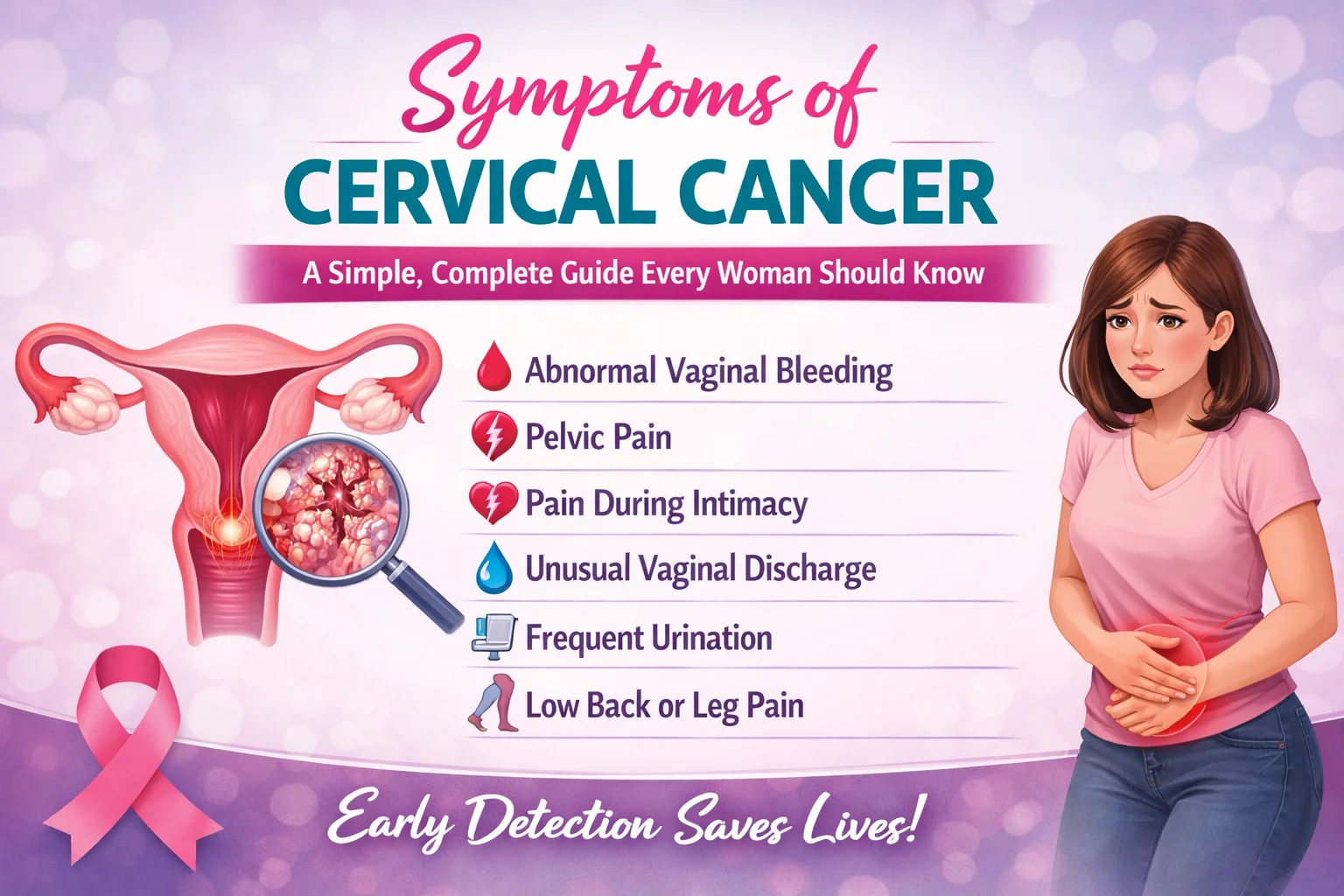
Some early symptoms of cervical cancer female include:
- Light bleeding between periods
- Bleeding after sex
- Unusual vaginal discharge
- Mild pelvic discomfort
These signs may seem small, but they should not be ignored. Many women think spotting is normal. But if it happens often, it needs checking.
I always suggest keeping track of your menstrual cycle. If something feels different, write it down. Patterns can reveal hidden issues.
Recognizing early symptoms of cervical cancer can make a big difference in treatment success.
Common Signs and Symptoms to Watch For
As the condition develops, symptoms may become more noticeable. These are the more common signs and symptoms of cervical cancer:
- Heavy or longer menstrual periods
- Pain during intercourse
- Thick or foul-smelling discharge
- Persistent pelvic pain
These symptoms can affect daily life. For example, pain during intimacy can cause emotional stress. Heavy bleeding may lead to weakness or fatigue.
It’s important to understand that these signs can also appear in other conditions. But it’s always better to get checked.
Advanced Symptoms of Cervical Cancer
When cervical cancer reaches later stages, symptoms become more serious.
Advanced symptoms of cervical cancer include:
- Severe pelvic or back pain
- Swelling in legs
- Trouble urinating or bowel changes
- Unexplained weight loss
- Extreme tiredness
At this stage, cancer may have spread to other areas. This is called metastasis.
These symptoms can greatly affect quality of life. That’s why early detection is so important.
Table: Early vs Advanced Symptoms
| Stage | Symptoms |
|---|---|
| Early Stage | Spotting, mild discharge, light pain |
| Mid Stage | Heavy bleeding, pelvic pain, discharge |
| Advanced Stage | Severe pain, swelling, weight loss |
Causes and Risk Factors
Understanding risk factors helps you stay alert.
Common causes include:
- Persistent HPV infection
- Smoking
- Weak immune system
- Early sexual activity
- Multiple sexual partners
Not every woman with these risks will get cancer. But awareness helps you take preventive steps.
Knowing what are the symptoms of cervical cancer along with risk factors gives a complete picture.
Table: Risk Factors Explained
| Risk Factor | Why It Matters |
|---|---|
| HPV Infection | Main cause of cervical cancer |
| Smoking | Weakens immune system |
| Early Pregnancy | Increases exposure risk |
| Poor Hygiene | May increase infection chances |
When Should You See a Doctor?
You should see a doctor if you notice:
- Bleeding after menopause
- Pain during sex
- Unusual discharge
- Irregular periods
Even if symptoms seem small, don’t wait. Early consultation can prevent serious issues.
From real-life cases, many women delay visits due to fear. But doctors are there to help, not judge.
How Cervical Cancer Is Diagnosed
Doctors use several tests to confirm the condition:
- Pap smear test
- HPV test
- Biopsy
- Imaging scans
A Pap smear checks for abnormal cells. It is simple and quick.
Diagnosis may sound scary, but it gives clarity. It helps doctors decide the best treatment.
Table: Diagnostic Tests Overview
| Test Type | Purpose |
|---|---|
| Pap Smear | Detect abnormal cells |
| HPV Test | Check virus presence |
| Biopsy | Confirm cancer |
| MRI/CT Scan | Check spread |
Treatment Options
Treatment depends on the stage.
Common options include:
- Surgery
- Radiation therapy
- Chemotherapy
- Targeted therapy
Early-stage cancer may only need minor surgery. Advanced cases may require combined treatments.
Each treatment has benefits and side effects. Doctors guide patients based on their condition.
Can Cervical Cancer Be Prevented?
Yes, prevention is possible.
Steps include:
- HPV vaccination
- Regular Pap tests
- Safe sexual practices
- Avoid smoking
Vaccination is very effective, especially when given early.
Prevention is always better than cure. Simple habits can reduce risk significantly.
Lifestyle Tips for Better Health
Healthy habits support your body:
- Eat fruits and vegetables
- Exercise regularly
- Maintain hygiene
- Manage stress
A strong immune system helps fight infections, including HPV.
Small changes in daily life can make a big difference over time.
Emotional Impact and Support
Facing symptoms can be stressful. Many women feel fear or anxiety.
Talking to family or friends helps. Support groups can also be useful.
Mental health is just as important as physical health. Don’t ignore your emotions.
Frequently Asked Questions (FAQs)
1. What are the symptoms of cervical cancer in early stages?
Early symptoms include light bleeding, mild discharge, and slight pelvic pain. These signs are often easy to miss.
2. What is the symptoms of cervical cancer most commonly seen?
Unusual vaginal bleeding is the most common symptom. It can happen between periods or after intercourse.
3. Can cervical cancer show no symptoms?
Yes, early stages may not show symptoms. That’s why regular screening is important.
4. Are symptoms of cervical cancer painful?
Early symptoms are usually not painful. Pain often appears in later stages.
5. How fast do symptoms develop?
Cervical cancer develops slowly over years. Symptoms may appear gradually.
6. When should I worry about symptoms?
You should worry if symptoms are persistent, unusual, or worsening. Always consult a doctor.
Conclusion
Understanding the symptoms of cervical cancer is one of the most powerful steps you can take for your health. Many women ignore early signs because they seem small or harmless. But even minor changes in your body can signal something important.
The good news is that cervical cancer often develops slowly. This gives you time to detect and treat it early. Regular check-ups, awareness of symptoms, and healthy habits can make a life-saving difference.
If you notice anything unusual, don’t wait. Talk to a doctor, ask questions, and take action. Your health matters, and early care can protect your future.
Stay informed, stay aware, and take care of yourself—you deserve it.
