

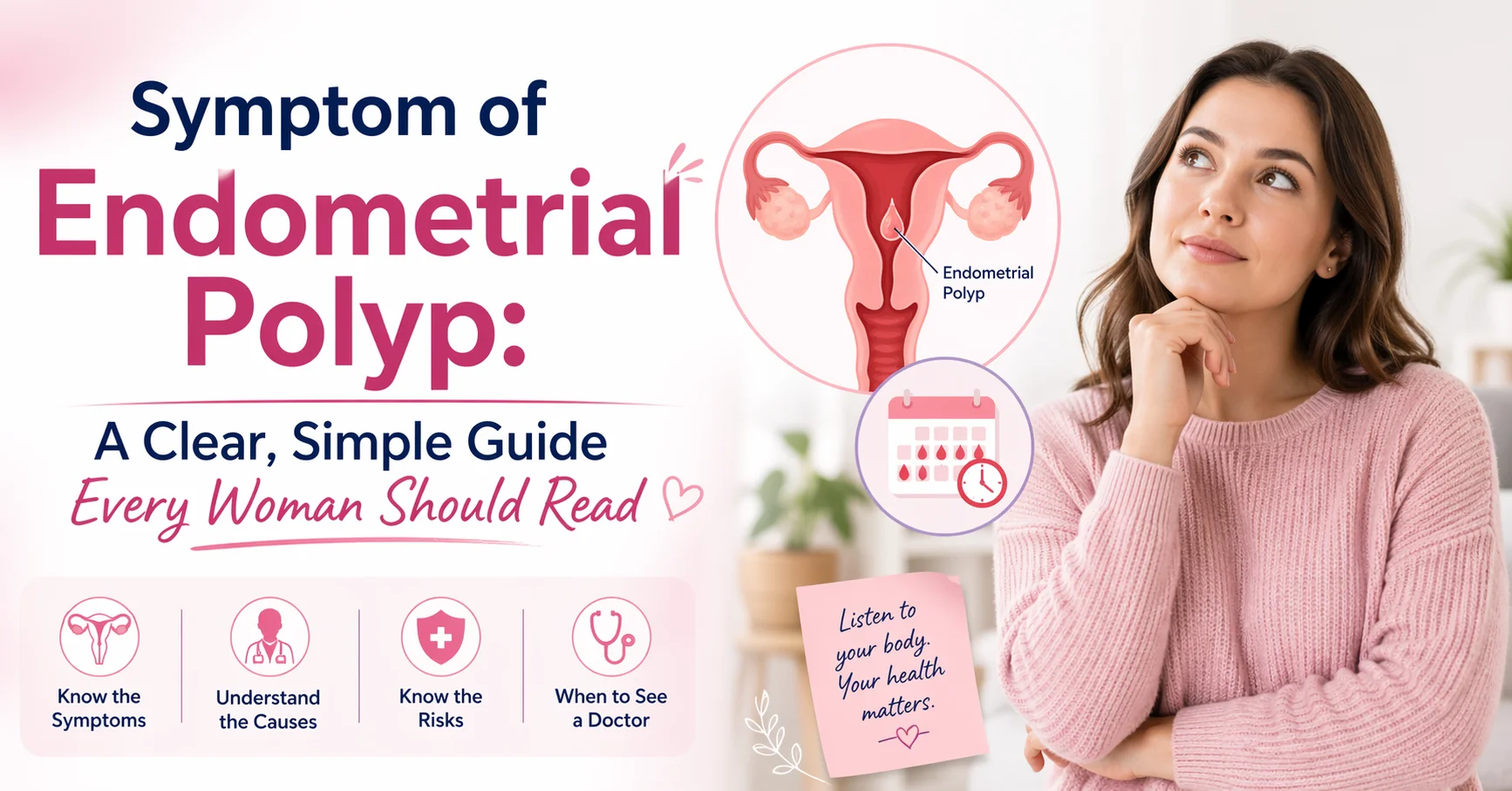
Understanding your body is powerful. When something feels off, even slightly, it’s worth paying attention. One condition many women don’t know much about is an endometrial polyp. These small growths in the uterus are common, but their symptoms can be confusing or easy to ignore.
In this guide, we will break down every important symptom of endometrial polyp in a way that is simple, clear, and helpful. You’ll learn what to watch for, when to act, and how to feel more confident about your health.
What Is an Endometrial Polyp?
An endometrial polyp is a small growth that forms in the lining of the uterus. This lining is called the endometrium. These polyps are usually soft and may look like tiny bumps or fingers.
Most polyps are not dangerous. However, some can cause discomfort or unusual bleeding. In rare cases, they may be linked to cancer. That’s why recognizing each symptom of endometrial polyp matters.
These growths can happen at any age but are more common in women in their 40s and 50s. They may appear alone or in groups.
Why Do Endometrial Polyps Form?
Doctors believe hormones play a big role. Estrogen, in particular, can cause the uterine lining to grow too much. This extra growth can form a polyp.
Other factors may include:
- Being overweight
- High blood pressure
- Hormone therapy
- Menopause
Sometimes, there is no clear cause. That’s why paying attention to symptoms is key.
Common Symptom of Endometrial Polyp
The most common symptom of endometrial polyp is abnormal bleeding. This can show up in different ways.
You may notice:
- Bleeding between periods
- Heavy periods
- Irregular cycles
- Bleeding after sex
These changes may seem small at first. Many women think it’s just hormonal changes. But if it keeps happening, it needs attention.
Symptoms of Endometrial Polyps You Should Not Ignore
Many women ask about symptoms of endometrial polyps and how they feel in daily life. The truth is, symptoms can vary.
Some women have no symptoms at all. Others notice clear signs, such as:
- Spotting between periods
- Longer or heavier periods
- Bleeding after menopause
- Difficulty getting pregnant
Each body is different. Even mild symptoms can be important.
Symptoms of Endometrial Polyps After Menopause
Postmenopausal bleeding is a serious sign. If you are no longer having periods and notice bleeding, do not ignore it.
Symptoms of endometrial polyps after menopause often include:
- Light spotting
- Sudden bleeding
- Brown discharge
Even a small amount of blood can be a warning sign. While polyps are often harmless, doctors must rule out other conditions.
Can Endometrial Polyps Cause Pain?
Pain is not always present. But some women do feel discomfort.
You might notice:
- Mild cramping
- Pressure in the lower abdomen
- Pain during intercourse
This pain is usually not severe. However, if it becomes frequent, it could be a symptom of endometrial polyp that needs checking.
Are Endometrial Polyps Linked to Cancer?
This is a common concern. Most polyps are benign, which means non-cancerous. However, a small number can develop into cancer.
The risk is higher if:
- You are postmenopausal
- You have abnormal bleeding
- You have large or multiple polyps
Understanding endometrial polyp symptoms of cancer is important. Warning signs may include:
- Heavy or ongoing bleeding
- Rapid growth of symptoms
- Unexplained weight loss
Early detection makes a big difference.
Table: Common vs Serious Symptoms
| Symptom Type | Examples | What It Means |
|---|---|---|
| Common | Irregular periods | Often harmless |
| Moderate | Heavy bleeding | Needs medical check |
| Serious | Postmenopausal bleeding | Urgent evaluation required |
How Symptoms Affect Daily Life
Living with these symptoms can be frustrating. You may feel tired, worried, or unsure of what’s normal.
For example, heavy bleeding can lead to low energy. It may affect work, sleep, and mood. Spotting can cause stress and embarrassment.
Recognizing each symptom of endometrial polyp early helps you avoid these struggles and feel more in control.
When Should You See a Doctor?
It’s always better to be safe than sorry. You should see a doctor if you notice:
- Bleeding between periods
- Very heavy periods
- Bleeding after menopause
- Trouble getting pregnant
Even if symptoms seem small, they matter. Doctors can run simple tests to check what’s going on.
Table: When to Act
| Symptom | Action Needed |
|---|---|
| Mild spotting | Monitor closely |
| Frequent irregular cycles | Book appointment |
| Postmenopausal bleeding | Seek urgent care |
How Are Endometrial Polyps Diagnosed?
Doctors use a few simple tools to find polyps. These may include:
- Ultrasound
- Hysteroscopy (camera inside uterus)
- Biopsy (small tissue sample)
These tests are usually quick and safe. They help confirm if your symptoms are due to polyps or something else.
Treatment Options You Should Know
Treatment depends on your symptoms and health.
Common options include:
- Watching and waiting
- Medication
- Removing the polyp
If symptoms are mild, doctors may just monitor you. If bleeding is heavy, removal is often recommended.
Table: Treatment Overview
| Treatment Type | When It’s Used | Result |
|---|---|---|
| Observation | Mild symptoms | No immediate action |
| Medication | Hormone-related symptoms | Symptom control |
| Surgery | Severe or risky polyps | Removes polyp completely |
Can Endometrial Polyps Affect Fertility?
Yes, they can. Polyps may block the uterus or affect implantation.
Some women only discover a symptom of endometrial polyp when trying to conceive. Removing the polyp can improve chances of pregnancy.
If you are trying to get pregnant and having trouble, it’s worth checking.
Lifestyle Tips to Support Your Health
While you cannot always prevent polyps, you can support your body.
Simple steps include:
- Maintain a healthy weight
- Eat balanced meals
- Exercise regularly
- Manage stress
These habits help keep your hormones balanced, which may reduce risk.
Table: Healthy Habits for Hormonal Balance
| Habit | Benefit |
|---|---|
| Regular exercise | Supports hormone balance |
| Healthy diet | Reduces inflammation |
| Stress control | Improves overall health |
Real-Life Insight: Why Early Attention Matters
Many women ignore small signs. A little spotting here, a heavy period there. It feels normal.
But one woman shared that she ignored symptoms for months. Later, she found out she had multiple polyps. Thankfully, they were treated early.
This shows how important it is to notice each symptom of endometrial polyp and act early.
FAQs About Endometrial Polyps
1. What is the main symptom of endometrial polyp?
The most common sign is abnormal bleeding, especially between periods or after menopause.
2. Can I have polyps without symptoms?
Yes, some women have no symptoms at all. They are found during routine checks.
3. Are endometrial polyps dangerous?
Most are harmless, but a few can become cancerous, especially after menopause.
4. Do polyps go away on their own?
Some small polyps may shrink, but many need monitoring or treatment.
5. How are polyps removed?
Doctors usually remove them with a simple procedure called hysteroscopy.
6. Can polyps come back?
Yes, they can return, so regular check-ups are important.
Final Thoughts: Listen to Your Body
Your body often gives small signals before bigger problems appear. Understanding each symptom of endometrial polyp helps you stay ahead of your health.
Do not ignore unusual bleeding or changes. Even if it feels minor, it matters. Getting checked early can give you peace of mind and prevent complications.
If something feels off, trust yourself and take action. Your health is always worth it.
