

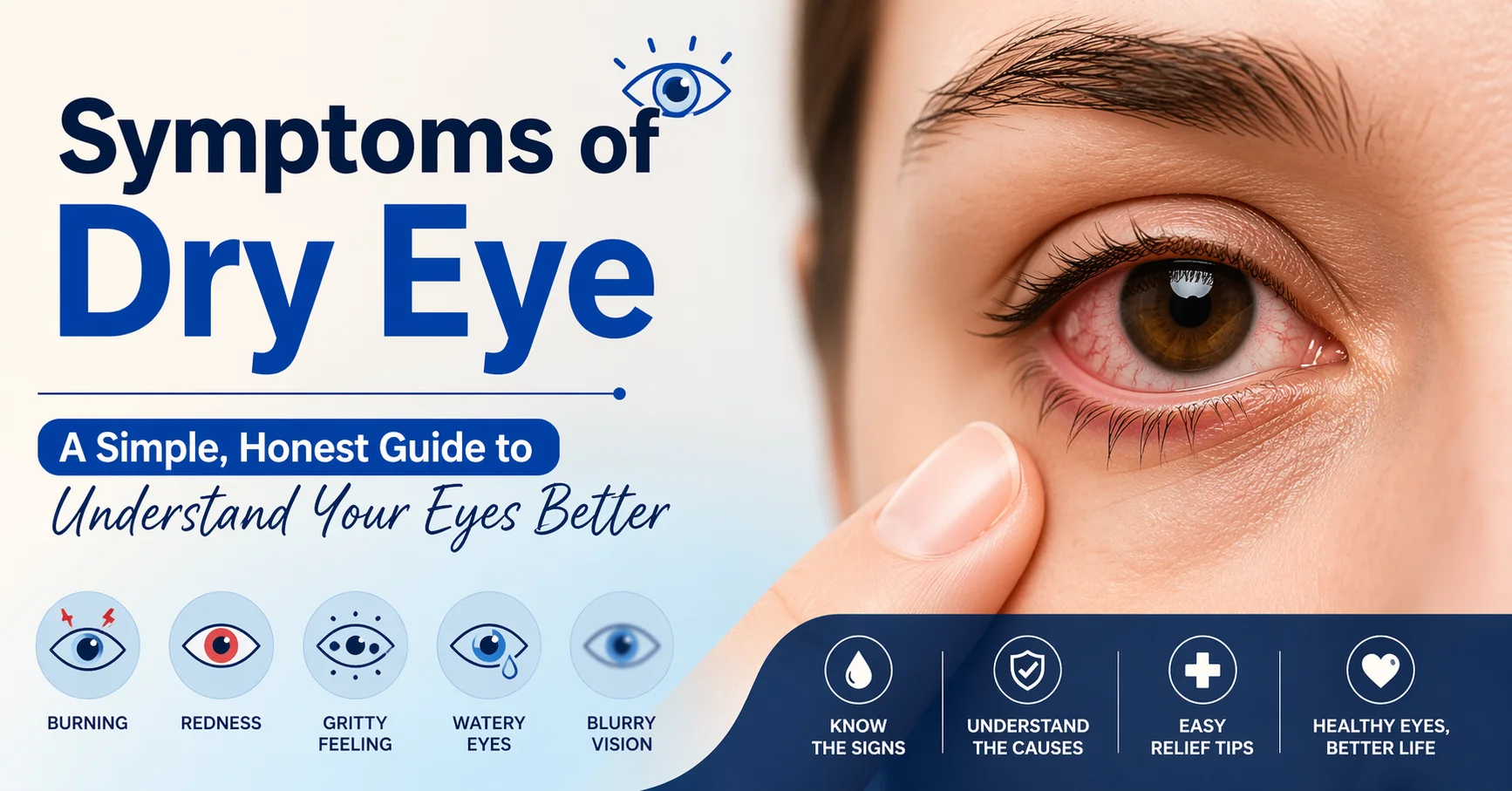
Dry eyes may sound like a small issue, but they can affect your daily comfort a lot. Many people ignore early signs until the problem gets worse. Understanding the symptoms of dry eye can help you take action early and protect your vision. This guide is written in very simple language so anyone can understand it easily, even a young student. We will talk about causes, signs, treatments, and easy home care tips.
The symptoms of dry eye often start slowly. You may feel mild irritation or tired eyes. Later, it can turn into burning, redness, or blurred vision. The good news is that this condition is manageable with proper care. Let’s explore everything step by step so you can clearly understand what your eyes are telling you.
What is Dry Eye?
Dry eye is a condition where your eyes do not produce enough tears or the tears dry too quickly. Tears are very important because they keep your eyes clean, smooth, and protected. Without enough moisture, your eyes can feel uncomfortable and tired.
Many people ask, what is symptoms of dry eyes and how they begin. The condition often starts with mild irritation that feels like something is stuck in the eye. Over time, the symptoms of dry eye can become more noticeable and frequent. It is not just about dryness—it also affects your vision clarity and comfort during daily tasks like reading or using a phone.
Dry eye can happen to anyone, but it is more common in adults, people who use screens a lot, and those living in dry environments. Understanding it early helps you prevent long-term discomfort.
Early Signs You Should Not Ignore
The early signs of dry eye are often small but important. You may feel slight burning or itching in your eyes. Sometimes, your eyes may become watery, which sounds strange, but it is actually a reaction to dryness.
These early symptoms of dry eyes often come and go. Many people ignore them, thinking they are just tired. But if you notice them regularly, it is time to pay attention. You may also feel like your eyes are heavy or tired after reading or working on a screen for a short time.
Another early sign is sensitivity to light. Bright lights may feel uncomfortable. If you notice these signs often, your eyes are asking for help. Early care can prevent the problem from getting worse and reduce future discomfort.
Common Symptoms of Dry Eye (Detailed List)
The symptoms of dry eye can vary from mild to severe. Some people feel slight irritation, while others struggle with constant discomfort. Below is a simple table that shows the most common symptoms.
Table 1: Common Symptoms of Dry Eye
| Symptom | Description |
|---|---|
| Burning sensation | Eyes feel hot or irritated |
| Redness | Eyes look pink or red |
| Watery eyes | Excess tears due to dryness |
| Blurry vision | Vision becomes unclear at times |
| Itchy eyes | Constant urge to rub eyes |
| Foreign body feeling | Feels like sand in the eye |
| Light sensitivity | Discomfort in bright light |
These symptoms of dry eye may appear during different times of the day. For some people, they are worse in the morning. For others, they become stronger after screen use or reading.
Main Causes Behind Dry Eye
There are many reasons why dry eye happens. One common cause is aging. As we grow older, our eyes produce fewer tears. Another major reason is screen time. Phones, computers, and TVs reduce blinking, which leads to dryness.
Environmental factors also play a big role. Wind, smoke, and dry air can increase irritation. Some medications and health conditions can also reduce tear production.
Understanding the causes helps explain why what are the symptoms of dry eye appear in the first place. When you know the reason, you can take better steps to manage it and reduce discomfort in daily life.
Environmental Triggers That Make Dry Eye Worse
Your surroundings can strongly affect your eye health. Air conditioners and fans can dry out your eyes quickly. Pollution and dust can also irritate them. Even long exposure to sunlight can increase discomfort.
These triggers often increase the symptoms of dry eye without warning. You may feel fine indoors, but experience irritation outdoors or in windy places. Dry environments like heated rooms or desert climates can also make the condition worse.
It is important to notice when your symptoms increase. This helps you identify your personal triggers and avoid them when possible. Small changes in your environment can bring big relief to your eyes.
Screen Time and Digital Eye Strain
In today’s world, screen time is one of the biggest reasons for dry eye. When we focus on screens, we blink less often. Blinking spreads tears across the eye surface. Without enough blinking, eyes become dry and irritated.
Many people notice symptoms of dry eye after long hours of phone or computer use. These symptoms include burning, tiredness, and blurry vision. This condition is often called digital eye strain.
Taking regular breaks is very important. A simple rule like looking away from the screen every 20 minutes can help a lot. This reduces pressure and keeps your eyes refreshed throughout the day.
Dry Eye in Contact Lens Users
People who wear contact lenses may experience dry eye more often. Lenses can reduce tear flow and make the eyes feel uncomfortable after long use. If lenses are not cleaned properly, irritation can increase.
The symptoms of dry eye in contact lens users include redness, discomfort, and a feeling that the lens is moving or scratching the eye. Some people may even feel the need to remove their lenses early in the day.
It is important to follow proper lens care instructions and give your eyes regular breaks. Using eye drops recommended by a doctor can also help maintain comfort and moisture.
Age and Hormonal Changes
Age is a natural factor that affects tear production. As people grow older, their eyes may not produce enough moisture. This is especially common in people over 40.
Hormonal changes, especially in women, can also lead to dryness. These changes affect the quality of tears, making the eyes more sensitive. That is why symptoms of dry eye are more common in older adults.
Understanding this helps you take preventive steps early. Regular eye checkups and proper care can reduce discomfort and protect your vision as you age.
Possible Complications If Left Untreated
If dry eye is not treated, it can lead to more serious problems. Constant irritation can damage the surface of the eye. This may affect vision clarity over time.
The symptoms of dry eye can also become more intense, making daily activities harder. Reading, driving, or using screens may feel uncomfortable. In severe cases, eye infections may develop.
That is why early treatment is very important. Even simple steps like using eye drops or adjusting habits can prevent complications and keep your eyes healthy.
How Doctors Diagnose Dry Eye
Doctors use simple tests to understand dry eye. They check tear production and eye surface health. These tests are quick and usually painless.
Table 2: Common Dry Eye Diagnosis Methods
| Test Name | Purpose |
|---|---|
| Tear break-up time test | Measures tear stability |
| Schirmer test | Checks tear production |
| Eye surface exam | Looks for dryness or damage |
| Fluorescein staining | Detects eye surface issues |
These tests help confirm what are the symptoms of dry eye and how serious the condition is. After diagnosis, doctors recommend the best treatment based on your needs.
Simple Home Remedies for Relief
There are many easy ways to reduce dry eye symptoms at home. One simple method is using warm compresses. This helps improve oil flow in the eyes.
Taking screen breaks is also very helpful. Drinking enough water keeps your body hydrated, which supports eye health. Avoiding direct wind or air conditioning can reduce irritation.
These home methods can reduce the symptoms of dry eye and improve comfort naturally. However, if symptoms continue, medical advice is important.
Medical Treatments for Dry Eye
Doctors may recommend eye drops, ointments, or special treatments depending on your condition. These treatments help increase moisture and reduce irritation.
Table 3: Medical Treatment Options
| Treatment | Purpose |
|---|---|
| Artificial tears | Add moisture to eyes |
| Lubricating ointments | Long-lasting relief |
| Anti-inflammatory drops | Reduce swelling |
| Punctal plugs | Keep tears in eyes longer |
These treatments are effective for managing symptoms of dry eye when home remedies are not enough. Always follow your doctor’s advice for safe results.
Prevention Tips for Healthy Eyes
Preventing dry eye is easier than treating it. Small habits can make a big difference. Taking regular screen breaks, staying hydrated, and protecting your eyes from wind are very helpful.
Table 4: Simple Prevention Tips
| Habit | Benefit |
|---|---|
| Drink water often | Keeps eyes hydrated |
| Blink regularly | Spreads tears evenly |
| Use screen breaks | Reduces eye strain |
| Wear sunglasses | Protects from wind and sunlight |
These habits reduce the chances of developing symptoms of dry eye and keep your eyes comfortable every day.
Conclusion: Take Care of Your Eyes Early
Dry eye may seem small at first, but it can affect your comfort and daily life. The symptoms of dry eye often start quietly but become more noticeable over time. By understanding early signs, causes, and treatments, you can protect your eyes better.
Simple lifestyle changes, good habits, and proper care can make a big difference. If symptoms continue, it is always best to consult an eye specialist. Healthy eyes mean a better and clearer life, so take care of them every day.
FAQs About Dry Eye
1. What are the symptoms of dry eye in daily life?
The symptoms of dry eye in daily life include burning, redness, itching, blurry vision, and a sandy feeling in the eyes. These signs may come and go depending on screen use and environment.
2. What is symptoms of dry eyes in simple words?
In simple words, dry eye means your eyes do not have enough moisture. This causes irritation, discomfort, and sometimes blurry vision during daily activities.
3. What causes dry eye the most?
The most common causes include screen time, aging, dry air, and reduced tear production. These factors often lead to the symptoms of dry eye becoming more noticeable.
4. Are dry eyes dangerous?
Dry eyes are usually not dangerous, but they can become serious if ignored. Long-term dryness may damage the eye surface and affect vision.
5. Can dry eye be cured at home?
Mild cases can improve with home care like hydration, screen breaks, and warm compresses. However, persistent symptoms of dry eye may need medical treatment.
6. When should I see a doctor for dry eyes?
You should see a doctor if symptoms continue for weeks or get worse. Constant irritation, pain, or blurry vision needs professional care.
