

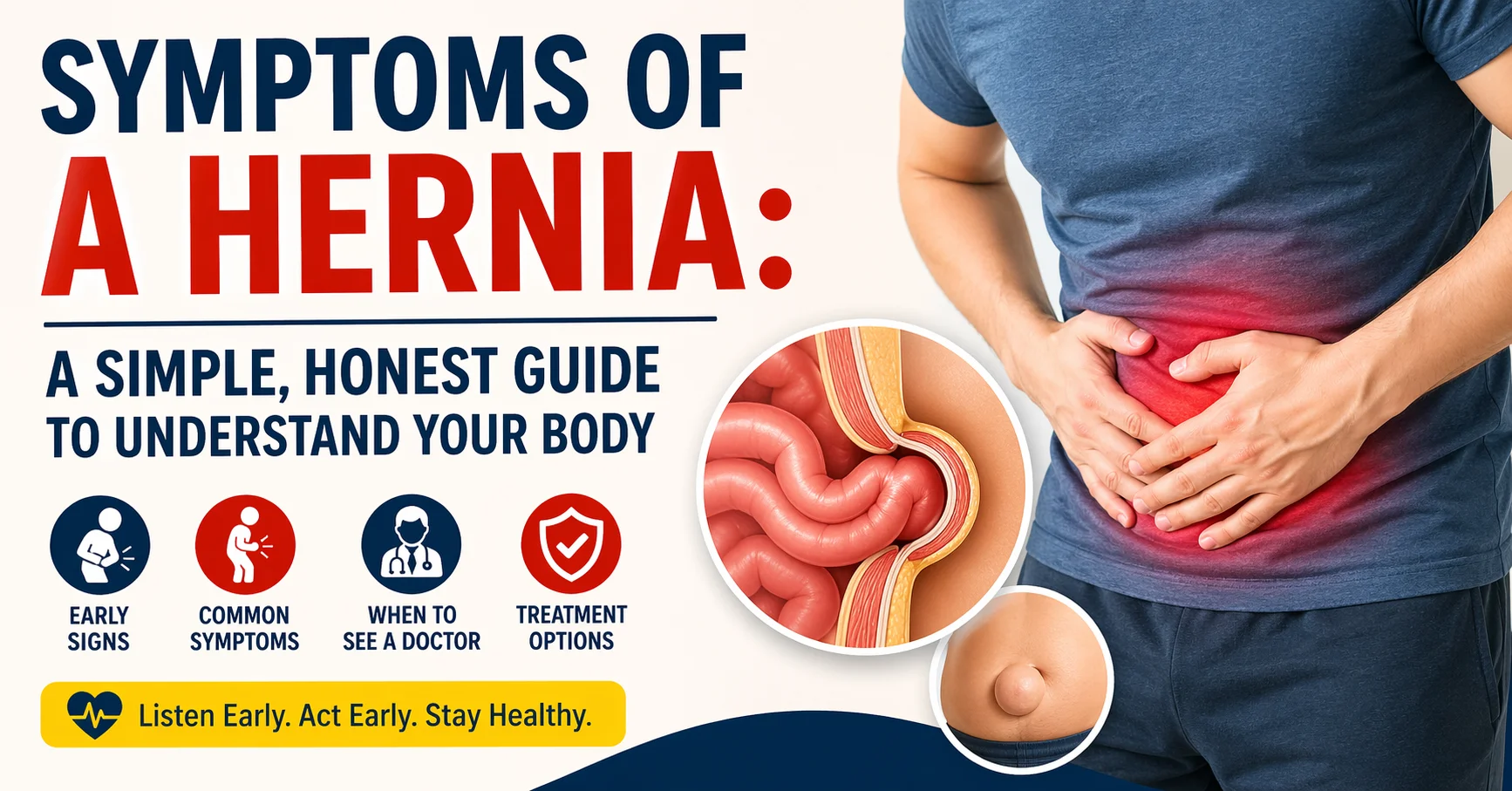
When your body sends signals, it’s trying to tell you something important. One of those signals can be the symptoms of a hernia. Many people ignore early signs because they seem small or harmless. But understanding these symptoms early can save you from pain and complications later.
A Hernia happens when an organ or tissue pushes through a weak spot in the muscle. It often appears in the belly or groin. Some hernias are easy to notice. Others are quiet and confusing.
In this guide, you’ll learn everything in simple words. We will cover what a hernia feels like, the warning signs, and when to act. You will also see real-life examples and easy tables to help you understand better.
What Is a Hernia and Why Does It Happen?
A hernia forms when pressure builds inside your body. At the same time, a weak spot in your muscle gives way. This allows tissue or organs to push through. It may look like a lump or swelling.
Common causes include heavy lifting, coughing, obesity, and even pregnancy. Sometimes, people are born with weak muscles. In other cases, muscles weaken over time.
The most common types include inguinal (groin), umbilical (belly button), and Hiatal Hernia (upper stomach). Each type has slightly different symptoms.
At first, the symptoms of a hernia may seem mild. But ignoring them can lead to serious problems. That’s why it’s important to listen to your body early.
Common Symptoms of a Hernia You Should Not Ignore
The symptoms of a hernia can vary, but some signs are very common. The most noticeable one is a bulge or lump. You may see it when standing or coughing.
You might also feel pain or discomfort. This pain can get worse when lifting, bending, or standing for long periods. Some people feel a heavy or dragging sensation.
Another common sign is weakness in the affected area. You may feel like something is “out of place.” In some cases, there is a burning feeling.
Not all hernias cause pain at first. This is why many people ignore early signs. But even a painless lump should be checked by a doctor.
Symptoms of a Hernia in the Abdomen
The symptoms of a hernia in the abdomen often include a visible swelling. This swelling may come and go. It usually becomes more noticeable when you strain.
You may also feel pressure in your stomach. Some people describe it as a tight or pulling feeling. Eating large meals may make the discomfort worse.
In more serious cases, you might feel nausea or vomiting. This can happen if the hernia blocks part of the intestine. This is a medical emergency.
Here’s a quick table to understand abdominal symptoms:
| Symptom | What It Feels Like |
|---|---|
| Bulge in abdomen | Soft lump that may disappear |
| Pressure | Tight or heavy feeling |
| Pain | Worse with movement |
| Nausea | Feeling sick after eating |
If these signs appear suddenly, don’t wait. Seek medical help quickly.
Symptoms of a Hiatal Hernia Explained Simply
A Hiatal Hernia is different from other hernias. It happens when part of your stomach moves up into your chest.
The symptoms of a hiatal hernia often feel like digestive problems. You may have heartburn, especially after eating. This happens because stomach acid moves upward.
You might also feel chest pain or trouble swallowing. Some people experience frequent burping or a sour taste in the mouth.
Here’s a simple table:
| Symptom | Description |
|---|---|
| Heartburn | Burning feeling in chest |
| Acid reflux | Food or acid coming back up |
| Chest discomfort | Pressure or mild pain |
| Trouble swallowing | Food feels stuck |
These symptoms can feel like other conditions. That’s why proper diagnosis is important.
What Are the Symptoms of a Hernia in Men vs Women?
The symptoms of a hernia can be slightly different in men and women. Men often get hernias in the groin area. This is called an inguinal hernia.
In men, you may notice swelling near the testicles. Pain may increase when lifting or coughing. Many men ignore this until it becomes severe.
Women can also get inguinal hernias, but they are less common. Instead, women may feel deep pelvic pain. This pain is sometimes mistaken for other issues.
Here’s a comparison:
| Feature | Men | Women |
|---|---|---|
| Common area | Groin | Lower abdomen |
| Visible lump | Often clear | Sometimes hidden |
| Pain type | Sharp or burning | Dull or deep |
| Misdiagnosis | Rare | More common |
Understanding these differences helps in early detection.
Early vs Late Symptoms of a Hernia
Catching the symptoms of a hernia early can make treatment easier. Early signs are usually mild. You may feel a small lump or slight discomfort.
As the hernia grows, symptoms become stronger. Pain may increase, and the bulge becomes more visible. You may also feel tired or weak.
Late-stage symptoms can be dangerous. If the hernia becomes trapped, it can cut off blood supply. This is called strangulation.
Here’s a clear table:
| Stage | Symptoms |
|---|---|
| Early | Small lump, mild discomfort |
| Middle | Pain, visible bulge |
| Late | Severe pain, nausea, emergency signs |
Never ignore worsening symptoms. Early action is always safer.
When Should You Worry About Hernia Symptoms?
Not all hernias are emergencies, but some signs should never be ignored. Severe pain is a major warning sign. Especially if it comes suddenly.
If the lump becomes hard or cannot be pushed back, this is serious. Redness or discoloration is also a danger signal.
Vomiting and inability to pass gas or stool are emergency signs. These may mean your intestine is blocked.
If you notice any of these, go to a doctor immediately. Waiting can make things worse.
Real-Life Example: How People Often Miss Early Signs
Many people delay treatment because symptoms seem small. For example, one person might feel a small lump after lifting something heavy. It doesn’t hurt much, so they ignore it.
Over time, the lump grows. Pain starts during daily activities. Eventually, it becomes hard and painful.
This is very common. I’ve seen people wait months before getting help. By then, surgery becomes more complicated.
Listening to your body early can save you stress and pain later.
How Hernia Symptoms Affect Daily Life
The symptoms of a hernia can slowly affect your daily routine. At first, you may feel fine. But over time, simple tasks become harder.
Lifting groceries, exercising, or even standing for long periods may cause discomfort. Some people avoid activities they enjoy.
Sleep can also be affected. Pain or pressure may disturb your rest. This leads to tiredness during the day.
Ignoring symptoms can reduce your quality of life. Early treatment helps you stay active and comfortable.
Diagnosis: How Doctors Confirm a Hernia
Doctors usually start with a physical exam. They may ask you to cough or stand. This helps reveal the bulge.
In some cases, imaging tests are needed. These include ultrasound or CT scans. These tests show the exact location.
For hiatal hernias, doctors may use endoscopy. This helps them see inside your stomach.
Diagnosis is usually simple and quick. Don’t feel nervous about getting checked.
Treatment Options Based on Symptoms
Treatment depends on how severe the symptoms of a hernia are. Small hernias may not need immediate surgery. Doctors may suggest lifestyle changes.
For larger or painful hernias, surgery is often recommended. This repairs the weak muscle area.
There are two main types: open surgery and laparoscopic surgery. The second option is less invasive.
Here’s a simple table:
| Treatment | When Used |
|---|---|
| Watchful waiting | Mild symptoms |
| Lifestyle changes | Early stage |
| Surgery | Severe or painful cases |
Always follow your doctor’s advice for the best outcome.
Simple Tips to Prevent Hernia Symptoms
While not all hernias can be prevented, you can reduce your risk. Avoid lifting heavy objects incorrectly. Always use proper technique.
Maintain a healthy weight. Extra weight puts pressure on your muscles. Eat a balanced diet to prevent constipation.
Quit smoking if possible. Chronic coughing increases pressure inside your body.
Small habits can make a big difference in preventing problems.
FAQs About Symptoms of a Hernia
1. What are the symptoms of a hernia most people notice first?
The first sign is usually a small lump or swelling. It may not hurt at first.
2. What are the symptoms of a hiatal hernia?
Common signs include heartburn, acid reflux, and chest discomfort after eating.
3. Can hernia symptoms go away on their own?
The symptoms may reduce, but the hernia itself does not heal without treatment.
4. Are hernia symptoms always painful?
No, some hernias are painless at first. Pain usually develops over time.
5. What are the symptoms of a hernia in the abdomen?
Look for swelling, pressure, discomfort, and sometimes nausea.
6. When should I see a doctor?
If you notice a lump, pain, or sudden worsening symptoms, see a doctor quickly.
Final Thoughts: Listen to Your Body Early
The symptoms of a hernia may start small, but they should never be ignored. Your body gives you signals for a reason. Paying attention early can prevent serious problems.
If something feels off, don’t wait. A simple check can give you peace of mind. Early treatment is easier, safer, and less stressful.
Take care of your body today so you can stay active tomorrow.
