

Introduction
Your body often sends small signals when something is wrong. The problem is, many of us ignore them. This is especially true with thyroid cancer symptoms, which can be very quiet at first.
The thyroid is a small gland in your neck. It controls how your body uses energy. When something goes wrong with it, the signs may seem harmless. You might think it’s just stress or tiredness.
I’ve seen many people overlook early warning signs because they felt “too normal.” That’s why this guide exists—to help you understand what to watch for in a clear and simple way.
In this article, you will learn about symptoms of thyroid cancer, how they feel, and when to take action. Whether you are worried about yourself or someone you love, this guide will help you stay informed and prepared.
What Is the Thyroid and Why It Matters
The thyroid is a small, butterfly-shaped gland at the front of your neck. Even though it is small, it plays a big role in your body.
It controls hormones that affect your heart, energy, weight, and mood. When the thyroid works well, your body feels balanced. But when it doesn’t, things can slowly go off track.
Cancer in this gland is called thyroid cancer. It happens when cells grow in an abnormal way. These cells can form lumps or tumors.
The tricky part is that thyroid cancer symptoms often develop slowly. Many people don’t notice them until later stages.
That’s why learning about thyroid and cancer symptoms early can make a big difference. Early detection often leads to better treatment outcomes.
Early Thyroid Cancer Symptoms You Should Not Ignore
In the early stage, signs can be very mild. Some people feel nothing at all. Others notice small changes that don’t seem serious.
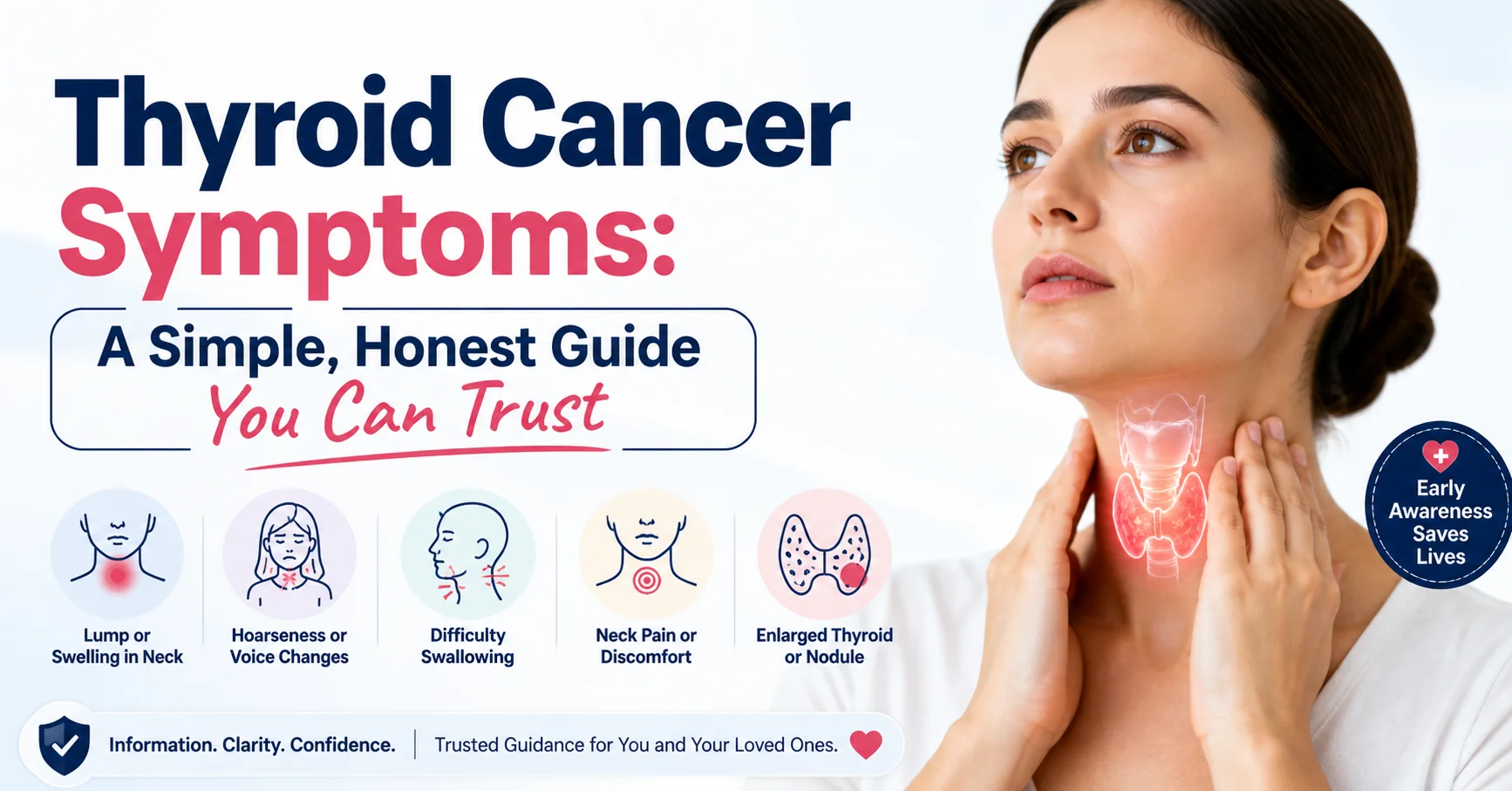
One of the most common early signs of thyroid cancer is a lump in the neck. It may not hurt, which makes it easy to ignore.
Other early symptoms include:
- A feeling of tightness in the neck
- Slight swelling
- Mild discomfort when swallowing
These early symptoms of thyroid cancer can be easy to miss. Many people think it is just a sore throat or muscle strain.
From experience, people often wait too long. They assume it will go away. But if something feels unusual and lasts more than two weeks, it’s worth checking.
Lump in the Neck: The Most Common Warning Sign
A lump or swelling in the neck is the most common sign. It usually appears in the lower front area.
This lump may grow slowly. It is often painless. That’s why people delay seeing a doctor.
In some cases, the lump can become more noticeable over time. You may see it when looking in the mirror or feel it while touching your neck.
This is one of the key cancer of thyroid symptoms and signs you should never ignore.
Not all lumps are cancer. Some are harmless nodules. But only a doctor can confirm that.
If you notice a lump that doesn’t go away, it’s important to get it checked early.
Changes in Voice and Hoarseness
Your voice can reveal a lot about your health. One important sign is hoarseness.
If your voice sounds rough or weak for more than two weeks, it could be a warning sign. This happens when the tumor affects nearby nerves.
This symptom is often overlooked. People blame it on a cold or overuse of the voice.
But persistent hoarseness is one of the key thyroid cancer symptoms.
If you also have a neck lump, the risk becomes higher.
Pay attention to how your voice changes. If it doesn’t improve, seek medical advice.
Difficulty Swallowing or Breathing
As thyroid cancer grows, it may press on nearby structures. This can make swallowing or breathing harder.
You might feel like food is stuck in your throat. Some people describe a tight or choking feeling.
Breathing problems can happen if the airway is affected. This is less common but serious.
These signs are important symptoms of thyroid cancer that should not be ignored.
If you notice these issues along with other symptoms, get checked quickly.
Thyroid Cancer Symptoms in Women
Women are more likely to develop thyroid problems than men. That’s why understanding thyroid cancer symptoms in women is very important.
Common symptoms include:
- Neck swelling
- Hormonal imbalance
- Fatigue
- Weight changes
In some cases, symptoms may feel like normal hormonal shifts. This makes them harder to detect.
Many women ignore these signs, thinking they are part of aging or stress.
But thyroid cancer in women symptoms can be subtle. Paying attention to your body can help catch problems early.
Thyroid Cancer Symptoms in Females: What’s Different?
There is no major difference in symptoms between men and women. However, hormonal changes can mask the signs.
For example, fatigue or mood swings may seem normal during certain life stages.
This is why thyroid cancer symptoms in females can sometimes go unnoticed.
Women should be extra aware of neck changes and voice issues. These signs are more specific and easier to detect.
Listening to your body is key. If something feels off, trust that feeling.
Papillary Thyroid Cancer Symptoms
Papillary thyroid cancer is the most common type. It grows slowly and often has a good outcome if treated early.
Common papillary thyroid cancer symptoms include:
- A small lump in the neck
- Swollen lymph nodes
- Mild neck pain
Many people live with this type for years without serious issues. But early detection still matters.
Even though it grows slowly, it can spread if ignored.
Regular check-ups can help catch it early and improve treatment success.
Less Common Symptoms You Should Know
Not all symptoms are obvious. Some are less common but still important.
These include:
- Persistent cough (not related to illness)
- Neck pain that spreads to ears
- Sudden weight changes
- Constant fatigue
These signs may not seem related to the thyroid. That’s why they are often ignored.
Understanding these less common thyroid and cancer symptoms can help you stay alert.
When Should You See a Doctor?
It’s always better to be safe than sorry. If you notice any unusual changes, don’t wait too long.
You should see a doctor if:
- A neck lump lasts more than two weeks
- You have ongoing hoarseness
- Swallowing becomes difficult
Early diagnosis can save lives. Most thyroid cancers are treatable when caught early.
Don’t ignore your body’s signals. They are there for a reason.
How Doctors Diagnose Thyroid Cancer
Doctors use several methods to diagnose the condition.
Common Tests
| Test | Purpose |
|---|---|
| Physical Exam | Check for lumps |
| Ultrasound | View thyroid structure |
| Biopsy | Confirm cancer cells |
| Blood Tests | Check hormone levels |
These tests help confirm if symptoms are linked to cancer or not.
Risk Factors for Thyroid Cancer
Certain factors increase the risk.
Key Risk Factors
| Risk Factor | Explanation |
|---|---|
| Family history | Genetics play a role |
| Radiation exposure | Especially in childhood |
| Gender | Women at higher risk |
| Age | Common in younger adults |
Knowing your risk can help you stay alert.
Tips for Early Detection
Early detection improves survival rates.
Here are simple tips:
- Check your neck regularly
- Notice voice changes
- Don’t ignore persistent symptoms
- Get regular health check-ups
These small steps can make a big difference.
FAQs About Thyroid Cancer Symptoms
1. What are the symptoms of thyroid cancer?
Common symptoms include a neck lump, hoarseness, and difficulty swallowing.
2. Are thyroid cancer symptoms painful?
Most early symptoms are painless, which makes them easy to ignore.
3. Can thyroid cancer be cured?
Yes, especially when detected early. Many cases are highly treatable.
4. Do all neck lumps mean cancer?
No, many lumps are harmless. But they should always be checked.
5. How fast do symptoms appear?
Symptoms usually develop slowly over time.
6. Is thyroid cancer common in women?
Yes, it is more common in women than men.
Conclusion
Understanding thyroid cancer symptoms can help you take control of your health. The signs are often small and easy to miss. But they matter.
A simple neck lump or voice change could be your body asking for attention.
From personal observation, people who act early often have better outcomes. Waiting only makes things harder.
If something feels unusual, trust yourself. Get it checked.
Your health is worth it.
