

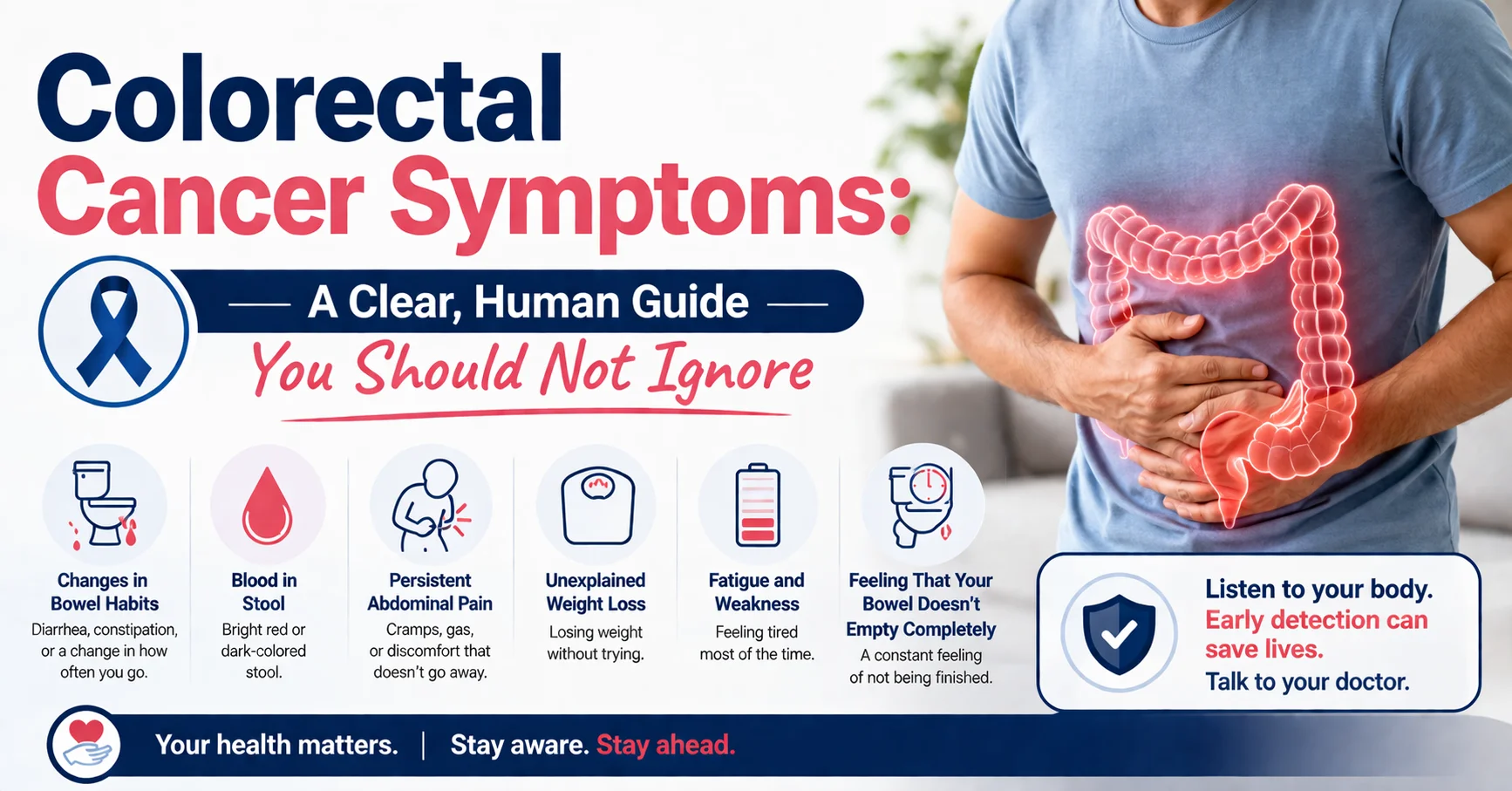
Understanding colorectal cancer symptoms can truly save lives. Many people miss early warning signs because they seem small or harmless. A little change in your body might not feel serious at first. But over time, it could point to something important.
Colorectal cancer affects the colon or rectum, which are parts of your digestive system. It often grows slowly. This means early signs can appear long before things become severe. The good news? When found early, treatment works much better.
In this guide, we will walk through the signs and symptoms for colorectal cancer in a simple, friendly way. You will learn what to watch for, when to act, and how to protect yourself and your loved ones.
What Is Colorectal Cancer?
Colorectal cancer starts in the large intestine. This includes the colon and rectum. It usually begins as small growths called polyps. Not all polyps are harmful, but some can turn into cancer over time.
Many people ask, what is symptoms of colorectal cancer? The answer is not always simple. Symptoms can vary from person to person. Some people feel nothing at all in the early stage.
That is why awareness matters. Knowing symptoms of colorectal cancer can help you catch problems early.
Why Knowing the Symptoms Matters
Early detection can make a big difference. When colorectal cancer is found early, it is easier to treat. Survival rates are also much higher.
Many people ignore early colorectal cancer symptoms and signs because they seem like common stomach issues. For example, bloating or constipation might not raise concern. But if these changes last for weeks, they should not be ignored.
Listening to your body is key. Small changes can be early warnings.
Common Colorectal Cancer Symptoms
Let’s look at the most common symptoms of colorectal cancer. These signs often appear slowly and may not seem serious at first.
| Symptom | What It Feels Like |
|---|---|
| Change in bowel habits | Diarrhea or constipation lasting weeks |
| Blood in stool | Bright red or dark blood |
| Abdominal pain | Cramping or discomfort |
| Weakness | Feeling tired often |
| Weight loss | Losing weight without trying |
If you notice one or more of these signs, it does not always mean cancer. But it does mean you should check with a doctor.
Changes in Bowel Habits
One of the earliest signs and symptoms of colorectal cancer is a change in how you go to the bathroom.
You may notice diarrhea that does not go away. Or constipation that lasts longer than usual. Some people feel like their bowel never fully empties.
These changes may come and go at first. That can make them easy to ignore. But if they last more than a few weeks, they should not be dismissed.
Blood in Stool: A Key Warning Sign
Seeing blood in your stool can be scary. It is also one of the most important colorectal cancer symptoms to watch for.
The blood may be bright red. Or it may look dark and mixed in with the stool. Sometimes, it is not visible at all but shows up in tests.
Not all blood means cancer. It could be hemorrhoids or another issue. Still, it is always best to get it checked.
Abdominal Pain and Discomfort
Ongoing stomach pain is another common sign. This can include cramping, gas, or bloating.
The pain may feel mild at first. Over time, it can become more frequent or stronger. Some people feel pressure or fullness even after eating a small meal.
This type of discomfort is often linked to colorectal cancer symptoms and signs, especially when it does not improve.
Unexplained Weight Loss and Fatigue
Losing weight without trying is not always a good sign. It can be one of the hidden symptoms of colorectal cancer.
Cancer uses the body’s energy. This can lead to sudden weight loss. You may also feel tired all the time, even after resting.
Fatigue happens because the body is working harder than usual. It may also be linked to blood loss from the digestive tract.
Stage 2 Colorectal Cancer Symptoms
When cancer reaches stage 2, it has grown deeper into the colon wall. It may not have spread far yet, but symptoms become clearer.
| Stage | Common Symptoms |
|---|---|
| Stage 2 | Persistent bowel changes, blood in stool, pain |
| Stage 3 | More fatigue, possible spread to lymph nodes |
| Stage 4 | Severe symptoms, spread to other organs |
Stage 2 colorectal cancer symptoms often include ongoing discomfort and visible bleeding. This is a key time for diagnosis and treatment.
Colorectal Cancer Symptoms in Females
Many people wonder about colorectal cancer symptoms in females. The symptoms are often similar to those in men. But some differences can occur.
Women may confuse symptoms with menstrual or hormonal issues. For example, bloating or abdominal pain might be mistaken for period-related discomfort.
Symptoms of colorectal cancer in women can also include:
- Pelvic pain
- Changes in appetite
- Increased fatigue
Because these signs overlap with other conditions, they are often ignored. Awareness is especially important.
Symptoms of Colorectal Cancer in Females vs Males
Here is a simple comparison to understand better:
| Symptom | Females | Males |
|---|---|---|
| Bloating | Common | Less common |
| Rectal bleeding | Common | Common |
| Fatigue | Common | Common |
| Pelvic discomfort | More common | Rare |
Understanding these patterns helps identify symptoms of colorectal cancer in females early.
When Should You See a Doctor?
If you notice symptoms lasting more than two weeks, it is time to seek help. Do not wait for pain to get worse.
You should see a doctor if you have:
- Blood in stool
- Ongoing bowel changes
- Unexplained weight loss
- Constant fatigue
These are strong signs and symptoms for colorectal cancer that need attention.
Risk Factors You Should Know
Some people have a higher risk of developing colorectal cancer. Knowing your risk helps you stay alert.
Common risk factors include:
- Age over 45
- Family history of cancer
- Poor diet
- Lack of exercise
- Smoking
Even without risk factors, anyone can develop the disease. That is why knowing colorectal cancer symptoms is important for everyone.
How Symptoms Progress Over Time
At first, symptoms may be mild or unclear. Over time, they become more noticeable.
Early stage:
- Mild bowel changes
- Occasional discomfort
Middle stage:
- Blood in stool
- Ongoing pain
Advanced stage:
- Severe fatigue
- Weight loss
- Strong pain
Tracking these changes helps you understand colorectal cancer symptoms and signs better.
How Doctors Diagnose Colorectal Cancer
Doctors use several tests to confirm the condition.
These may include:
- Colonoscopy
- Stool tests
- Blood tests
- Imaging scans
A colonoscopy is the most common test. It allows doctors to see inside the colon and remove polyps if needed.
Tips to Lower Your Risk
You cannot control everything, but you can reduce your risk.
Simple steps include:
- Eat more fruits and vegetables
- Exercise regularly
- Avoid smoking
- Limit processed foods
These habits support overall health and may reduce the chance of developing symptoms.
Frequently Asked Questions (FAQs)
1. What are the first colorectal cancer symptoms?
Early signs include changes in bowel habits, mild pain, and fatigue. These may seem small at first.
2. Can colorectal cancer have no symptoms?
Yes, especially in early stages. That is why regular screening is important.
3. Are symptoms different in women?
Colorectal cancer symptoms in females can include bloating and pelvic discomfort, which may be confused with other issues.
4. Is blood in stool always cancer?
No, but it is a warning sign. Always get it checked by a doctor.
5. How long do symptoms last before diagnosis?
Symptoms can last weeks or months. Many people ignore them early on.
6. Can young people get colorectal cancer?
Yes, cases in younger adults are rising. Symptoms should never be ignored at any age.
Final Thoughts: Listen to Your Body
Your body often gives signals when something is wrong. The challenge is not ignoring them.
Colorectal cancer symptoms may start small. A simple change in your routine could be the first clue. Paying attention and acting early can make a life-saving difference.
If something feels off, trust your instincts. Speak to a doctor. Share this guide with family and friends. Awareness is one of the strongest tools we have.
Taking action today could protect your future.
