

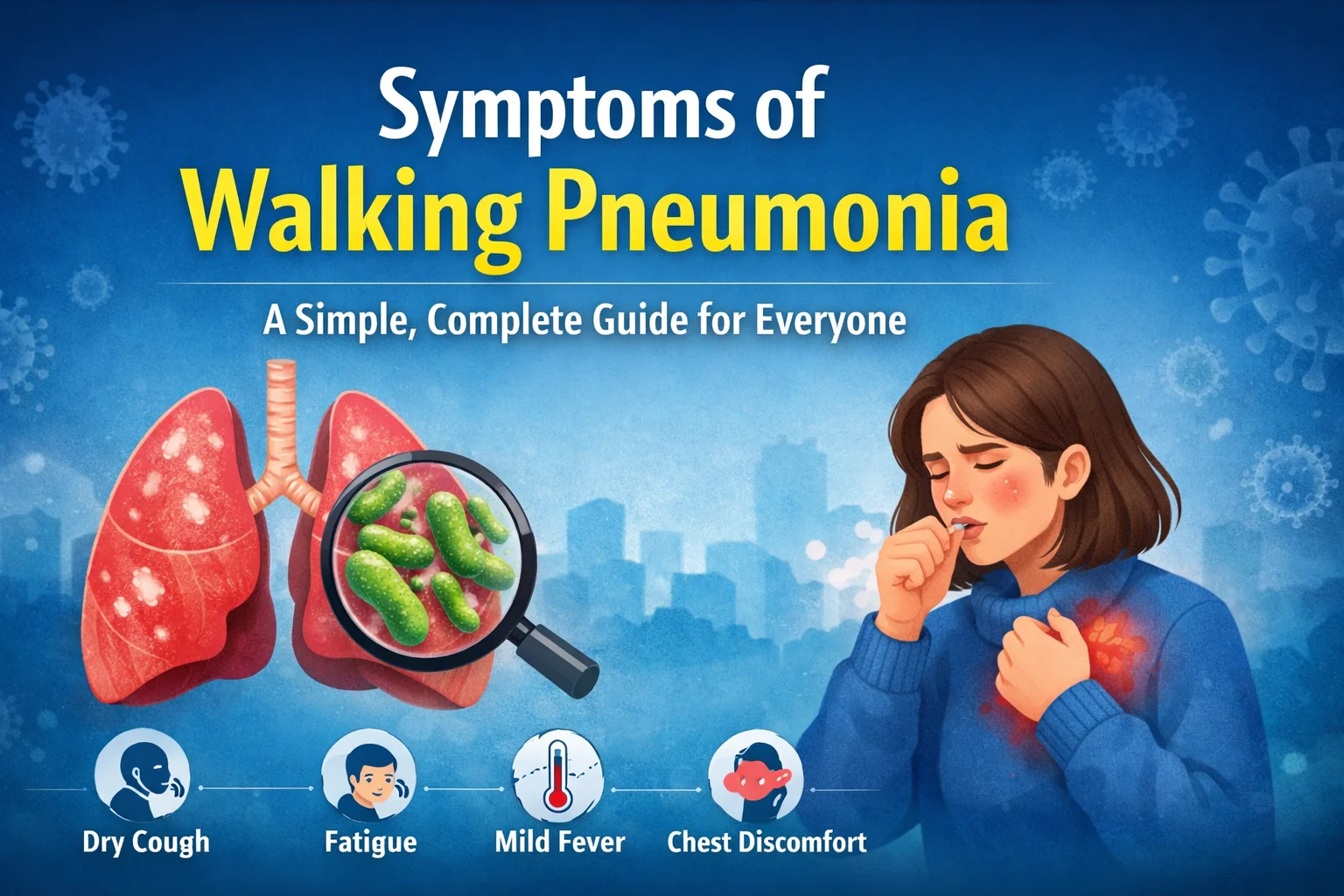
Walking pneumonia may sound scary, but it is often milder than regular pneumonia. Still, it should never be ignored. Many people keep going to school or work while sick, which is why it’s called “walking” pneumonia. In this guide, we will explore the symptoms of walking pneumonia, how to recognize them early, and what you can do to feel better faster.
This article is written in a friendly and easy way so anyone can understand it. Whether you’re worried about yourself or someone else, this guide will help you feel more informed and confident.
What Is Walking Pneumonia?
Walking pneumonia is a mild form of pneumonia. It is often caused by bacteria like Mycoplasma pneumoniae. Unlike severe pneumonia, it does not always make you feel very sick at first.
Many people continue their daily routine because the illness starts slowly. But even though it feels mild, it can still affect your lungs and overall health.
What Are the Symptoms of Walking Pneumonia?
The symptoms of walking pneumonia can be easy to miss. They often look like a common cold at first. Over time, they may become more noticeable.
Here are the most common signs:
- Dry cough that does not go away
- Mild fever
- Feeling tired or weak
- Sore throat
- Headache
- Chest discomfort
- Shortness of breath
The tricky part is that these symptoms come on slowly. Many people ignore them until they worsen.
Early Warning Signs You Should Not Ignore
At the start, the symptoms of walking pneumonia may feel harmless. But paying attention early can help prevent complications.
You might notice:
- A slight cough that lasts for days
- Low energy even after resting
- Mild body aches
- A scratchy throat
These early signs can last for a week or more before becoming stronger. If your cough keeps getting worse, it’s time to take it seriously.
Symptoms of Walking Pneumonia in Adults
The symptoms of walking pneumonia in adults can differ slightly from children. Adults often feel more fatigue and chest discomfort.
Common symptoms in adults include:
- Persistent dry cough
- Chest tightness
- Difficulty breathing during activity
- Low-grade fever
- Extreme tiredness
Adults may also ignore symptoms longer because they seem mild. This can delay treatment and recovery.
How Walking Pneumonia Feels Compared to a Cold
Many people ask, “what are the symptoms of walking pneumonia compared to a cold?” This is a great question.
A cold usually improves within a few days. Walking pneumonia lasts longer and gets worse over time.
| Feature | Cold | Walking Pneumonia |
|---|---|---|
| Duration | 3–7 days | 1–3 weeks |
| Cough | Mild | Persistent and dry |
| Fever | Rare | Common (low-grade) |
| Energy | Slightly low | Very tired |
If your symptoms last longer than a week, it may not be just a cold.
Why Is It Called “Walking” Pneumonia?
The name comes from how people behave during illness. Most people are not bedridden. They can still walk around and do daily tasks.
However, this does not mean it is harmless. The infection is still in your lungs and needs care.
Many people only realize the seriousness after the cough becomes severe.
What Causes Walking Pneumonia?
Walking pneumonia is usually caused by bacteria. The most common one spreads through coughing and sneezing.
You can catch it from:
- Close contact with an infected person
- Sharing spaces like schools or offices
- Poor ventilation
Here’s a quick overview:
| Cause | Description |
|---|---|
| Bacteria | Most common cause |
| Viruses | Less common |
| Close contact | Easy spread in groups |
Good hygiene can help reduce the risk.
How Long Do Symptoms Last?
The symptoms of walking pneumonia can last longer than expected. Even after treatment, the cough may stay for weeks.
Typical timeline:
| Stage | Duration |
|---|---|
| Early symptoms | 3–7 days |
| Peak illness | 1–2 weeks |
| Recovery | 2–4 weeks |
Some people feel tired even after other symptoms improve.
When Should You See a Doctor?
It’s important to know when to seek help. Do not wait too long.
See a doctor if you have:
- A cough lasting more than 10 days
- Trouble breathing
- Chest pain
- High fever
- Symptoms getting worse
Even mild cases should be checked if they do not improve.
How Is Walking Pneumonia Diagnosed?
Doctors use simple methods to diagnose this condition. They may:
- Listen to your lungs
- Ask about your symptoms
- Order a chest X-ray
- Recommend blood tests
These tests help confirm the cause and guide treatment.
Treatment Options and What Helps
The good news is that walking pneumonia is treatable. Most people recover fully with proper care.
Treatment may include:
- Antibiotics (for bacterial cases)
- Rest
- Drinking fluids
- Over-the-counter medicine for fever
At home, you can also:
- Use a humidifier
- Drink warm liquids
- Avoid smoking
These steps can help you feel better faster.
Tips for Faster Recovery
Recovering from walking pneumonia takes time. Be patient with your body.
Helpful tips:
- Get plenty of sleep
- Stay hydrated
- Avoid heavy exercise
- Eat simple, healthy meals
Many people try to rush back to normal life. This can slow recovery. Give your body the time it needs.
How to Prevent Walking Pneumonia
Prevention is always better than cure. Simple habits can lower your risk.
- Wash your hands often
- Avoid close contact with sick people
- Cover your mouth when coughing
- Keep your immune system strong
Healthy habits go a long way in preventing infections.
Walking Pneumonia vs Regular Pneumonia
Understanding the difference can help you act quickly.
| Feature | Walking Pneumonia | Regular Pneumonia |
|---|---|---|
| Severity | Mild | Severe |
| Symptoms | Gradual | Sudden |
| Activity level | Still active | Often bedridden |
| Recovery | Slower but mild | May need hospital |
Even though walking pneumonia is milder, it still needs attention.
FAQs About Symptoms of Walking Pneumonia
1. What are the symptoms of walking pneumonia?
The most common symptoms include a dry cough, mild fever, tiredness, and chest discomfort. These symptoms develop slowly.
2. What are symptoms of walking pneumonia that last the longest?
The cough and fatigue often last the longest. They can continue even after treatment.
3. What is symptoms of walking pneumonia in early stages?
Early symptoms include a mild cough, sore throat, and low energy. These may seem like a common cold.
4. Can you recover without treatment?
Some mild cases improve on their own. However, medical treatment can speed recovery and prevent complications.
5. Is walking pneumonia contagious?
Yes, it spreads through droplets when an infected person coughs or sneezes.
6. How do I know if it’s not just a cold?
If symptoms last longer than a week and get worse, it may be walking pneumonia.
Final Thoughts: Don’t Ignore the Signs
The symptoms of walking pneumonia may seem mild at first, but they should never be ignored. A simple cough and tiredness can slowly turn into something more serious if left untreated.
Listening to your body is key. If something feels off for too long, it’s always better to check with a doctor. Early care can make recovery faster and easier.
If you found this guide helpful, consider sharing it with friends or family. You never know who might need it. Staying informed is one of the best ways to stay healthy.
