

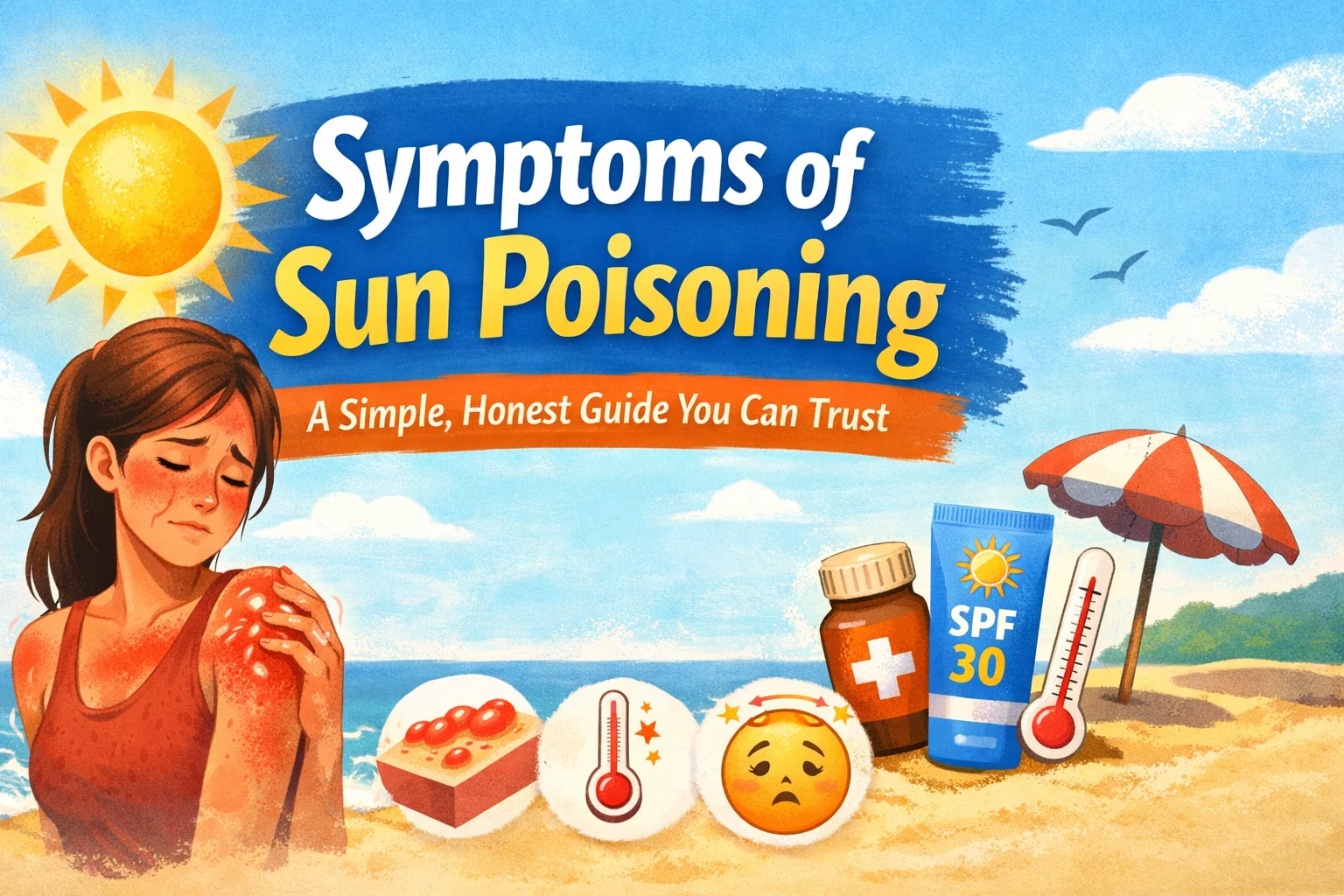
Spending time in the sun feels good. It boosts mood and gives you vitamin D. But too much sun can harm your skin and body. One serious result is sun poisoning. Many people confuse it with a normal sunburn. They are not the same. Sun poisoning is more severe and can affect your whole body.
In this guide, you will learn the symptoms of sun poisoning, how to spot early warning signs, and what to do next. I will keep everything simple, clear, and useful. You will also find practical tips, real-life insights, and easy steps to stay safe.
What Is Sun Poisoning?
Sun poisoning is a strong reaction to too much ultraviolet (UV) light. It is not a medical poison. Instead, it is a severe form of sunburn with extra symptoms.
Your body reacts when the skin is badly damaged. This can cause swelling, pain, and even illness-like signs. Many people ignore early clues, thinking it is just redness. That mistake can make things worse.
The symptoms of sun poisoning often go beyond the skin. You may feel tired, dizzy, or even sick. That is your body asking for help.
Why Sun Poisoning Happens
Sun poisoning happens when your skin gets too much UV exposure. This can happen faster than you think.
Several factors increase risk:
- Staying outside for long hours
- No sunscreen or low SPF
- Light or sensitive skin
- Certain medicines
- Hot climates
People living in sunny regions often underestimate the risk. I have seen cases where just one long afternoon caused severe damage.
Early Signs You Should Never Ignore
The early stage can look like a normal sunburn. But there are key differences.
Common early signs include:
- Bright red skin
- Warm or hot feeling
- Mild swelling
- Tender touch
These are the first signs symptoms of sun poisoning. At this stage, quick action can stop things from getting worse.
Common Symptoms of Sun Poisoning
As the condition worsens, symptoms become stronger and more serious.
Here are the most common symptoms of sun poisoning:
- Severe redness
- Painful skin
- Blisters
- Swelling
- Headache
- Fever
- Nausea
These signs show that your body is under stress. It is not just a skin problem anymore.
Symptoms of Mild Sun Poisoning
Not every case is severe. Some people experience milder symptoms.
Symptoms of mild sun poisoning may include:
- Slight swelling
- Red patches
- Itching
- Mild discomfort
- Fatigue
Even mild cases need care. Ignoring them can lead to worse damage later.
Severe Symptoms That Need Immediate Attention
Some signs should never be ignored. They may need medical help.
Watch for:
- Large blisters
- High fever
- Chills
- Confusion
- Dehydration
- Fainting
These are serious signs and symptoms of sun poisoning. They show your body is struggling.
Sunburn vs Sun Poisoning: Key Differences
| Feature | Sunburn | Sun Poisoning |
|---|---|---|
| Severity | Mild to moderate | Severe |
| Skin Color | Pink or red | Bright red or deep red |
| Blisters | Rare | Common |
| Body Symptoms | Usually none | Fever, nausea, dizziness |
| Recovery Time | Few days | May take weeks |
Understanding this difference helps you act faster.
How Long Do Symptoms Last?
The timeline varies from person to person.
| Stage | Duration | What Happens |
|---|---|---|
| Early stage | 6–24 hours | Redness and warmth |
| Peak symptoms | 1–3 days | Pain, swelling, blisters |
| Healing phase | 3–7 days (or longer) | Peeling and recovery |
Severe cases may take longer. The symptoms of sun poisoning can last over a week.
What Causes Sun Poisoning to Get Worse?
Some habits can make things worse quickly.
- Staying in the sun after burning
- Not drinking enough water
- Using harsh skin products
- Ignoring symptoms
I once saw someone continue a beach trip after burning. Within hours, they developed fever and blisters. Quick rest could have prevented it.
How to Treat Sun Poisoning at Home
Mild cases can be managed at home with care.
Try these steps:
- Move to shade immediately
- Drink plenty of water
- Apply cool compresses
- Use aloe vera gel
- Take pain relief if needed
Avoid:
- Hot showers
- Tight clothing
- Scratching skin
These simple actions can ease symptoms of mild sun poisoning.
When to See a Doctor
Sometimes home care is not enough.
Seek help if you have:
- Severe pain
- Large blisters
- High fever
- Vomiting
- Signs of infection
Doctors can provide stronger treatment. Do not wait if symptoms feel serious.
Who Is Most at Risk?
Some people face higher risk than others.
| Risk Group | Reason |
|---|---|
| Fair skin | Less natural protection |
| Children | Sensitive skin |
| Outdoor workers | Long sun exposure |
| People on medication | Increased sensitivity |
| Tourists | Sudden sun exposure |
Knowing your risk helps you stay prepared.
Prevention Tips That Actually Work
Prevention is easier than treatment.
Follow these tips:
- Use SPF 30 or higher sunscreen
- Reapply every 2 hours
- Wear hats and sunglasses
- Stay in shade during peak hours
- Drink water regularly
These habits can prevent what are the symptoms of sun poisoning from ever appearing.
Long-Term Effects on Skin
Repeated sun poisoning can damage your skin deeply.
Possible long-term effects:
- Early aging
- Dark spots
- Wrinkles
- Increased risk of skin problems
Protecting your skin today helps you later.
Real-Life Insight: Why People Ignore It
Many people think, “It’s just a sunburn.” That mindset is risky.
In my experience, most cases get worse because people delay care. They ignore early signs and symptoms of sun poisoning. By the time they act, the damage is already severe.
Listening to your body is the smartest step.
FAQs
1. What are the symptoms of sun poisoning?
They include redness, pain, blisters, fever, nausea, and swelling. Severe cases affect the whole body.
2. Can sun poisoning go away on its own?
Mild cases can improve with care. Severe cases need medical help.
3. How is it different from sunburn?
Sun poisoning is more severe and includes body symptoms like fever and dizziness.
4. How long does recovery take?
Most cases heal in a few days, but severe ones can take weeks.
5. Can I prevent sun poisoning completely?
Yes, using sunscreen, staying hydrated, and limiting sun exposure can prevent it.
6. Is sun poisoning dangerous?
It can be serious if ignored. Severe symptoms require medical attention.
Conclusion: Take Sun Exposure Seriously
The sun is powerful. It can help your health, but it can also harm you. The symptoms of sun poisoning are your body’s warning signal. Ignoring them can lead to serious problems.
Stay alert to early signs. Act quickly if you notice changes in your skin or body. Simple habits like sunscreen and hydration can make a big difference.
Your skin protects you every day. Protect it back.
