

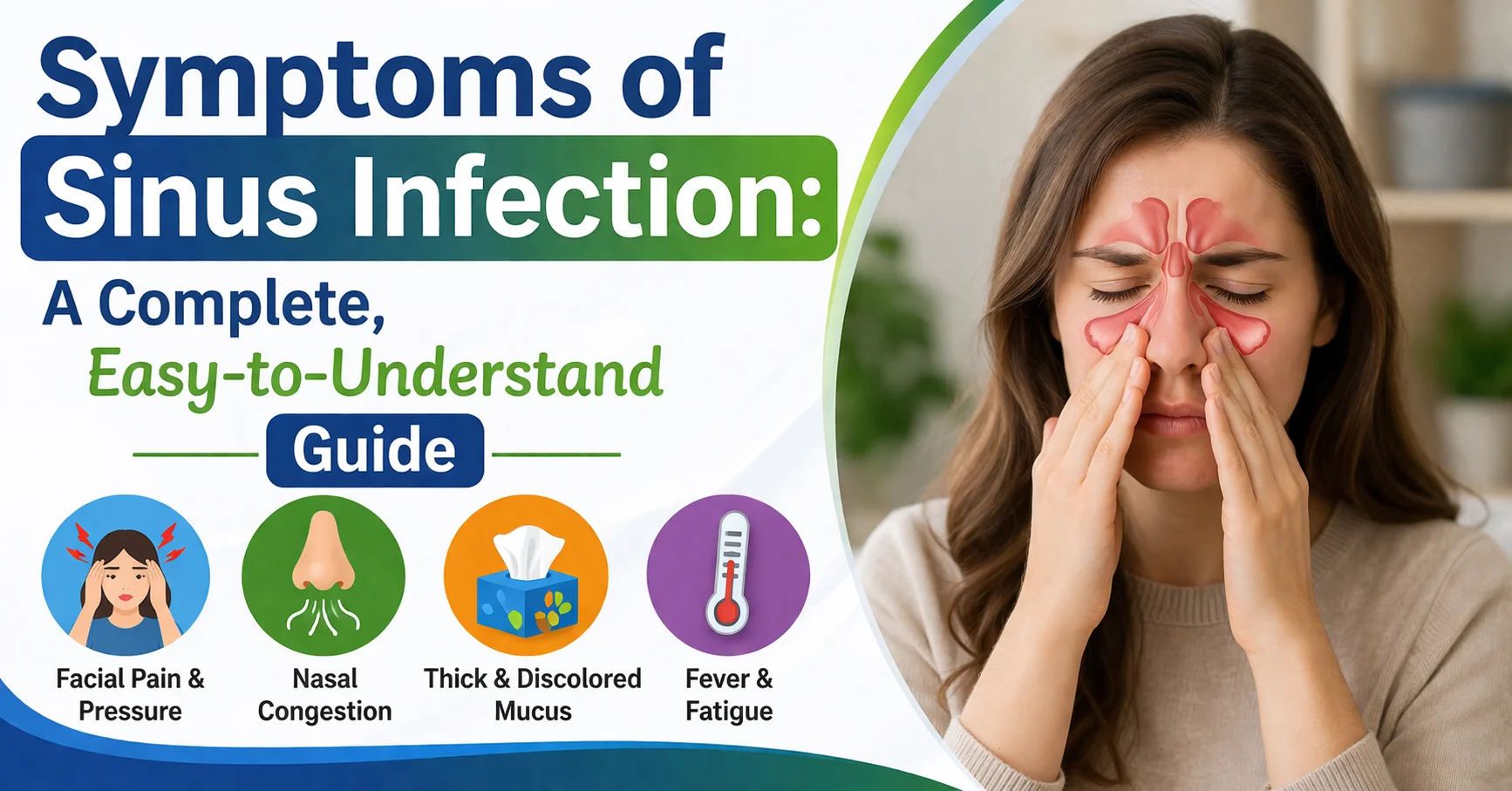
Sinus infections are very common, yet many people do not fully understand them. If you have ever felt pressure in your face, had a blocked nose, or dealt with thick mucus, you may have experienced the symptoms of sinus infection. These infections can affect your daily life, making simple tasks feel exhausting.
In this guide, we will explore everything in a clear and friendly way. You will learn what sinus infections feel like, how to spot early signs, and when to take action. I’ll also share practical tips based on real-life experiences, so the information feels useful—not just medical.
Let’s start by understanding what’s really going on inside your body.
What Is a Sinus Infection?
A sinus infection happens when the spaces in your face, called sinuses, become swollen and filled with fluid. This creates a perfect place for germs to grow.
Normally, sinuses are filled with air and help you breathe easily. But when they get blocked, mucus builds up. This leads to the symptoms of a sinus infection like pressure, pain, and congestion.
Many people confuse sinus infections with a common cold. The difference is simple. A cold usually goes away in a few days. A sinus infection can last longer and often feels more intense.
In my experience, the biggest clue is facial pressure. It feels like someone is pushing on your cheeks or forehead. That discomfort is hard to ignore.
Common Symptoms of Sinus Infection
The symptoms of sinus infection can vary from mild to severe. However, there are some signs that most people experience.
Here are the most common ones:
| Symptom | What It Feels Like |
|---|---|
| Facial pressure | Pain around eyes, nose, or forehead |
| Stuffy nose | Hard to breathe through your nose |
| Thick mucus | Yellow or green discharge |
| Headache | Constant dull pain |
| Fever | Mild to moderate temperature |
| Fatigue | Feeling tired all day |
These symptoms often come together. For example, you may have a blocked nose and a headache at the same time.
If you notice several of these signs lasting more than a week, it could be a sinus infection.
What Are the Symptoms of a Sinus Infection in Adults?
Adults often experience stronger and longer-lasting symptoms. The symptoms of sinus infection in adults can also interfere with work and daily routines.
Some key signs include:
- Deep facial pain that worsens when bending forward
- Tooth pain, especially in the upper jaw
- Reduced sense of smell or taste
- Persistent cough, especially at night
- Ear pressure or fullness
I once had a sinus infection that made my teeth hurt so badly I thought I had a dental issue. It turned out to be sinus pressure affecting my nerves.
Adults should pay attention to how long symptoms last. If they continue beyond 10 days, it’s important to take them seriously.
Early Warning Signs You Should Not Ignore
Catching a sinus infection early can make recovery easier. The early symptoms of a sinus infection often feel like a cold at first.
Here are some warning signs:
- Mild nasal congestion
- Slight headache
- Light facial pressure
- Runny nose that thickens over time
At this stage, many people ignore the symptoms. That’s a mistake. Early care, like hydration and rest, can stop things from getting worse.
If symptoms start mild but grow stronger after a few days, it’s a clear sign your sinuses are struggling.
Acute vs Chronic Sinus Infection Symptoms
Not all sinus infections are the same. Some are short, while others last for months.
| Type | Duration | Key Symptoms |
|---|---|---|
| Acute | Up to 4 weeks | Sudden pain, congestion, fever |
| Subacute | 4–12 weeks | Lingering symptoms |
| Chronic | 12+ weeks | Ongoing blockage, mild pain |
Chronic infections are tricky. The symptoms of sinus infection may feel less intense but never fully go away.
If you constantly feel blocked or tired, it might be chronic sinusitis. This requires proper medical care.
What Causes Sinus Infection Symptoms?
Understanding the cause helps you prevent future problems. The symptoms of a sinus infection usually start due to:
- Viral infections (like a cold)
- Bacterial infections
- Allergies
- Nasal polyps
- Deviated septum
A simple cold is the most common trigger. When your nose is blocked for too long, bacteria can grow.
I’ve noticed that seasonal allergies can also lead to sinus infections if ignored. Managing allergies early can prevent bigger issues later.
How Symptoms Progress Over Time
Sinus infection symptoms often follow a pattern. Knowing this can help you decide when to act.
| Stage | Symptoms |
|---|---|
| Day 1–3 | Mild congestion, runny nose |
| Day 4–7 | Thick mucus, facial pressure |
| Day 8+ | Severe pain, fatigue, possible fever |
If symptoms worsen after day 5 instead of improving, it may not be just a cold anymore.
This pattern is one of the easiest ways to identify the symptoms of sinus infection early.
When Should You See a Doctor?
Most sinus infections improve on their own. However, some cases need medical attention.
You should see a doctor if:
- Symptoms last more than 10 days
- Fever is high (above 101°F / 38.3°C)
- Pain becomes severe
- Vision changes occur
- Swelling appears around the eyes
Ignoring serious symptoms of sinus infection in adults can lead to complications.
It’s always better to be safe than sorry. If something feels off, trust your instincts.
Home Remedies to Relieve Symptoms
Many people recover using simple home treatments. These methods can ease the symptoms of a sinus infection naturally.
Some effective remedies include:
- Drinking warm fluids
- Using steam inhalation
- Applying warm compresses
- Staying hydrated
- Resting properly
Steam inhalation is my favorite remedy. It quickly opens nasal passages and reduces pressure.
Consistency is key. Doing these daily can speed up recovery and improve comfort.
Medical Treatments for Sinus Infections
Sometimes, home remedies are not enough. Doctors may suggest treatments based on your symptoms.
Common options include:
| Treatment | Purpose |
|---|---|
| Decongestants | Reduce swelling |
| Pain relievers | Ease headaches |
| Nasal sprays | Clear nasal passages |
| Antibiotics | Treat bacterial infections |
Not all sinus infections need antibiotics. They are only used when bacteria are involved.
Always follow your doctor’s advice. Self-medicating can sometimes make things worse.
How to Prevent Sinus Infection Symptoms
Prevention is always better than treatment. You can reduce the risk of symptoms of sinus infection by following simple habits.
Here are some tips:
- Wash your hands regularly
- Avoid allergens
- Use a humidifier
- Stay hydrated
- Treat colds early
I’ve found that keeping indoor air moist during winter helps a lot. Dry air can irritate your sinuses.
Small changes in daily life can make a big difference over time.
Lifestyle Tips for Faster Recovery
Recovery depends on how well you care for your body. Managing the symptoms of a sinus infection becomes easier with the right habits.
Focus on:
- Getting enough sleep
- Eating healthy foods
- Avoiding smoking
- Reducing stress
Your body heals faster when it is well-rested. Even one extra hour of sleep can help.
Think of recovery as teamwork between you and your body.
FAQs About Symptoms of Sinus Infection
1. What are the symptoms of a sinus infection?
Common symptoms include facial pain, nasal congestion, thick mucus, headache, and fatigue.
2. How long do sinus infection symptoms last?
Most last 7–10 days. Chronic cases can last for weeks or months.
3. Can sinus infections go away on their own?
Yes, many mild cases improve without medical treatment.
4. Are sinus infections contagious?
No, but the cold that causes them can be contagious.
5. What are symptoms of a sinus infection that need urgent care?
High fever, vision problems, or severe swelling need immediate attention.
6. How can I tell if it’s a cold or sinus infection?
If symptoms last longer than 10 days or worsen, it may be a sinus infection.
Conclusion: Take Control of Your Sinus Health
Understanding the symptoms of sinus infection is the first step toward better health. These infections are common, but they should not be ignored.
By recognizing early signs, using simple remedies, and seeking help when needed, you can manage symptoms effectively. Small actions, like staying hydrated and resting, can make a big difference.
If you often experience the symptoms of a sinus infection, it may be time to look deeper into your lifestyle or consult a doctor.
