

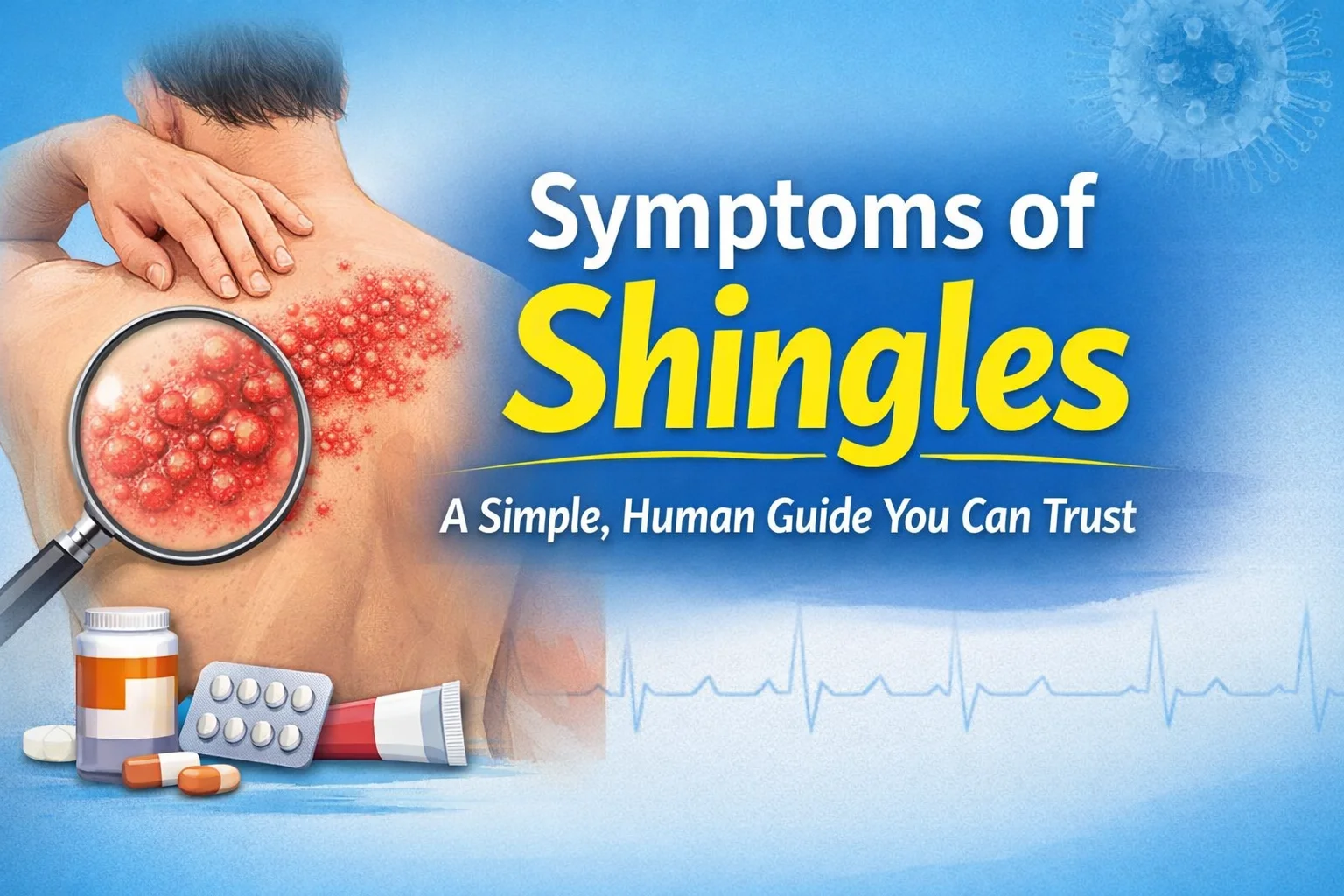
Shingles can feel scary, especially if you have never heard about it before. The good news is that understanding the symptoms of shingles can help you act fast and get the right care. This guide will walk you through everything in a simple and friendly way.
Shingles is a painful skin condition caused by a virus. It often starts quietly, with small signs that many people ignore. But catching those early signs can make a big difference.
In this article, we will explore the symptoms of shingles early, how they change over time, and when you should see a doctor. You will also learn helpful tips, real-life insights, and easy explanations so you can feel confident and informed.
What Is Shingles?
Shingles is a viral infection that causes a painful rash. It comes from the same virus that causes chickenpox. If you had chickenpox as a child, the virus stays in your body. Years later, it can wake up again as shingles.
This condition usually affects one side of the body. It often shows up as a band or strip of rash. The pain can be mild or very strong.
Many people don’t realize that shingles can begin before the rash appears. That’s why learning the signs and symptoms of shingles is so important. Early action can reduce pain and prevent complications.
Why Do Shingles Symptoms Matter?
The symptoms of shingles are not just about skin problems. They can affect your nerves, energy levels, and daily life.
If treated early, shingles can be less severe. But if ignored, it can lead to long-term pain. This is called postherpetic neuralgia, and it can last for months or even years.
Recognizing the early symptoms of shingles gives you a head start. You can seek treatment before the rash becomes painful and widespread.
Symptoms of Shingles Early: First Warning Signs
The symptoms of shingles early often appear before any rash. This stage can confuse many people.
Here are the first signs to watch for:
| Early Symptom | What It Feels Like |
|---|---|
| Tingling | Pins and needles feeling |
| Burning | Warm or hot sensation on skin |
| Itching | Mild to strong urge to scratch |
| Pain | Sharp or dull pain in one area |
| Sensitivity | Skin hurts even with light touch |
These symptoms usually affect one side of the body. They may last for a few days before the rash appears.
Many people mistake these signs for muscle pain or skin irritation. But if the feeling is unusual and stays in one spot, it could be shingles.
What Are the Symptoms of Shingles After the Rash Appears?
After a few days, the rash begins. This is when shingles becomes easier to recognize.
The rash starts as red patches. Then it turns into small, fluid-filled blisters.
| Stage | Description |
|---|---|
| Red patches | Flat, red areas on the skin |
| Blisters | Small bumps filled with clear fluid |
| Break and crust | Blisters burst and form scabs |
| Healing | Skin slowly clears over 2–4 weeks |
The rash is usually painful. It may feel like burning or stabbing pain.
Understanding what are the symptoms of shingles at this stage helps you confirm what’s happening and take action quickly.
Where Do Shingles Symptoms Appear?
The symptoms of shingles can appear on different parts of the body, but they follow a pattern.
Most common areas include:
| Body Area | Details |
|---|---|
| Chest | Most common, often on one side |
| Back | Can wrap around the torso |
| Face | May affect eyes or mouth |
| Neck | Less common but possible |
| Waist | Appears as a band or strip |
Shingles usually affects only one side of the body. This is a key sign that helps doctors identify it.
Pain: The Most Noticeable Symptom
Pain is one of the strongest signs and symptoms of shingles. It can begin before the rash and last after it heals.
Types of pain include:
- Burning pain
- Sharp stabbing pain
- Constant aching
- Sensitivity to touch
For some people, the pain is mild. For others, it can be very severe.
A personal insight: Many people say the pain feels like a deep nerve pain, not just skin irritation. This makes shingles different from other rashes.
Other Common Symptoms of Shingles
Besides pain and rash, there are other symptoms of shingles you should know.
| Symptom | Description |
|---|---|
| Fever | Mild increase in body temperature |
| Headache | Dull or sharp pain in the head |
| Fatigue | Feeling tired and weak |
| Chills | Feeling cold without reason |
| Upset stomach | Mild nausea or discomfort |
These symptoms can appear before or during the rash stage.
They may feel like a mild flu, which can confuse people. But when combined with skin pain, they point toward shingles.
How Long Do Shingles Symptoms Last?
The symptoms of shingles usually follow a timeline.
| Stage | Duration |
|---|---|
| Early symptoms | 1–5 days |
| Rash development | 7–10 days |
| Healing stage | 2–4 weeks |
In some cases, pain can last longer. This is more common in older adults.
Early treatment can shorten the duration and reduce discomfort.
Who Is at Risk of Shingles?
Anyone who had chickenpox can get shingles. But some people are at higher risk.
| Risk Factor | Explanation |
|---|---|
| Age over 50 | Immune system becomes weaker |
| Weak immunity | Due to illness or medication |
| Stress | Can trigger the virus |
| Past illness | Long-term health conditions |
Knowing your risk helps you stay alert to the early symptoms of shingles.
When Should You See a Doctor?
You should see a doctor if you notice the symptoms of shingles early.
Seek medical help if:
- You feel pain or tingling in one area
- A rash appears suddenly
- The rash is near your eyes
- Pain becomes severe
Early treatment with antiviral medicine can reduce symptoms and prevent complications.
Can Shingles Be Prevented?
Yes, prevention is possible.
The best way to reduce risk is through vaccination. It is especially recommended for older adults.
Other tips include:
- Keep your immune system strong
- Manage stress
- Eat a healthy diet
- Get enough sleep
While these steps don’t guarantee prevention, they help reduce the chance of shingles.
Complications of Shingles
Sometimes, the symptoms of shingles can lead to complications.
| Complication | Description |
|---|---|
| Postherpetic neuralgia | Long-lasting nerve pain |
| Vision problems | If shingles affects the eye |
| Skin infections | Bacteria enter open blisters |
| Nerve damage | Rare but possible |
Early treatment lowers the risk of these problems.
Real-Life Insight: Why Early Action Matters
Many people ignore the early symptoms of shingles because they seem mild.
For example, someone might feel a tingling sensation and think it’s nothing serious. A few days later, a painful rash appears.
By that time, the virus has already progressed.
From experience, people who act early often recover faster. They also report less pain compared to those who delay treatment.
This shows how important awareness really is.
Tips to Manage Shingles Symptoms at Home
While medical care is important, you can also ease the symptoms of shingles at home.
Simple tips include:
- Keep the rash clean and dry
- Wear loose clothing
- Use cool compresses
- Avoid scratching
- Rest as much as possible
These steps can help reduce discomfort and support healing.
FAQs About Symptoms of Shingles
1. What are the first symptoms of shingles?
The first signs include tingling, burning, and pain in one area. These appear before the rash.
2. How do I know if it’s shingles or something else?
Shingles usually affects one side of the body and includes pain followed by a rash.
3. Can shingles happen without a rash?
Yes, but it is rare. This is called “zoster sine herpete.”
4. How painful are the symptoms of shingles?
Pain can range from mild to very severe. It often feels like nerve pain.
5. Are early symptoms of shingles easy to miss?
Yes, many people mistake them for muscle pain or skin irritation.
6. How long does shingles last?
Most cases last 2 to 4 weeks, but pain can last longer in some people.
Conclusion: Don’t Ignore the Signs
The symptoms of shingles can start quietly but quickly become painful. Knowing the early signs gives you the power to act fast.
If you notice tingling, burning, or pain in one area, don’t ignore it. These could be the early symptoms of shingles.
With the right care and early treatment, most people recover well. Staying informed is your best defense.
If you found this guide helpful, consider sharing it with others. You never know who might need this information today.
