

Introduction
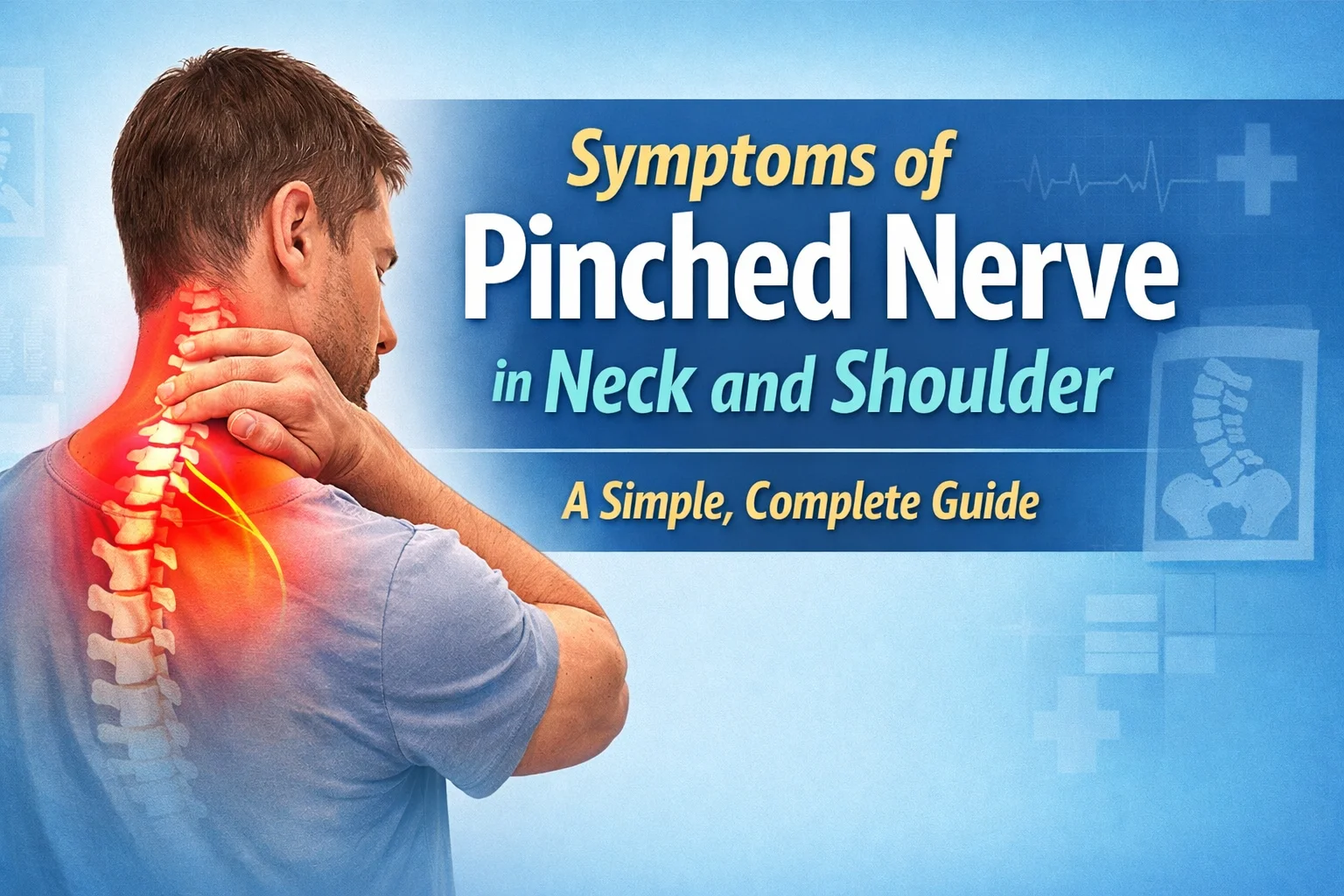
Have you ever felt a sharp pain in your neck that spreads into your shoulder? Or maybe a tingling feeling runs down your arm for no clear reason. These can be early symptoms of pinched nerve in neck and shoulder, and they are more common than people think.
A pinched nerve happens when nearby tissues press on a nerve. This pressure can come from muscles, bones, or discs in your spine. When this happens in the neck area, it can affect your shoulder, arm, and even your hands.
I’ve seen many people ignore these signs at first. They think it’s just a bad posture or a simple strain. But over time, the pain gets worse and starts affecting daily life. The good news is that early understanding can help you manage it better.
In this guide, you’ll learn everything in simple words. We’ll cover causes, signs, treatments, and when to see a doctor. Let’s start with the basics.
What Is a Pinched Nerve?
A pinched nerve happens when too much pressure is placed on a nerve. This pressure interrupts how the nerve works. It can cause pain, numbness, or weakness.
In the neck, nerves come out from the spinal cord and travel to your shoulders and arms. If one of these nerves gets compressed, you may feel discomfort in multiple areas.
The symptoms of pinched nerve in neck and shoulder can vary from mild to severe. Some people feel a dull ache. Others feel sharp, burning pain.
Common causes include:
- Poor posture
- Herniated discs
- Bone spurs
- Injuries
- Repetitive movements
Think of it like a garden hose. If you step on it, water flow stops. In the same way, pressure on a nerve disrupts signals in your body.
Common Symptoms You Should Not Ignore
The most noticeable symptoms of pinched nerve in neck and shoulder often start slowly. Many people ignore them at first, but early signs matter a lot.
Here are the most common symptoms:
| Symptom | What It Feels Like |
|---|---|
| Neck pain | Stiff or sharp pain when moving |
| Shoulder pain | Aching or burning sensation |
| Tingling | “Pins and needles” feeling |
| Numbness | Loss of feeling in arm or fingers |
| Weakness | Trouble lifting or holding items |
These symptoms may come and go. But if they last for days or weeks, it’s a warning sign.
Sometimes, the pain travels down the arm. This is called radiating pain. It often confuses people because they think the problem is in the arm, not the neck.
Early Warning Signs of a Pinched Nerve
Early signs are often mild. But catching them early can prevent bigger problems later.
You might feel:
- Slight stiffness in the neck
- Pain when turning your head
- Mild tingling in your shoulder
- Occasional numbness in fingers
These early symptoms of a pinched nerve in the neck and shoulder are easy to ignore. Many people think it’s just tiredness or bad sleep.
I once worked long hours on a laptop. At first, I felt a small stiffness. I ignored it. After a few weeks, it turned into sharp pain. That’s how quickly things can worsen.
Causes of Pinched Nerve in Neck and Shoulder
Understanding the cause helps in better treatment. There are several reasons behind the symptoms of pinched nerve in neck and shoulder.
| Cause | Explanation |
|---|---|
| Poor posture | Sitting or looking down too long |
| Herniated disc | Disc pushes out and presses nerve |
| Bone spurs | Extra bone growth compresses nerve |
| Injury | Accidents or sudden movement |
| Repetitive strain | Repeated motion over time |
Modern lifestyle plays a big role. Long screen time is a major cause. Many people bend their necks while using phones. This puts stress on neck nerves.
Even sleeping in a bad position can trigger symptoms.
How Pain Travels from Neck to Shoulder
One confusing thing about the symptoms of pinched nerve in neck and shoulder is how pain spreads.
Nerves in your neck connect to your shoulder and arm. So when one nerve is compressed, pain travels along its path.
You may feel:
- Pain in shoulder but not neck
- Tingling in fingers
- Weak grip strength
This is called nerve pathway pain. It doesn’t always stay in one place.
Risk Factors You Should Know
Some people are more likely to develop these symptoms.
Here are key risk factors:
- Sitting for long hours
- Poor posture habits
- Heavy lifting
- Aging (wear and tear)
- Lack of exercise
People working desk jobs often report symptoms of pinched nerve in neck and shoulder passaic county and other regions. Location doesn’t matter—lifestyle does.
If you fall into these groups, you should be more careful.
When Symptoms Become Serious
Sometimes, symptoms get worse and need medical attention.
Watch for these warning signs:
| Serious Symptom | What It Means |
|---|---|
| Severe pain | Nerve pressure is increasing |
| Muscle weakness | Nerve signals are blocked |
| Loss of coordination | Brain and body not syncing |
| Constant numbness | Long-term nerve damage risk |
If you notice these, don’t wait. Early treatment can prevent permanent damage.
Diagnosis: How Doctors Identify It
Doctors use simple methods to diagnose the problem.
They may:
- Ask about symptoms
- Check movement and strength
- Test reflexes
- Order imaging tests like MRI
The goal is to find where the nerve is being compressed.
Even if you search terms like symptoms of pinched nerve in neck and shoulder bergen county, the diagnosis process is the same everywhere.
Treatment Options That Work
Treatment depends on how severe the symptoms are.
1. Home Remedies
- Rest your neck
- Use a warm compress
- Improve posture
- Do gentle stretches
2. Medications
- Pain relievers
- Muscle relaxants
3. Physical Therapy
A therapist teaches exercises to reduce pressure on nerves.
4. Advanced Treatment
- Injections
- Surgery (in rare cases)
Most people recover without surgery.
Simple Exercises for Relief
Exercise can help reduce the symptoms of pinched nerve in neck and shoulder.
Here are a few simple ones:
- Neck tilts (side to side)
- Shoulder rolls
- Chin tucks
Do these slowly. Never force movement.
Consistency matters more than intensity.
Daily Habits to Prevent the Problem
Prevention is always better than treatment.
Follow these habits:
- Keep your screen at eye level
- Sit straight with support
- Take breaks every 30 minutes
- Use a good pillow
- Stay active
These small changes can prevent long-term issues.
Comparing Pinched Nerve vs Other Conditions
Sometimes, people confuse these symptoms with other illnesses.
| Condition | Key Difference |
|---|---|
| Muscle strain | Pain stays in one spot |
| Arthritis | Joint stiffness more common |
| Heart issues | Chest pain involved |
| Signs and symptoms of stomach cancer | Digestive issues, not nerve pain |
It’s important to understand the difference. A pinched nerve mainly affects movement and sensation.
Real-Life Example for Better Understanding
Let me share a simple example.
A friend of mine worked long hours on a computer. He started feeling slight neck pain. He ignored it. After weeks, he felt numbness in his fingers.
He finally saw a doctor. It turned out to be a pinched nerve. With therapy and posture correction, he recovered in a few months.
This shows how early action can make a big difference.
FAQs
1. How long do symptoms last?
Mild cases improve in a few days. Severe cases may take weeks or months.
2. Can a pinched nerve heal on its own?
Yes, many cases heal with rest and proper care.
3. Is it dangerous?
Not always, but ignoring it can lead to serious problems.
4. What is the fastest way to relieve pain?
Rest, heat therapy, and gentle stretches can help quickly.
5. Can exercise make it worse?
Wrong exercises can worsen it. Always do safe movements.
6. When should I see a doctor?
If pain is severe, lasts long, or causes weakness.
Conclusion
The symptoms of pinched nerve in neck and shoulder can start small but grow into bigger problems if ignored. Pain, tingling, and weakness are your body’s warning signs.
The good news is that most cases are treatable. With simple lifestyle changes, proper care, and early attention, you can recover and prevent future issues.
Listen to your body. Don’t ignore small signs. A little care today can save you from long-term pain tomorrow.
If you’re experiencing these symptoms, take action now. Even small steps can make a big difference in your health and comfort.
