

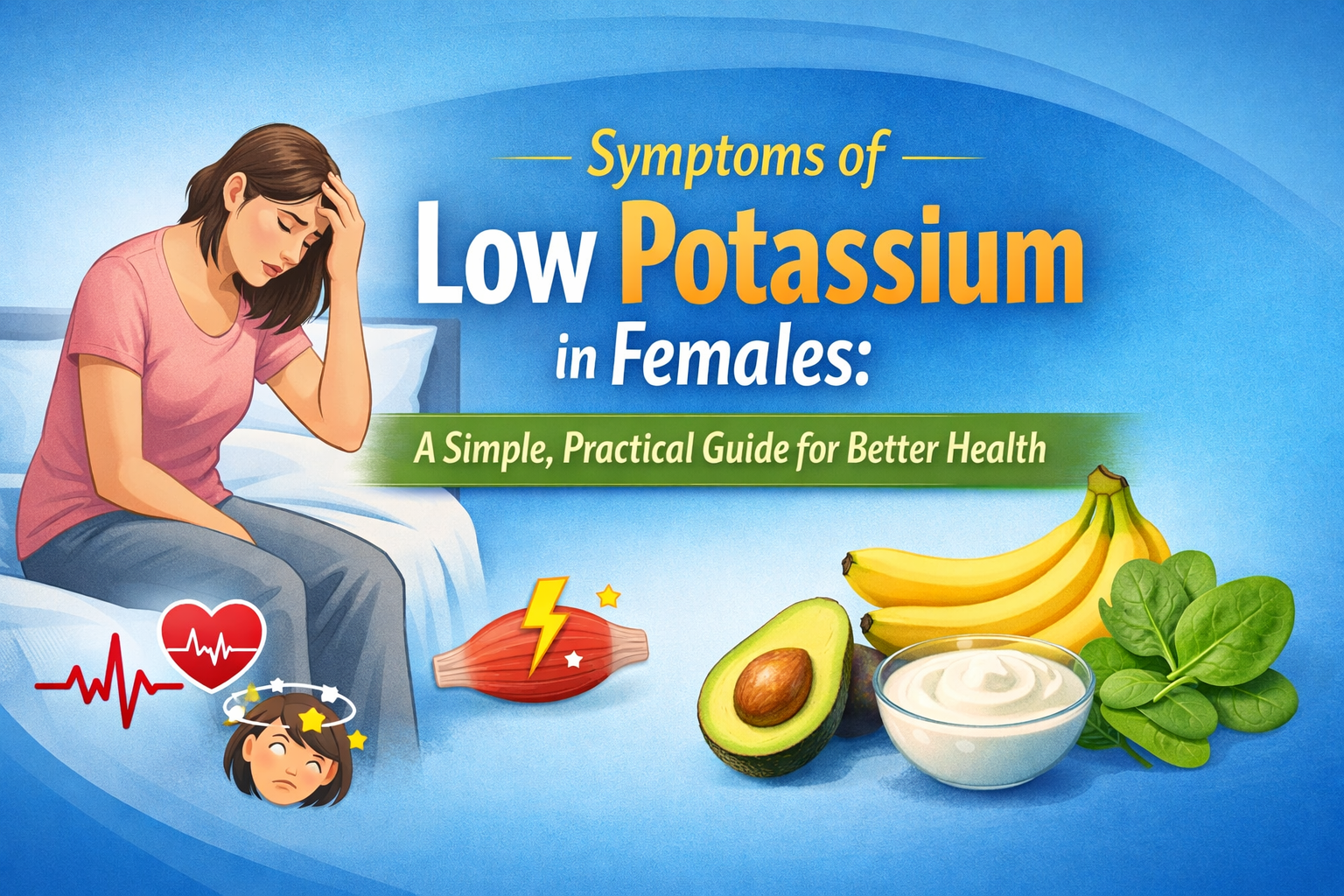
Low potassium may sound like a small issue. But it can affect many parts of your body. From your heart to your muscles, potassium plays a key role every day. When levels drop, your body starts sending warning signs. Sadly, many women ignore these signs or mistake them for something else.
In this easy guide, we will explore the symptoms of low potassium in females in a clear and simple way. You will learn what to watch for, why it happens, and how to fix it. I will also share real-life insights to help you relate better. Many women I’ve spoken to only realized the problem after weeks of fatigue or weakness.
Let’s break everything down step by step so you can stay safe, aware, and healthy.
What Is Potassium and Why Does Your Body Need It?
Potassium is a mineral your body needs to function well. It helps your muscles move, your nerves send signals, and your heart beat normally. Without enough potassium, your body cannot work properly.
Think of potassium as a helper that keeps your system balanced. It works closely with sodium to control fluids in your body. This balance is important for blood pressure and hydration.
Women need potassium daily, especially if they are active, pregnant, or dealing with stress. Low levels can happen slowly, so you may not notice at first. But over time, the symptoms become clear.
Why Females Are More Prone to Low Potassium
Women face unique health challenges. Hormonal changes, diet habits, and certain medications can increase the risk. For example, some women use diuretics for bloating or blood pressure. These can lower potassium levels.
Also, dieting or skipping meals can reduce potassium intake. Many women avoid potassium-rich foods without knowing it. Stress and dehydration can make the problem worse.
Older women are at higher risk too. That’s why symptoms of low potassium in elderly females are often more serious and need quick attention.
Early Symptoms of Low Potassium in Females
At first, the signs may feel mild. You might think it’s just tiredness or stress. But these early clues matter a lot.
Common early symptoms include:
- Feeling weak or tired
- Muscle cramps or twitching
- Mild constipation
- Feeling dizzy sometimes
These signs are easy to ignore. I’ve seen many women brush them off as “just a busy day.” But when these symptoms repeat often, your body is asking for help.
Advanced Symptoms You Should Never Ignore
If potassium levels drop further, symptoms become more serious. These signs need attention right away.
- Irregular heartbeat
- Severe muscle weakness
- Numbness or tingling
- Breathing problems
- Extreme fatigue
These symptoms can feel scary. One woman shared how her heart felt like it skipped beats for days. She thought it was anxiety. But it turned out to be low potassium.
Ignoring these signs can lead to serious health problems. Always take them seriously.
Symptoms of Low Potassium and Magnesium in Females
Potassium and magnesium often work together. When one is low, the other may also drop. This can make symptoms worse.
Here’s how they combine:
| Symptom | Low Potassium | Low Magnesium | Combined Effect |
|---|---|---|---|
| Fatigue | Yes | Yes | Severe tiredness |
| Muscle cramps | Yes | Yes | Painful spasms |
| Irregular heartbeat | Yes | Yes | Higher risk |
| Weakness | Yes | Yes | Extreme weakness |
When both are low, recovery may take longer. That’s why doctors often check both levels together.
Symptoms of Low Potassium in Elderly Females
Older women face higher risks due to aging and medication use. The symptoms of low potassium in elderly females may appear differently.
Common signs include:
- Confusion or memory issues
- Frequent falls
- Weak muscles
- Irregular heartbeat
These symptoms can be mistaken for aging. But they may point to low potassium. Families should stay alert and supportive.
Common Causes of Low Potassium in Women
Understanding the cause helps prevent the problem. Here are the main reasons:
| Cause | How It Affects Potassium |
|---|---|
| Poor diet | Low intake of potassium-rich foods |
| Diuretics | Flush potassium out of body |
| Vomiting/diarrhea | Loss of electrolytes |
| Hormonal changes | Affects balance |
| Excess sweating | Loss through sweat |
Many women don’t realize how daily habits impact potassium levels. Even simple dehydration can play a role.
How Low Potassium Affects Your Daily Life
Low potassium can disrupt your routine. You may feel too tired to complete simple tasks. Even walking or climbing stairs may feel harder.
Work performance can drop. Mood changes can occur. Some women feel anxious or irritable without knowing why.
I’ve noticed many women blame themselves for feeling “lazy.” But often, it’s a physical issue like low potassium. Fixing it can bring back energy and confidence.
Foods That Help Boost Potassium Naturally
Food is the best way to restore potassium. Adding the right foods can make a big difference.
Here are some helpful options:
| Food | Potassium Benefit |
|---|---|
| Bananas | Quick and easy source |
| Spinach | Rich and healthy |
| Sweet potatoes | High in nutrients |
| Yogurt | Supports gut and minerals |
| Avocados | Packed with potassium |
Eating a balanced diet daily helps prevent low levels. Small changes can lead to big improvements.
Symptoms of Low Potassium in Females Treatment Options
Treating low potassium depends on the severity. Mild cases can improve with diet changes. Severe cases may need medical help.
Common treatments include:
- Potassium-rich foods
- Supplements (if prescribed)
- Treating underlying causes
- Staying hydrated
Doctors may also adjust medications if needed. The goal is to restore balance safely.
The symptoms of low potassium in females treatment approach should always be guided by a healthcare professional.
When Should You See a Doctor?
Not all symptoms require urgent care. But some should not be ignored.
See a doctor if you have:
- Ongoing weakness
- Heart palpitations
- Severe cramps
- Confusion or dizziness
Early diagnosis can prevent serious complications. It’s always better to be safe.
Simple Lifestyle Tips to Prevent Low Potassium
Prevention is easier than treatment. Here are some easy tips:
- Drink enough water daily
- Eat fresh fruits and vegetables
- Avoid extreme dieting
- Monitor medication side effects
- Stay active but hydrated
These habits can protect your health long term.
Emotional and Mental Impact of Low Potassium
Low potassium doesn’t only affect the body. It can impact your mood and mental health too.
Many women report feeling anxious, low, or mentally drained. This happens because potassium helps nerve signals function properly.
When levels drop, your brain may not work at its best. You may feel foggy or forgetful. Fixing potassium levels often improves mood quickly.
FAQs
1. What are the main symptoms of low potassium in females?
Common symptoms include weakness, fatigue, muscle cramps, and irregular heartbeat.
2. Can low potassium cause anxiety in women?
Yes, it can affect nerve signals and may lead to anxiety or mood changes.
3. Are elderly women at higher risk?
Yes, symptoms of low potassium in elderly females are more common due to medications and aging.
4. How quickly can potassium levels be restored?
Mild cases improve in days with diet changes. Severe cases may take longer with treatment.
5. What foods are best for low potassium?
Bananas, spinach, sweet potatoes, and yogurt are excellent choices.
6. Can low potassium and magnesium occur together?
Yes, and it can worsen symptoms. That’s why both should be checked together.
Final Thoughts: Take Charge of Your Health Today
The symptoms of low potassium in females are often easy to miss. But your body always gives signals. Listening to these signals can protect your health.
Small changes can make a big difference. Eat better, stay hydrated, and don’t ignore unusual symptoms. If something feels off, trust your instincts and seek help.
Your health matters. Taking action today can prevent bigger problems tomorrow.
