

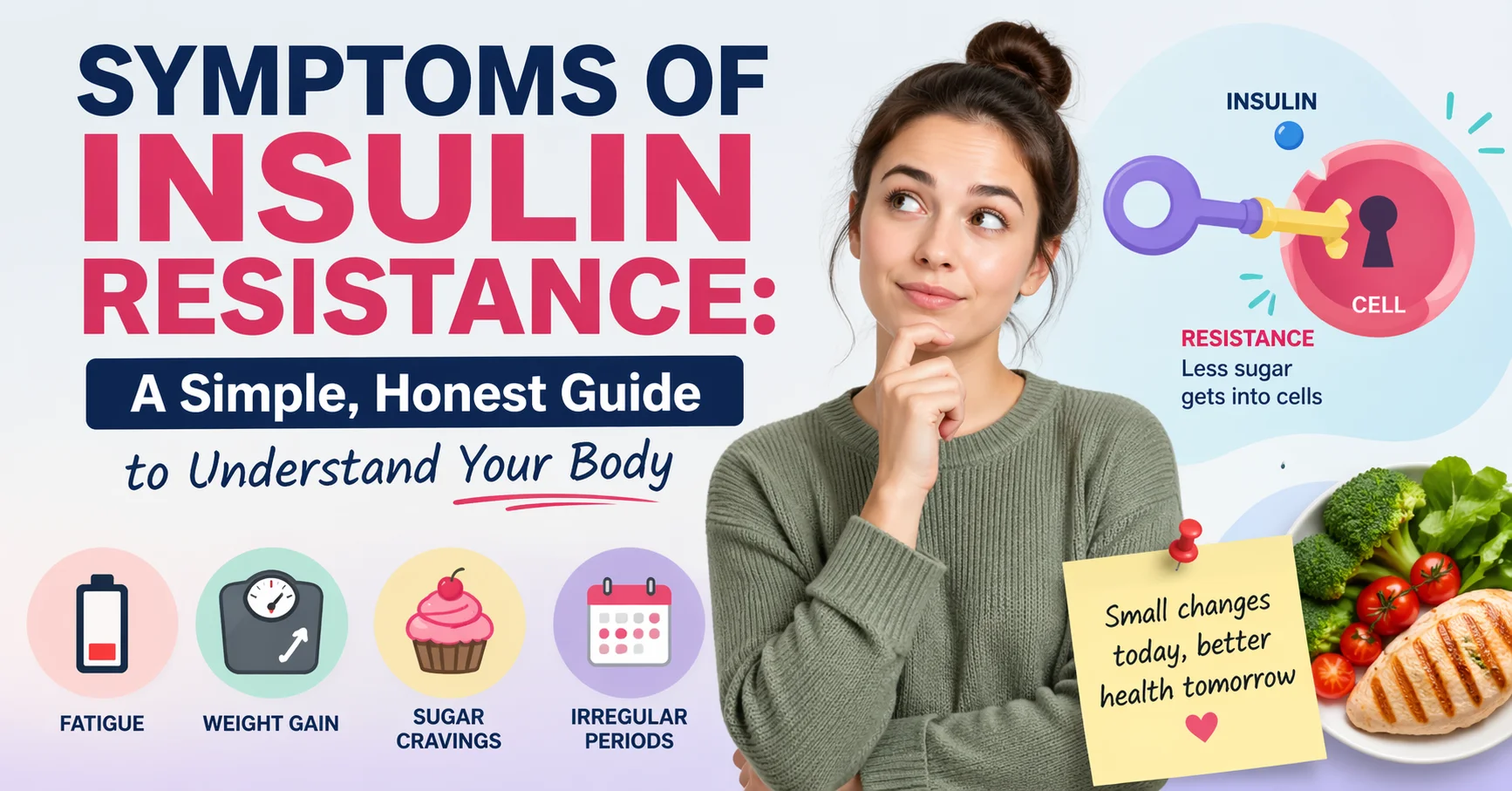
Insulin resistance is more common than most people think. It often builds slowly and quietly. Many people feel “off” but cannot explain why. They may feel tired, gain weight, or crave sugar often. These small signs can be easy to ignore. Over time, they may lead to bigger health problems.
In this guide, we will talk about the symptoms of insulin resistance in a clear and simple way. You do not need medical training to understand this. Everything is explained in short, easy steps. You will also learn how it affects women, how it connects to PCOS, and what you can do to feel better.
I have seen many people struggle with these symptoms without knowing the cause. Once they understand what is happening inside their body, things start to make sense. That is the goal here—to help you connect the dots and take control of your health.
What Is Insulin Resistance?
Insulin resistance happens when your body stops responding well to insulin. Insulin is a hormone that helps move sugar from your blood into your cells. Your cells use that sugar for energy.
When your body becomes resistant, insulin cannot do its job properly. So, your body makes more insulin to compensate. This leads to high insulin levels in the blood. Over time, this can raise blood sugar levels too.
Think of it like a key and a lock. Insulin is the key. Your cells are the locks. In insulin resistance, the locks become rusty. The key still exists, but it does not work well.
This condition does not happen overnight. It builds slowly. Many people live with it for years without knowing. That is why learning the sign and symptoms of insulin resistance is so important.
Why Insulin Resistance Matters
Insulin resistance is not just about sugar. It affects your whole body. It can impact your weight, energy, hormones, and even your mood.
If left untreated, it can lead to serious conditions like type 2 diabetes. It is also linked to heart disease and fatty liver. In women, it can disturb hormones and lead to PCOS.
The tricky part is that the symptoms of insulin resistance are often mild at first. You may feel tired or gain a little weight. These signs are easy to overlook.
But your body is sending signals. Learning to notice them early can make a big difference. Early action can even reverse insulin resistance in many cases.
Early Symptoms of Insulin Resistance
The early signs are often subtle. Many people ignore them or blame stress.
One common sign is constant tiredness. Even after a full night’s sleep, you may feel low on energy. This happens because your cells are not getting enough fuel.
Another early symptom is frequent hunger. You may feel hungry soon after eating. This is because your body struggles to use glucose properly.
Brain fog is also common. You may find it hard to focus or remember things. Mood swings can happen too.
These early symptoms of insulin resistance are easy to miss. But noticing them early can help prevent bigger problems later.
Common Physical Symptoms to Watch
As insulin resistance grows, physical signs become clearer. These signs often show up on the body.
One major sign is weight gain, especially around the belly. This type of fat is strongly linked to insulin resistance.
Dark patches on the skin can also appear. These are often found on the neck, armpits, or elbows. This condition is called acanthosis nigricans.
Skin tags are another sign. These small growths may appear on the neck or underarms.
You may also notice increased sweating or feeling hot often.
Here is a quick table for clarity:
| Symptom | What It Looks Like |
|---|---|
| Belly fat | Weight around stomach |
| Dark skin patches | Neck, armpits |
| Skin tags | Small soft growths |
| Fatigue | Low energy daily |
These visible symptoms of insulin resistance are important warning signs.
Symptoms of Insulin Resistance in Women
Women often experience unique symptoms due to hormonal changes. These signs can affect daily life.
One common issue is irregular periods. Your cycle may become unpredictable. Some months may be missed entirely.
Weight gain is another common symptom. It often happens even with normal eating habits.
Hair changes can also occur. Some women notice hair thinning on the head. Others may see unwanted hair on the face or body.
Acne is another sign. It often appears on the chin or jawline.
Here’s a helpful breakdown:
| Symptom | Impact |
|---|---|
| Irregular periods | Hormonal imbalance |
| Acne | Skin inflammation |
| Hair growth | Facial/body hair |
| Hair thinning | Scalp hair loss |
These are key symptoms of insulin resistance in women that should not be ignored.
Symptoms of PCOS Insulin Resistance
Polycystic Ovary Syndrome (PCOS) is closely linked to insulin resistance. In fact, many women with PCOS have it.
The symptoms of PCOS insulin resistance often include weight gain, especially around the belly. Cravings for sugar and carbs are also common.
Periods may become very irregular or stop completely. Fertility issues may arise too.
Another sign is stubborn acne. It may not respond well to regular treatments.
Mood changes can also happen. Anxiety and depression are more common in women with PCOS.
This connection makes it important to check insulin levels if PCOS is suspected.
Hidden Symptoms You Might Miss
Not all symptoms are obvious. Some are easy to overlook.
One hidden sign is constant cravings, especially for sweets. Your body is trying to get quick energy.
Another is feeling sleepy after meals. This can happen when blood sugar spikes and drops quickly.
Frequent urination or thirst may also occur in later stages.
Poor sleep quality is another hidden sign. You may wake up tired even after enough rest.
These hidden symptoms of insulin resistance can be early warnings.
Causes Behind Insulin Resistance
Understanding the cause helps you take control.
The biggest cause is a diet high in sugar and processed foods. These foods spike insulin levels often.
Lack of physical activity also plays a role. Your body becomes less efficient at using insulin.
Stress is another factor. High stress raises cortisol, which affects insulin.
Genetics can also increase risk. If family members have diabetes, your risk may be higher.
Here’s a simple table:
| Cause | Effect |
|---|---|
| High sugar diet | Insulin spikes |
| Low activity | Poor glucose use |
| Stress | Hormone imbalance |
| Genetics | Higher risk |
Knowing the cause helps manage the symptoms of insulin resistance better.
How Doctors Diagnose It
Doctors use simple tests to check insulin resistance.
A fasting blood sugar test is common. It checks your sugar level after not eating.
Another test is fasting insulin. It measures how much insulin your body produces.
The HOMA-IR test combines both values. It gives a clearer picture.
Sometimes, an oral glucose tolerance test is used. You drink a sugary liquid, and your blood is tested over time.
These tests help confirm what your symptoms suggest.
Simple Ways to Improve Symptoms
The good news is that insulin resistance can improve. Small changes can make a big difference.
Start with food. Eat whole foods like vegetables, fruits, and lean protein. Avoid sugary drinks and snacks.
Exercise regularly. Even a 30-minute walk helps your body use insulin better.
Sleep well. Aim for 7–8 hours each night.
Manage stress through simple habits like deep breathing or journaling.
Here’s a helpful guide:
| Habit | Benefit |
|---|---|
| Healthy diet | Stable blood sugar |
| Exercise | Better insulin use |
| Sleep | Hormone balance |
| Stress control | Lower cortisol |
These steps can reduce the symptoms of insulin resistance over time.
Foods That Help and Foods to Avoid
Food plays a major role in managing symptoms.
Eat more fiber-rich foods. These include vegetables, oats, and beans. They slow sugar absorption.
Healthy fats like nuts and olive oil are also helpful.
Avoid processed foods. These include chips, sugary drinks, and fast food.
Limit white bread and sweets. They raise blood sugar quickly.
A balanced diet can greatly reduce symptoms.
When Should You See a Doctor?
If you notice several symptoms, it is time to act.
Persistent fatigue, weight gain, and irregular periods should not be ignored.
Dark skin patches are also a strong sign.
If you have a family history of diabetes, be extra careful.
Early diagnosis can prevent serious complications.
Long-Term Risks if Ignored
Ignoring insulin resistance can lead to serious problems.
The biggest risk is type 2 diabetes. This happens when blood sugar stays high for too long.
Heart disease risk also increases. High insulin affects blood vessels.
Fatty liver disease is another concern.
Women may face fertility issues due to hormonal imbalance.
Taking action early can prevent these risks.
Conclusion: Listen to Your Body
Your body always gives signals. The symptoms of insulin resistance are those signals. They may start small, but they matter.
By understanding these signs, you can take control early. Simple changes in diet, exercise, and lifestyle can make a huge difference.
You do not need perfection. Start small. Stay consistent. Over time, your body will respond.
If something feels off, trust that feeling. Get checked. Take action. Your future health depends on the steps you take today.
FAQs
1. What are the symptoms of insulin resistance?
Common symptoms include fatigue, weight gain, sugar cravings, and dark skin patches.
2. Can insulin resistance be reversed?
Yes, in many cases, lifestyle changes like diet and exercise can improve it.
3. Are symptoms different in women?
Yes, symptoms of insulin resistance in women may include irregular periods and acne.
4. How is PCOS related to insulin resistance?
Many women with PCOS have insulin resistance, which worsens hormonal imbalance.
5. Do thin people get insulin resistance?
Yes, it can affect people of any body type, not just those who are overweight.
6. How long does it take to improve symptoms?
With consistent lifestyle changes, improvements can be seen in a few weeks to months.
