

Introduction
Your gallbladder is a small organ, but it plays a big role in digestion. It sits under your liver and stores bile, a fluid that helps break down fats. When something goes wrong with this organ, your body often sends clear signals. These signals are called symptoms of gallbladder issues, and understanding them early can make a big difference.
Many people ignore mild stomach pain or think it is just gas. But sometimes, it could be your gallbladder asking for attention. I have seen people delay care because they thought it was a simple stomach upset. Later, the pain became worse and harder to treat.
This guide will help you understand the most common signs, what they feel like, and when to worry. We will also compare them with serious conditions like stomach cancer, so you can spot the difference early.
What Is the Gallbladder and What Does It Do?
The gallbladder is a small, pear-shaped organ. It stores bile made by the liver. When you eat fatty food, the gallbladder releases bile into your small intestine. This helps your body digest fats easily.
When the gallbladder is not working well, digestion becomes slow. This leads to discomfort, pain, and other digestive problems. These are often the first symptoms of gallbladder issues.
Many people do not think about this organ until something goes wrong. But keeping it healthy is important for smooth digestion.
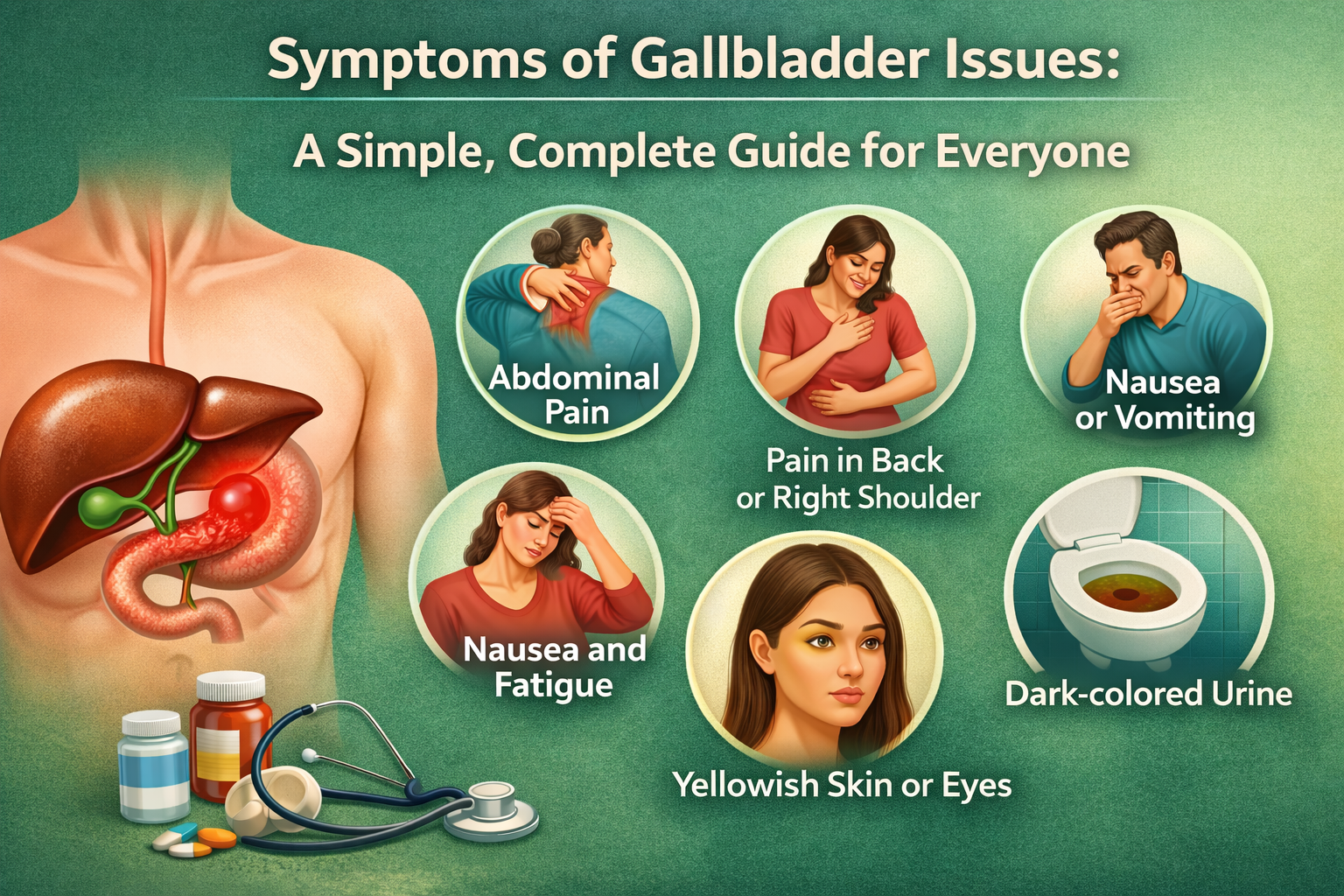
Common Symptoms of Gallbladder Issues
The body gives many warning signs when the gallbladder is in trouble. Some symptoms are mild, while others can be severe.
Here are the most common symptoms:
- Pain in the upper right abdomen
- Nausea or vomiting
- Bloating and gas
- Indigestion after fatty meals
- Fever (in serious cases)
- Yellowing of skin (jaundice)
These symptoms of gallbladder issues may come and go. Sometimes they appear suddenly, especially after eating heavy food.
Where Does Gallbladder Pain Occur?
Gallbladder pain usually happens in the upper right side of your belly. It may also spread to your back or right shoulder.
This pain often starts after eating fried or oily food. It can last for a few minutes or even hours.
Many people describe it as a sharp or cramping pain. Some feel a dull ache that does not go away easily. If the pain becomes severe, it may need medical attention.
Gallstones: The Most Common Cause
Gallstones are small, hard deposits that form in the gallbladder. They are the main cause of many symptoms of gallbladder issues.
Gallstones can block the flow of bile. This causes pain and swelling. In some cases, they may lead to infection.
Types of Gallstones
| Type | Description |
|---|---|
| Cholesterol | Most common, made of hardened fat |
| Pigment stones | Made from excess bilirubin |
Not all gallstones cause pain. But when they do, the symptoms can be intense.
Symptoms After Eating Fatty Foods
One clear sign of gallbladder trouble is discomfort after eating fatty meals. This happens because the gallbladder struggles to release bile properly.
You may feel:
- Full very quickly
- Bloated
- Mild to severe pain
- Nausea
These symptoms of gallbladder issues are often ignored at first. But if they keep happening, it is time to take them seriously.
Chronic vs Acute Gallbladder Problems
Gallbladder issues can be short-term (acute) or long-term (chronic).
| Type | Description |
|---|---|
| Acute | Sudden and severe pain |
| Chronic | Ongoing mild discomfort |
Acute problems often need urgent care. Chronic issues may slowly affect your digestion over time.
Knowing the difference helps you decide when to seek help.
Warning Signs You Should Not Ignore
Some symptoms need quick medical attention. Ignoring them can lead to serious problems.
Watch out for:
- Severe abdominal pain
- High fever
- Yellow skin or eyes
- Dark urine
- Clay-colored stool
These strong symptoms of gallbladder issues may point to infection or blockage. Do not delay treatment in such cases.
Gallbladder Issues vs Stomach Cancer Symptoms
Sometimes, people confuse gallbladder problems with serious conditions like stomach cancer. It is important to understand the difference.
Comparison Table
| Symptom | Gallbladder Issues | Stomach Cancer |
|---|---|---|
| Pain location | Upper right abdomen | Upper middle abdomen |
| Trigger | Fatty meals | No clear trigger |
| Weight loss | Rare | Common |
| Appetite loss | Mild | Severe |
| Blood in stool | Rare | Possible |
When asking what are the symptoms of stomach cancer, people often mention weight loss, fatigue, and loss of appetite. These are different from typical symptoms of gallbladder issues.
Early Symptoms of Stomach Cancer (Important Awareness)
It is useful to know the early symptoms of stomach cancer so you can compare them with gallbladder problems.
Common early signs include:
- Feeling full quickly
- Mild stomach discomfort
- Nausea
- Loss of appetite
Many people confuse these with simple digestive problems. That is why awareness is important.
When people ask what are symptoms of stomach cancer, doctors also mention fatigue and unexplained weight loss.
Signs and Symptoms of Stomach Cancer (Advanced Stage)
As the disease progresses, symptoms become more serious.
These include:
- Severe stomach pain
- Vomiting blood
- Black stools
- Sudden weight loss
The signs and symptoms of stomach cancer are usually more serious than gallbladder issues. If symptoms are getting worse instead of better, always consult a doctor.
Risk Factors for Gallbladder Problems
Some people are more likely to develop gallbladder issues.
Common Risk Factors
| Risk Factor | Explanation |
|---|---|
| Obesity | Increases cholesterol levels |
| Poor diet | High fat, low fiber intake |
| Age | Risk increases with age |
| Gender | More common in women |
Understanding these risks helps prevent symptoms of gallbladder issues.
How Doctors Diagnose Gallbladder Issues
Doctors use simple tests to check your gallbladder.
These include:
- Ultrasound
- Blood tests
- CT scan
- HIDA scan
An ultrasound is the most common test. It can easily detect gallstones.
Early diagnosis helps prevent complications and keeps treatment simple.
Treatment Options for Gallbladder Issues
Treatment depends on the severity of the problem.
Common Treatments
- Pain relief medicines
- Diet changes
- Surgery (in severe cases)
In many cases, doctors recommend removing the gallbladder. This surgery is safe and common.
After surgery, most people live a normal life without major problems.
Simple Diet Tips for a Healthy Gallbladder
Diet plays a big role in preventing symptoms of gallbladder issues.
Healthy Tips
- Eat less fried food
- Add more fruits and vegetables
- Drink enough water
- Avoid overeating
A simple diet can reduce pain and improve digestion.
Real-Life Insight: Why Early Action Matters
I once knew someone who ignored mild stomach pain for months. He thought it was just gas. One day, the pain became severe, and he had to rush to the hospital. It turned out to be gallstones.
After surgery, he felt much better. But he often said, “I wish I had checked earlier.”
This shows how important it is to notice symptoms of gallbladder issues early.
FAQs About Gallbladder Issues
1. What are the first symptoms of gallbladder issues?
The first signs are usually mild pain, bloating, and discomfort after eating fatty food.
2. Can gallbladder problems go away on their own?
Mild symptoms may improve, but serious issues need medical care.
3. How do I know if it is gallbladder pain or gas?
Gallbladder pain is sharper and often occurs in the upper right abdomen.
4. Are gallbladder issues dangerous?
They can become serious if ignored, especially with infection or blockage.
5. What are the symptoms of stomach cancer?
Common symptoms include weight loss, fatigue, and loss of appetite.
6. Can diet help prevent gallbladder issues?
Yes, a healthy low-fat diet can reduce the risk.
Conclusion
Understanding the symptoms of gallbladder issues can help you take action early. Small signs like mild pain or bloating should not be ignored. Your body often gives warnings before problems become serious.
It is also important to know the difference between gallbladder problems and serious conditions like stomach cancer. If symptoms are unusual or getting worse, always seek medical advice.
Taking care of your diet, staying active, and paying attention to your body can protect your health. If you notice any signs discussed in this guide, do not wait. Early action can save you from bigger problems later.
If you found this guide helpful, consider sharing it with others. It might help someone recognize symptoms early and get the care they need.
