

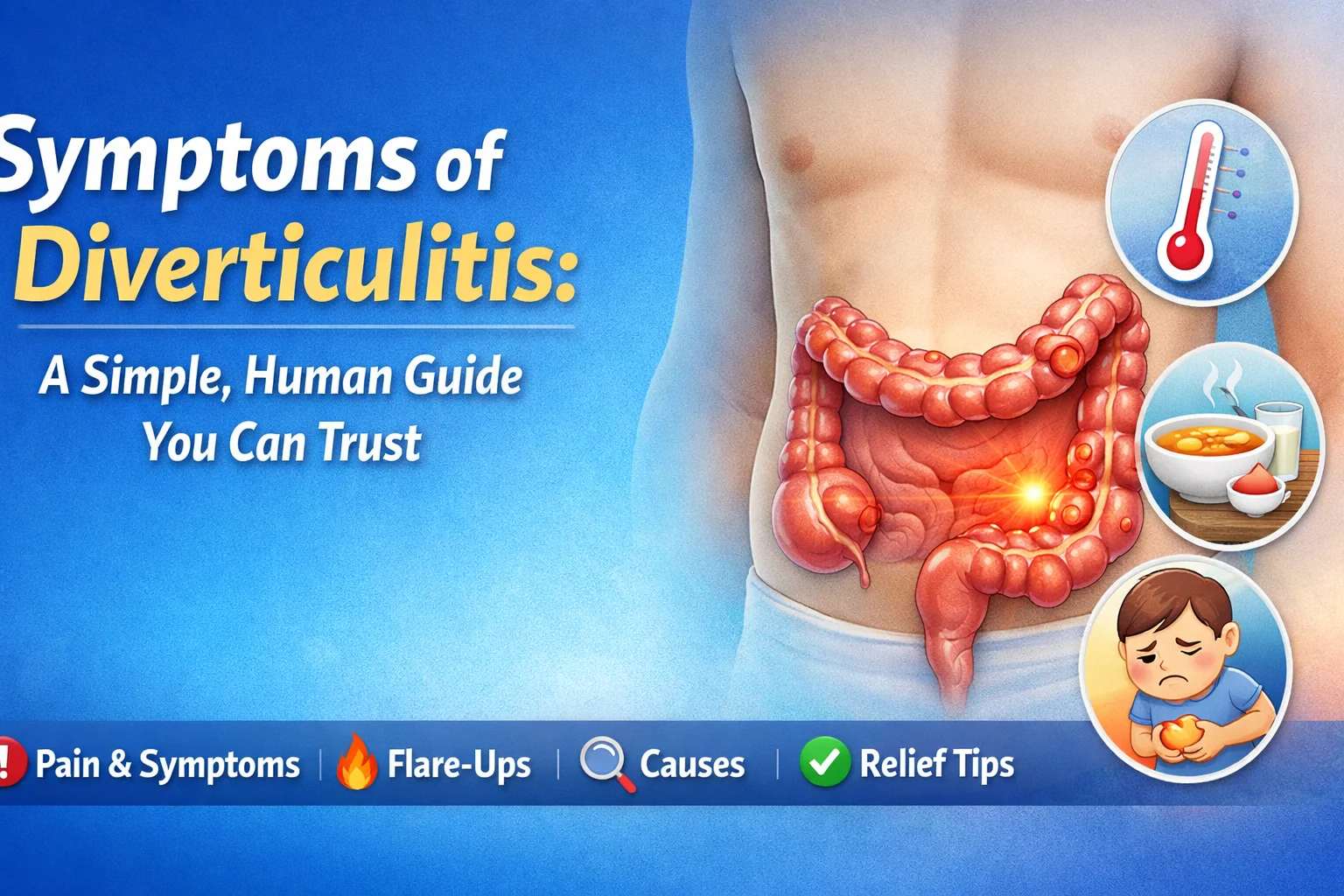
Diverticulitis can feel scary when it first shows up. The pain may come suddenly. You might feel confused about what’s happening inside your body. Many people ask, “What are the symptoms of diverticulitis?” or wonder if what they feel is serious.
This guide will help you understand everything in a clear and simple way. We will talk about the symptoms of diverticulitis, how flare-ups feel, and what you can do to feel better. You’ll also learn from real-life style examples and easy explanations that anyone can understand.
Let’s break it down step by step.
What Is Diverticulitis in Simple Words?
Diverticulitis happens when small pouches form in your colon and become inflamed or infected. These pouches are called diverticula. Many people have them without problems. But when they get irritated, that’s when symptoms begin.
Think of it like tiny balloons in your gut. When they are calm, you feel fine. But when they swell or get infected, pain starts.
The symptoms of diverticulitis can be mild at first. But sometimes, they become strong and need medical care.
Why Do People Get Diverticulitis?
There is no single cause. But a few common reasons include:
- Low-fiber diet
- Constipation
- Aging
- Lack of exercise
- Gut bacteria imbalance
When stool gets stuck in the colon, pressure builds up. This can irritate the pouches and lead to inflammation.
Many people don’t know they have diverticula until a flare-up happens.
Common Symptoms of Diverticulitis
The symptoms of diverticulitis can vary from person to person. Some feel mild discomfort, while others feel strong pain.
Here are the most common signs:
| Symptom | What It Feels Like |
|---|---|
| Abdominal pain | Sharp or cramping, often on the lower left side |
| Fever | Mild to high temperature |
| Nausea | Feeling like you may vomit |
| Bloating | Tight or full stomach |
| Constipation or diarrhea | Changes in bowel habits |
Pain is usually the first sign people notice. It may stay constant for hours or even days.
Symptoms of Diverticulitis Flare Up
A flare-up means the condition becomes active and worse. The symptoms of diverticulitis flare up are often stronger and harder to ignore.
During a flare-up, you may feel:
- Sudden, intense belly pain
- Fever with chills
- Severe bloating
- Loss of appetite
- Fatigue or weakness
The pain often gets worse when you move or touch your stomach.
Real-Life Example
One person described it as a “sharp stabbing pain that wouldn’t go away.” They first thought it was gas, but the pain kept getting worse.
This is why it’s important not to ignore these signs.
Early Symptoms You Should Not Ignore
Early detection can help prevent serious problems. The symptoms of diverticulitis often start small.
Watch for these early signs:
- Mild stomach discomfort
- Slight bloating after meals
- Changes in bathroom habits
- Low-grade fever
These symptoms may come and go. Many people ignore them, thinking it’s just indigestion.
But catching it early can make treatment much easier.
Symptoms of a Flare Up of Diverticulitis vs Mild Symptoms
It’s helpful to know the difference between mild symptoms and a flare-up.
| Mild Symptoms | Flare-Up Symptoms |
|---|---|
| Light discomfort | Severe pain |
| No fever or slight fever | High fever |
| Normal activity possible | Hard to move |
| Mild bloating | Extreme swelling |
If your symptoms suddenly get worse, it may be a flare-up.
Where Does Diverticulitis Pain Occur?
Most people feel pain on the lower left side of the abdomen. But it can sometimes appear in other areas.
Here’s a simple guide:
| Area of Pain | Possible Meaning |
|---|---|
| Lower left abdomen | Most common sign |
| Lower right abdomen | Less common, but possible |
| Whole abdomen | Severe inflammation |
The pain may feel steady or come in waves.
Digestive Changes You May Notice
The symptoms of diverticulitis often affect digestion.
You may notice:
- Constipation that lasts several days
- Diarrhea that comes suddenly
- Trouble passing gas
- Feeling full even after small meals
These changes happen because the colon is inflamed.
Simple Tip
If your bowel habits suddenly change and stay that way, don’t ignore it.
When Symptoms Become Serious
Sometimes diverticulitis can lead to complications. This is rare but important to know.
Serious symptoms include:
- Very high fever
- Vomiting that won’t stop
- Blood in stool
- Severe abdominal swelling
If you notice these, seek medical help right away.
How to Relieve Symptoms of Diverticulitis
Many people ask, “How to relieve symptoms of diverticulitis?” The good news is that mild cases can often be managed at home.
Here are simple ways to feel better:
1. Rest Your Digestive System
Stick to clear liquids for a short time. This helps your colon heal.
2. Drink Plenty of Water
Water keeps things moving and reduces pressure.
3. Eat Low-Fiber Foods (Short Term)
During a flare-up, low-fiber foods are easier to digest.
4. Use Heat Therapy
A warm heating pad on your stomach can ease pain.
5. Take Prescribed Medication
Doctors may give antibiotics if there is infection.
Foods That Help and Foods to Avoid
Diet plays a big role in managing symptoms.
Helpful Foods
| Food Type | Examples |
|---|---|
| High-fiber foods (after recovery) | Fruits, vegetables, oats |
| Soft foods | Rice, bananas, yogurt |
| Hydrating foods | Soups, broths |
Foods to Avoid During Flare-Up
| Food Type | Examples |
|---|---|
| Spicy foods | Chili, hot sauces |
| Fried foods | Fast food, oily snacks |
| Processed foods | Chips, packaged meals |
Eating the right foods can reduce the symptoms of diverticulitis over time.
How Long Do Symptoms Last?
The length of symptoms depends on the severity.
- Mild cases: 2–3 days
- Moderate cases: About a week
- Severe cases: Longer, with medical treatment
Most people feel better within a few days if treated early.
Can Diverticulitis Come Back?
Yes, it can return. This is called recurrence.
The symptoms of diverticulitis flare up may happen again if lifestyle changes are not made.
To lower your risk:
- Eat more fiber regularly
- Stay hydrated
- Exercise often
- Avoid constipation
Prevention is key to long-term health.
When Should You See a Doctor?
You should see a doctor if:
- Pain lasts more than 2 days
- You have a fever
- Symptoms are getting worse
- You cannot eat or drink
Never ignore severe pain. It’s better to be safe.
FAQs About Symptoms of Diverticulitis
1. What are the symptoms of diverticulitis?
The most common symptoms include abdominal pain, fever, bloating, and changes in bowel habits.
2. What does a diverticulitis flare-up feel like?
It feels like strong, constant pain in the abdomen, often with fever and fatigue.
3. Can symptoms go away on their own?
Mild symptoms may improve with rest and diet changes. Severe cases need medical care.
4. How to relieve symptoms of diverticulitis quickly?
Rest, hydration, and a simple diet can help. In some cases, medication is needed.
5. Is diverticulitis pain constant?
Yes, the pain is usually steady and does not go away easily.
6. Can stress cause a flare-up?
Stress may not directly cause it, but it can affect digestion and worsen symptoms.
Final Thoughts: Take Control of Your Gut Health
The symptoms of diverticulitis can be uncomfortable and sometimes scary. But the good news is that most cases can be managed with simple steps and early care.
Listen to your body. If something feels off, don’t ignore it. Small symptoms can turn into bigger problems if left untreated.
With the right diet, healthy habits, and awareness, you can reduce flare-ups and live comfortably.
If you’ve experienced a flare-up before, you already know how important prevention is. Stay consistent with your lifestyle changes, and your gut will thank you.
