

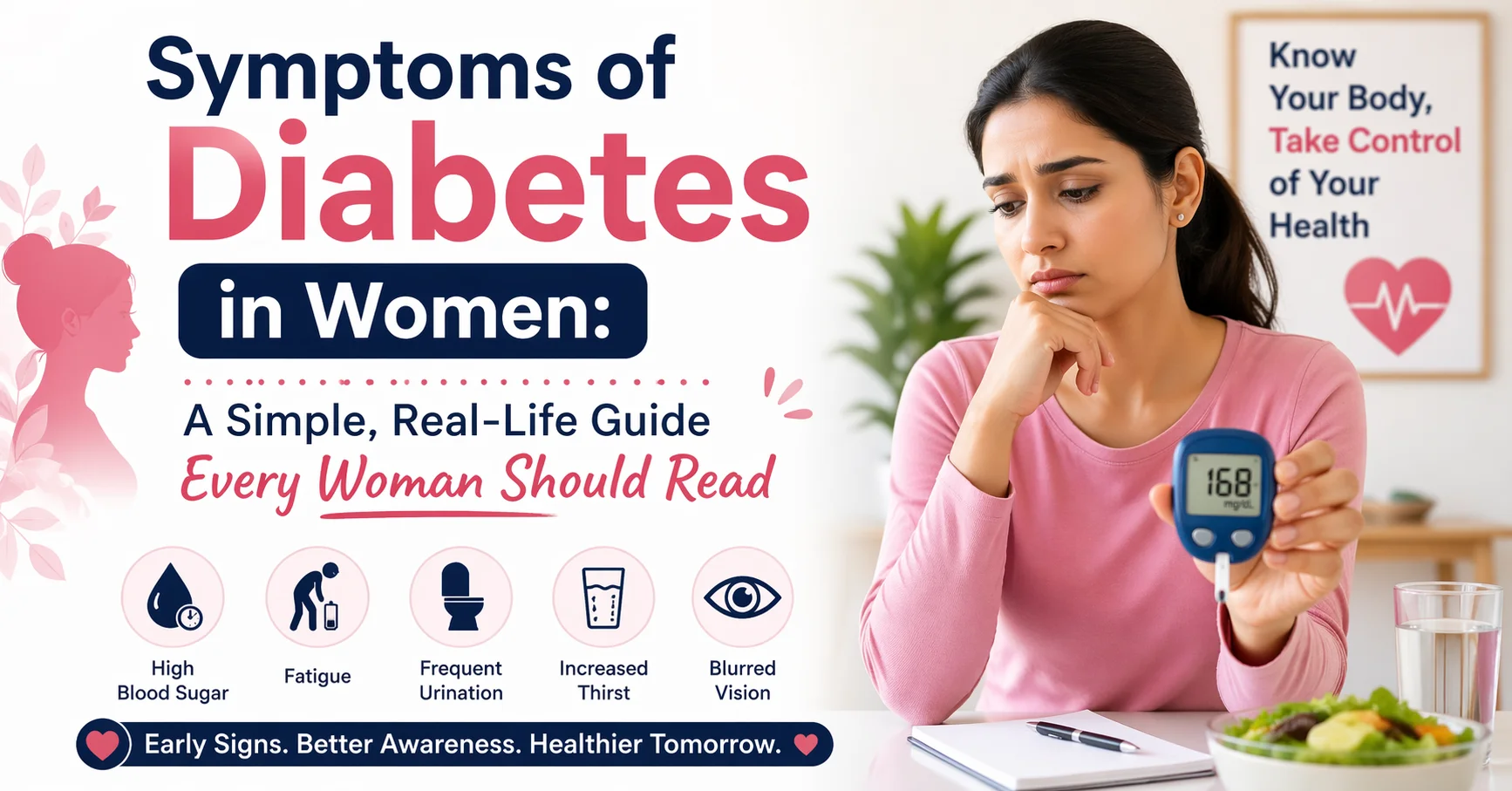
Understanding the symptoms of diabetes in women is more important than ever. Many women ignore early warning signs because they seem small or unrelated. But these signs often appear quietly and slowly. By the time they become serious, the condition may already be advanced.
Diabetes is not just about sugar. It affects your whole body—your energy, hormones, skin, and even your mood. Women can experience symptoms differently than men. Hormonal changes, pregnancy, and menopause all play a role. That’s why it’s important to know what to look for.
In this guide, you will learn how to spot early signs, understand different types, and know when to take action. This is not just medical advice—it’s real, practical knowledge you can use in everyday life.
What Is Diabetes and Why It Affects Women Differently
Diabetes is a condition where your body cannot properly control blood sugar levels. This happens either because the body doesn’t make enough insulin or cannot use it well. Insulin is a hormone that helps sugar enter your cells for energy.
Women face unique challenges with diabetes. Hormones like estrogen and progesterone can change how insulin works. During pregnancy, some women develop gestational diabetes. Later in life, menopause can also increase risk.
Because of these changes, the symptoms of diabetes in women can sometimes be subtle or confusing. For example, fatigue might be blamed on stress, or weight changes on hormonal shifts. This makes early detection harder but even more important.
Early Symptoms of Diabetes in Women You Should Never Ignore
Early signs are often mild but meaningful. They may come and go, making them easy to overlook. Still, your body is trying to send a message.
Common early symptoms include frequent urination, constant thirst, and unusual hunger. You may also feel tired even after resting. Some women notice blurred vision or headaches.
Another key sign is slow healing of cuts or infections. You might get more urinary tract infections or yeast infections than usual. These are often overlooked but are important clues.
Recognizing these early symptoms of diabetes in women can help you seek treatment before complications develop. The sooner you act, the better your chances of managing the condition effectively.
Table: Common Early Warning Signs
| Symptom | What It Feels Like | Why It Happens |
|---|---|---|
| Frequent urination | Going to the bathroom often | Excess sugar leaves through urine |
| Extreme thirst | Feeling dehydrated constantly | Body loses fluids quickly |
| Fatigue | Always feeling tired | Cells lack energy |
| Blurred vision | Difficulty focusing | Sugar affects eye lenses |
| Slow healing | Cuts take longer to heal | Poor blood circulation |
Symptoms of Type 1 Diabetes in Women
The symptoms of type 1 diabetes in women usually appear quickly. This type is often diagnosed in younger women or girls, but it can happen at any age.
You may notice sudden weight loss without trying. There is also intense hunger and extreme tiredness. Some women experience nausea or vomiting. These symptoms can become serious very fast.
Another sign is fruity-smelling breath. This can be a sign of a dangerous condition called ketoacidosis. It needs immediate medical care.
Unlike other forms, type 1 diabetes is not caused by lifestyle. It is an autoimmune condition. The body attacks its own insulin-producing cells.
Knowing the difference helps you respond quickly. If you notice sudden and severe changes, don’t wait. Seek medical help right away.
Table: Type 1 vs Type 2 Symptoms
| Feature | Type 1 Diabetes | Type 2 Diabetes |
|---|---|---|
| Onset | Sudden | Gradual |
| Age group | Often younger | Usually adults |
| Weight changes | Sudden loss | Often gain |
| Energy levels | Very low | Mild fatigue |
| Severity | High | Moderate at first |
Symptoms of Type 2 Diabetes in Women
The symptoms of type 2 diabetes in women often develop slowly. Many women live with it for years without knowing. This makes it more dangerous in the long run.
Common signs include increased thirst, frequent urination, and fatigue. You may also notice dark patches on your skin, especially around the neck or underarms. This is called insulin resistance.
Weight gain, especially around the belly, is another sign. Some women also experience numbness or tingling in hands and feet.
Because these symptoms build over time, they are often ignored. But early detection can prevent serious complications like heart disease or nerve damage.
Unique Symptoms of Diabetes in Women
Some signs are more common in women than men. These are often related to hormonal and reproductive health.
Frequent yeast infections are one example. High sugar levels create a perfect environment for yeast growth. Vaginal dryness and itching may also occur.
Another symptom is urinary tract infections. Women may get these more often when blood sugar is high. Irregular periods or fertility issues can also be linked to diabetes.
These unique symptoms of diabetes in women are often overlooked or misdiagnosed. Paying attention to these signs can make a big difference in early diagnosis.
Table: Female-Specific Symptoms
| Symptom | Description | Risk Level |
|---|---|---|
| Yeast infections | Frequent and recurring | Moderate |
| UTIs | Painful urination | Moderate |
| Hormonal imbalance | Irregular periods | High |
| Vaginal dryness | Discomfort | Low |
| Fertility issues | Difficulty conceiving | High |
Symptoms of Diabetes in Elderly Women
The symptoms of diabetes in elderly woman can be different from younger women. They may be less obvious but more serious.
Older women may experience confusion, dizziness, or memory problems. These are often mistaken for aging but could be linked to blood sugar changes.
Fatigue and weakness are also common. Some may lose weight unexpectedly or have poor appetite. Vision problems may worsen quickly.
Because symptoms can be mild, regular check-ups are very important. Early detection helps prevent complications like heart disease or kidney problems.
Table: Diabetes Symptoms by Age Group
| Age Group | Common Symptoms |
|---|---|
| Young women | Sudden hunger, fatigue |
| Middle-aged | Weight gain, thirst |
| Elderly women | Confusion, weakness |
How Hormones Affect Diabetes Symptoms
Hormones play a big role in how diabetes appears in women. During menstruation, blood sugar levels can change. Some women notice symptoms worsen before their period.
Pregnancy is another critical time. Gestational diabetes can develop even in healthy women. It often disappears after birth but increases future risk.
Menopause also affects blood sugar control. Lower estrogen levels can lead to insulin resistance.
Understanding these changes helps you manage the symptoms of diabetes in women better. It also helps doctors create more effective treatment plans.
Table: Hormonal Stages and Risk
| Stage | Risk Level | Common Issues |
|---|---|---|
| Puberty | Low | Hormonal changes |
| Pregnancy | High | Gestational diabetes |
| Menopause | High | Insulin resistance |
When Should You See a Doctor?
You should not ignore symptoms that last more than a few days. If you feel constant thirst, fatigue, or frequent urination, it’s time to act.
Women with a family history of diabetes should be extra careful. Regular blood sugar tests can help catch problems early.
If symptoms suddenly worsen, seek medical help immediately. Early diagnosis can prevent long-term damage.
Listening to your body is the first step. The earlier you respond to symptoms of diabetes in women, the better your health outcome.
Simple Lifestyle Changes That Can Help
Managing diabetes does not always require big changes. Small steps can make a huge difference.
Start with a balanced diet. Eat more vegetables, whole grains, and lean protein. Reduce sugary foods and drinks.
Regular exercise helps control blood sugar levels. Even a daily walk can improve your health.
Sleep and stress management are also important. Poor sleep can worsen symptoms. Try relaxation techniques like deep breathing or meditation.
These simple habits can help reduce the impact of symptoms of diabetes in women and improve your quality of life.
Real-Life Insight: A Story Many Women Relate To
A woman in her late 30s noticed she was always tired. She thought it was due to work and family stress. Later, she started having frequent infections and blurry vision.
After a routine test, she discovered she had type 2 diabetes. With lifestyle changes and proper care, she managed her condition well.
This story is common. Many women ignore early signs. Recognizing the symptoms of diabetes in women early can truly change lives.
Frequently Asked Questions (FAQs)
1. What are the first symptoms of diabetes in women?
Early signs include thirst, fatigue, frequent urination, and blurred vision.
2. Are diabetes symptoms different in women than men?
Yes, women may experience infections, hormonal issues, and reproductive symptoms.
3. Can diabetes affect menstrual cycles?
Yes, it can cause irregular periods and hormonal imbalance.
4. Is fatigue a common symptom?
Yes, fatigue is one of the most common signs of diabetes.
5. Can young women get diabetes?
Yes, both type 1 and type 2 diabetes can occur at any age.
6. How can I confirm if I have diabetes?
A simple blood test by a doctor can confirm the diagnosis.
Final Thoughts: Take Control of Your Health Today
The symptoms of diabetes in women are often quiet but powerful. Ignoring them can lead to serious health problems. But the good news is that early action can make a huge difference.
Pay attention to your body. Small changes in energy, thirst, or infections matter. Don’t brush them aside.
Make healthy lifestyle choices and get regular check-ups. Share this knowledge with other women in your life. Awareness can save lives.
Your health is in your hands. Start today, stay informed, and take control of your future.
