

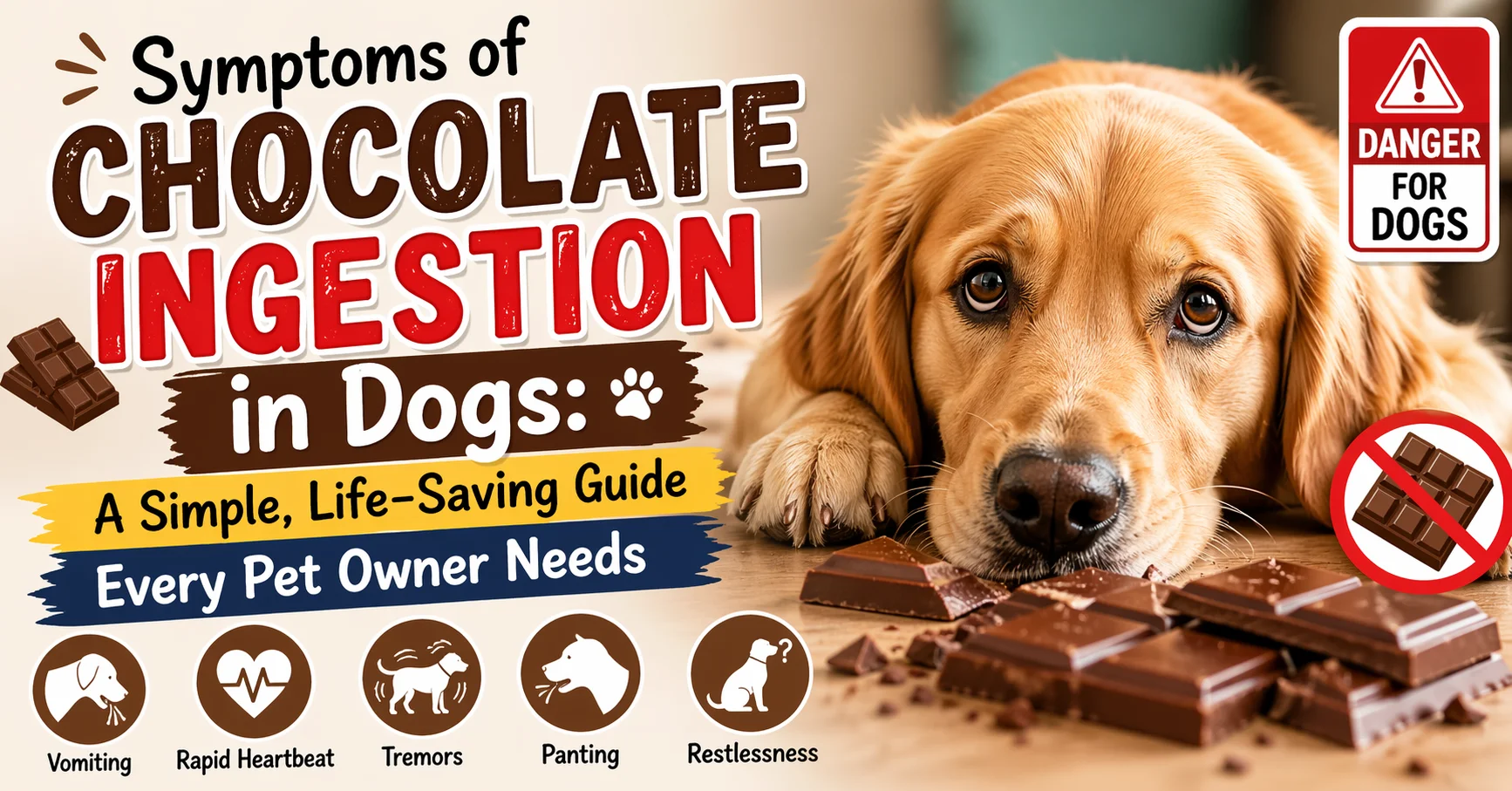
If you have a dog, you’ve likely heard that chocolate is dangerous. But many pet owners don’t fully understand why or what to look for. The truth is, the symptoms of chocolate ingestion in dogs can range from mild to life-threatening—and they can appear quickly.
I’ve seen situations where a dog seemed “fine” after eating chocolate, only to get very sick hours later. That delay is what makes it risky. Knowing the warning signs early can make all the difference.
In this guide, you’ll learn everything in simple, clear language. We’ll cover what happens inside your dog’s body, how symptoms develop, and what you should do right away. This isn’t just theory—it’s practical, real-life advice you can actually use.
Why Chocolate Is Toxic to Dogs
Chocolate contains two harmful substances: theobromine and caffeine. Dogs cannot process these chemicals well. They stay in the body much longer than in humans.
This causes a buildup that affects the heart, brain, and muscles. Even a small amount can trigger symptoms of chocolate ingestion in dogs, especially in small breeds.
Dark chocolate and baking chocolate are the most dangerous. Milk chocolate is less toxic, but still risky in larger amounts.
Here’s the key idea:
The darker the chocolate, the more toxic it is.
How Much Chocolate Is Dangerous for Dogs?
The danger depends on three things:
- Dog’s weight
- Type of chocolate
- Amount eaten
A tiny dog eating a small piece of dark chocolate can be more at risk than a large dog eating milk chocolate.
Chocolate Toxicity Guide
| Chocolate Type | Toxic Level | Risk Level |
|---|---|---|
| White Chocolate | Very Low | Minimal risk |
| Milk Chocolate | Low | Mild to moderate risk |
| Dark Chocolate | High | Serious risk |
| Baking Chocolate | Very High | Emergency level |
Even if you’re unsure, always assume risk and act quickly.
Early Symptoms of Chocolate Ingestion in Dogs
The symptoms of chocolate ingestion in dogs often begin within 6–12 hours. Early signs may seem mild, but they can escalate fast.
Watch for these first warning signs:
- Restlessness
- Increased thirst
- Vomiting
- Mild diarrhea
- Panting
At this stage, your dog may just seem “off.” Many owners miss this phase because symptoms look minor.
But this is actually the best time to act.
Moderate Symptoms You Should Never Ignore
As toxicity increases, symptoms become more obvious and concerning.
Your dog may show:
- Rapid heart rate
- Hyperactivity
- Muscle tremors
- Frequent urination
- Agitation
These symptoms of chocolate ingestion in dogs mean the toxins are affecting the nervous system.
This stage requires immediate attention. Waiting can make things worse quickly.
Severe Symptoms That Need Emergency Care
In serious cases, chocolate poisoning can become life-threatening.
Watch for:
- Seizures
- Extreme shaking
- Collapse
- Irregular heartbeat
- High fever
These are critical symptoms of chocolate ingestion in dogs. At this point, your dog needs urgent veterinary care.
Delaying even an hour can be dangerous.
Timeline of Symptoms After Chocolate Exposure
Understanding the timeline helps you stay alert.
Symptom Progression Table
| Time After Eating | Possible Symptoms |
|---|---|
| 0–2 hours | No signs yet |
| 6–12 hours | Vomiting, restlessness |
| 12–24 hours | Heart issues, tremors |
| 24+ hours | Severe complications |
Symptoms can last up to 3 days in serious cases.
Why Small Dogs Are at Higher Risk
Smaller dogs are more sensitive to toxins. Their bodies cannot handle even small amounts of theobromine.
For example:
A small puppy eating a chocolate bar may face severe symptoms of chocolate ingestion in dogs, while a large dog might show milder signs.
This doesn’t mean big dogs are safe. It just means risk varies.
Always take chocolate exposure seriously, no matter your dog’s size.
Common Types of Chocolate Dogs Eat at Home
Dogs are curious. They don’t know chocolate is harmful.
Here are common sources:
- Chocolate bars
- Cookies and brownies
- Chocolate cake
- Cocoa powder
- Holiday treats
Many cases of symptoms of chocolate ingestion in dogs happen during holidays like Eid, Christmas, or birthdays when sweets are around.
Always store chocolate safely and out of reach.
What To Do If Your Dog Eats Chocolate
Act fast. Don’t wait for symptoms to appear.
Follow these steps:
- Remove any remaining chocolate
- Check how much was eaten
- Note the type of chocolate
- Call your vet immediately
If advised, you may need to bring your dog in quickly.
Quick action can prevent serious symptoms of chocolate ingestion in dogs.
How Vets Treat Chocolate Poisoning
Veterinarians use several methods depending on severity.
Treatment Options
| Treatment Method | Purpose |
|---|---|
| Inducing vomiting | Remove chocolate from stomach |
| Activated charcoal | Block toxin absorption |
| IV fluids | Support hydration |
| Medications | Control heart rate and seizures |
Early treatment improves recovery chances greatly.
How Long Do Symptoms Last?
The symptoms of chocolate ingestion in dogs can last from 24 hours to 72 hours.
In mild cases, dogs recover quickly.
In severe cases, recovery may take several days.
Theobromine stays in a dog’s body for a long time. That’s why symptoms don’t disappear quickly.
Long-Term Effects of Chocolate Poisoning
Most dogs recover fully if treated early. But severe poisoning can cause lasting issues.
Possible long-term effects:
- Heart problems
- Nervous system damage
- Weakness
This is why recognizing symptoms of chocolate ingestion in dogs early is so important.
Prevention Tips Every Dog Owner Should Follow
Prevention is always better than treatment.
Here’s how to keep your dog safe:
- Store chocolate in closed cabinets
- Keep sweets away from pets
- Educate family members
- Avoid feeding table scraps
Even a small mistake can lead to serious symptoms of chocolate ingestion in dogs.
Real-Life Example: A Lesson Many Owners Learn Late
A friend once left chocolate cake on the table. His small dog ate just a portion. At first, nothing seemed wrong.
Hours later, the dog started shaking and vomiting.
It turned into an emergency visit.
Thankfully, the dog recovered—but it was a stressful and expensive experience.
This is how quickly symptoms of chocolate ingestion in dogs can escalate.
When Should You Call the Vet?
Call your vet immediately if:
- Your dog ate dark or baking chocolate
- You notice any unusual behavior
- Your dog is small or has health issues
Even if there are no symptoms yet, don’t wait.
Early action can prevent serious symptoms of chocolate ingestion in dogs.
Frequently Asked Questions (FAQs)
1. How long after eating chocolate do symptoms appear?
Symptoms usually start within 6–12 hours. But sometimes they appear sooner.
2. Can a small amount of chocolate hurt my dog?
Yes. Even small amounts can cause symptoms of chocolate ingestion in dogs, especially in small breeds.
3. What is the most dangerous type of chocolate?
Baking chocolate and dark chocolate are the most toxic.
4. Can dogs recover from chocolate poisoning?
Yes, most dogs recover fully with quick treatment.
5. Should I wait for symptoms before acting?
No. Always contact a vet immediately after ingestion.
6. Is white chocolate safe for dogs?
It is less toxic but still not safe. It can cause stomach upset and other issues.
Final Thoughts: Stay Alert, Stay Prepared
Chocolate poisoning is one of the most common pet emergencies. But it’s also one of the most preventable.
Understanding the symptoms of chocolate ingestion in dogs gives you the power to act quickly and protect your pet.
If there’s one thing to remember, it’s this:
Don’t wait for symptoms. Act immediately.
Your quick response could save your dog’s life.
If you found this guide helpful, consider sharing it with other pet owners. You might help someone avoid a scary situation.
