

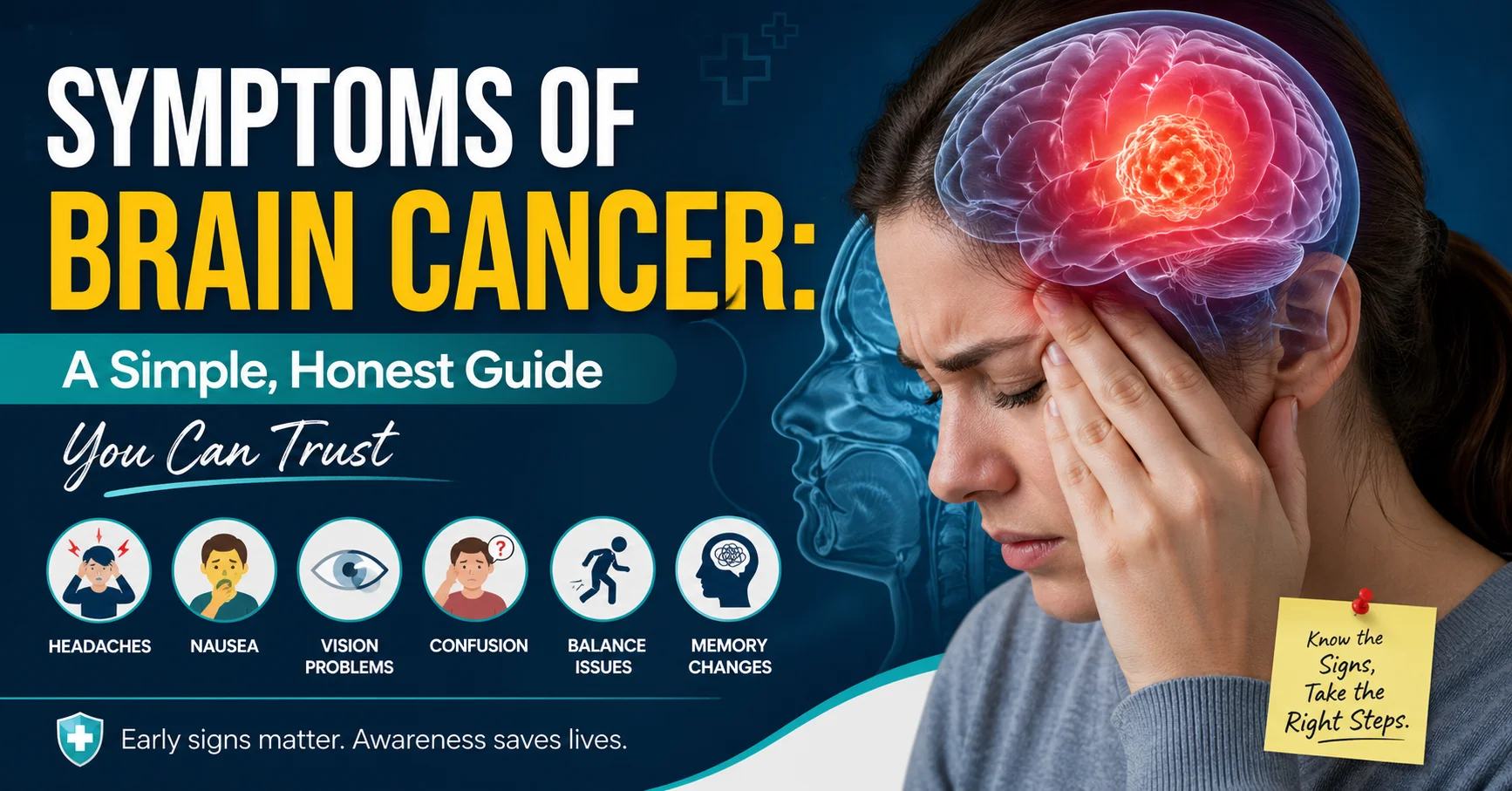
Understanding the symptoms of brain cancer can feel scary. Many people worry when they get headaches or feel dizzy. But not every symptom means cancer. This guide will help you learn what to watch for, in a calm and clear way.
Brain cancer happens when abnormal cells grow inside the brain. These cells can affect how your brain works. Because the brain controls everything, symptoms can vary a lot. Some signs are mild at first. Others may appear suddenly.
The key is awareness—not fear. When you know the signs and symptoms of brain cancer or tumor, you can act early. Early action often leads to better outcomes. This article explains everything in simple language, so anyone can understand.
What Is Brain Cancer?
Brain cancer is when abnormal cells grow in the brain. These cells form a mass called a tumor. Some tumors grow slowly. Others grow fast and spread quickly.
There are two main types:
- Primary brain tumors (start in the brain)
- Secondary brain tumors (spread from other cancers)
When people ask, what are the symptoms of brain cancer, the answer depends on the tumor’s size and location. A tumor in one area may affect speech. Another may affect vision or balance.
Why Symptoms of Brain Cancer Are Different for Everyone
The brain has many parts. Each part controls a different function. This is why the symptoms of brain cancer are not the same for everyone.
For example:
- A tumor in the front area may affect behavior
- A tumor in the back may affect vision
- A tumor near nerves may cause numbness
Also, symptoms may develop slowly. Some people ignore them for months. Others notice sudden changes. Listening to your body is important.
Early Symptoms of Brain Cancer You Should Not Ignore
Early signs can be easy to miss. They may seem like normal health issues. But when they happen often or worsen, they need attention.
Common early symptoms of brain cancer include:
- Frequent headaches
- Feeling very tired
- Trouble focusing
- Mood changes
- Mild vision problems
These symptoms may come and go. Many people think they are due to stress. But if they keep returning, it is better to check with a doctor.
Common Symptoms of Brain Cancer
As the tumor grows, symptoms become more clear. These are the most reported signs and symptoms of brain cancer:
- Severe headaches, especially in the morning
- Nausea or vomiting without reason
- Seizures (even in people with no history)
- Difficulty speaking or understanding
- Weakness in arms or legs
- Memory problems
Table: Common Symptoms and What They May Affect
| Symptom | Possible Effect Area | What You May Notice |
|---|---|---|
| Headaches | Brain pressure | Worse in morning |
| Seizures | Brain activity | Sudden shaking or confusion |
| Vision problems | Occipital lobe | Blurred or double vision |
| Weakness | Motor cortex | Trouble walking or holding |
| Speech issues | Language center | Slurred or slow speech |
What Are the Symptoms of Brain Cancer in Females?
The symptoms of brain cancer in females are mostly the same as in males. However, some differences may appear due to hormones or body response.
Women may experience:
- Hormonal imbalance
- Irregular periods
- Increased fatigue
- Mood swings or anxiety
The symptoms of brain cancer in women may also be confused with stress or hormonal issues. This can delay diagnosis. That is why tracking changes in your body is very important.
Symptoms of Brain Cancer in Men
The symptoms of brain cancer in men are also similar. But some signs may stand out more.
Men may notice:
- Sudden personality changes
- Difficulty concentrating at work
- Muscle weakness
- Loss of coordination
Sometimes men ignore symptoms longer. This can delay treatment. Paying attention early can make a big difference.
Symptoms of Cancer Spreading to Brain
When cancer spreads from another part of the body, it is called metastasis. The symptoms of cancer spreading to brain can be stronger and faster.
These include:
- Severe headaches
- Sudden seizures
- Loss of balance
- Confusion or memory loss
Table: Primary vs Secondary Brain Tumor Symptoms
| Type | Symptom Speed | Common Signs |
|---|---|---|
| Primary tumor | Slow | Gradual headaches, vision issues |
| Secondary tumor | Fast | Sudden seizures, confusion |
If someone already has cancer, these symptoms should never be ignored.
Signs and Symptoms of Brain Cancer in Dogs
Even pets can suffer from brain tumors. The signs and symptoms of brain cancer in dogs can be different from humans but still noticeable.
Look for:
- Seizures
- Walking in circles
- Sudden behavior changes
- Vision loss
- Loss of appetite
Table: Symptoms in Humans vs Dogs
| Symptom | Humans | Dogs |
|---|---|---|
| Seizures | Common warning sign | Very common |
| Behavior change | Mood swings | Aggression or confusion |
| Balance issues | Trouble walking | Circling or falling |
If your dog shows these signs, a vet visit is important.
When Should You See a Doctor?
Not every headache means cancer. But some warning signs need quick attention.
See a doctor if you notice:
- Headaches that worsen over time
- Seizures for the first time
- Sudden vision or speech problems
- Weakness on one side of the body
These could be serious symptoms of brain cancer or other conditions. Early testing can help find the cause.
How Doctors Diagnose Brain Cancer
Doctors use several tests to confirm the condition.
Common methods include:
- MRI scans
- CT scans
- Neurological exams
- Biopsy (in some cases)
These tests help doctors understand the size and location of the tumor. This helps guide treatment.
Treatment Options for Brain Cancer
Treatment depends on many factors. These include tumor size, type, and location.
Common treatments:
- Surgery to remove the tumor
- Radiation therapy
- Chemotherapy
- Targeted therapy
Some patients need a mix of treatments. Doctors create a plan based on each case.
Living With Brain Cancer: What to Expect
Living with brain cancer can be challenging. But many people manage it well with treatment and support.
Patients may experience:
- Fatigue
- Emotional stress
- Memory issues
Support from family and doctors is very important. Small lifestyle changes can help improve daily life.
Tips to Stay Aware and Healthy
While you cannot always prevent brain cancer, you can stay aware.
Helpful tips:
- Track unusual symptoms
- Maintain a healthy lifestyle
- Avoid ignoring long-term headaches
- Get regular medical checkups
Awareness is your best tool.
FAQs About Symptoms of Brain Cancer
1. What are the first symptoms of brain cancer?
Early signs include headaches, fatigue, and trouble focusing. These may seem mild at first.
2. Are headaches always a sign of brain cancer?
No. Most headaches are not related to cancer. But persistent or unusual ones should be checked.
3. Can brain cancer symptoms come suddenly?
Yes. Especially seizures or confusion can appear suddenly.
4. Do symptoms differ between men and women?
Mostly similar, but women may notice hormonal changes more.
5. How fast do symptoms of brain cancer grow?
It depends on the tumor type. Some grow slowly, others quickly.
6. Can dogs really get brain cancer?
Yes. Dogs can develop brain tumors and show symptoms like seizures and behavior changes.
Conclusion: Stay Aware, Not Afraid
The symptoms of brain cancer can be different for each person. Some are mild. Others are serious. The important thing is not to panic—but to stay aware.
If something feels off in your body, do not ignore it. Many symptoms may have simple causes. But checking early can save lives.
Knowledge gives you power. When you understand the signs and symptoms of brain cancer, you can take the right steps at the right time.
If you found this guide helpful, consider sharing it with others. You never know who might need this information.
