

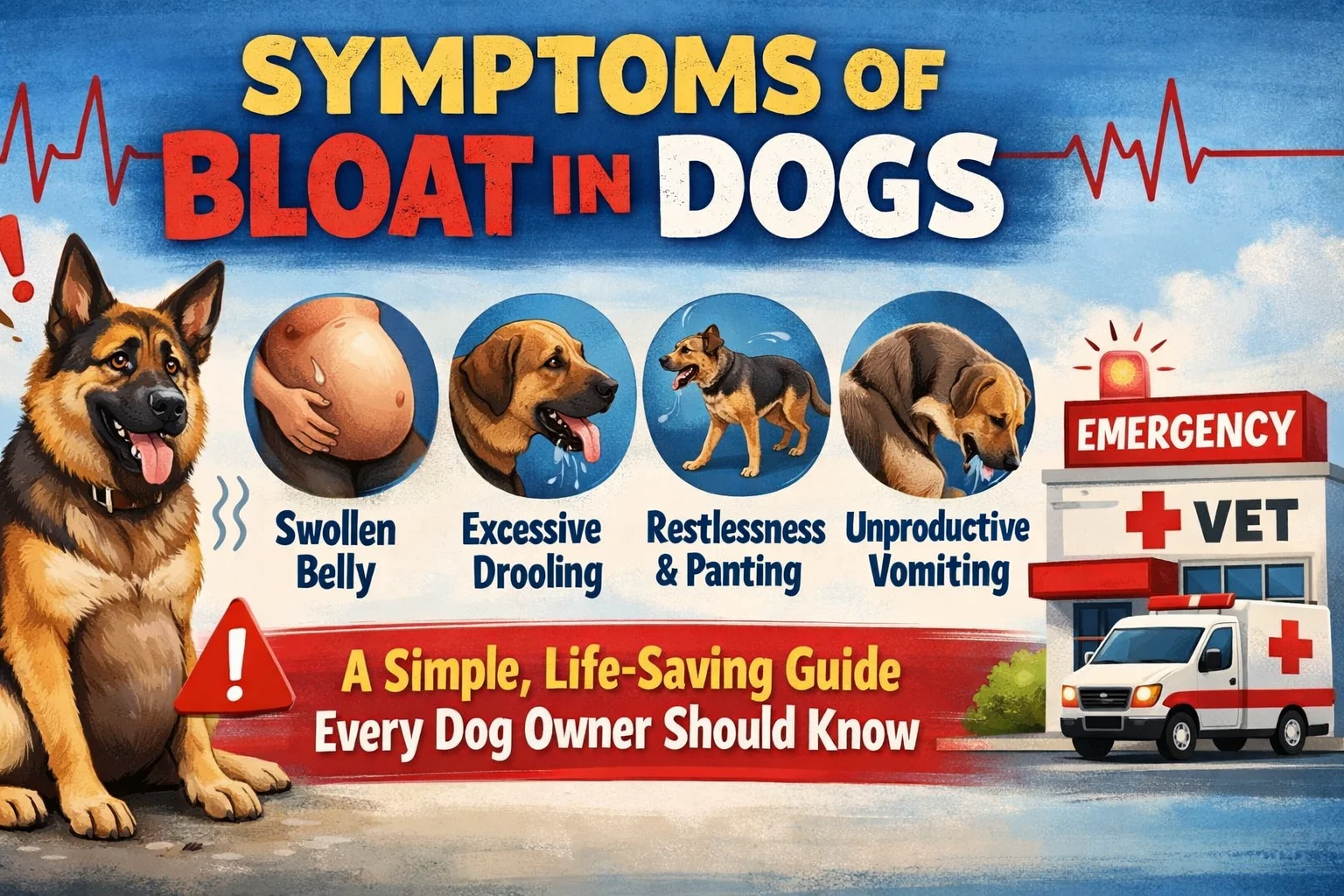
If you love your dog like family, this is something you must understand. The symptoms of bloat in dogs can appear fast and become deadly within hours. Many owners miss the early warning signs because they seem small at first. But quick action can save a life.
Bloat, also known as gastric dilatation, happens when a dog’s stomach fills with gas. In severe cases, it twists, cutting off blood flow. This is an emergency.
I’ve seen cases where a happy dog became weak in less than an hour. That’s why learning the signs early matters so much.
This guide will walk you through everything in a clear and simple way. You will learn what to watch for, what to do, and how to reduce risk. Let’s get started.
What Is Bloat in Dogs?
Bloat is a serious stomach condition. It happens when the stomach fills with gas, food, or fluid. This causes swelling and pressure inside the belly.
In worse cases, the stomach can twist. This is called GDV (gastric dilatation-volvulus). When that happens, blood flow stops. Organs begin to fail.
The symptoms of bloat in dogs often start mild. A dog may just seem restless or uncomfortable. But things can quickly become severe.
Large and deep-chested dogs face higher risk. However, any dog can develop bloat.
Understanding this condition is the first step to protecting your pet.
Why Bloat Is So Dangerous
Bloat is not just a stomach issue. It affects the whole body.
When the stomach expands, it presses on other organs. This can block blood flow to the heart. Oxygen levels drop quickly.
If the stomach twists, the situation becomes critical. Toxins build up. Shock can happen.
The scary part is speed. The signs and symptoms of bloat in dogs can go from mild to severe in a short time.
Without treatment, many dogs do not survive. But with fast care, many can recover.
That is why early recognition is so important.
Early Symptoms of Bloat in Dogs
The early signs are easy to miss. They may seem like normal discomfort.
Here are some of the first symptoms of bloat in a dog:
- Restlessness or pacing
- Trying to vomit but nothing comes out
- Drooling more than usual
- Looking at the stomach area
- Mild swelling of the belly
Your dog may seem uneasy. They may not settle down. Some dogs try to hide their discomfort.
If you notice these signs together, do not ignore them.
Early action can make a huge difference.
Advanced Symptoms You Should Never Ignore
As bloat worsens, symptoms become more obvious and serious.
Here are advanced symptoms of bloat in dog cases:
- A hard, swollen belly
- Rapid breathing
- Weakness or collapse
- Pale gums
- Fast heart rate
At this stage, it is an emergency. Your dog needs immediate veterinary care.
Waiting can be dangerous. Even a delay of one hour can change the outcome.
If you see these signs, go to the vet right away.
Common Causes of Bloat in Dogs
Bloat does not have one single cause. Several factors can increase risk.
Here are common triggers:
| Cause | Explanation |
|---|---|
| Eating too fast | Swallowing air while eating |
| Large meals | Stomach stretches quickly |
| Exercise after eating | Increases pressure in stomach |
| Stress or anxiety | Can affect digestion |
| Dry food diets | Some studies link to higher risk |
The symptoms of bloat in dogs often appear after eating or drinking.
I once saw a dog develop bloat after gulping water quickly after a run. Small habits can matter a lot.
Breeds Most at Risk
Some dogs have a higher risk due to body shape.
Here are examples:
| High-Risk Breeds | Reason |
|---|---|
| Great Danes | Deep chest |
| German Shepherds | Large size |
| Doberman Pinschers | Narrow body shape |
| Boxers | Active and deep-chested |
| Standard Poodles | Taller body structure |
However, any dog can develop bloat. Never assume your dog is safe.
Knowing the what are the symptoms of bloat in a dog is important for all owners.
How Fast Does Bloat Progress?
Bloat can develop very quickly. In some cases, symptoms appear within 30 minutes.
Here is a simple timeline:
| Time Frame | What Happens |
|---|---|
| 0–1 hour | Mild discomfort begins |
| 1–2 hours | Swelling and distress increase |
| 2–4 hours | Severe symptoms and shock risk |
| 4+ hours | Life-threatening stage |
This is why the symptoms of bloat in dogs should never be ignored.
If something feels wrong, trust your instincts.
What to Do If You Suspect Bloat
If you think your dog has bloat, act fast.
Follow these steps:
- Call your vet immediately
- Do not wait for symptoms to worsen
- Avoid giving food or water
- Transport your dog carefully
Do not try home remedies. Bloat needs medical treatment.
The sooner your dog gets help, the better the chances.
How Vets Treat Bloat
Veterinary care depends on the severity.
Common treatments include:
- Releasing gas from the stomach
- IV fluids to treat shock
- Surgery if the stomach twists
In surgery, the vet may also secure the stomach to prevent future twisting.
The signs and symptoms of bloat in dogs guide the treatment plan.
Quick treatment saves lives.
How to Prevent Bloat in Dogs
Prevention is not always perfect, but it helps reduce risk.
Here are practical tips:
| Prevention Tip | Why It Helps |
|---|---|
| Feed smaller meals | Reduces stomach pressure |
| Use slow feeder bowls | Prevents fast eating |
| Avoid exercise after meals | Allows digestion |
| Provide calm eating space | Reduces stress |
| Monitor water intake | Prevents gulping |
Simple changes can make a big difference.
I always suggest watching your dog after meals. That is when the symptoms of bloat in a dog often appear.
Real-Life Example: Why Awareness Matters
A dog owner once noticed their pet pacing after dinner. The dog tried to vomit but couldn’t. The belly looked slightly swollen.
They recognized the symptoms of bloat in dogs and rushed to the vet.
The dog received treatment early and survived.
If they had waited, the outcome could have been very different.
Stories like this show how knowledge can save lives.
Mistakes Dog Owners Often Make
Many owners miss early signs. Here are common mistakes:
- Thinking it is just gas
- Waiting too long
- Trying home remedies
- Ignoring restlessness
The symptoms of bloat in dog cases are often subtle at first.
It is always better to be safe than sorry.
When to Call the Vet Immediately
Call your vet right away if you notice:
- Swollen or hard belly
- Repeated attempts to vomit
- Sudden weakness
- Rapid breathing
These are clear symptoms of bloat in a dog that need urgent care.
Do not wait for all symptoms to appear.
FAQs About Symptoms of Bloat in Dogs
1. What are the symptoms of bloat in a dog?
Early signs include restlessness, drooling, and failed vomiting attempts. Later signs include a swollen belly and weakness.
2. How quickly can bloat become dangerous?
Bloat can become life-threatening within hours. Immediate action is critical.
3. Can small dogs get bloat?
Yes, but it is more common in large breeds. Still, all owners should know the symptoms.
4. Is bloat preventable?
You can reduce risk with proper feeding and care, but it cannot always be fully prevented.
5. Should I wait to see if symptoms improve?
No. If you suspect bloat, go to the vet immediately.
6. Can bloat happen more than once?
Yes, especially if preventive steps are not taken.
Final Thoughts: Stay Alert, Save a Life
The symptoms of bloat in dogs are not something to take lightly. This condition can move fast and become deadly in a short time.
The good news is that you can make a difference. By knowing the signs and acting quickly, you can protect your dog.
Watch your pet closely after meals. Learn their normal behavior. Trust your instincts if something feels off.
Your awareness could save your dog’s life one day.
If you found this guide helpful, consider sharing it with other dog owners. The more people know, the more dogs we can protect.
