

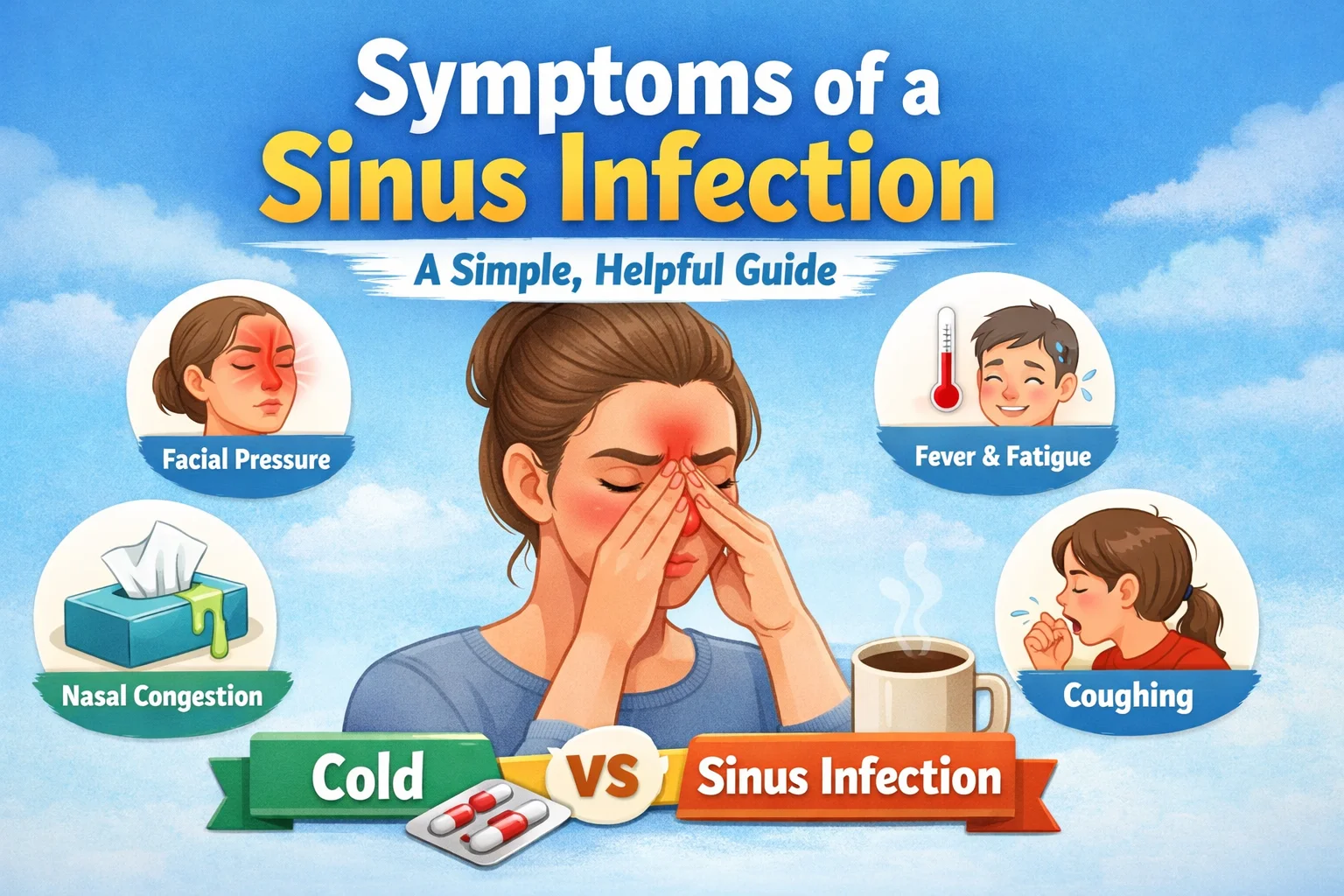
Sinus infections are very common, yet many people are unsure what they feel like. You may wonder if your symptoms are from a cold, allergies, or something more serious. This guide will help you clearly understand the symptoms of a sinus infection in a simple and friendly way.
I’ve personally experienced sinus infections during seasonal changes, and they can feel frustrating. The pressure, the blocked nose, and the tiredness can really affect your daily life. The good news is that once you understand the signs, it becomes much easier to manage and treat them early.
In this article, we’ll explore everything you need to know. You’ll learn what causes sinus infections, how symptoms feel, and how they differ from a cold. We’ll also answer common questions like: what are the symptoms of a sinus infection and is cough a symptom of sinus infection. Let’s dive in.
What Is a Sinus Infection?
A sinus infection, also called sinusitis, happens when the air-filled spaces in your face become swollen. These spaces are called sinuses. They are located behind your nose, cheeks, and forehead.
Normally, sinuses are filled with air and produce mucus. This mucus helps trap dust and germs. But when your sinuses get blocked, mucus builds up. This creates a perfect place for bacteria or viruses to grow.
This is when the symptoms of a sinus infection begin. You may feel pressure in your face or have trouble breathing through your nose.
Sinus infections can be short-term (acute) or long-lasting (chronic). Most people get the acute type, which usually improves within 10 days to a few weeks.
Common Symptoms of a Sinus Infection
Let’s break down the most common symptoms of a sinus infection so you can recognize them easily.
| Symptom | What It Feels Like |
|---|---|
| Facial pressure | Pain around eyes, cheeks, or forehead |
| Stuffy nose | Trouble breathing through your nose |
| Thick mucus | Yellow or green nasal discharge |
| Headache | Pressure-like pain in the head |
| Fever | Mild to moderate temperature increase |
| Fatigue | Feeling tired and low energy |
These symptoms can vary from person to person. Some people feel mild discomfort, while others feel strong pressure and pain.
What Are the Symptoms of a Sinus Infection in Detail?
Many people ask, what are the symptoms of a sinus infection exactly? Let’s go deeper.
One key symptom is facial pain. It often gets worse when you bend forward. You may feel it in your cheeks or behind your eyes. This is due to pressure in the sinuses.
Another common symptom is thick nasal discharge. Unlike a clear runny nose, sinus mucus is usually yellow or green. It may also have a bad smell.
You might also lose your sense of smell or taste. This happens because your nasal passages are blocked.
These are classic signs that help answer the question: what are symptoms of a sinus infection in a more detailed way.
Symptoms of a Sinus Infection vs Cold
It can be tricky to tell the difference between a sinus infection and a cold. Many symptoms overlap.
| Feature | Sinus Infection | Cold |
|---|---|---|
| Duration | More than 10 days | Usually 5–7 days |
| Facial pain | Common | Rare |
| Fever | Sometimes | Rare |
| Nasal discharge | Thick, colored | Clear to mild |
| Smell loss | Common | Less common |
The key difference is time and severity. If symptoms last longer and include facial pain, it’s likely a sinus infection.
Understanding the difference between symptoms of a sinus infection vs cold can help you decide when to seek treatment.
Is Cough a Symptom of Sinus Infection?
Yes, cough can be part of the symptoms of a sinus infection.
| Type of Cough | Cause |
|---|---|
| Night cough | Mucus dripping down throat |
| Dry cough | Irritated throat |
| Wet cough | Mucus buildup |
This happens because mucus drains from your sinuses into your throat. This is called postnasal drip.
The cough is often worse at night when you lie down. Many people don’t realize this connection and think it’s just a throat issue.
So if you’re asking, is cough a symptom of sinus infection, the answer is yes—especially when combined with other signs.
What Causes a Sinus Infection?
Understanding causes helps you prevent future infections.
| Cause | Description |
|---|---|
| Viral infections | Most common cause |
| Bacteria | Occurs after viral infection |
| Allergies | Cause swelling and blockage |
| Nasal polyps | Growths that block sinuses |
| Deviated septum | Crooked nasal wall |
A cold is often the starting point. If your nose stays blocked, bacteria can grow, leading to infection.
Early Signs You Should Not Ignore
Sometimes, early symptoms of a sinus infection are mild. But catching them early can prevent complications.
Watch for:
- Pressure around your eyes
- Thick mucus after a cold
- Mild headache
- Slight fever
If these symptoms last more than a few days, take action. Early care can make recovery faster.
When Symptoms Become Severe
In some cases, sinus infections become more serious.
| Severe Symptom | What It Means |
|---|---|
| High fever | Possible bacterial infection |
| Swelling around eyes | Infection spreading |
| Severe headache | Increased sinus pressure |
| Vision problems | Urgent medical issue |
If you notice these, see a doctor immediately. Severe symptoms of a sinus infection need medical care.
How Long Do Symptoms Last?
The duration depends on the type of infection.
| Type | Duration |
|---|---|
| Acute | 10 days to 4 weeks |
| Subacute | 4 to 12 weeks |
| Chronic | 12 weeks or longer |
Most people recover within two weeks. If symptoms last longer, it may be chronic sinusitis.
Simple Ways to Relieve Symptoms
Here are easy methods that helped me during sinus infections:
- Drink warm fluids
- Use steam inhalation
- Rest as much as possible
- Use saline nasal sprays
- Apply warm compress on your face
These can reduce discomfort and help your body heal faster.
When Should You See a Doctor?
You should consult a doctor if:
- Symptoms last more than 10 days
- Fever is high
- Pain becomes severe
- Symptoms keep coming back
Doctors may prescribe antibiotics if bacteria are involved.
Preventing Future Sinus Infections
Prevention is always better than cure.
| Tip | Benefit |
|---|---|
| Wash hands | Reduces infection risk |
| Stay hydrated | Keeps mucus thin |
| Avoid allergens | Prevents blockage |
| Use humidifier | Keeps air moist |
These simple steps can reduce your chances of getting sinus infections again.
FAQs About Symptoms of a Sinus Infection
1. What are the symptoms of a sinus infection?
Common symptoms include facial pain, nasal congestion, thick mucus, headache, and fatigue.
2. What are symptoms of a sinus infection that last long?
Chronic symptoms include long-lasting congestion, reduced smell, and ongoing pressure.
3. Symptoms of a sinus infection vs cold—what’s the key difference?
Sinus infections last longer and include facial pain and thick mucus.
4. Is cough a symptom of sinus infection?
Yes, especially due to postnasal drip, which irritates the throat.
5. Can sinus infections go away on their own?
Yes, mild cases often improve without treatment within 10–14 days.
6. When should I worry about sinus infection symptoms?
If symptoms are severe, last over 10 days, or include high fever, seek medical help.
Final Thoughts
Understanding the symptoms of a sinus infection can make a big difference in how you respond. Many people ignore early signs, thinking it’s just a cold. But recognizing the difference can help you act sooner and feel better faster.
From personal experience, even simple remedies like steam and rest can help a lot. But don’t ignore severe symptoms. Your health always comes first.
If you found this guide helpful, consider sharing it with someone who might need it. And if you’re unsure about your symptoms, don’t hesitate to talk to a healthcare professional.
