

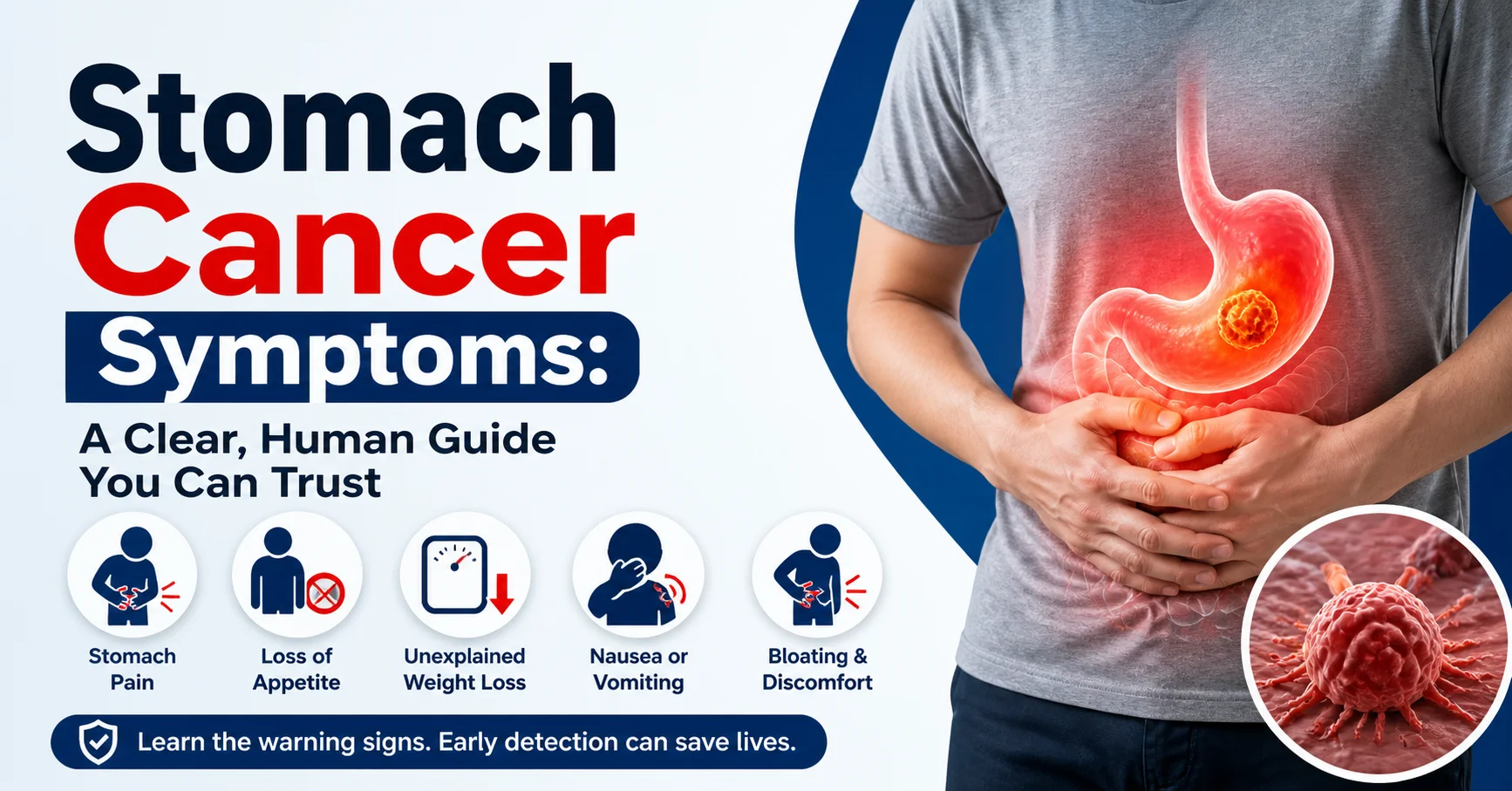
Understanding stomach cancer symptoms can feel confusing and even scary. Many people ignore early warning signs because they seem mild or common. A little stomach pain or loss of appetite does not always feel serious. But sometimes, these small changes matter more than we think.
This guide is written in simple words. It explains what to watch for, when to worry, and how symptoms may differ in women. You will also find real-life style examples, helpful tips, and clear answers to common questions.
If you have been wondering “what are the symptoms of stomach cancer?”, this article will give you honest, easy-to-understand answers.
Why It’s Important to Know Stomach Cancer Symptoms Early
Early stomach cancer symptoms are often very mild. Many people confuse them with normal digestion problems. That is why this disease is often found late.
When found early, treatment is much more effective. People have better chances of recovery. But when symptoms are ignored for months, the cancer can spread.
Think of your body like a warning system. It sends small signals first. If you listen early, you can act early. This can save your life.
Even if symptoms seem small, it is always better to check them.
What Are the Symptoms of Stomach Cancer?
The symptoms of stomach cancer can vary from person to person. Some people feel nothing at first. Others may notice small changes.
Here are the most common signs:
- Feeling full very quickly
- Loss of appetite
- Unexplained weight loss
- Mild stomach pain or discomfort
- Heartburn or indigestion that does not go away
- Nausea or vomiting
These symptoms may not always mean cancer. But if they last for weeks, they should not be ignored.
Early Stomach Cancer Symptoms You Should Not Ignore
Early stomach cancer symptoms are often subtle. That is why they are easy to miss.
You might feel full after eating a small meal. You may feel bloated even without eating much. Some people notice a dull pain in the upper stomach area.
A common example is someone who thinks they just have “gas issues.” They take medicine, but the problem keeps coming back.
If your symptoms are new and last more than two weeks, it is time to speak with a doctor.
Advanced Symptoms of Stomach Cancer
As the disease grows, symptoms become more serious. These signs are harder to ignore.
Advanced symptoms of stomach cancer include:
- Severe stomach pain
- Vomiting blood
- Black or tar-like stools
- Extreme weakness
- Swelling in the stomach
At this stage, the cancer may have spread. Treatment becomes more complex. This is why early detection is so important.
Stomach Cancer Symptoms Female: What Women Should Know
Stomach cancer symptoms female patients experience can sometimes be slightly different. Women may notice symptoms that feel like hormonal or digestive issues.
For example, women may feel:
- Constant bloating
- Loss of appetite
- Feeling tired all the time
- Mild nausea that does not go away
These symptoms are often confused with common conditions like acidity or stress.
That is why awareness is key. If something feels unusual for your body, do not ignore it.
Cancer Symptoms in Women Stomach: Subtle but Serious Signs
When we talk about cancer symptoms in women stomach, we must focus on subtle changes.
Women often ignore symptoms because they are busy or think it is nothing serious. But small changes matter.
For example, a woman might notice she cannot finish her meals anymore. Or she may feel discomfort after eating normal food.
These signs may not seem alarming at first. But over time, they can point to something serious.
Listening to your body is very important.
Common vs Serious Symptoms: A Helpful Comparison
| Common Digestive Issues | Possible Stomach Cancer Symptoms |
|---|---|
| Occasional heartburn | Constant indigestion |
| Mild bloating | Severe or long-term bloating |
| Temporary nausea | Ongoing nausea or vomiting |
| Normal appetite | Loss of appetite |
| Stable weight | Unexplained weight loss |
This table helps you see the difference. If symptoms are frequent and persistent, they need attention.
Causes and Risk Factors You Should Know
Understanding causes can help you stay alert. While not everyone with risk factors develops cancer, they do increase the chances.
Common risk factors include:
- Smoking
- Eating too much salty or processed food
- Family history of stomach cancer
- Infection like H. pylori
- Age above 50
Lifestyle plays a big role. Healthy eating and regular checkups can reduce risk.
When Should You See a Doctor?
You should see a doctor if:
- Symptoms last more than two weeks
- Pain gets worse over time
- You lose weight without trying
- You feel tired all the time
Many people delay visiting a doctor. They hope symptoms will go away. But early testing can make a huge difference.
A simple check today can prevent serious problems later.
How Stomach Cancer Is Diagnosed
Doctors use different tests to confirm the condition. These tests help find the cause of symptoms.
Common methods include:
- Endoscopy (camera test inside the stomach)
- Biopsy (taking a small tissue sample)
- CT scans
- Blood tests
These tests are safe and important. They help doctors decide the best treatment.
Treatment Options: What to Expect
Treatment depends on how early the cancer is found.
Common treatments include:
- Surgery to remove the tumor
- Chemotherapy
- Radiation therapy
- Targeted therapy
Early-stage cancer may only need surgery. Advanced stages may need a combination of treatments.
Your doctor will guide you based on your condition.
Real-Life Insight: Why Early Symptoms Matter
Many people share similar stories. They ignore small symptoms for months. They think it is just acidity or stress.
One example is a man who felt full quickly after meals. He ignored it for months. Later, he was diagnosed with stomach cancer.
Stories like this remind us to take symptoms seriously. Early action can save lives.
Simple Tips to Protect Your Stomach Health
You can lower your risk with simple habits:
- Eat fresh fruits and vegetables
- Avoid too much processed food
- Quit smoking
- Stay active
- Get regular health checkups
Small changes can make a big difference over time.
FAQs About Stomach Cancer Symptoms
1. What are the first symptoms of stomach cancer?
Early symptoms include loss of appetite, mild stomach pain, and feeling full quickly.
2. Are stomach cancer symptoms always painful?
No. Early stages may not cause pain. That is why it is often missed.
3. Can women have different symptoms?
Yes. Stomach cancer symptoms female patients experience may include bloating and fatigue.
4. How long should I wait before seeing a doctor?
If symptoms last more than two weeks, you should get checked.
5. Is weight loss a common sign?
Yes. Unexplained weight loss is a key warning sign.
6. Can stomach cancer be cured?
If found early, treatment can be very effective.
Final Thoughts: Listen to Your Body
Understanding stomach cancer symptoms can help you take control of your health. Your body always gives signals. The key is to listen and act on time.
Do not ignore small changes. Even simple symptoms can carry important messages. If something feels wrong, trust your instincts.
Talk to a doctor. Share your concerns. Early action can make all the difference.
Your health matters. Stay aware, stay informed, and take care of yourself.
