

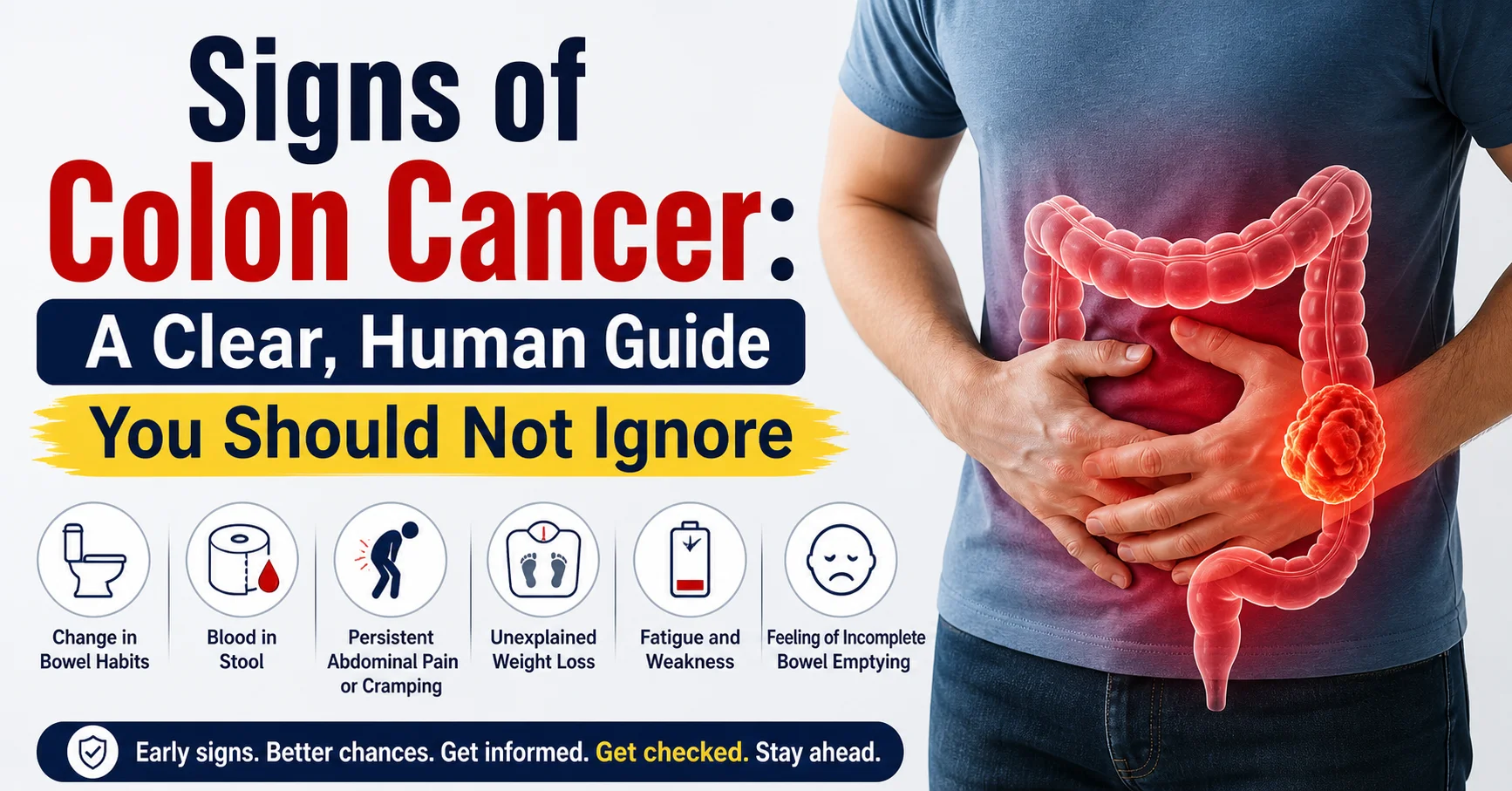
Colon cancer is one of the most common cancers worldwide. The good news is that it often develops slowly. This means there is time to notice early warning signs and take action. Many people ignore symptoms because they seem small or harmless. But understanding the signs of colon cancer can help you or someone you love catch it early.
This guide will walk you through everything in simple words. You will learn what to watch for, when to act, and why early detection matters. I will also share real-life insights to help you relate better to the topic.
What Is Colon Cancer?
Colon cancer starts in the large intestine, also called the colon. It usually begins as small growths called polyps. Over time, some polyps can turn into cancer.
At first, these growths may not cause any symptoms. That is why many people do not notice anything wrong. But as the cancer grows, it starts to affect how your body works.
Understanding the signs of colon cancer early can make a huge difference. Early detection can lead to better treatment and higher survival rates.
Why You Should Not Ignore Early Signs
Many early symptoms are easy to overlook. People often think it is just gas, stress, or a minor stomach issue.
But here is the truth: your body gives signals when something is wrong.
Ignoring early signs can delay diagnosis. This can allow cancer to grow and spread. Acting early can save your life.
The early signs of colon cancer are often mild. But they are still important. Even small changes in your body should not be ignored.
Common Signs of Colon Cancer
Here are some of the most common symptoms people experience:
| Symptom | What It Feels Like |
|---|---|
| Blood in stool | Bright red or dark-colored stool |
| Changes in bowel habits | Diarrhea or constipation lasting weeks |
| Abdominal pain | Cramping or discomfort |
| Fatigue | Feeling tired all the time |
| Unexplained weight loss | Losing weight without trying |
These are the basic signs of colon cancer, but not everyone will have all of them.
Changes in Bowel Habits
One of the most noticeable signs is a change in your bathroom routine.
You may feel like you need to go more often. Or you may struggle with constipation. Some people switch between diarrhea and constipation.
If these changes last more than a few weeks, do not ignore them.
Your body has a normal pattern. When that pattern changes, it is worth checking.
Many people ask, what are signs of colon cancer? Changes in bowel habits are often one of the first answers.
Blood in Stool: A Warning Sign
Seeing blood can be scary. It may appear bright red or dark and sticky.
Some people think it is just hemorrhoids. While that can be true, it is not always safe to assume.
Blood in stool is one of the key signs of colon cancer. Even small amounts matter.
If you notice blood even once, it is best to consult a doctor. It is better to be safe than sorry.
Persistent Abdominal Pain or Cramping
Stomach pain happens to everyone. But pain that does not go away is different.
You may feel cramps, pressure, or bloating. Some people describe it as a dull ache.
If the pain lasts for weeks, it should not be ignored.
Persistent discomfort is one of the lesser-known early signs of colon cancer, but it is still important.
Feeling Tired All the Time
Fatigue is more than just feeling sleepy. It is a deep sense of tiredness that does not improve with rest.
Colon cancer can cause internal bleeding. This can lead to low iron levels, also known as anemia.
When your body lacks iron, you feel weak and tired.
If you feel exhausted without a clear reason, it may be one of the signs of colon cancer.
Unexplained Weight Loss
Losing weight without trying may sound like a good thing, but it is not always healthy.
Cancer can affect how your body uses energy. It can also reduce your appetite.
If you lose weight suddenly and do not know why, pay attention.
This symptom often appears in later stages, but it can still be one of the signs of colon cancer.
Signs of Colon Cancer in Women
Women may experience symptoms slightly differently. Hormonal changes can sometimes hide early signs.
Here are some signs of colon cancer in women:
- Bloating that feels constant
- Changes in bowel habits
- Fatigue that feels unusual
- Mild abdominal discomfort
Some women confuse these symptoms with menstrual issues or digestive problems.
That is why awareness is important. Recognizing the sign of colon cancer women experience can lead to earlier diagnosis.
Risk Factors You Should Know
Not everyone has the same risk. Some factors increase your chances:
| Risk Factor | Explanation |
|---|---|
| Age | Risk increases after 45 |
| Family history | Genetics play a role |
| Diet | High red meat intake increases risk |
| Smoking | Raises cancer risk |
| Lack of exercise | Affects overall health |
Knowing your risk helps you stay alert to the signs of colon cancer.
When Should You See a Doctor?
You do not need to panic over every symptom. But you should take action if:
- Symptoms last more than two weeks
- You see blood in stool
- You feel constant fatigue
- You notice major changes in bowel habits
Doctors can perform simple tests to check for problems.
Catching the early signs of colon cancer can make treatment much easier.
How Colon Cancer Is Diagnosed
Doctors use different methods to confirm the condition:
| Test | Purpose |
|---|---|
| Colonoscopy | Checks inside the colon |
| Stool test | Detects hidden blood |
| CT scan | Looks for growths |
| Biopsy | Confirms cancer cells |
These tests are safe and can provide clear answers.
Real-Life Insight: Why Awareness Matters
I once spoke to someone who ignored symptoms for months. He thought it was just stress and poor diet.
When he finally saw a doctor, the cancer had already progressed.
On the other hand, another person acted quickly after noticing blood in stool. The cancer was caught early, and treatment was successful.
The difference? Awareness and action.
Understanding the signs of colon cancer can truly save lives.
How to Lower Your Risk
While you cannot control everything, you can reduce your risk:
- Eat more fruits and vegetables
- Exercise regularly
- Avoid smoking
- Limit processed foods
- Get regular screenings
Healthy habits can make a big difference over time.
FAQs About Signs of Colon Cancer
1. What are the early signs of colon cancer?
Early signs include changes in bowel habits, fatigue, and mild abdominal pain.
2. Can colon cancer symptoms come and go?
Yes, symptoms can appear and disappear, especially in early stages.
3. Are signs of colon cancer different in women?
Some symptoms may feel like hormonal issues, which can delay detection.
4. Is blood in stool always cancer?
No, but it should always be checked by a doctor.
5. How long can symptoms last before diagnosis?
Some people experience symptoms for months before diagnosis.
6. Can young people get colon cancer?
Yes, cases in younger adults are increasing, so symptoms should not be ignored.
Final Thoughts: Listen to Your Body
Your body speaks to you every day. Sometimes the signs are small, but they matter.
The signs of colon cancer are often easy to miss. But when you understand them, you gain the power to act early.
Do not ignore changes. Do not delay checkups. Even if it turns out to be nothing serious, peace of mind is worth it.
If you found this guide helpful, consider sharing it with others. You never know whose life it might help.
