

Introduction
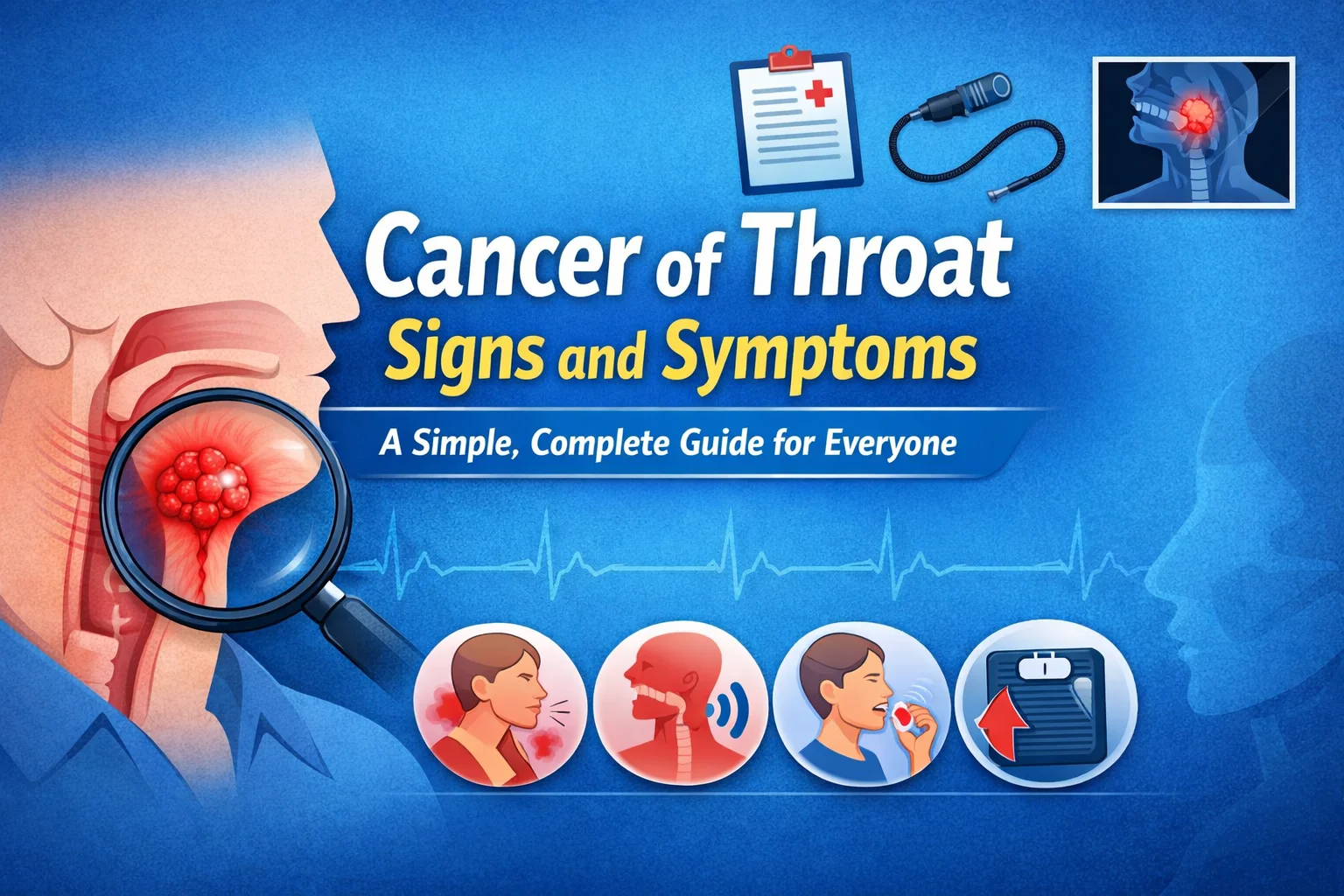
Talking about cancer can feel scary. But knowing the cancer of throat signs and symptoms can help you stay safe and act early. The throat plays an important role in breathing, speaking, and swallowing. When something goes wrong there, your body often gives warning signs.
Many people ignore early symptoms. They may think it is just a cold or sore throat. But sometimes, these small signs can point to something more serious. Learning the sign and symptoms of cancer of the throat helps you understand when to see a doctor.
This guide explains everything in simple words. You will learn what throat cancer is, its causes, early warning signs, and when to take action. The goal is to give you clear, helpful knowledge that anyone can understand.
What Is Throat Cancer?
Throat cancer is a type of cancer that develops in the throat area. This includes the voice box, tonsils, and windpipe. It happens when cells grow in an abnormal and uncontrolled way.
There are different types of throat cancer. Some start in the voice box, while others begin in the upper throat. Even though the types vary, many signs and symptoms of throat cancer are similar.
This cancer can affect speaking and swallowing. It may also change your voice or cause discomfort. Early detection can make treatment easier and more effective.
Why Understanding Symptoms Matters
Knowing the cancer of the throat signs and symptoms can save lives. Early-stage cancer is often easier to treat. But late-stage cancer can spread and become dangerous.
Many symptoms may seem harmless at first. A sore throat or hoarseness might not feel serious. But if these problems last for weeks, they need attention.
By understanding the sign and symptoms of throat cancer, you can act quickly. Seeing a doctor early can lead to better outcomes and faster recovery.
Early Warning Signs You Should Not Ignore
Early symptoms are often mild. That is why many people ignore them. But these small signs can be important clues.
Here are common early signs:
| Early Symptom | What It Feels Like |
|---|---|
| Persistent sore throat | Pain that does not go away |
| Hoarseness | Voice sounds rough or weak |
| Trouble swallowing | Feeling like food is stuck |
| Lump in the neck | Swelling or small bump |
If these symptoms last more than two weeks, it is best to consult a doctor. These are key signs and symptoms of throat cancer that should not be ignored.
Common Symptoms of Throat Cancer
As the disease develops, symptoms become more noticeable. These signs affect daily life and comfort.
Some common symptoms include:
- Constant throat pain
- Difficulty speaking clearly
- Ear pain without infection
- Unexplained weight loss
- Persistent cough
These symptoms are part of the cancer of throat signs and symptoms that appear in many patients. They can interfere with eating, talking, and sleeping.
Advanced Signs of Throat Cancer
In later stages, symptoms become stronger and harder to ignore. These signs often mean the cancer has grown or spread.
| Advanced Symptom | Description |
|---|---|
| Severe swallowing pain | Eating becomes very difficult |
| Breathing trouble | Feeling short of breath |
| Bleeding from throat | Rare but serious sign |
| Large neck lump | Noticeable swelling |
Recognizing these sign and symptoms of cancer of the throat early can help prevent reaching this stage.
Causes and Risk Factors
Understanding causes helps reduce risk. While anyone can develop throat cancer, some factors increase the chances.
Key risk factors include:
- Smoking or tobacco use
- Heavy alcohol consumption
- Poor diet
- Viral infections like HPV
- Long-term acid reflux
These factors can damage throat cells over time. This damage may lead to cancer. Knowing these risks helps you avoid triggers and protect your health.
Who Is Most at Risk?
Some people are more likely to develop throat cancer. Age and lifestyle play a big role.
Higher risk groups include:
- Adults over 50
- Smokers and drinkers
- People with weak immune systems
- Individuals exposed to harmful chemicals
Even if you are not in these groups, you should still watch for signs and symptoms of throat cancer.
When Should You See a Doctor?
Many people delay seeing a doctor. This can make things worse. If symptoms last longer than two weeks, take them seriously.
Visit a doctor if you notice:
- A sore throat that won’t heal
- Voice changes lasting weeks
- Difficulty swallowing food
- Unexplained weight loss
These are important cancer of the throat signs and symptoms that need medical evaluation.
How Throat Cancer Is Diagnosed
Doctors use several tests to confirm throat cancer. These tests are simple and help find the problem early.
Common diagnostic methods:
| Test | Purpose |
|---|---|
| Physical exam | Check throat and neck |
| Endoscopy | View inside throat |
| Biopsy | Test tissue sample |
| Imaging scans | Detect tumor size |
These tests help doctors understand the condition and plan treatment.
Treatment Options for Throat Cancer
Treatment depends on the stage and type of cancer. Early cases are easier to treat.
Main treatments include:
- Surgery to remove tumors
- Radiation therapy
- Chemotherapy
- Targeted therapy
Doctors may combine treatments for better results. Early detection improves success rates.
Lifestyle Changes to Lower Risk
Prevention is always better than cure. Small lifestyle changes can reduce your risk.
Helpful habits:
- Quit smoking
- Limit alcohol intake
- Eat fruits and vegetables
- Stay physically active
- Maintain oral hygiene
These steps support overall health and lower the chances of developing throat cancer.
Living with Throat Cancer
Living with throat cancer can be challenging. But many people recover and live full lives.
Support is important. Family, friends, and healthcare teams play a big role. Speech therapy and nutrition support can help during recovery.
Understanding the sign and symptoms of throat cancer also helps patients track progress and notice changes.
Emotional Impact and Support
Cancer affects both body and mind. Many patients feel fear, stress, or sadness.
It is important to talk about your feelings. Support groups and counseling can help. Staying positive and informed can improve recovery.
FAQs About Cancer of Throat Signs and Symptoms
1. What are the first signs of throat cancer?
Early signs include a sore throat, hoarseness, and trouble swallowing. These symptoms often last longer than normal infections.
2. Can throat cancer be cured?
Yes, especially if detected early. Treatment success depends on the stage and overall health.
3. Is a persistent cough a symptom?
Yes, a long-lasting cough can be one of the signs and symptoms of throat cancer.
4. How long should symptoms last before seeing a doctor?
If symptoms last more than two weeks, you should consult a doctor.
5. Does throat cancer cause pain?
Yes, it can cause throat pain, ear pain, and difficulty swallowing.
6. Can non-smokers get throat cancer?
Yes, although the risk is lower, non-smokers can still develop it due to other factors.
Conclusion
Understanding the cancer of throat signs and symptoms is one of the best ways to protect your health. Early signs are often small, but they matter. Paying attention to your body can help you catch problems early.
Do not ignore symptoms that last longer than usual. A simple check-up can make a big difference. Remember, early action saves lives.
Take care of your throat by living a healthy lifestyle. Avoid harmful habits and listen to your body. If something feels wrong, seek help.
Your health is important—and staying informed is the first step toward a safer future.
