

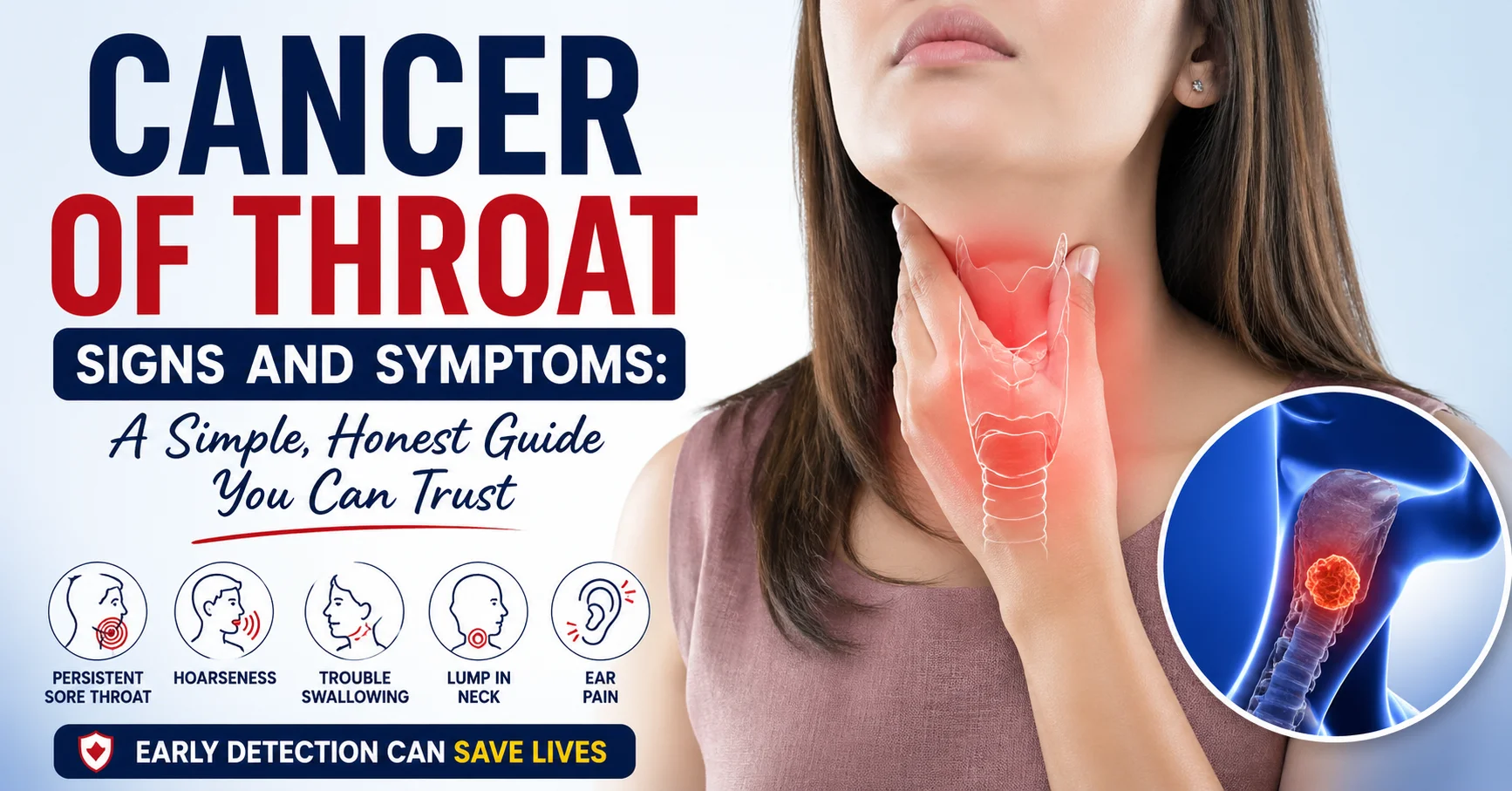
Understanding your body can save your life. Many people ignore early warning signs because they seem small or harmless. But when it comes to cancer of throat signs and symptoms, early attention matters a lot. This guide will help you understand what to look for, when to worry, and what steps to take next.
We will keep things simple, clear, and easy to follow. No confusing medical words. Just real, helpful information you can trust.
What Is Throat Cancer?
Throat cancer happens when abnormal cells grow in your throat. This includes areas like the voice box, tonsils, and the back of your throat.
These cells grow out of control and can spread if not treated early. The good news is that many cases can be treated successfully if found early.
The tricky part is that cancer of throat signs and symptoms often start small. They can feel like a cold or minor infection. That’s why awareness is so important.
Why You Should Know the Early Signs
Early detection can save lives. When throat cancer is found early, treatment is easier and more successful.
Many people delay seeing a doctor because symptoms seem normal. A sore throat or hoarseness doesn’t feel serious at first.
But if symptoms last longer than expected, your body may be sending a warning.
Knowing the signs and symptoms of throat cancer helps you act quickly. It gives you control over your health.
Common Cancer of Throat Signs and Symptoms
Here are the most common symptoms people experience:
| Symptom | What It Feels Like | When to Worry |
|---|---|---|
| Persistent sore throat | Pain that doesn’t go away | Lasts more than 2 weeks |
| Hoarseness | Voice sounds rough or weak | No improvement over time |
| Trouble swallowing | Pain or discomfort while eating | Gets worse daily |
| Lump in neck | Swelling or small bump | Doesn’t shrink |
| Ear pain | Pain without infection | Ongoing and unexplained |
These sign and symptoms of cancer of the throat may seem simple. But if they stay, don’t ignore them.
Early Warning Signs You Should Not Ignore
Early symptoms are often mild. Many people mistake them for a cold or allergy.
Here are early cancer of throat signs and symptoms:
- Mild throat discomfort
- Slight voice changes
- Feeling like something is stuck in your throat
- Small swelling in the neck
These signs may not hurt much. But they matter.
If something feels “off” for more than two weeks, it’s time to check it.
Advanced Symptoms of Throat Cancer
As cancer grows, symptoms become stronger and harder to ignore.
| Advanced Symptom | Description |
|---|---|
| Severe swallowing pain | Eating becomes difficult |
| Weight loss | Losing weight without trying |
| Breathing difficulty | Feeling short of breath |
| Persistent cough | Sometimes with blood |
| Extreme fatigue | Feeling tired all the time |
These are serious signs and symptoms of throat cancer. They need immediate medical attention.
Signs and Symptoms of Throat Cancer in Women
Throat cancer affects both men and women, but symptoms can feel slightly different in women.
Women may notice:
- Voice changes earlier
- Hormonal changes affecting throat dryness
- More frequent throat irritation
| Symptom in Women | Why It Happens |
|---|---|
| Dry throat feeling | Hormonal shifts |
| Voice fatigue | Vocal cord strain |
| Mild swallowing pain | Early tissue changes |
Understanding signs and symptoms of throat cancer in women helps with early detection.
What Causes Throat Cancer?
There is no single cause, but several risk factors increase the chances.
| Risk Factor | Impact |
|---|---|
| Smoking | Damages throat cells |
| Alcohol use | Irritates throat lining |
| HPV infection | Major risk factor |
| Poor diet | Weakens immunity |
| Pollution | Long-term exposure risk |
Many cases of sign and symptoms of throat cancer are linked to lifestyle habits.
Who Is Most at Risk?
Anyone can develop throat cancer, but some people have higher risk.
High-risk groups include:
- Smokers
- Heavy alcohol users
- People over age 50
- Those with HPV infection
- People with poor oral hygiene
Knowing your risk helps you stay alert for cancer of throat signs and symptoms.
When Should You See a Doctor?
You don’t need to panic over every sore throat. But you should not ignore long-lasting symptoms.
See a doctor if:
- Symptoms last more than 2 weeks
- You have trouble swallowing
- Your voice changes without reason
- You notice a lump in your neck
Early action can make a big difference.
How Doctors Diagnose Throat Cancer
Doctors use simple tests to find the cause of symptoms.
Common methods include:
- Physical throat exam
- Imaging scans
- Endoscopy (looking inside the throat)
- Biopsy (testing tissue)
Diagnosis confirms whether symptoms are serious or not.
Treatment Options You Should Know
Treatment depends on how early the cancer is found.
| Treatment | Purpose |
|---|---|
| Surgery | Remove cancer cells |
| Radiation therapy | Kill cancer cells |
| Chemotherapy | Stop cancer growth |
| Targeted therapy | Focus on cancer cells |
Early-stage cancer is easier to treat.
Can Throat Cancer Be Prevented?
You cannot prevent all cases, but you can reduce your risk.
Simple steps include:
- Quit smoking
- Limit alcohol
- Eat healthy foods
- Maintain oral hygiene
- Get HPV vaccination
Prevention lowers your chances of developing sign and symptoms of throat cancer.
Real-Life Insight: Why Early Action Matters
Many people ignore symptoms thinking they will go away.
One common story is someone having a sore throat for months. They treat it at home, thinking it’s nothing serious.
Later, they find out it’s cancer at an advanced stage.
This shows why recognizing cancer of throat signs and symptoms early can save lives.
Emotional Impact of Throat Cancer
Throat cancer does not just affect the body. It affects emotions too.
People may feel:
- Fear
- Anxiety
- Stress about speaking or eating
Support from family and doctors helps a lot.
Talking about symptoms early reduces stress and improves outcomes.
Lifestyle Changes After Diagnosis
Life changes after diagnosis, but many people recover and live well.
Helpful changes include:
- Healthy diet
- Speech therapy if needed
- Regular checkups
- Avoiding smoking and alcohol
These steps improve quality of life.
FAQs About Cancer of Throat Signs and Symptoms
1. What is the first sign of throat cancer?
The first sign is often a sore throat or voice change that does not go away.
2. How long should symptoms last before worrying?
If symptoms last more than two weeks, you should see a doctor.
3. Is throat cancer painful in early stages?
Not always. Early stages may feel mild or painless.
4. Can young people get throat cancer?
Yes, but it is more common in older adults.
5. Are all throat lumps cancer?
No. Many lumps are harmless, but they should be checked.
6. Can throat cancer be cured?
Yes, especially if found early.
Final Thoughts: Listen to Your Body
Your body always gives signals when something is wrong. The key is to listen.
Understanding cancer of throat signs and symptoms helps you take control of your health. Small symptoms can mean something bigger, but early action can change everything.
If something feels unusual, don’t wait. Get it checked. It’s always better to be safe than sorry.
Your health matters. Take it seriously, and encourage others to do the same.
