

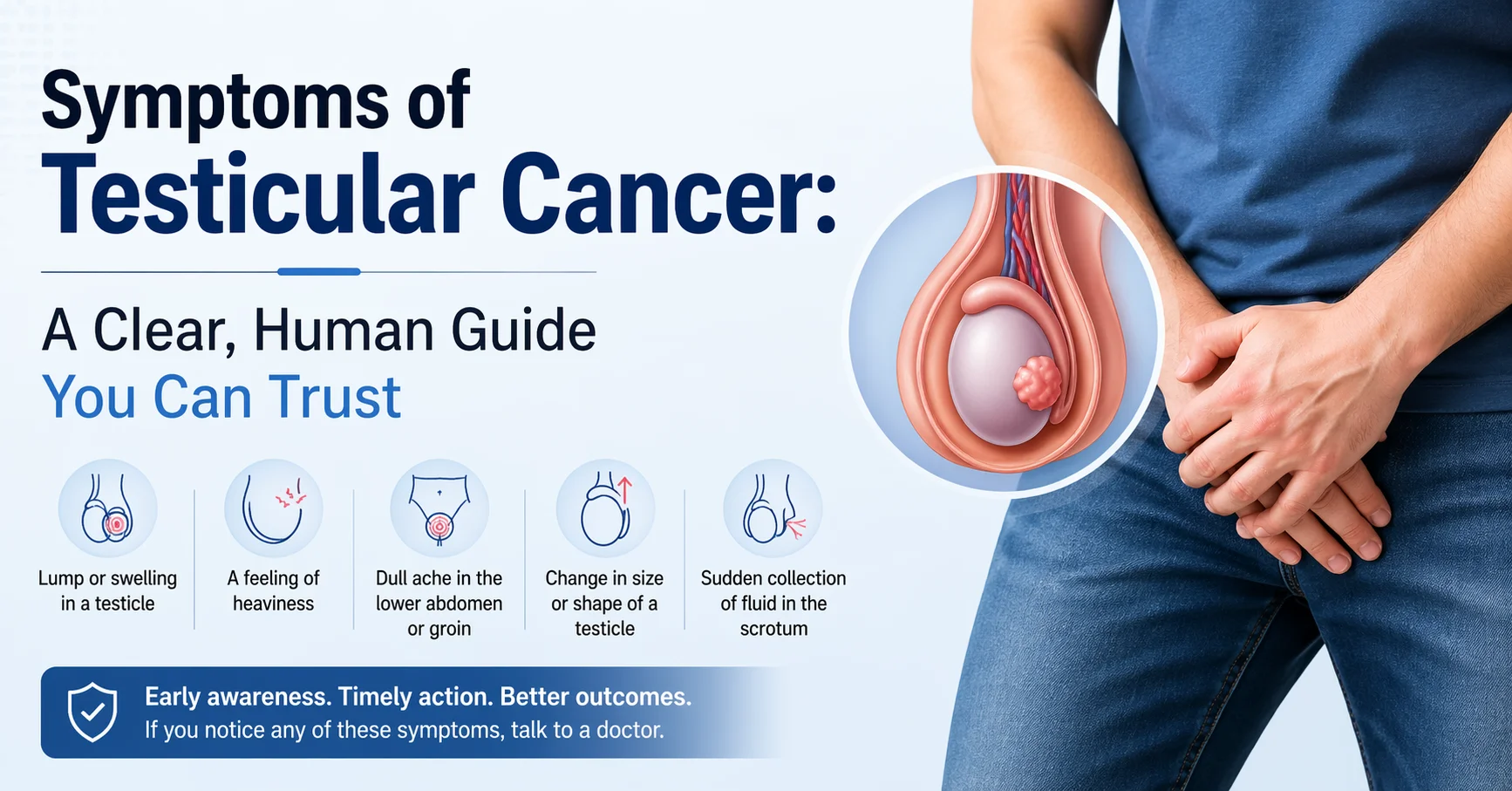
Testicular cancer is not something most people think about every day. But knowing the symptoms of testicular cancer can make a life-saving difference. The good news is that this type of cancer is often highly treatable, especially when found early.
In this guide, we will walk through everything in a simple and honest way. You will learn what to watch for, when to take action, and what the signs really feel like in real life. No confusing medical language. Just clear, helpful information you can trust.
Why Understanding Symptoms of Testicular Cancer Matters
Many people ignore early changes in their bodies. That’s normal. Life is busy, and small symptoms don’t always seem serious. But when it comes to symptoms of testicular cancer, early attention can save lives.
Testicular cancer often starts quietly. A small lump or slight swelling may not hurt at all. Because of this, it is easy to miss. Some people only notice it by chance, like during a shower.
From real-life stories, many men say they waited weeks or months before seeing a doctor. They thought it was nothing. Later, they wished they had acted sooner.
The key point is simple: knowing what are the symptoms of testicular cancer helps you act early. Early treatment is easier, faster, and more successful.
What Are the Symptoms of Testicular Cancer?
Let’s answer the main question clearly: what are the symptoms of testicular cancer?
The most common signs include:
- A lump in one testicle
- Swelling or size change
- A heavy feeling in the scrotum
- Mild pain or discomfort
- Sudden fluid buildup
These signs may not all appear at once. Some people notice only one change.
Here’s a quick overview:
| Symptom | What It Feels Like | Common or Rare |
|---|---|---|
| Lump | Small, firm, painless | Very common |
| Swelling | Testicle feels bigger | Common |
| Pain | Dull ache, not sharp | Sometimes |
| Heaviness | Dragging feeling | Common |
| Fluid buildup | Sudden swelling | Less common |
Always remember: not every lump is cancer. But every lump should be checked.
Early Signs You Should Never Ignore
Early signs and symptoms of testicular cancer are often mild. That is why many people miss them.
The earliest warning is usually a small lump. It may feel like a pea or marble. It usually does not hurt.
Another early sign is a change in size. One testicle may become slightly larger or feel different.
Some people notice a dull ache in the lower abdomen or groin. It is not sharp pain. It feels more like pressure.
These signs are easy to ignore. But ignoring them can delay diagnosis.
Here’s a helpful breakdown:
| Early Sign | Why It Matters |
|---|---|
| Small lump | First visible change |
| Size difference | Indicates growth |
| Mild discomfort | Early internal change |
| Heaviness | Pressure buildup |
If something feels different, trust your body.
Pain vs No Pain: What to Expect
One common myth is that cancer always hurts. That is not true.
Many symptoms of testicular cancer are painless at first. This is why people delay checking.
Pain, if it happens, is usually mild. It may feel like a dull ache or slight discomfort.
Some men describe it as a “pulling” feeling. Others say it feels like pressure.
Severe pain is rare in early stages. If pain becomes strong, it may mean the condition has progressed.
So, don’t wait for pain to take action. A painless lump is just as important.
Changes in Size, Shape, or Weight
One of the clearest signs and symptoms of testicular cancer is a change in how the testicle looks or feels.
You might notice:
- One testicle looks larger
- The shape feels uneven
- It feels heavier than usual
These changes can happen slowly. That makes them harder to notice.
A useful habit is to check regularly. This helps you understand what is normal for your body.
Here’s a comparison:
| Normal | Possible Concern |
|---|---|
| Smooth surface | Hard lump |
| Same size | One larger |
| Light feeling | Heavy feeling |
If something changes, even slightly, it’s worth checking.
Feeling of Heaviness or Discomfort
A heavy feeling in the scrotum is another common symptom.
It may feel like something is pulling downward. This can be uncomfortable but not painful.
Some people feel this when walking or standing for long periods.
This symptom happens because of swelling or fluid buildup.
While it may seem minor, it is one of the early symptoms of testicular cancer many people report.
Back Pain and Other Advanced Symptoms
When cancer spreads, new symptoms may appear.
These include:
- Lower back pain
- Chest discomfort
- Shortness of breath
Back pain happens when cancer affects nearby lymph nodes.
These are not early signs. They usually appear later.
If you have these along with testicular changes, seek medical help quickly.
Risk Factors That Increase Your Chances
Some people have a higher risk of developing testicular cancer.
These include:
- Undescended testicle
- Family history
- Previous testicular cancer
- Age (15–35 most common)
But here’s the important part: anyone can get it.
Even if you have no risk factors, you should still know the symptoms of testicular cancer.
How to Do a Simple Self-Check
A self-check takes less than a minute. It can help you spot early changes.
The best time is after a warm shower. The skin is relaxed.
Steps:
- Hold each testicle gently
- Roll it between your fingers
- Feel for lumps or changes
It should feel smooth and slightly soft.
Do not panic if one is slightly bigger. That can be normal.
The goal is to notice new changes.
Symptoms of Testicular Cancer in Dogs
Yes, dogs can also develop testicular cancer.
The signs and symptoms of testicular cancer in dogs include:
- Swelling in the testicles
- Change in size
- Lethargy
- Loss of appetite
Pet owners often notice physical changes first.
If your dog shows these signs, a vet visit is important.
When Should You See a Doctor?
You should see a doctor if you notice:
- Any lump
- Swelling
- Pain that does not go away
- Change in size or shape
Do not wait weeks or months.
Even if it turns out to be nothing serious, peace of mind is worth it.
Early action leads to better outcomes.
How Doctors Diagnose It
Doctors use simple tests to confirm the condition.
These may include:
- Physical exam
- Ultrasound
- Blood tests
The process is quick and not painful.
If needed, further tests may follow.
Early diagnosis makes treatment easier and more effective.
Treatment and Survival Rates
The good news is that testicular cancer is highly treatable.
Treatment options include:
- Surgery
- Chemotherapy
- Radiation
Survival rates are very high, especially when found early.
Many people return to normal life after treatment.
This is why recognizing what are symptoms of testicular cancer is so important.
Common Myths You Should Ignore
Let’s clear up a few myths:
- “It always hurts” → False
- “Only older men get it” → False
- “Lumps are always cancer” → False
Understanding the truth helps reduce fear and confusion.
Emotional Side: It’s Okay to Feel Worried
It’s normal to feel anxious if you notice symptoms.
Many people feel fear or embarrassment.
But remember, doctors deal with this every day.
Getting checked is a smart and responsible step.
You are not alone in this.
Quick Symptom Summary Table
| Category | Symptoms |
|---|---|
| Early | Lump, swelling, heaviness |
| Mid | Mild pain, discomfort |
| Advanced | Back pain, breathing issues |
This table makes it easy to remember key points.
FAQs
1. What are the first symptoms of testicular cancer?
The first sign is usually a painless lump or swelling. Some people also feel heaviness.
2. Can testicular cancer go unnoticed?
Yes, early symptoms of testicular cancer are often mild and painless.
3. Is testicular pain always cancer?
No, many conditions cause pain. But any lasting pain should be checked.
4. How fast does testicular cancer grow?
It can grow quickly, which is why early detection matters.
5. Are the symptoms the same in all people?
Not always. Some have lumps, others notice swelling or discomfort.
6. Can young men get testicular cancer?
Yes, it is most common between ages 15 and 35.
Final Thoughts: Take Action, Stay Aware
Understanding the symptoms of testicular cancer is one of the simplest ways to protect your health.
Most symptoms start small. A lump. A slight change. A feeling of heaviness.
These signs are easy to ignore. But they should not be.
If you notice anything unusual, do not wait. A quick check can make a big difference.
Early detection saves lives. And in many cases, it leads to full recovery.
Stay aware. Stay informed. And take care of your health—you deserve it.
