

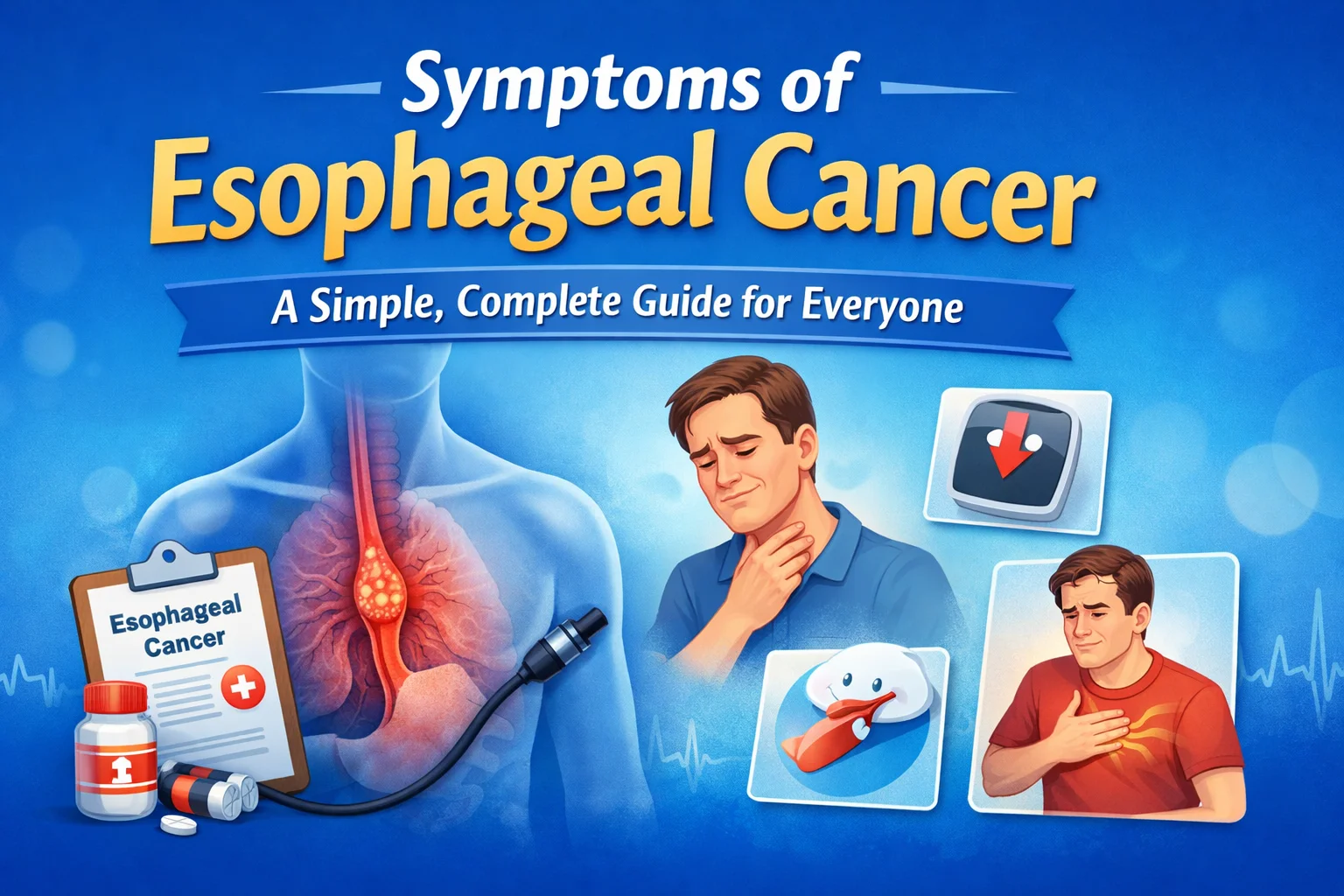
Understanding the symptoms of esophageal cancer can truly save lives. Many people ignore early warning signs because they seem small or harmless. But catching changes early can make a big difference.
The esophagus is the tube that carries food from your mouth to your stomach. When cancer develops here—called esophageal cancer—it can slowly affect how you eat, swallow, and feel overall. The tricky part is that early symptoms are often mild.
In this guide, you will learn what are the symptoms of esophageal cancer, including early and unusual signs. We will keep things simple, clear, and helpful so anyone can understand. I’ll also share practical insights and real-life examples to make this easier to relate to.
What Is Esophageal Cancer?
Esophageal cancer starts in the lining of the esophagus. Over time, abnormal cells grow and form a tumor. There are two main types: squamous cell carcinoma and adenocarcinoma. Both can affect swallowing and digestion.
Many people do not notice symptoms at first. That’s why learning the earliest symptoms of esophageal cancer is so important. In my experience, people often think swallowing trouble is just acid reflux or stress. But if it keeps happening, it should never be ignored.
Risk factors include smoking, heavy alcohol use, obesity, and long-term acid reflux. But even people without these risks can develop it. So awareness matters more than assumptions.
Why Early Symptoms Are Easy to Miss
The early symptoms of esophageal cancer are often subtle. They may feel like common problems, such as heartburn or mild discomfort.
For example, someone might feel food “sticking” occasionally. At first, it may only happen with solid foods like bread or meat. Many people simply drink water and move on.
This is why early detection is difficult. Symptoms slowly get worse over time. By the time they become obvious, the cancer may have already grown.
The key lesson here is simple: small, repeated changes in your body should never be ignored.
Earliest Symptoms of Esophageal Cancer
Let’s look at the earliest symptoms of esophageal cancer. These signs are often mild but important.
| Early Symptom | What It Feels Like | Why It Happens |
|---|---|---|
| Trouble swallowing | Food feels stuck | Narrowing of esophagus |
| Mild chest discomfort | Pressure or tightness | Irritation in the lining |
| Frequent heartburn | Burning sensation | Acid reflux damage |
| Unexplained fatigue | Feeling tired often | Body under stress |
At first, swallowing problems may come and go. Many people adjust their eating habits without realizing it. They chew more or avoid certain foods.
If you notice these signs lasting more than two weeks, it’s wise to check with a doctor.
Difficulty Swallowing (Most Common Sign)
Difficulty swallowing, also called dysphagia, is the most common symptom. It often starts slowly.
At first, solid foods may feel hard to swallow. Later, even liquids become difficult. This happens because the tumor blocks the passage.
Here’s how it usually progresses:
| Stage | Food Type Affected |
|---|---|
| Early | Solid foods |
| Middle | Soft foods |
| Late | Liquids |
Many people describe it as food “getting stuck.” Some even avoid eating due to fear. This can lead to weight loss and weakness.
If swallowing becomes harder over time, it is one of the clearest symptoms of esophageal cancer.
Unexplained Weight Loss
Sudden weight loss without trying is another warning sign. This often happens because eating becomes difficult.
People may eat less due to discomfort or fear of choking. The body may also burn more energy fighting the disease.
In real life, many patients say they thought their weight loss was a good thing at first. But when it continues without effort, it becomes concerning.
If you lose more than 5–10% of your body weight in a short time, it should be checked.
Persistent Chest Pain or Pressure
Chest pain linked to esophageal cancer is different from heart pain. It may feel like pressure, burning, or discomfort behind the breastbone.
This pain can worsen when swallowing or eating. Sometimes, it spreads to the back.
Because it feels similar to acid reflux, many people ignore it. But if the pain keeps coming back or gets worse, it could be a sign.
Among the unusual symptoms of esophageal cancer, this one is often misunderstood.
Chronic Cough or Hoarseness
A long-lasting cough or a hoarse voice can also be signs. This happens when the tumor affects nearby nerves or the airway.
You may notice:
- A cough that doesn’t go away
- Voice changes
- A raspy or weak voice
Many people think it’s just a cold or throat irritation. But if it lasts for weeks, it needs attention.
Food Coming Back Up (Regurgitation)
Another symptom is food coming back up after swallowing. This is called regurgitation.
It happens when food cannot pass through the esophagus properly. Instead, it returns to the mouth.
This can be uncomfortable and even embarrassing. Some people may also choke while eating.
This is one of the more noticeable symptoms of esophageal cancer as the disease progresses.
Pain While Swallowing
Pain during swallowing, known as odynophagia, is another warning sign.
It may feel like:
- Sharp pain
- Burning sensation
- Pressure in the chest
This often occurs when the tumor irritates the lining of the esophagus.
People may start avoiding food due to pain. This leads to poor nutrition and weight loss.
Unusual Symptoms of Esophageal Cancer
Some symptoms are less common but still important. These are the unusual symptoms of esophageal cancer.
| Unusual Symptom | Description |
|---|---|
| Hiccups that don’t stop | Irritation of nerves |
| Black stools | Possible internal bleeding |
| Bone pain | Cancer spread |
| Frequent infections | Weakened immunity |
These signs usually appear in later stages. But they should never be ignored.
Risk Factors That Increase Chances
Understanding risk factors helps you stay alert.
| Risk Factor | Why It Matters |
|---|---|
| Smoking | Damages cells |
| Alcohol use | Irritates lining |
| Acid reflux (GERD) | Causes long-term damage |
| Obesity | Increases pressure on stomach |
| Age (50+) | Higher risk with age |
Even if you don’t have these risks, symptoms should still be taken seriously.
When Should You See a Doctor?
You should see a doctor if you notice:
- Trouble swallowing that gets worse
- Weight loss without trying
- Ongoing chest discomfort
- Persistent cough or hoarseness
A simple check-up can lead to early detection. Doctors may use tests like endoscopy or imaging scans.
Early diagnosis improves treatment success.
How Symptoms Progress Over Time
Here’s a simple timeline to understand progression:
| Stage | Symptoms |
|---|---|
| Early | Mild swallowing issues |
| Middle | Pain, weight loss |
| Advanced | Severe blockage, fatigue |
This shows why early action is so important.
Personal Insight: Why Awareness Matters
I’ve seen many people ignore early signs. They think it’s just acidity or stress. Months later, symptoms become severe.
One common story is someone avoiding solid food without realizing why. By the time they seek help, swallowing becomes very hard.
This is why awareness of what are symptoms of esophageal cancer is powerful. Listening to your body is one of the best things you can do.
FAQs
1. What are the symptoms of esophageal cancer in early stages?
Early signs include mild swallowing difficulty, heartburn, and chest discomfort. These are often easy to miss.
2. What are symptoms of esophageal cancer that should worry me?
Trouble swallowing, weight loss, and persistent chest pain are key warning signs.
3. Can acid reflux lead to esophageal cancer?
Long-term acid reflux can increase risk, especially if untreated.
4. Are there unusual symptoms of esophageal cancer?
Yes, such as chronic hiccups, hoarseness, and black stools.
5. How fast do symptoms develop?
Symptoms usually develop slowly and worsen over time.
6. Is esophageal cancer treatable?
Yes, especially when caught early. Treatment options include surgery, chemotherapy, and radiation.
Conclusion
Understanding the symptoms of esophageal cancer can help you take action early. The signs may start small, but they should never be ignored.
If something feels off—especially swallowing problems or unexplained weight loss—don’t wait. Early detection can improve outcomes and even save lives.
Stay aware, listen to your body, and encourage others to do the same. A simple check today can make a huge difference tomorrow.
