

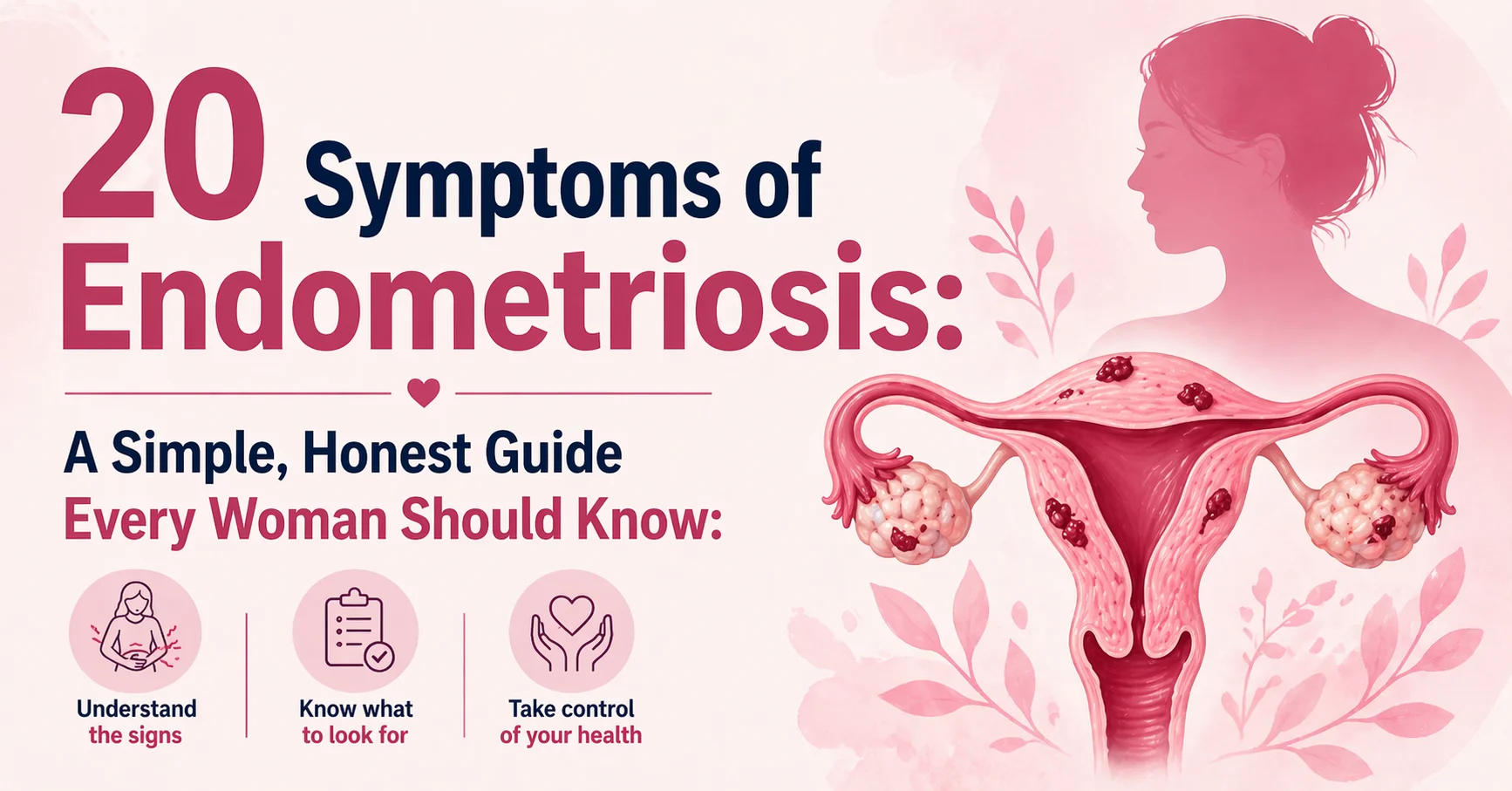
Endometriosis is a condition many women live with, often without knowing it. It can affect daily life, relationships, and even mental health. Yet, it is often misunderstood or ignored for years.
In this guide, we will walk through the 20 symptoms of endometriosis in a clear, simple way. You will learn what to watch for, how it feels in real life, and when to seek help. This is not just a list—it is a practical, human guide designed to help you understand your body better.
Many women describe endometriosis as “invisible pain.” From the outside, everything looks normal. Inside, the body is struggling. If you have ever felt like your pain was dismissed or “just part of being a woman,” this guide is for you.
What Is Endometriosis in Simple Words?
Endometriosis happens when tissue similar to the lining of the uterus grows outside it. This tissue can attach to the ovaries, fallopian tubes, or other organs.
Each month, this tissue reacts to hormones just like the uterine lining. It thickens, breaks down, and bleeds. But unlike normal periods, the blood has nowhere to go. This can cause pain, swelling, and scar tissue.
The tricky part is that symptoms vary a lot. Some women have severe pain. Others feel almost nothing. That is why understanding the 20 symptoms of endometriosis is so important. It helps you notice patterns early.
Why Recognizing Symptoms Matters
Many women wait years before getting a diagnosis. Some are told their pain is “normal.” Others feel embarrassed to speak up.
Recognizing symptoms early can:
- Help you get the right treatment sooner
- Prevent complications like infertility
- Improve your quality of life
Even mild symptoms can signal something deeper. Listening to your body is not overreacting—it is being smart.
1–5: The Most Common Early Signs
These are often the first signs women notice. They may start in the teenage years or early adulthood.
1. Painful Periods (Dysmenorrhea)
This is more than normal cramps. The pain can feel sharp, deep, or stabbing. It may start before your period and last several days.
Many women miss school or work because of this pain.
2. Heavy Menstrual Bleeding
You may notice soaking through pads quickly or needing double protection. Clots can also be larger than usual.
3. Pain During or After Sex
This is a very common but rarely discussed symptom. The pain can feel deep inside the pelvis.
4. Lower Back Pain
Some women feel a constant dull ache in the lower back, especially during periods.
5. Pelvic Pain Between Periods
Pain is not always tied to your cycle. Some women feel discomfort almost daily.
6–10: Symptoms That Affect Daily Life
These symptoms can make normal routines harder and more exhausting.
6. Painful Bowel Movements
Pain while using the bathroom is a strong sign. It often gets worse during periods.
7. Painful Urination
Some women feel burning or pressure when urinating, especially during menstruation.
8. Bloating (“Endo Belly”)
The stomach can feel swollen and tight. Clothes may suddenly feel too small.
9. Fatigue
This is deep, ongoing tiredness. It does not improve with rest.
10. Nausea
Some women feel sick to their stomach, especially during painful episodes.
11–15: Emotional and Hidden Symptoms
Endometriosis does not just affect the body. It can impact mental health too.
11. Anxiety
Living with constant pain can create worry and stress.
12. Depression
Feeling unheard or misunderstood can lead to sadness and low mood.
13. Brain Fog
Some women struggle to focus or remember things clearly.
14. Sleep Problems
Pain can make it hard to fall asleep or stay asleep.
15. Reduced Quality of Life
Daily activities, social events, and work may become difficult.
16–20: Less Common but Important Signs
These symptoms are less talked about but still part of the 20 symptoms of endometriosis.
16. Infertility
Some women discover endometriosis when trying to conceive.
17. Pain in the Legs
Pain may travel down the legs due to nerve involvement.
18. Spotting Between Periods
Light bleeding outside your cycle can occur.
19. Digestive Issues
Constipation, diarrhea, or IBS-like symptoms are common.
20. Pain After Exercise
Physical activity can trigger pelvic pain in some cases.
Quick Overview Table: Symptoms at a Glance
| Category | Symptoms Included |
|---|---|
| Pain-related | Cramps, pelvic pain, back pain, pain during sex |
| Digestive issues | Bloating, constipation, painful bowel movements |
| Urinary symptoms | Painful urination |
| Emotional effects | Anxiety, depression, fatigue |
| Reproductive | Infertility, heavy bleeding |
How Symptoms Can Change Over Time
Endometriosis is not static. Symptoms can change with age, stress, or hormonal shifts.
In some cases, symptoms worsen over time. Pain may become more frequent or intense. In others, symptoms may come and go.
Understanding this pattern helps you track your condition. Keeping a symptom diary can be very useful.
20 Symptoms of Endometriosis After Menopause
Many people believe endometriosis disappears after menopause. That is not always true.
Some women still experience symptoms due to hormone therapy or existing tissue.
Common symptoms after menopause include:
- Pelvic pain
- Digestive issues
- Fatigue
The keyword 20 symptoms of endometriosis after menopause highlights that awareness is needed at every stage of life.
Causes and Risk Factors
Doctors do not fully understand what causes endometriosis. However, several factors may increase risk:
- Family history
- Early menstruation
- Short menstrual cycles
- Hormonal imbalance
It is not caused by anything you did. It is a medical condition that needs attention.
Diagnosis: Why It Can Take Time
Diagnosing endometriosis is not always easy. Symptoms overlap with other conditions.
Doctors may use:
- Medical history
- Physical exams
- Ultrasound or MRI
- Laparoscopy (a minor surgery)
Many women wait years for answers. That is why knowing the 20 symptoms of endometriosis is so important.
Treatment Options That Can Help
There is no one-size-fits-all treatment. Options depend on your symptoms and goals.
Common Treatments
| Treatment Type | What It Does |
|---|---|
| Pain relief meds | Reduce inflammation and pain |
| Hormone therapy | Controls tissue growth |
| Surgery | Removes endometriosis tissue |
| Lifestyle changes | Improves overall health |
The phrase 20 symptoms of endometriosis treatment often comes up when women look for ways to manage symptoms. Treatment focuses on relief and quality of life.
Natural Ways to Support Your Body
While medical treatment is key, lifestyle changes can help:
- Eat anti-inflammatory foods
- Exercise gently
- Manage stress
- Get enough sleep
Simple steps can make a big difference over time.
Real-Life Example: What It Feels Like
A woman in her 30s once shared her story. She had painful periods since her teens. Doctors told her it was normal.
Years later, the pain worsened. She struggled with work and relationships. Finally, she was diagnosed with endometriosis.
Her biggest regret? Not trusting her instincts earlier.
Stories like this show why awareness matters.
Myth vs Reality Table
| Myth | Reality |
|---|---|
| Painful periods are normal | Severe pain is not normal |
| Only older women get it | It can start in teens |
| Pregnancy cures it | It may reduce symptoms, not cure |
| It always causes infertility | Many women still conceive |
When Should You See a Doctor?
You should seek help if:
- Pain affects your daily life
- Periods are extremely heavy
- You feel pain during sex
- You struggle to get pregnant
Early care can prevent complications.
FAQs About Endometriosis
1. Can endometriosis go away on its own?
It usually does not go away completely. Symptoms may improve with treatment.
2. Is it life-threatening?
No, but it can seriously affect quality of life if untreated.
3. Can teenagers have it?
Yes, symptoms often start during teenage years.
4. Does diet really help?
Diet alone is not a cure, but it can reduce inflammation and pain.
5. Can I get pregnant with endometriosis?
Yes, many women do. Some may need medical support.
6. Is surgery always needed?
No, many cases are managed with medication and lifestyle changes.
Final Thoughts: Listen to Your Body
Understanding the 20 symptoms of endometriosis can change your life. It helps you recognize when something is wrong and take action early.
Pain should never be ignored. Your body is not meant to suffer in silence.
If something feels off, trust yourself. Seek help. Ask questions. You deserve to feel heard and supported.
Endometriosis is real. Your pain is real. And with the right care, things can get better.
