

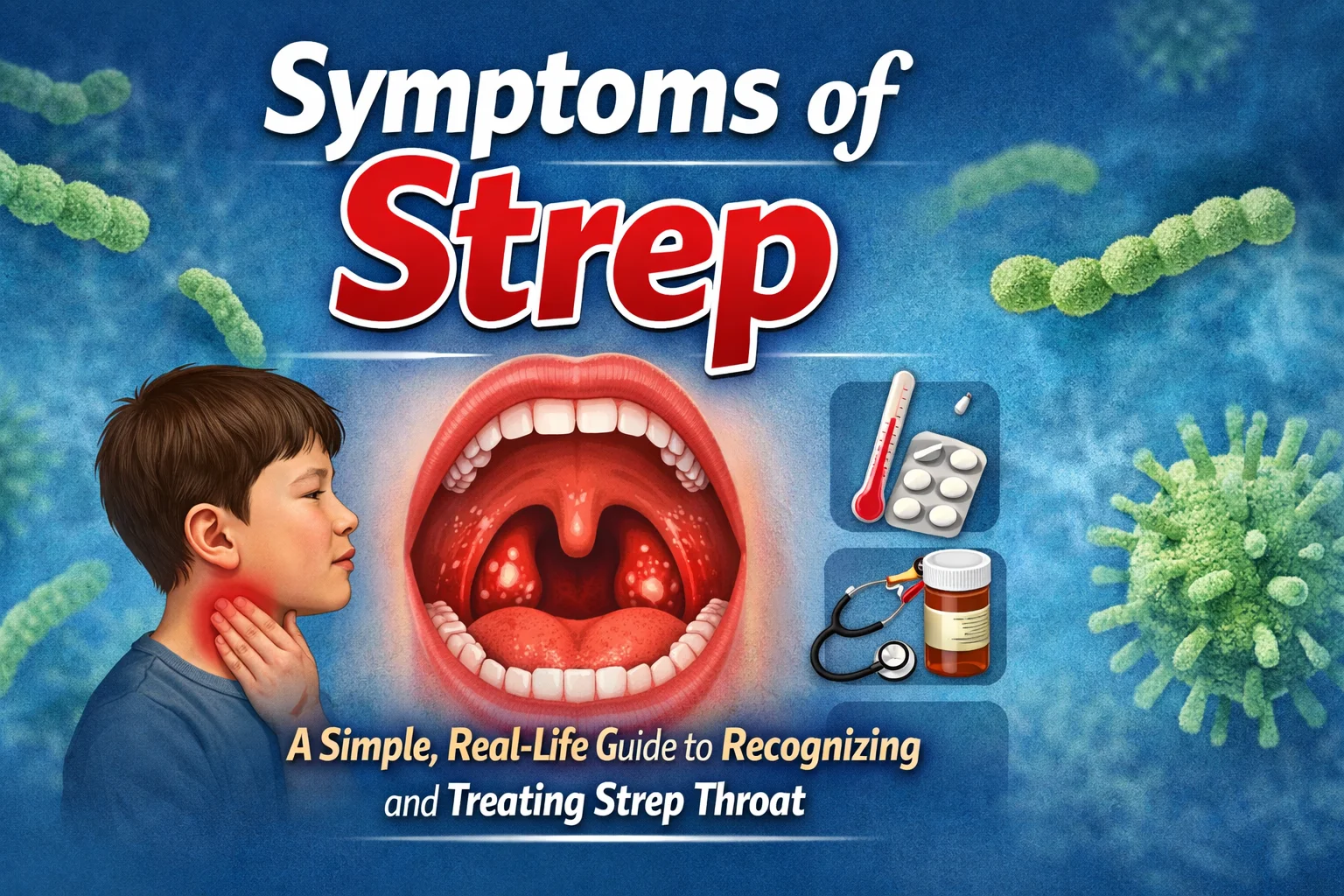
Strep throat is a common infection that can make you feel very uncomfortable very quickly. Many people ignore early warning signs, thinking it’s just a normal sore throat. But knowing the symptoms of strep can help you act fast and avoid complications.
This guide will walk you through everything in a clear, simple way. You’ll learn what to look for, how it feels, and what to do next. Whether you’re a parent, student, or adult dealing with throat pain, this article is designed to help you understand your body better.
What Is Strep Throat?
Strep throat is a bacterial infection caused by Streptococcus bacteria. It mainly affects the throat and tonsils. Unlike a regular cold, it does not go away on its own easily.
One key thing to know is that the symptoms of strep often come on quickly. You may feel fine one day and very sick the next. That’s why early recognition is important.
Doctors usually treat strep throat with antibiotics. Without treatment, it can lead to serious problems like ear infections or even kidney issues. So, understanding the signs early can make a big difference in recovery.
Why It’s Important to Recognize Symptoms Early
Many people confuse strep throat with a viral sore throat. This mistake can delay proper treatment. The symptoms of strep throat are different in some important ways.
For example, strep usually does not cause a runny nose or cough. Instead, it focuses on the throat and causes sharp pain. Acting early can help you feel better faster and prevent spreading the infection to others.
I’ve seen cases where people waited too long, thinking it was just a mild cold. Within days, their condition worsened. A simple test and treatment could have saved them from that discomfort.
Common Symptoms of Strep
The symptoms of strep are often easy to spot once you know them. Here are the most common ones:
| Symptom | What It Feels Like |
|---|---|
| Sore throat | Sharp pain, especially when swallowing |
| Fever | Usually above 101°F (38.3°C) |
| Red tonsils | Swollen and irritated |
| White patches | Spots on tonsils or throat |
| Headache | Mild to severe |
| Fatigue | Feeling very tired |
These symptoms can appear suddenly. Most people notice a sore throat first, followed by fever and body weakness.
What Are the Symptoms of Strep Throat in Adults?
Adults may experience slightly different signs compared to children. The symptoms of strep throat in adults can sometimes be milder but still serious.
Common adult symptoms include:
- Pain when swallowing
- Sudden fever
- Swollen lymph nodes in the neck
- No cough (this is important)
- Body aches
Adults often ignore these signs because they seem manageable. But untreated strep can still lead to complications, even in grown-ups.
Early Warning Signs You Shouldn’t Ignore
The early symptoms of strep can feel small at first. But they can quickly become worse.
Here are some early clues:
| Early Sign | Why It Matters |
|---|---|
| Sudden throat pain | Often the first sign |
| Fever without cold symptoms | Suggests bacterial infection |
| Pain while swallowing | Indicates throat inflammation |
| Loss of appetite | Common in infections |
If you notice these signs, it’s smart to monitor your condition closely. Early action can prevent severe illness.
Symptoms of Strep vs Common Cold
It’s easy to confuse strep throat with a cold. But there are clear differences.
| Feature | Strep Throat | Common Cold |
|---|---|---|
| Cause | Bacteria | Virus |
| Fever | High | Rare or mild |
| Cough | Usually absent | Common |
| Runny nose | Rare | Very common |
| Throat pain | Severe | Mild |
Understanding this difference helps you decide when to see a doctor. The symptoms of strep throat are usually stronger and more focused on the throat.
How Symptoms Progress Over Time
The symptoms of strep often follow a pattern. Knowing this can help you track your illness.
| Day | What Happens |
|---|---|
| Day 1 | Sudden sore throat, mild fever |
| Day 2 | Fever rises, pain worsens |
| Day 3 | Swelling and white patches appear |
| Day 4+ | Symptoms peak without treatment |
With treatment, most people feel better within 24–48 hours. Without it, symptoms can last longer and become more serious.
When Symptoms Become Serious
Sometimes, the symptoms of strep can turn dangerous. You should seek medical help if you notice:
- Difficulty breathing
- Trouble swallowing liquids
- High fever lasting more than 3 days
- Rash on the body
- Severe weakness
These signs may mean the infection is spreading. It’s better to be safe and get checked by a doctor.
How Strep Spreads and Why Symptoms Matter
Strep throat spreads through droplets when someone coughs or sneezes. That’s why recognizing the symptoms of strep early is important.
You can spread the infection even before you feel very sick. Schools and offices are common places where strep spreads quickly.
Simple habits like washing hands and avoiding close contact can help reduce the risk. If you suspect strep, try to stay home and rest.
Diagnosis: How Doctors Confirm Strep
Doctors use simple tests to confirm strep throat. They may do a throat swab, which takes only a few minutes.
| Test Type | Description |
|---|---|
| Rapid test | Results in minutes |
| Throat culture | More accurate, takes longer |
These tests help doctors decide if antibiotics are needed. Not every sore throat needs medication, so testing is important.
Treatment and Recovery
Once diagnosed, treatment is usually straightforward. Antibiotics are the main treatment for strep throat.
Common recovery tips:
- Take all prescribed medicine
- Drink warm fluids
- Get plenty of rest
- Avoid sharing utensils
Most people feel better within two days of starting treatment. The symptoms of strep throat fade quickly with proper care.
Home Remedies That Help Ease Symptoms
While medicine treats the infection, home remedies can ease discomfort.
| Remedy | Benefit |
|---|---|
| Warm saltwater gargle | Reduces throat pain |
| Honey tea | Soothes irritation |
| Humidifier | Keeps throat moist |
| Soft foods | Easier to swallow |
These simple steps can make a big difference in how you feel during recovery.
Preventing Strep Throat
Prevention is always better than cure. You can reduce your risk by following simple habits.
- Wash hands often
- Avoid close contact with sick people
- Cover your mouth when coughing
- Keep your immune system strong
Knowing the symptoms of strep also helps you act quickly and avoid spreading it to others.
Real-Life Example: Why Early Action Matters
A friend once ignored a sore throat for days. He thought it was just a cold. By the time he saw a doctor, his fever was high and swallowing was painful.
After a quick test, it turned out to be strep. Within 48 hours of treatment, he felt much better. This shows how recognizing the symptoms of strep throat early can save you from unnecessary suffering.
FAQs About Symptoms of Strep
1. What are the symptoms of strep throat?
Common symptoms include sore throat, fever, swollen tonsils, and pain when swallowing.
2. Can strep throat go away on its own?
It might improve slightly, but antibiotics are usually needed to fully treat it.
3. How fast do symptoms appear?
The symptoms of strep often appear suddenly, within 1–3 days after exposure.
4. Is cough a symptom of strep?
No, a cough is usually not present in strep throat.
5. How long are you contagious?
You are contagious until 24 hours after starting antibiotics.
6. Can adults get strep throat?
Yes, and the symptoms of strep throat in adults can still be serious.
Final Thoughts: Listen to Your Body
The symptoms of strep are your body’s way of asking for attention. Ignoring them can lead to bigger problems. But recognizing them early can make treatment quick and easy.
If you notice sudden throat pain, fever, and difficulty swallowing, don’t wait. Get checked and start proper care. Your health matters, and small steps can make a big difference.
Take care of yourself, stay informed, and always listen to what your body is telling you.
