
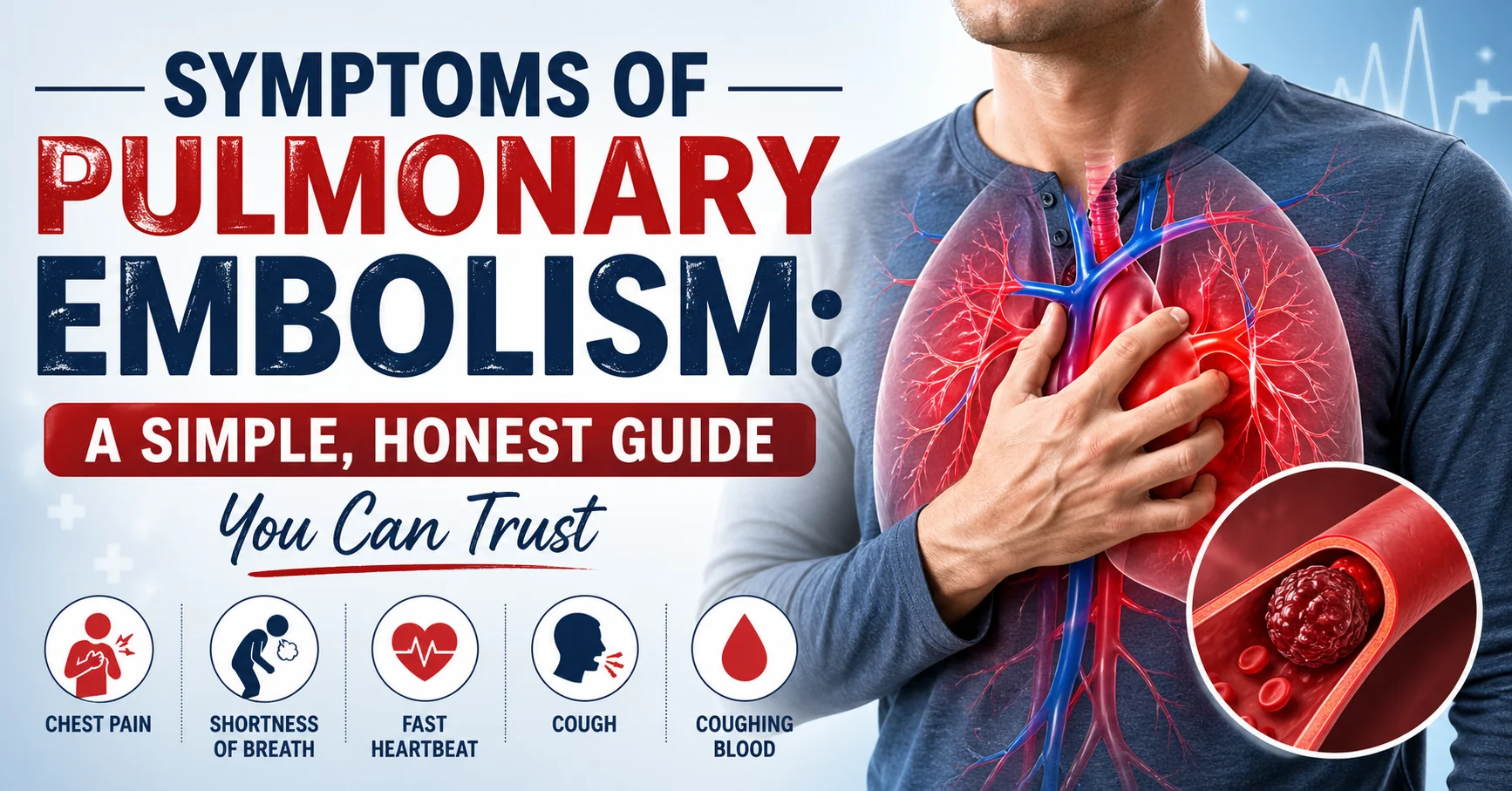
Understanding the symptoms of pulmonary embolism can save lives. This condition happens when a blood clot blocks an artery in your lungs. It may sound scary—and it can be—but knowing the warning signs helps you act fast.
Many people miss early clues because they feel mild or confusing. Others mistake them for anxiety, muscle pain, or even a simple cold. I’ve seen stories where people ignored chest pain or shortness of breath, only to face a medical emergency later. That’s why this guide exists—to give you clear, simple, and honest information.
In this article, we will walk through the signs and symptoms of pulmonary embolism, how they feel, when to worry, and what makes them different. You’ll also learn about special cases, like pregnancy, and what your body might be trying to tell you.
Let’s break it down step by step in plain, easy language.
What Is a Pulmonary Embolism?
A Pulmonary embolism is a blockage in a lung artery. It usually comes from a blood clot that travels from your legs. This clot can stop blood flow and lower oxygen levels.
This is a serious condition. Without quick care, it can damage your lungs or even be life-threatening. But many cases are treatable if caught early.
The tricky part is this: the symptoms of a pulmonary embolism are not always obvious. Some people feel strong pain. Others feel only mild discomfort. That’s why awareness matters so much.
Why Recognizing Symptoms Early Matters
Early detection can make a huge difference. When doctors catch a pulmonary embolism early, treatment works better. Recovery is also smoother.
Ignoring symptoms can lead to severe problems like lung damage or heart strain. In some cases, it can become fatal within hours.
Think of your body as an alarm system. The symptoms of pulmonary embolism are warning signals. Listening to them can protect your life.
Most Common Symptoms of Pulmonary Embolism
The most common symptoms of pulmonary embolism often appear suddenly. They can include:
| Symptom | What It Feels Like |
|---|---|
| Shortness of breath | Trouble breathing, even at rest |
| Chest pain | Sharp pain, worse when breathing |
| Fast heart rate | Heart racing without reason |
| Cough | Sometimes with blood |
These symptoms can come on quickly. Some people feel them within minutes. Others notice them over a few hours.
If you feel a mix of these signs, do not ignore them.
Chest Pain: A Key Warning Sign
Chest pain is one of the most serious signs and symptoms of pulmonary embolism. It often feels sharp and stabbing. It may get worse when you take a deep breath.
Some people describe it as a tight or burning feeling. Others say it feels like a pulled muscle—but deeper.
Unlike a heart attack, this pain often changes with breathing. That difference can help doctors identify the cause.
Still, any chest pain should be taken seriously. It is always better to be safe.
Shortness of Breath: When Breathing Feels Hard
Shortness of breath is another major symptom. It can happen suddenly or build slowly.
You may feel like you cannot get enough air. Even small tasks, like walking, may feel exhausting. Some people feel breathless while sitting still.
This symptom can be scary. It often leads people to seek help first.
The symptoms of a pulmonary embolism often include this breathing struggle. It is one of the clearest signs your body needs attention.
Less Obvious Symptoms You Should Not Ignore
Not all symptoms are clear or strong. Some are easy to overlook.
| Subtle Symptom | Description |
|---|---|
| Dizziness | Feeling lightheaded or faint |
| Sweating | Sudden, unexplained sweating |
| Anxiety | Feeling of doom or panic |
| Leg pain | Often in the calf |
These symptoms may seem unrelated. But together, they can point to a problem.
Many people ignore these early signs. That delay can make things worse.
Symptoms of a Pulmonary Embolism in Pregnancy
Pregnancy changes your body in many ways. It also increases the risk of blood clots.
The symptoms of a pulmonary embolism in pregnancy can be harder to spot. Some signs, like shortness of breath, are common in pregnancy anyway.
However, sudden or severe symptoms should never be ignored. Warning signs include:
- Sharp chest pain
- Sudden breathlessness
- Rapid heartbeat
- Swelling in one leg
Doctors take these symptoms very seriously during pregnancy. Quick care keeps both mother and baby safe.
What Causes These Symptoms?
The symptoms happen because the clot blocks blood flow. This reduces oxygen in your body.
Your lungs struggle to work properly. Your heart has to pump harder. This leads to pain, breathlessness, and fatigue.
The body reacts quickly to this stress. That’s why the symptoms of pulmonary embolism often appear suddenly.
Who Is at Higher Risk?
Some people have a higher risk of developing this condition.
| Risk Factor | Why It Matters |
|---|---|
| Long travel | Sitting slows blood flow |
| Surgery | Increases clot risk |
| Smoking | Damages blood vessels |
| Obesity | Raises pressure on veins |
Other risks include pregnancy, birth control pills, and family history.
Knowing your risk can help you stay alert to symptoms.
How Symptoms Can Vary From Person to Person
Not everyone feels the same symptoms. Some people have strong pain. Others feel mild discomfort.
In rare cases, there are almost no symptoms. This makes the condition harder to detect.
The what are the symptoms of a pulmonary embolism question does not have one answer. Each case is different.
That’s why it’s important to trust your instincts. If something feels wrong, seek help.
When Should You Seek Medical Help?
You should get help right away if you notice:
- Sudden chest pain
- Trouble breathing
- Coughing blood
- Fainting
These are emergency signs. Call for medical help immediately.
Even mild symptoms should not be ignored if they come suddenly. It’s always better to check.
How Doctors Diagnose It
Doctors use tests to confirm the condition. These may include:
| Test | Purpose |
|---|---|
| CT scan | Shows clots in lungs |
| Blood test | Checks clotting signs |
| Ultrasound | Finds clots in legs |
| ECG | Checks heart activity |
Diagnosis is quick in most hospitals. Early testing leads to faster treatment.
Real-Life Example for Better Understanding
A friend once shared her story. She felt a sharp chest pain after a long flight. She thought it was stress.
Later, she noticed shortness of breath while climbing stairs. She almost ignored it again. But something felt off.
She went to the hospital. Doctors found a pulmonary embolism. Treatment started right away, and she recovered well.
Her story shows how easy it is to miss the symptoms of pulmonary embolism. Listening to your body can make all the difference.
Treatment and Recovery Overview
Treatment usually includes blood thinners. These medicines stop clots from growing.
In severe cases, doctors may remove the clot. Oxygen support may also be needed.
Recovery depends on how early the condition is treated. Many people recover fully with proper care.
How to Lower Your Risk
Prevention is always better than treatment.
Simple steps include:
- Stay active
- Avoid long sitting periods
- Drink enough water
- Quit smoking
These habits improve blood flow and reduce clot risk.
Frequently Asked Questions (FAQs)
1. What are the symptoms of a pulmonary embolism?
Common symptoms include chest pain, shortness of breath, and a fast heartbeat. Some people also cough or feel dizzy.
2. Can symptoms be mild?
Yes, some symptoms of pulmonary embolism can be mild. This makes them easy to ignore.
3. How fast do symptoms appear?
Symptoms often appear suddenly. But in some cases, they develop over hours or days.
4. Are symptoms different in pregnancy?
Yes, the symptoms of a pulmonary embolism in pregnancy can overlap with normal pregnancy signs. Sudden symptoms need urgent care.
5. Can anxiety feel like a pulmonary embolism?
Yes, anxiety can mimic symptoms. But it’s important to rule out serious causes first.
6. Is a pulmonary embolism always fatal?
No, many people recover fully with quick treatment. Early action is key.
Final Thoughts: Listen to Your Body
The symptoms of pulmonary embolism are your body’s way of asking for help. Some signs are loud and clear. Others are quiet and easy to miss.
Never ignore sudden chest pain or breathing trouble. Even small changes in how you feel matter.
If something feels wrong, trust that feeling. Getting checked early can save your life.
Stay aware, stay informed, and take care of your health—because it truly matters.
