

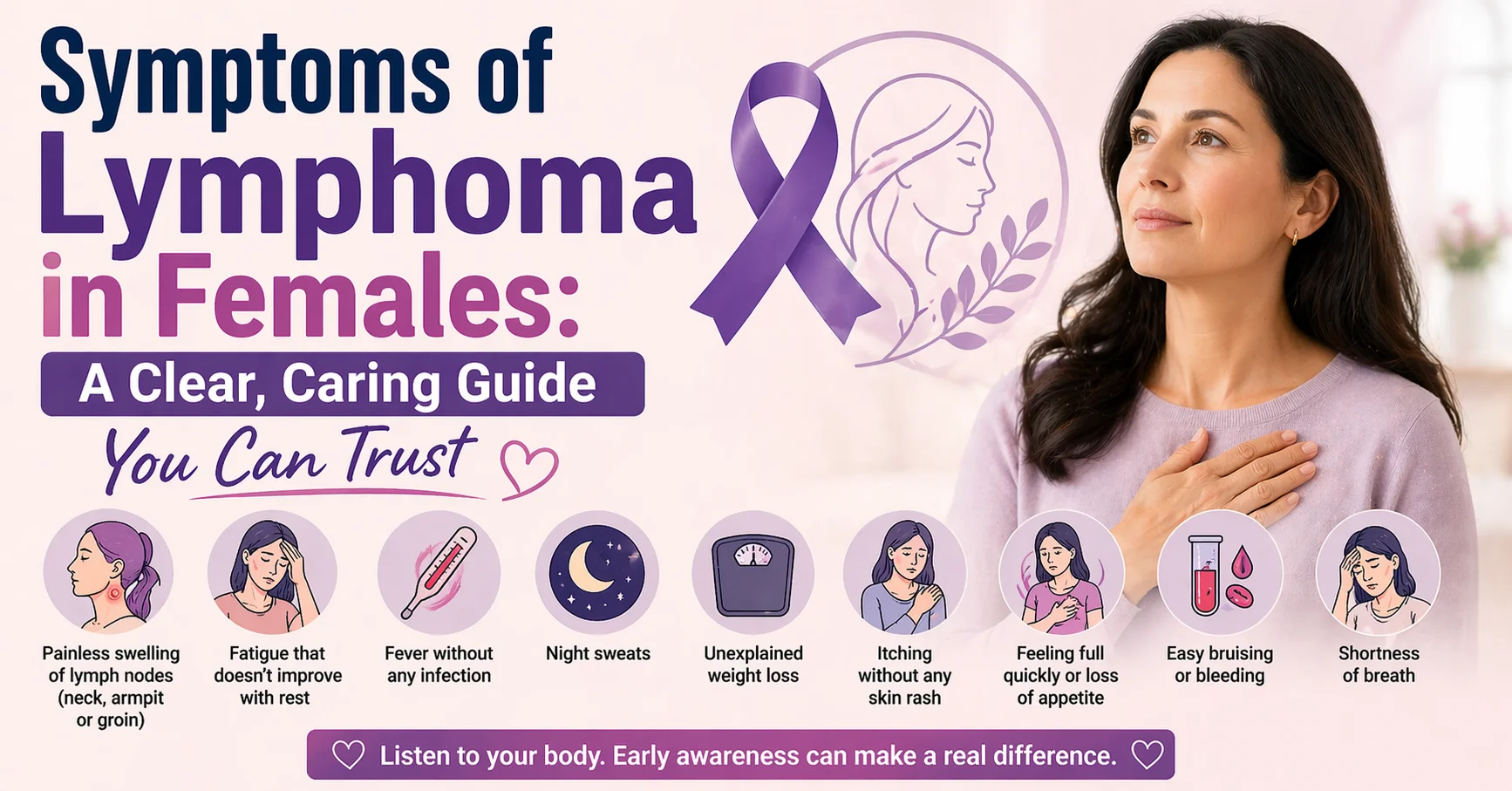
Understanding your body can feel confusing, especially when symptoms don’t make sense. This guide will help you learn about symptoms of lymphoma in females in a simple, honest way. The goal is not to scare you, but to give you clear knowledge so you can take smart steps for your health.
Lymphoma is a type of cancer that starts in the lymphatic system. This system helps fight infections. When something goes wrong, cells can grow out of control. That is when lymphoma develops.
Many women miss early signs because they seem small or common. Things like tiredness or mild swelling may not feel serious. But noticing patterns early can make a big difference.
In this article, you will learn what to watch for, how symptoms may differ, and when to seek help. We will also cover both symptoms of Hodgkin’s lymphoma in females and symptoms of non Hodgkin’s lymphoma in females in an easy-to-follow way.
What Is Lymphoma and Why It Matters
Lymphoma is not just one disease. It is a group of cancers that affect white blood cells. These cells help your body fight infections.
There are two main types:
- Hodgkin lymphoma
- Non-Hodgkin lymphoma
Both types can affect women of any age. Some types grow slowly. Others move faster. That is why understanding the symptoms of lymphoma cancer in females is so important.
The lymphatic system runs through your whole body. It includes lymph nodes, the spleen, and bone marrow. Because of this, lymphoma can affect many areas at once.
Women sometimes ignore symptoms because they overlap with stress, hormones, or busy life routines. But your body often gives early clues. Learning to notice them can help you act sooner.
Early Symptoms of Lymphoma in Females
Early signs are often mild. They can come and go. This makes them easy to ignore.
Common early symptoms of lymphoma in females include:
- Swollen lymph nodes
- Feeling tired all the time
- Mild fever
- Night sweats
- Unexplained weight loss
These symptoms may not seem serious at first. Many women think it is stress or a simple infection. But if these signs last for weeks, they should not be ignored.
For example, a small lump in the neck may seem harmless. But if it does not go away, it needs attention. The same goes for fatigue that does not improve with rest.
Listening to your body early can lead to faster diagnosis and better outcomes.
Swollen Lymph Nodes: The Most Common Sign
Swollen lymph nodes are often the first noticeable sign. They may appear in the neck, armpits, or groin.
Here’s how they usually feel:
- Firm but not painful
- Slowly growing
- Not going away after weeks
Many infections also cause swelling. But infection-related swelling usually hurts and goes away. Lymphoma swelling often does not.
Common Lymph Node Locations
| Area | What You May Notice |
|---|---|
| Neck | Lump under the jaw or side |
| Armpit | Small swelling or fullness |
| Groin | Lump near upper thigh |
| Chest | Pressure or breathing discomfort |
If you feel a lump that stays longer than two weeks, it is wise to get it checked.
Unexplained Weight Loss and Appetite Changes
Sudden weight loss can be a warning sign. This is especially true if you are not trying to lose weight.
Women with lymphoma may:
- Lose more than 5–10% of body weight
- Feel less hungry
- Feel full quickly
This happens because cancer affects how your body uses energy. It may also release substances that reduce appetite.
Weight loss is one of the key symptoms of lymphoma cancer in females. It often appears with other signs like fatigue and night sweats.
If your clothes suddenly feel loose without effort, take it seriously.
Constant Fatigue That Doesn’t Go Away
Feeling tired after a long day is normal. But lymphoma fatigue feels different.
It is:
- Deep and constant
- Not improved by sleep
- Affecting daily tasks
This type of tiredness can make simple things feel hard. You may struggle to focus or feel weak all day.
Fatigue is one of the most overlooked symptoms of lymphoma in females. Many women think it is due to stress, work, or family responsibilities.
But when fatigue lasts for weeks without a clear reason, it should not be ignored.
Night Sweats and Fever Without Infection
Night sweats linked to lymphoma are intense. They can soak your clothes and bedsheets.
Along with sweats, you may have:
- Low-grade fever
- Chills
- Feeling hot and cold
These symptoms are sometimes called “B symptoms” in medical terms.
Key Differences
| Symptom | Normal Cause | Lymphoma Sign |
|---|---|---|
| Night sweats | Hot weather | Drenching, frequent |
| Fever | Infection | No clear infection |
| Chills | Cold environment | Occur without reason |
These signs are common in both symptoms of Hodgkins lymphoma in females and non-Hodgkin types.
Itchy Skin Without a Rash
Itchy skin may not seem serious. But in lymphoma, it can be a key symptom.
This itching:
- Happens without a visible rash
- Can be severe
- Often worse at night
Doctors are not fully sure why this happens. It may be due to chemicals released by lymphoma cells.
Some women describe it as a deep itch that scratching does not relieve.
If itching becomes constant and unusual, it is worth discussing with a doctor.
Pain or Fullness in the Chest or Abdomen
Lymphoma can grow inside the chest or abdomen. This can cause pressure or pain.
Symptoms may include:
- Chest tightness
- Trouble breathing
- Feeling full after small meals
- Abdominal swelling
These signs are more common in symptoms of non Hodgkin’s lymphoma in females, but can appear in both types.
If you feel pressure or discomfort that does not go away, it is important to check it.
Differences Between Hodgkin and Non-Hodgkin Lymphoma
Both types share many symptoms. But there are some differences.
Comparison Table
| Feature | Hodgkin Lymphoma | Non-Hodgkin Lymphoma |
|---|---|---|
| Age group | Younger adults common | All ages |
| Spread pattern | More predictable | Less predictable |
| Growth speed | Often slower | Can be fast or slow |
| Common symptoms | Swelling, fever, sweats | Wider range of symptoms |
Understanding these differences helps explain why symptoms vary between individuals.
Symptoms That May Be Unique or Noticeable in Women
Some symptoms may feel more noticeable in women due to body awareness and hormonal cycles.
Examples include:
- Breast area swelling
- Changes in menstrual cycle due to illness
- Increased fatigue during routine tasks
These are not exclusive signs but may feel more obvious.
Women often juggle many roles. Because of this, symptoms can be ignored or explained away. But trusting your instincts matters.
When Should You See a Doctor?
It is always better to check early than wait too long.
See a doctor if you have:
- Swollen lymph nodes lasting more than 2–3 weeks
- Unexplained weight loss
- Ongoing fatigue
- Night sweats or fever without cause
Quick Symptom Checklist
| Symptom | Duration to Watch |
|---|---|
| Lump or swelling | More than 2 weeks |
| Fatigue | More than 3 weeks |
| Fever | Repeated without cause |
| Weight loss | Sudden and unexplained |
Early action can lead to earlier diagnosis and better treatment options.
How Lymphoma Is Diagnosed
Doctors use several steps to confirm lymphoma.
These may include:
- Physical exam
- Blood tests
- Imaging scans
- Biopsy (removing a small tissue sample)
The biopsy is the most important step. It confirms if lymphoma is present.
Diagnosis may feel scary. But it is the first step toward treatment and recovery.
Treatment Options and Outlook
Treatment depends on the type and stage of lymphoma.
Common treatments include:
- Chemotherapy
- Radiation therapy
- Immunotherapy
Many women respond well to treatment, especially when diagnosed early.
Treatment Overview
| Treatment Type | Purpose |
|---|---|
| Chemotherapy | Kills cancer cells |
| Radiation | Targets specific areas |
| Immunotherapy | Boosts immune system |
Survival rates have improved greatly over time. Early awareness of symptoms of lymphoma in females plays a big role.
Emotional Impact and Support
Facing possible cancer symptoms can feel overwhelming. It is normal to feel fear or confusion.
Talking to someone helps. This could be:
- A doctor
- A trusted friend
- A support group
You are not alone in this journey. Many women go through similar experiences and find strength in support.
FAQs About Symptoms of Lymphoma in Females
1. What are the first symptoms of lymphoma in females?
The first signs are often swollen lymph nodes, fatigue, and mild fever. These symptoms may seem harmless at first.
2. Are symptoms of Hodgkin’s lymphoma in females different?
They are similar but may include more noticeable “B symptoms” like night sweats and fever.
3. Can lymphoma symptoms come and go?
Yes, some symptoms may appear and disappear, especially in early stages.
4. Is itching always a sign of lymphoma?
No, itching can have many causes. But unexplained, persistent itching should be checked.
5. How long can symptoms be ignored?
Symptoms lasting more than a few weeks should not be ignored. Early action is important.
6. Are symptoms of non Hodgkin’s lymphoma in females more severe?
They can vary widely. Some cases are mild, while others progress quickly.
Final Thoughts: Listen to Your Body
Understanding the symptoms of lymphoma in females is not about fear. It is about awareness.
Your body often gives signals when something is wrong. Small changes can mean something bigger. Paying attention can help you act early.
If something feels off, trust yourself. It is always okay to ask questions and seek help.
Early awareness saves lives. And knowledge gives you the power to take control of your health.
