

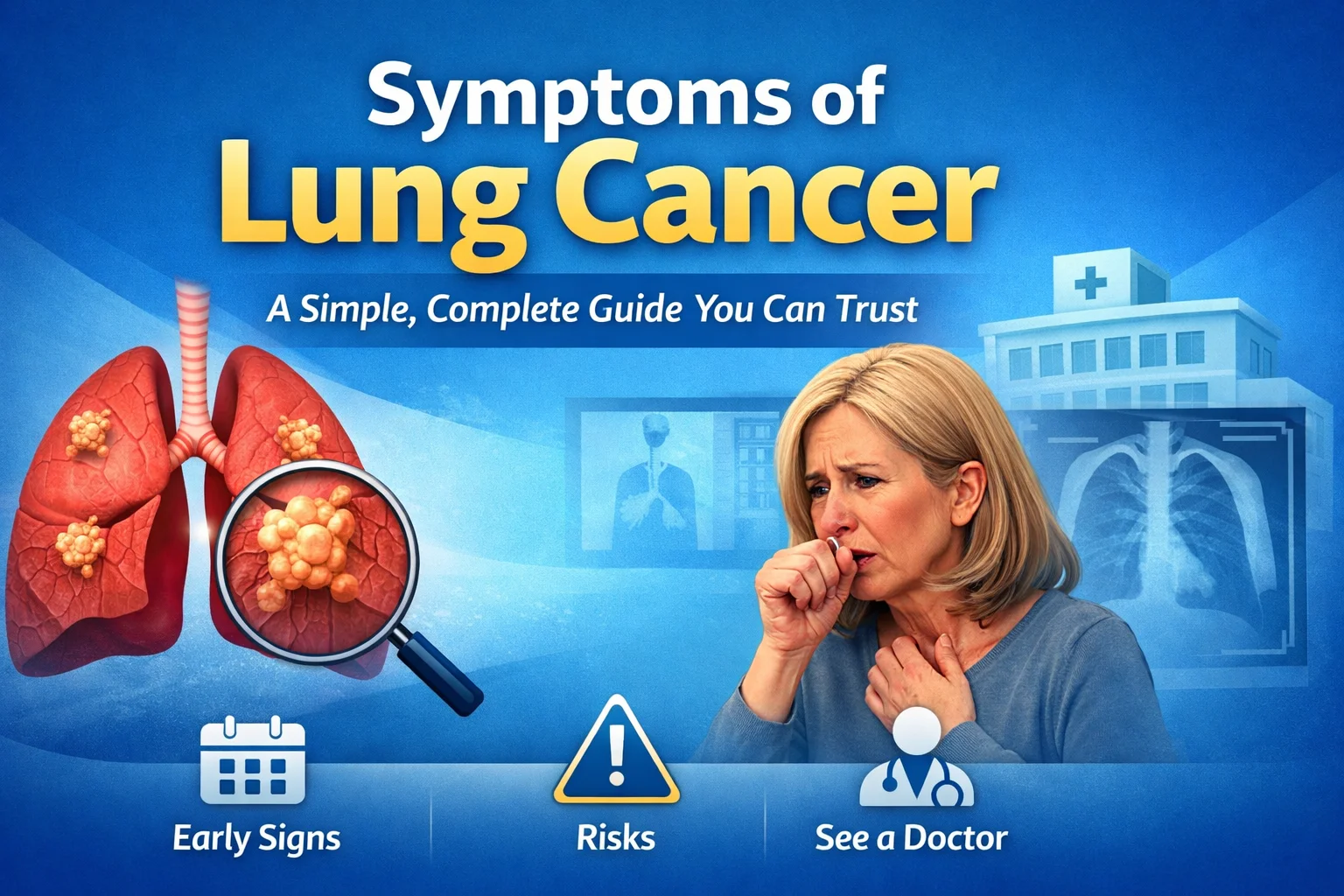
Lung cancer is one of the most serious health problems in the world. But the good news is this: knowing the symptoms of lung cancer early can help save lives. Many people ignore early signs because they seem small or common, like a cough or tiredness. That’s why awareness is so important.
In this guide, we will explain everything in a clear and simple way. You will learn what to watch for, how symptoms may differ in men and women, and when to see a doctor. This article is written to help you understand your body better and take action when needed.
What Are the Symptoms of Lung Cancer?
When people ask, what are the symptoms of lung cancer, they often expect one clear sign. But lung cancer does not always show strong symptoms at first. In many cases, the early stage is silent.
As the disease grows, signs become more noticeable. These can include a long-lasting cough, chest pain, and breathing trouble. Some people may also feel weak or lose weight without trying.
It is important to understand that these symptoms can also happen in other illnesses. But if they last for weeks or keep getting worse, you should not ignore them. Early action can make a big difference.
Early Symptoms of Lung Cancer You Should Not Ignore
The early symptoms of lung cancer are often mild and easy to miss. That is why many people do not seek help right away.
Here are some early warning signs:
- A cough that does not go away
- Feeling tired all the time
- Shortness of breath
- Mild chest discomfort
- Losing weight without reason
These signs may seem normal, especially if you have a busy life. But if they stay for more than two weeks, it is better to get checked.
Table: Early Warning Signs vs Common Causes
| Symptom | Could Be Normal Cause | When to Worry |
|---|---|---|
| Cough | Cold or flu | Lasts over 3 weeks |
| Tiredness | Stress or lack of sleep | Constant and unexplained |
| Breathlessness | Lack of exercise | Happens during simple tasks |
| Weight loss | Diet changes | No clear reason |
Advanced Symptoms of Lung Cancer
As lung cancer grows, symptoms become stronger and harder to ignore. These are called advanced symptoms.
You may notice:
- Chest pain that gets worse
- Coughing up blood
- Severe breathing problems
- Hoarseness in voice
- Frequent lung infections
At this stage, the disease may have spread. That is why early detection is so important.
Symptoms of Lung Cancer in Women
The symptoms of lung cancer in women can sometimes be different from men. Women are more likely to have certain types of lung cancer that show subtle signs.
Many women report:
- Extreme tiredness
- Back or shoulder pain
- Shortness of breath without cough
- Hormonal changes or weakness
These symptoms are often mistaken for stress or aging. That can delay diagnosis.
Table: Symptoms in Women vs Men
| Symptom Type | Women | Men |
|---|---|---|
| Common sign | Fatigue | Persistent cough |
| Pain location | Back or shoulders | Chest |
| Breathing issues | Without strong cough | With heavy coughing |
| Diagnosis delay | More common | Less common |
Symptoms of Lung Cancer in Females: What Makes It Unique?
The symptoms of lung cancer in females can be tricky. Many signs are not directly linked to the lungs.
For example, some women feel:
- Pain in upper back
- Mild chest tightness
- Dizziness or headaches
These symptoms can be confused with other health issues. That’s why awareness is key.
Women who never smoked can also develop lung cancer. This surprises many people. Factors like air pollution and genetics may play a role.
Why Symptoms Are Often Missed
One big problem with the symptoms of lung cancer is that they look like common illnesses. A cough may seem like a cold. Tiredness may seem like stress.
People often delay seeing a doctor. They hope the symptoms will go away on their own. Sadly, this delay can allow cancer to grow.
Another reason is lack of awareness. Many people do not know the early signs at all.
Risk Factors That Increase Symptoms
Certain factors make lung cancer more likely. If you have these risks, you should pay extra attention to symptoms.
Common risk factors include:
- Smoking
- Secondhand smoke
- Air pollution
- Family history
- Exposure to harmful chemicals
Even non-smokers can develop lung cancer. So never ignore symptoms based on lifestyle alone.
When Should You See a Doctor?
You should see a doctor if you notice any symptoms of lung cancer that last more than two weeks.
Do not wait if you have:
- Blood in cough
- Severe chest pain
- Trouble breathing
- Sudden weight loss
Early diagnosis can improve treatment success. It is always better to be safe than sorry.
How Doctors Check for Lung Cancer
Doctors use different tests to confirm lung cancer. These tests help find the cause of symptoms.
Common tests include:
- Chest X-ray
- CT scan
- Sputum test
- Biopsy
These tests are simple and can detect problems early.
Table: Common Tests and Their Purpose
| Test Type | Purpose |
|---|---|
| X-ray | Check lung shape and shadows |
| CT Scan | Detailed lung imaging |
| Sputum Test | Look for cancer cells |
| Biopsy | Confirm cancer diagnosis |
How Symptoms Change Over Time
The symptoms of lung cancer often change as the disease grows.
At first, symptoms are mild. Later, they become more severe. Some new symptoms may also appear, like bone pain or headaches.
This happens when cancer spreads to other parts of the body.
Real-Life Insight: Why Early Attention Matters
I once heard about a man who ignored his cough for months. He thought it was just smoking effects. When he finally went to the doctor, the cancer had already spread.
This story shows how important it is to act early. Even small symptoms can be serious.
Listening to your body can save your life.
Tips to Stay Aware and Safe
Here are simple steps to protect yourself:
- Do not ignore long-term symptoms
- Avoid smoking
- Stay away from polluted air
- Get regular health checkups
- Eat healthy foods
Small actions can make a big difference.
FAQs About Symptoms of Lung Cancer
1. What are the symptoms of lung cancer in the early stage?
Early signs include cough, tiredness, and breathlessness. They are often mild and easy to miss.
2. Do all people with lung cancer have symptoms?
No. Some people have no symptoms in the early stage. That is why regular checkups matter.
3. Are symptoms different in women?
Yes. The symptoms of lung cancer in women may include fatigue and back pain more than coughing.
4. Can non-smokers get lung cancer?
Yes. Air pollution and genetics can also cause lung cancer.
5. How long should symptoms last before concern?
If symptoms last more than two weeks, you should see a doctor.
6. Is coughing blood always lung cancer?
Not always, but it is a serious sign. You should seek medical help immediately.
Conclusion: Take Symptoms Seriously and Act Early
Understanding the symptoms of lung cancer can help you protect your health and your loved ones. Many signs may seem small at first, but they should not be ignored. Early detection gives you the best chance for successful treatment.
If you notice anything unusual in your body, trust your instincts. Talk to a doctor and get proper advice. Your health is too important to delay.
Stay aware, stay informed, and take action when needed. It could save a life—maybe even yours.
