

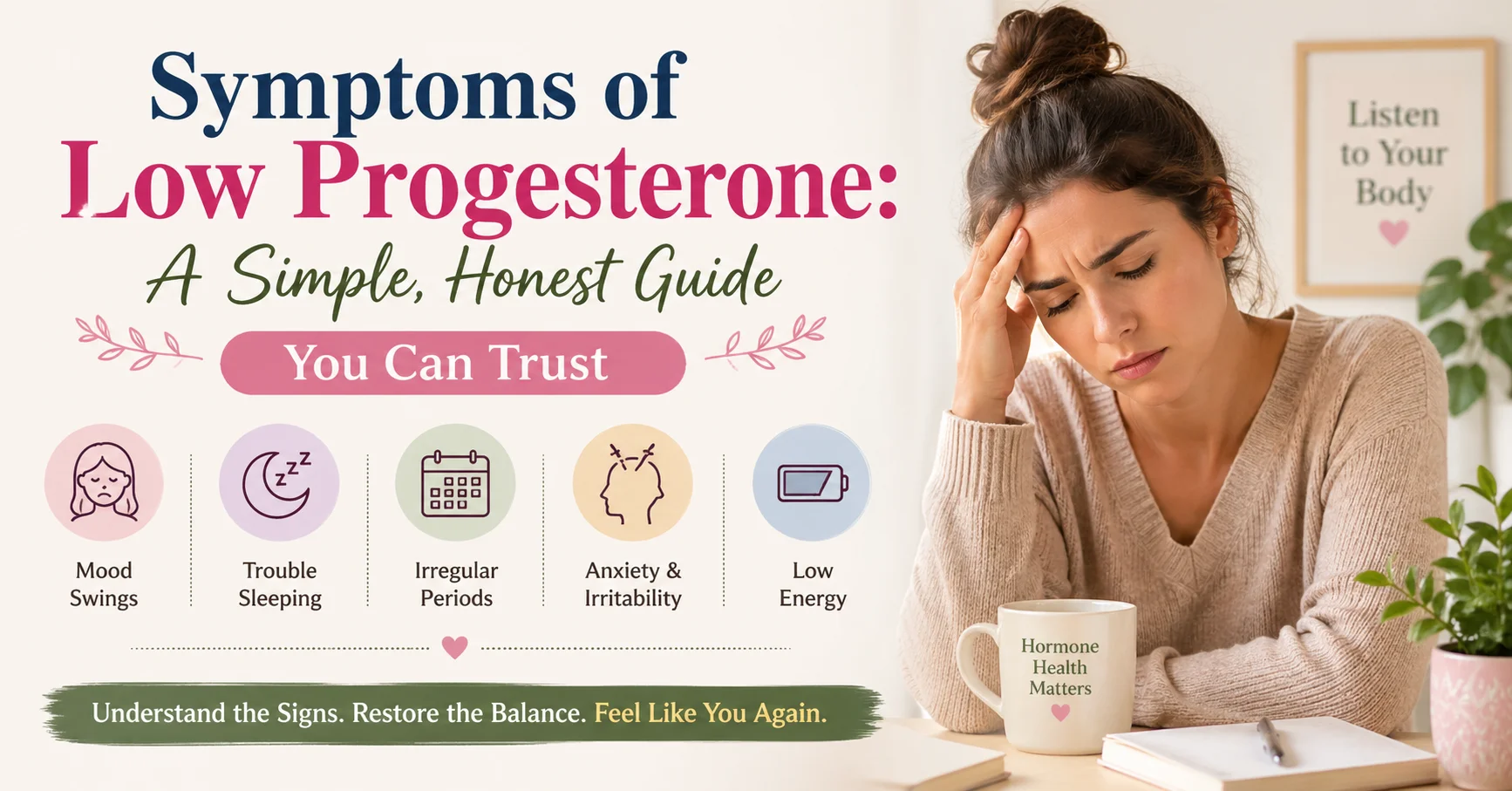
Hormones quietly control many parts of your body. You may not notice them when things feel normal. But when they shift, your body often sends signals. One important hormone is progesterone. When it drops too low, it can affect your mood, cycle, sleep, and more.
In this guide, we’ll talk clearly about the symptoms of low progesterone, what they feel like in real life, and why they happen. You’ll also learn how to spot early signs and what you can do next. This is not confusing medical talk. It’s a simple, honest explanation meant to help you understand your body better.
What Is Progesterone and Why It Matters
Progesterone is a hormone made mainly in the ovaries. It plays a key role after ovulation. It helps prepare your body for pregnancy and keeps your menstrual cycle balanced.
Think of progesterone as a calming hormone. It works with estrogen to keep things stable. When levels are healthy, you may feel more relaxed and balanced. But when levels drop, the body can feel off.
Low levels can affect sleep, mood, and your monthly cycle. That’s why understanding the symptoms of low progesterone is important for every woman.
Common Symptoms of Low Progesterone
The symptoms of low progesterone can vary from person to person. Some are mild, while others feel more intense.
Here are some of the most common signs:
| Symptom | What It Feels Like |
|---|---|
| Irregular periods | Cycles that come too early or too late |
| Mood swings | Sudden sadness or irritability |
| Trouble sleeping | Difficulty falling or staying asleep |
| Headaches | Frequent or hormonal migraines |
| Low libido | Reduced interest in intimacy |
These symptoms can show up alone or together. Many women ignore them at first. But noticing patterns can help you take action early.
Symptoms of Low Progesterone in Women
The symptoms of low progesterone in women often show up during the second half of the menstrual cycle. This is when progesterone should be highest.
Women may notice increased anxiety or feel emotionally sensitive. Small things might feel overwhelming. Some describe it as feeling “on edge” for no clear reason.
Physical symptoms also appear. Breast tenderness, bloating, and fatigue are common. These signs can look like PMS but feel stronger or last longer.
Understanding these patterns helps you recognize when something isn’t right.
Symptoms of Low Estrogen and Progesterone Together
Sometimes, both hormones drop at the same time. The symptoms of low estrogen and progesterone can feel more intense.
You might experience hot flashes, night sweats, and dry skin. Mood changes can become stronger, with feelings of sadness or low energy.
Here’s a simple comparison:
| Symptom Area | Low Progesterone | Low Estrogen & Progesterone |
|---|---|---|
| Mood | Anxiety, irritability | Depression, mood swings |
| Sleep | Trouble staying asleep | Insomnia, night sweats |
| Skin | Normal | Dry or thinning skin |
| Energy | Mild fatigue | Strong fatigue |
These combined symptoms often happen during perimenopause or menopause.
Signs and Symptoms of Low Progesterone You Should Not Ignore
Some signs need closer attention. The signs and symptoms of low progesterone can sometimes point to deeper hormonal imbalance.
Heavy periods or spotting between cycles is one example. Another is repeated difficulty getting pregnant. These are signals your body needs support.
Chronic stress can also lower progesterone. If you feel constantly tired, overwhelmed, or burned out, your hormones may be affected.
Listening to your body early can prevent bigger problems later.
How Low Progesterone Affects Your Menstrual Cycle
Your menstrual cycle depends on hormone balance. Progesterone plays a key role after ovulation.
When levels are low, cycles may become irregular. Some women have shorter cycles. Others skip periods completely.
You may also notice spotting before your period starts. This is a common symptom of low progesterone.
Over time, this imbalance can make cycles unpredictable. Tracking your cycle can help you spot changes early.
Emotional and Mental Symptoms You Might Feel
Hormones and emotions are closely linked. Low progesterone can affect your brain and mood.
You might feel anxious without a clear reason. Some women describe a constant sense of worry. Others feel irritable or easily upset.
Here are common emotional signs:
- Sudden mood swings
- Increased anxiety
- Feeling overwhelmed
- Low patience
These emotional symptoms of low progesterone can affect daily life. Recognizing them helps you respond with care instead of confusion.
Physical Symptoms That Show Up in Your Body
Low progesterone doesn’t just affect mood. It also shows up physically.
You may feel tired even after rest. Sleep may feel light or broken. Headaches can appear more often.
Here’s a helpful breakdown:
| Body Area | Symptom |
|---|---|
| Sleep | Insomnia or poor sleep |
| Energy | Constant tiredness |
| Head | Hormonal headaches |
| Body | Bloating or swelling |
These physical symptoms of low progesterone in women often build slowly over time.
Causes Behind Low Progesterone Levels
Understanding the cause can help you fix the problem. Low progesterone doesn’t happen randomly.
Common causes include:
- Chronic stress
- Poor diet
- Lack of ovulation
- Thyroid imbalance
- Aging (perimenopause)
Stress is one of the biggest factors. When your body is under pressure, it makes more cortisol. This can reduce progesterone production.
Knowing the cause helps you choose the right solution.
How Stress Impacts Your Hormones
Stress has a powerful effect on your body. It can directly lower progesterone levels.
When stressed, your body focuses on survival. It shifts hormone production away from balance. This can lead to many symptoms of low progesterone.
You may notice:
- Poor sleep
- Anxiety
- Irregular cycles
Managing stress is not just about feeling calm. It’s a key step in hormone health.
Simple Ways to Support Progesterone Naturally
You can take small steps to support your hormones. Lifestyle changes often make a big difference.
Start with sleep. Aim for 7–8 hours each night. Your body repairs and balances hormones during rest.
Eat balanced meals. Include healthy fats, protein, and vegetables. Avoid too much sugar or processed food.
Here’s a quick guide:
| Habit | Benefit |
|---|---|
| Good sleep | Supports hormone balance |
| Healthy diet | Improves energy and cycle |
| Stress control | Protects progesterone levels |
| Light exercise | Boosts overall health |
These steps can reduce the symptoms of low progesterone over time.
When to See a Doctor
Sometimes, lifestyle changes are not enough. If symptoms continue, it’s important to seek help.
You should consider seeing a doctor if:
- Periods are very irregular
- You have trouble getting pregnant
- Symptoms affect daily life
A doctor may suggest hormone testing. This helps confirm if progesterone levels are low.
Getting the right support can improve your health and peace of mind.
Real-Life Example: Understanding Your Body Better
Many women don’t realize their symptoms are hormone-related. One woman shared that she felt anxious every month before her period. She also had trouble sleeping and frequent headaches.
At first, she thought it was just stress. But tracking her cycle showed a pattern. After testing, she learned she had low progesterone.
With simple lifestyle changes and guidance, her symptoms improved. This shows how awareness can lead to real change.
FAQs About Symptoms of Low Progesterone
1. What are the first symptoms of low progesterone?
Early signs include mood swings, poor sleep, and irregular periods. These often appear after ovulation.
2. Can low progesterone cause anxiety?
Yes, anxiety is a common symptom. Progesterone has a calming effect, so low levels can increase stress feelings.
3. Are symptoms of low estrogen and progesterone different?
Yes, combined hormone drops can cause stronger symptoms like hot flashes and extreme fatigue.
4. How do I know if my progesterone is low?
A blood test can confirm it. Tracking symptoms and cycle patterns also helps.
5. Can lifestyle changes improve progesterone levels?
Yes, good sleep, stress control, and healthy eating can support hormone balance.
6. Is low progesterone serious?
It can affect quality of life and fertility. Early care helps manage symptoms effectively.
Conclusion: Listen to Your Body and Take Action
Your body speaks to you every day. The symptoms of low progesterone are not random. They are signals asking for attention and care.
By understanding these signs, you take the first step toward better health. Small changes can make a big difference over time.
If something feels off, don’t ignore it. Track your symptoms, care for your body, and seek help when needed. You deserve to feel balanced, calm, and in control of your health.
