

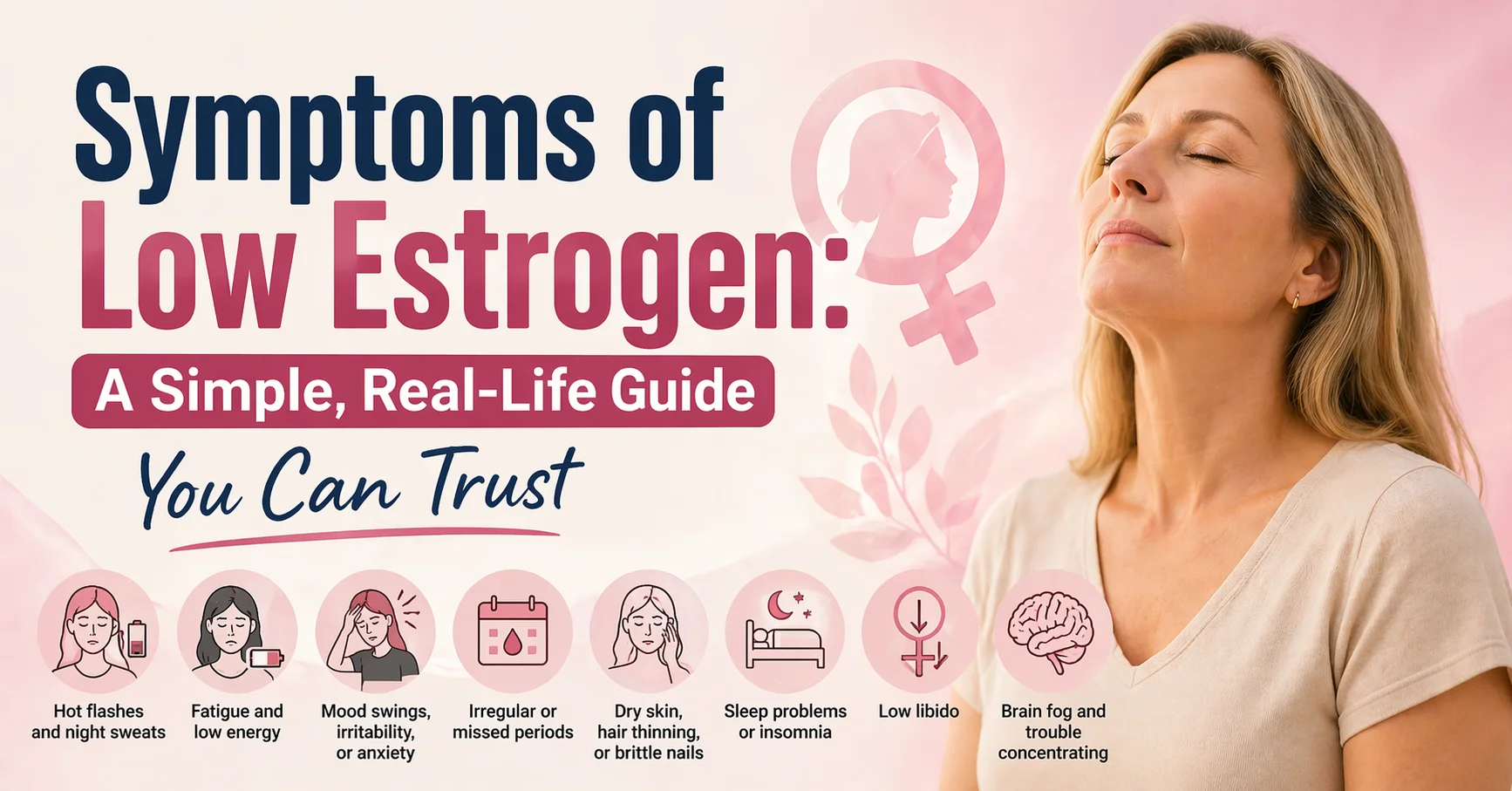
Low estrogen can affect how your body feels, looks, and works. Many women notice small changes at first. These changes may seem normal or easy to ignore. But over time, they can become harder to handle.
Understanding the symptoms of low estrogen helps you take control early. This guide explains everything in simple words. You will learn what to look for, why it happens, and what you can do.
This is not just medical talk. It includes real-life signs, practical tips, and honest advice. By the end, you will feel more confident about your health.
What Is Estrogen and Why It Matters
Estrogen is a hormone. It plays a big role in a woman’s body. It helps control the menstrual cycle. It also supports bones, skin, mood, and heart health.
Think of estrogen as a “balancer.” When levels drop, the body feels it quickly. That is why the symptoms of low estrogen in women can show up in many ways.
Low estrogen can happen at any age. It is common during menopause. But it can also affect younger women due to stress, diet, or medical issues.
Common Symptoms of Low Estrogen
The signs and symptoms of low estrogen can be mild or strong. Some women notice only one or two. Others may experience many at once.
Here is a simple overview:
| Symptom | What It Feels Like |
|---|---|
| Hot flashes | Sudden heat and sweating |
| Irregular periods | Missed or uneven cycles |
| Mood swings | Feeling sad or irritated |
| Dry skin | Rough or flaky skin |
| Low libido | Less interest in intimacy |
These symptoms may come slowly. Or they may appear suddenly. Always pay attention to changes in your body.
Early Signs You Should Not Ignore
Early symptoms of low estrogen women often go unnoticed. Many women think they are just tired or stressed.
But these signs can be important:
- Trouble sleeping at night
- Feeling anxious without reason
- Dry eyes or mouth
- Mild headaches
- Feeling less focused
These are often called “hidden” or weird symptoms of low estrogen. They are not always obvious. But they matter.
Weird Symptoms of Low Estrogen You Might Not Expect
Some symptoms may surprise you. They do not seem linked to hormones at first.
Here are a few unusual signs:
| Weird Symptom | Explanation |
|---|---|
| Tingling hands | Nerve sensitivity changes |
| Burning tongue | Hormonal effect on tissues |
| Joint stiffness | Less lubrication in joints |
| Memory lapses | Brain affected by hormones |
These weird symptoms of low estrogen can confuse many women. If you notice them often, it is worth checking.
Symptoms of Low Estrogen in Women at Different Ages
Low estrogen does not look the same for everyone. Age plays a big role.
In Young Women (20s–30s)
Low estrogen may cause missed periods, acne, or mood issues. Stress and diet are common causes.
In Midlife (40s)
This stage often includes perimenopause. Symptoms include hot flashes and sleep problems.
In Older Women (50+)
After menopause, symptoms may include bone loss and vaginal dryness.
Here is a quick comparison:
| Age Group | Common Symptoms |
|---|---|
| 20–30 | Irregular periods, fatigue |
| 40–50 | Hot flashes, mood swings |
| 50+ | Bone thinning, dryness |
Emotional and Mental Symptoms
Hormones affect your brain. So, the symptoms of low estrogen are not just physical.
You may feel:
- Sad or low mood
- Irritable easily
- Less motivated
- Anxious or worried
Some women describe it as “not feeling like themselves.” This is very common.
Low estrogen can also affect sleep. Poor sleep then makes mood worse. It becomes a cycle.
Physical Changes You May Notice
Low estrogen also changes how your body looks and feels.
Common physical symptoms of low estrogen in women include:
- Thinning hair
- Dry skin
- Weight gain (especially around belly)
- Breast tenderness
- Joint pain
These changes may feel frustrating. But they are signals from your body.
Causes of Low Estrogen
Understanding the cause helps you fix the problem.
Here are the main reasons:
| Cause | Details |
|---|---|
| Menopause | Natural drop in hormones |
| Stress | High stress lowers hormones |
| Poor diet | Lack of nutrients affects balance |
| Excess exercise | Too much can disrupt cycles |
| Medical conditions | Thyroid or ovarian issues |
Lifestyle plays a big role. Small daily habits can affect hormone levels.
When Should You See a Doctor?
Not every symptom is serious. But some signs need attention.
You should talk to a doctor if you have:
- No periods for months
- Severe mood swings
- Constant fatigue
- Pain during intimacy
- Frequent hot flashes
Tracking your symptoms of low estrogen helps doctors understand your condition better.
How Low Estrogen Affects Long-Term Health
Low estrogen is not just about short-term discomfort. It can affect your future health too.
Here are some risks:
- Weak bones (osteoporosis)
- Heart problems
- Memory issues
- Skin aging
This is why early action matters. Managing symptoms of low estrogen women can prevent bigger problems later.
Natural Ways to Support Estrogen Levels
You do not always need medication. Many natural methods can help.
1. Eat Healthy Foods
Include foods rich in phytoestrogens:
- Soy products
- Flaxseeds
- Chickpeas
2. Manage Stress
Try simple habits:
- Deep breathing
- Walking
- Meditation
3. Sleep Well
Aim for 7–8 hours of sleep. Good sleep supports hormone balance.
4. Exercise Smartly
Avoid over-exercising. Balance is key.
These steps can reduce signs and symptoms of low estrogen naturally.
Medical Treatments and Options
Sometimes lifestyle changes are not enough. Doctors may suggest treatments.
Common options include:
| Treatment | Purpose |
|---|---|
| Hormone therapy | Replace estrogen |
| Birth control pills | Regulate hormones |
| Vaginal creams | Reduce dryness |
| Supplements | Support overall health |
Always consult a doctor before starting treatment.
Real-Life Example: A Simple Story
A 35-year-old woman noticed she felt tired all the time. She also had mood swings. At first, she ignored it.
Later, her periods became irregular. She visited a doctor. Tests showed low estrogen.
She improved her diet and reduced stress. Within months, her symptoms improved.
This shows how early awareness of symptoms of low estrogen can make a big difference.
FAQs About Symptoms of Low Estrogen
1. What are the most common symptoms of low estrogen?
Hot flashes, mood swings, and irregular periods are most common.
2. Can young women have low estrogen?
Yes, stress, diet, and medical issues can cause it even in younger women.
3. Are weird symptoms of low estrogen real?
Yes, symptoms like tingling or memory issues can happen.
4. How is low estrogen diagnosed?
Doctors use blood tests and symptom tracking.
5. Can diet improve estrogen levels?
Yes, foods like soy and flaxseeds may help support balance.
6. Is low estrogen dangerous?
It can lead to long-term issues like weak bones if untreated.
Conclusion: Listen to Your Body
Your body always gives signals. The key is to notice them early.
The symptoms of low estrogen may start small. But they can grow over time. Paying attention helps you act before things get worse.
Simple lifestyle changes can make a big difference. In some cases, medical help is needed. Both are okay.
Do not ignore how you feel. If something seems off, trust yourself. Take action, ask questions, and care for your health.
Because when your hormones are balanced, you feel like your true self again.
