

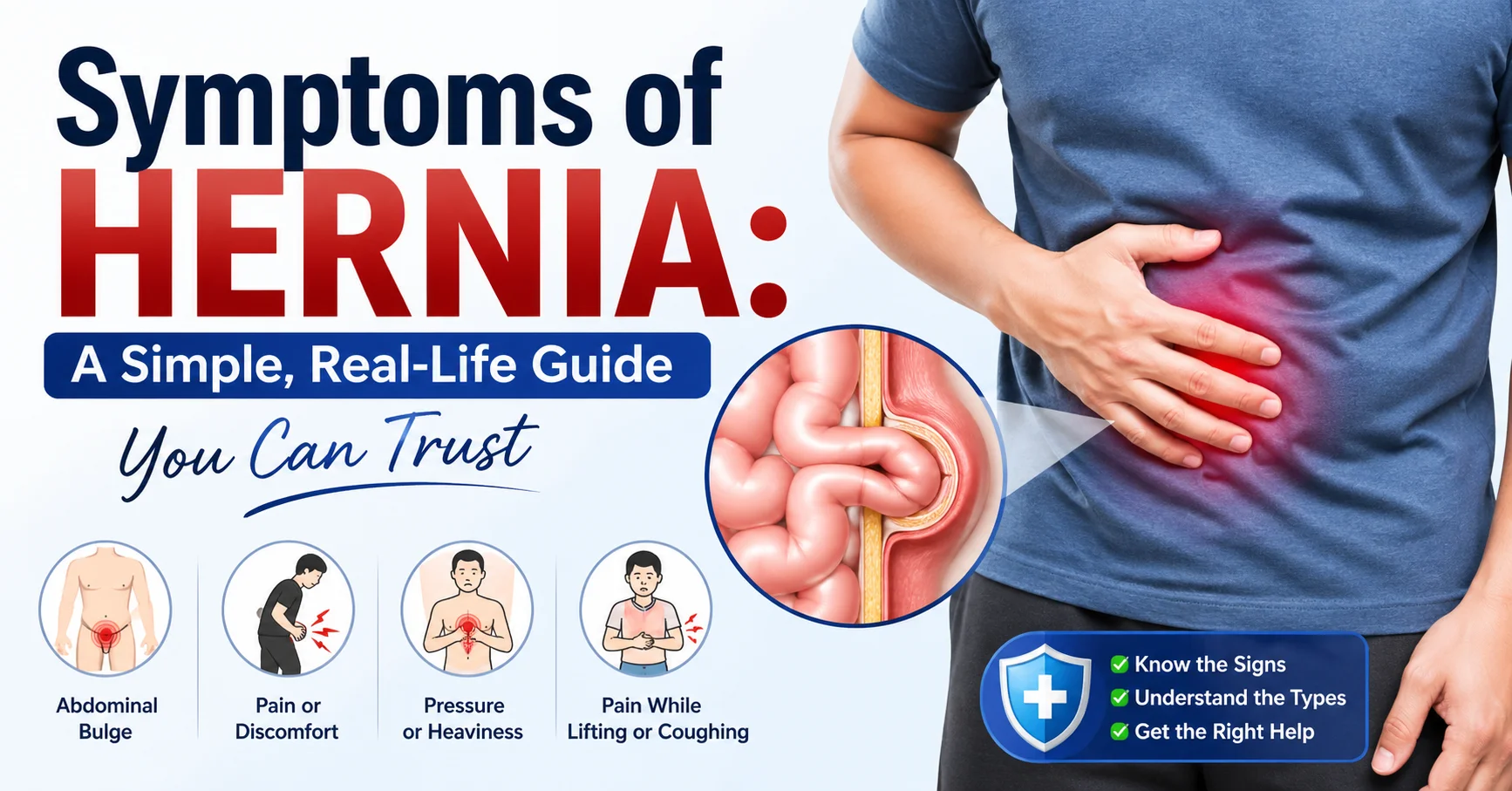
Hernias are more common than most people think. Many people ignore early signs. That can lead to bigger problems later. This guide will help you understand the symptoms of hernia in a simple and clear way.
You do not need medical knowledge to follow this. We will use easy words and real-life examples. By the end, you will know what to watch for and when to act.
A hernia happens when an organ pushes through a weak spot in muscle. This often causes a visible lump. But not all hernias look the same. Some stay hidden for a long time.
Let’s break everything down step by step so you can stay safe and informed.
What Is a Hernia in Simple Words?
A hernia is like a small bulge or tear inside your body. It happens when pressure pushes tissue out of place.
Think of a worn-out tire. When pressure builds, a weak spot bulges out. That is similar to what happens in your body.
The most common places are the stomach area and groin. But hernias can appear in other parts too.
Understanding this helps you spot early symptoms of a hernia before things get worse.
Early Symptoms of Hernia You Should Not Ignore
At first, the signs may seem small. Many people think it is just a muscle strain.
Here are some early symptoms of hernia to watch for:
- A small lump that appears when standing
- Mild pain when lifting or bending
- A feeling of pressure in the abdomen
- Discomfort after eating or coughing
The lump may disappear when you lie down. That can make it easy to ignore.
But early signs matter. Catching a hernia early can prevent serious issues later.
Common Types of Hernias and Their Symptoms
Different hernias show different signs. Knowing the type helps you understand your body better.
Here is a simple table to explain:
| Type of Hernia | Where It Happens | Key Symptoms |
|---|---|---|
| Inguinal | Groin area | Bulge, pain when lifting |
| Hiatal | Upper stomach | Heartburn, chest discomfort |
| Umbilical | Belly button | Swelling near navel |
| Epigastric | Upper abdomen | Small lump, mild pain |
Each type has unique symptoms of hernia in stomach or nearby areas.
Symptoms of Hiatal Hernia Explained Simply
A hiatal hernia is different. It happens inside your body, not outside.
This means you may not see a lump. Instead, you feel symptoms.
Common symptoms of hiatal hernia include:
- Heartburn that does not go away
- Acid reflux after meals
- Trouble swallowing
- Chest pain or burning feeling
These signs often feel like indigestion. Many people mistake them for normal stomach problems.
If these symptoms keep coming back, it may be more than just acid reflux.
Signs That Hiatal Hernia Is Getting Worse
Sometimes symptoms become stronger over time. This can mean the condition is worsening.
Watch for these symptoms of hiatal hernia getting worse:
- Severe chest pain
- Frequent vomiting
- Difficulty eating
- Sudden weight loss
- Constant acid reflux
These are warning signs. Do not ignore them. You may need medical help quickly.
Symptoms of Umbilical Hernia in Adults
An umbilical hernia appears near the belly button. It is common in both children and adults.
In adults, it may feel uncomfortable or painful.
Here are the main symptoms of umbilical hernia in adults:
- A soft bulge near the navel
- Pain when coughing or lifting
- Swelling that becomes larger over time
- Tenderness when touched
Many adults ignore it because it seems harmless. But it can grow bigger if untreated.
Understanding Symptoms of Epigastric Hernias
Epigastric hernias occur between the chest and belly button.
They are often small but can still cause discomfort.
Common symptoms of epigastric hernias include:
- A small lump in the upper abdomen
- Pain during movement
- Burning or aching feeling
- Discomfort after meals
These hernias may not always hurt. That makes them easy to overlook.
What Causes Hernia Symptoms?
Hernias do not appear without reason. There are common causes behind them.
Here is a simple breakdown:
| Cause | How It Leads to Hernia |
|---|---|
| Heavy lifting | Adds pressure to muscles |
| Obesity | Weakens abdominal wall |
| Chronic coughing | Repeated strain |
| Constipation | Straining during bowel movements |
| Aging | Muscles become weak |
Knowing the cause helps you prevent future problems.
When Hernia Symptoms Become Dangerous
Not all hernias are serious at first. But some can become life-threatening.
Danger signs include:
- Sudden, severe pain
- Nausea or vomiting
- A lump that becomes hard
- Red or dark skin over the bulge
This may mean the hernia is trapped. It can cut off blood supply.
If this happens, seek emergency care right away.
Symptoms of Hernia in Stomach Area
Hernias in the stomach area can feel different. They often affect digestion.
Common symptoms of hernia in stomach include:
- Bloating after eating
- Burning sensation
- Pressure in upper abdomen
- Pain when bending over
These symptoms can feel like normal stomach issues. But repeated discomfort is not normal.
Always pay attention to patterns in your body.
How Doctors Diagnose Hernia
Doctors use simple methods to check for hernia.
They may:
- Examine the bulge
- Ask you to cough or stand
- Use ultrasound or scans
Diagnosis is usually quick and painless.
Getting checked early can save you from surgery later.
Simple Ways to Manage Hernia Symptoms
You cannot always avoid a hernia. But you can reduce symptoms.
Here are some helpful tips:
- Avoid lifting heavy objects
- Eat smaller meals
- Maintain a healthy weight
- Stop smoking
- Treat chronic cough
These steps can ease symptoms of hernia and prevent worsening.
Can Hernia Heal Without Surgery?
This is a common question. The truth is simple.
A hernia does not heal on its own. It may stay the same for a while.
But over time, it often gets worse.
Lifestyle changes can reduce symptoms. But surgery is the only permanent fix.
Always talk to a doctor before deciding.
Real-Life Example: Why Early Action Matters
A friend once ignored a small lump in his groin. It did not hurt at first.
He thought it was nothing serious. Months later, the pain became severe.
He needed emergency surgery because the hernia got trapped.
This shows why early symptoms of a hernia should not be ignored.
Small signs can turn into big problems.
FAQs About Symptoms of Hernia
1. What are the symptoms of a hernia?
The most common signs include a bulge, pain, and pressure in the abdomen. Some people also feel discomfort when lifting.
2. Can hernia symptoms come and go?
Yes, symptoms can appear and disappear. The bulge may show when standing and vanish when lying down.
3. Are all hernias painful?
No, some hernias do not cause pain at first. That is why they are often ignored.
4. What are the symptoms of a hiatal hernia?
They include heartburn, acid reflux, chest discomfort, and trouble swallowing.
5. When should I worry about hernia symptoms?
You should worry if you feel severe pain, vomiting, or a hard lump. These may be emergency signs.
6. Can exercise make hernia worse?
Yes, heavy or incorrect exercise can increase pressure and worsen symptoms.
Final Thoughts: Listen to Your Body
Your body always gives signals when something is wrong. You just need to notice them.
The symptoms of hernia may start small. But they can grow into serious problems if ignored.
Do not wait for pain to become severe. Take early signs seriously.
If you notice any unusual bulge or discomfort, consult a doctor. It is always better to be safe than sorry.
Staying aware and informed is the best way to protect your health.
