

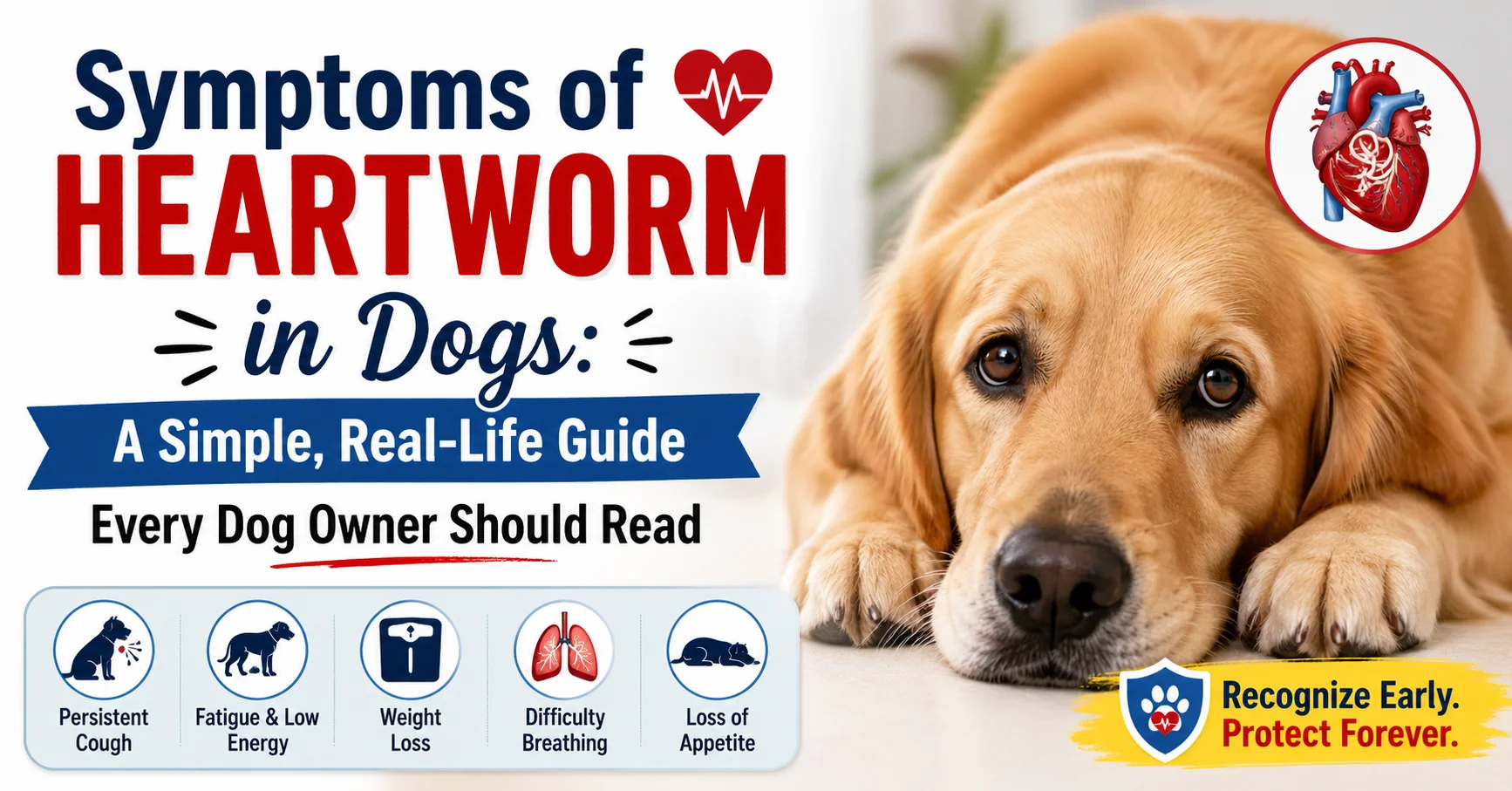
If you love your dog, you want them happy and healthy. But some illnesses can hide quietly. One of them is heartworm disease. Many owners don’t notice early warning signs. That’s why learning the symptoms of heartworm in dogs can truly save a life.
Heartworms are dangerous parasites. They live inside your dog’s heart and lungs. Over time, they can cause serious damage. The tricky part is this—early signs are often mild or easy to miss. By the time symptoms become obvious, the disease may already be advanced.
In this guide, I’ll walk you through everything in a simple way. You’ll learn what to watch for, how symptoms change over time, and when to act. I’ll also share real-life insights to help you understand what your dog might be feeling.
What Is Heartworm Disease in Dogs?
Heartworm disease is caused by a parasite called Dirofilaria immitis. These worms are spread through mosquito bites. When a mosquito bites an infected animal, it carries tiny larvae. Then it passes them to your dog.
Inside your dog, these larvae grow into long worms. They live in the heart, lungs, and blood vessels. Over months, they multiply and grow bigger. This blocks blood flow and stresses the heart.
Many people think heartworms happen quickly. But the truth is, it takes months for symptoms to show. That’s why regular checkups matter so much. Without treatment, the disease can become life-threatening.
Why Early Detection of Symptoms Matters
Catching the symptoms of heartworm in dogs early can make a huge difference. In the beginning, treatment is easier and safer. But in later stages, it becomes risky and expensive.
Dogs are very good at hiding pain. They may act normal even when something is wrong. That’s why small changes matter. A slight cough or low energy could be a warning sign.
From personal experience, many pet owners ignore early symptoms. They think their dog is just tired or aging. But waiting too long can lead to serious complications.
Early detection can:
- Reduce treatment risks
- Prevent severe organ damage
- Save money on medical care
- Improve your dog’s chances of full recovery
How Dogs Get Heartworms
Heartworms spread through mosquito bites. It only takes one bite to infect a dog. That’s what makes prevention so important.
Here’s how it works:
- A mosquito bites an infected animal
- It picks up heartworm larvae
- The mosquito bites your dog
- Larvae enter your dog’s bloodstream
- They grow into adult worms over time
Even indoor dogs are not safe. Mosquitoes can enter homes easily. Warm climates increase the risk, but heartworms can occur almost anywhere.
Early Symptoms of Heartworm in Dogs
In the early stage, signs are very mild. Many owners miss them completely. But noticing them early can help your dog recover faster.
Common early symptoms include:
- Mild cough
- Slight tiredness after play
- Reduced interest in exercise
- Subtle weight loss
Your dog may still eat normally and act happy. That’s why these signs are easy to ignore. But if they last for weeks, it’s time to see a vet.
In my opinion, the biggest mistake owners make is waiting too long. Even a small cough shouldn’t be ignored.
Common Symptoms of Heartworms in Dogs
As the disease progresses, symptoms become more noticeable. This is when many owners start to worry.
Here are common symptoms of heartworms in dogs:
- Persistent cough
- Fatigue after light activity
- Decreased appetite
- Weight loss
- Difficulty breathing
At this stage, worms are growing larger. They begin to block blood flow in the lungs and heart. This puts extra pressure on your dog’s body.
Dogs may avoid running or playing. They may rest more often. Some may even seem depressed.
Signs and Symptoms of Heartworms in Dogs You Should Never Ignore
Some symptoms are serious warning signs. If you notice these, seek veterinary care immediately.
Danger signs include:
- Severe coughing
- Fainting or collapse
- Swollen belly (fluid buildup)
- Pale gums
- Labored breathing
These signs mean the disease is advanced. The heart and lungs are under heavy stress.
I’ve seen cases where owners waited too long. Sadly, late treatment becomes much harder and riskier. Acting fast can save your dog’s life.
Symptoms of Late-Stage Heartworms in Dogs
Late-stage heartworm disease is very dangerous. It can lead to heart failure and even death.
Here are the symptoms of late-stage heartworms in dogs:
| Symptom | What It Means |
|---|---|
| Severe fatigue | Heart cannot pump properly |
| Constant coughing | Lung damage is severe |
| Difficulty breathing | Blood flow is blocked |
| Swollen abdomen | Fluid buildup from heart failure |
| Collapse | Emergency condition |
At this stage, worms may completely block blood vessels. This condition is sometimes called caval syndrome. It requires urgent treatment.
How Symptoms Progress Over Time
Heartworm symptoms don’t appear overnight. They develop slowly over months.
Here’s a simple breakdown:
| Stage | Symptoms |
|---|---|
| Early | Mild cough, slight fatigue |
| Middle | Weight loss, exercise intolerance |
| Late | Breathing issues, collapse |
Understanding this timeline helps you act early. The sooner you notice symptoms, the better the outcome.
What Are the Symptoms of Heartworms in Dogs by Size and Age?
Not all dogs show symptoms the same way. Size and age play a big role.
Small dogs:
- Show symptoms earlier
- Get severe damage faster
Large dogs:
- May hide symptoms longer
- Disease progresses slowly
Puppies:
- Rarely show symptoms early
- Infection may go unnoticed
Older dogs:
- Symptoms may be mistaken for aging
- Fatigue is often ignored
This is why regular vet visits are essential for all dogs.
Behavioral Changes Linked to Heartworm Disease
Sometimes the symptoms of heartworm in dogs are not physical at first. They can be behavioral.
Watch for:
- Less interest in play
- Sleeping more than usual
- Avoiding exercise
- Mood changes
Your dog may seem “off.” Many owners describe it as a gut feeling. Trust that instinct.
Dogs cannot tell us they feel unwell. But their behavior often speaks for them.
Diagnosis: How Vets Confirm Heartworms
If you suspect heartworms, a vet will run tests. Diagnosis is usually simple and quick.
Common methods include:
- Blood tests
- X-rays
- Ultrasound
These tests detect worms or their effects on the heart and lungs. Organizations like the American Heartworm Society recommend yearly testing.
Early diagnosis makes treatment much safer.
Treatment Options and What to Expect
Treatment depends on how severe the infection is. It usually involves medications to kill the worms.
Steps may include:
- Stabilizing your dog
- Killing adult worms
- Restricting activity
Treatment can take weeks or months. During this time, your dog must rest. Too much activity can be dangerous.
In advanced cases, treatment carries risks. That’s why prevention is always better.
Prevention: The Best Way to Protect Your Dog
Preventing heartworms is much easier than treating them. Many safe medications are available.
Prevention tips:
- Monthly heartworm preventatives
- Regular vet checkups
- Mosquito control
These medications kill larvae before they grow into worms. They are simple, affordable, and highly effective.
Real-Life Insight: A Lesson Every Dog Owner Should Learn
A friend of mine had a playful Labrador. He loved running and playing fetch. One day, he started coughing lightly. They ignored it.
Months later, the dog became weak. A vet diagnosed advanced heartworm disease. Treatment was long and stressful.
Thankfully, the dog survived. But it could have been avoided with early care.
This story shows why recognizing the symptoms of heartworm in dogs is so important.
FAQs About Symptoms of Heartworm in Dogs
1. What are the first symptoms of heartworm in dogs?
Early signs include mild coughing, low energy, and slight weight loss. These symptoms are often easy to miss.
2. Can a dog have heartworms without symptoms?
Yes, especially in early stages. Many dogs show no signs for months.
3. How fast do heartworm symptoms appear?
Symptoms can take 6–7 months to develop after infection.
4. Is coughing always a sign of heartworms?
Not always, but a persistent cough should be checked by a vet.
5. Can heartworm symptoms be cured?
Yes, if detected early. Late-stage cases are harder to treat.
6. Should indoor dogs be tested for heartworms?
Yes. Mosquitoes can enter homes, so indoor dogs are still at risk.
Final Thoughts: Protect Your Dog Before It’s Too Late
The symptoms of heartworm in dogs may start small, but they can quickly become serious. That’s what makes this disease so dangerous.
The good news is that heartworm disease is preventable. With simple steps, you can protect your dog from pain and suffering.
Pay attention to small changes. Trust your instincts. And never ignore unusual symptoms.
If you found this guide helpful, consider sharing it with other dog owners. You might help save another dog’s life.
