

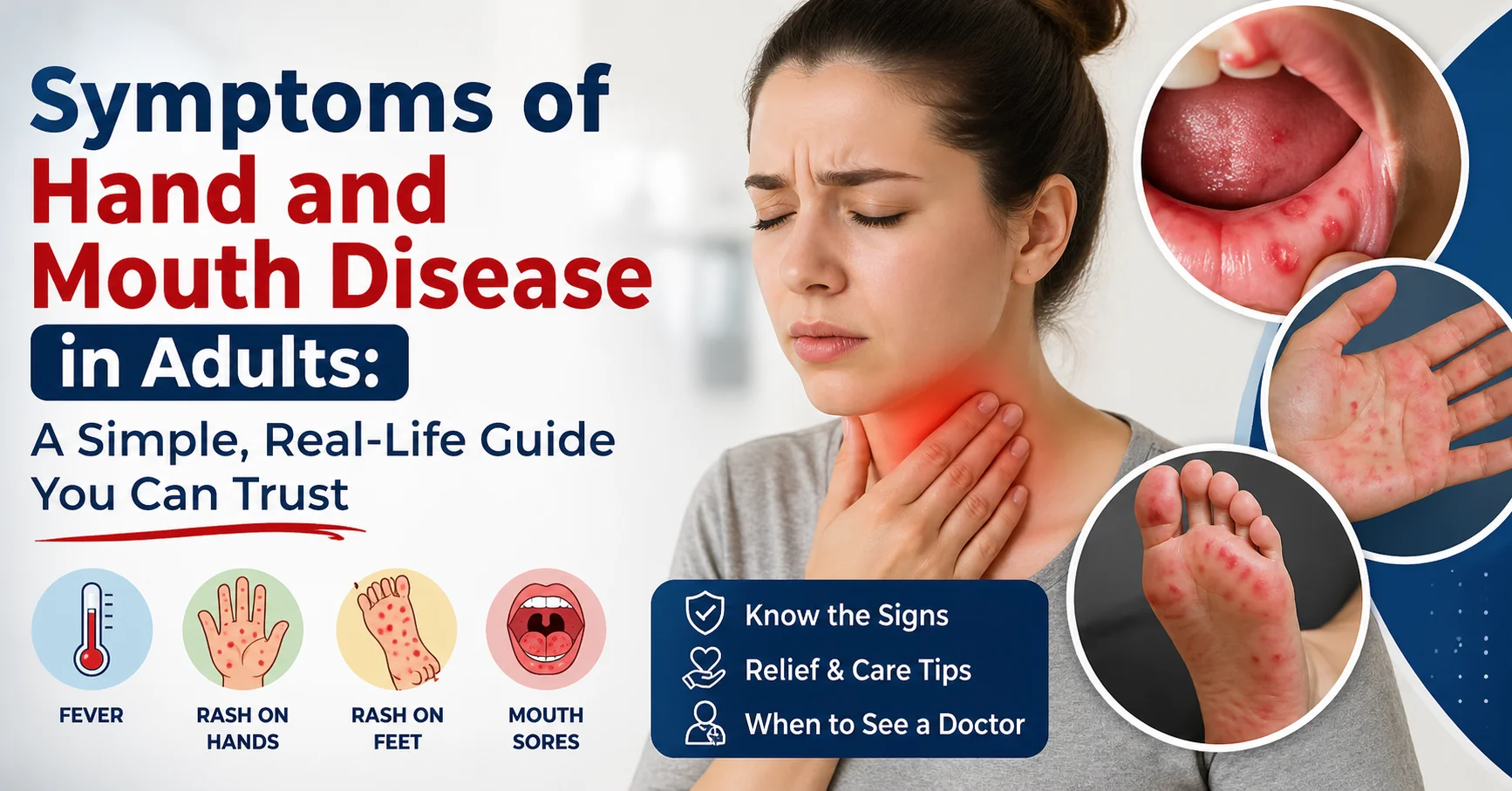
Hand, foot, and mouth disease (HFMD) is often seen in children. But adults can get it too. And when they do, the experience can feel confusing and even scary. Many people don’t expect it, so they miss the early warning signs.
In this guide, we’ll break down the symptoms of hand and mouth disease in adults in a clear and simple way. You’ll learn what to look for, how it spreads, and what to expect during recovery. I’ll also share real-life insights to help you feel more prepared and less worried.
What Is Hand, Foot, and Mouth Disease in Adults?
Hand, foot, and mouth disease is a viral infection. It is usually caused by coxsackievirus. While it spreads quickly among children, adults can catch it too, especially from kids.
In adults, the illness may feel stronger or last longer. Some people have mild symptoms. Others feel quite sick for several days. That’s why understanding the symptoms of hand and mouth disease in adults is so important.
It spreads through saliva, cough droplets, and contact with infected surfaces. Even touching blisters can pass the virus.
Early Symptoms of Hand Foot and Mouth Disease in Adults
The early stage can feel like a mild flu. Many adults ignore it at first. But these early signs are important clues.
You may notice a low fever. Your throat may feel sore. Some people feel tired or weak. Headaches and body aches are also common.
These early symptoms of hand foot and mouth disease in adults usually show up 3–6 days after exposure. This stage is called the incubation period.
If you’ve been around children or sick people, don’t ignore these signs. Acting early can help you manage symptoms better.
Common Symptoms of Hand Foot and Mouth Disease in Adults
After the early stage, more clear symptoms appear. These are easier to recognize.
Here are the most common symptoms of hand foot and mouth disease in adults:
- Painful mouth sores
- Red spots or blisters on hands and feet
- Fever
- Sore throat
- Loss of appetite
- Fatigue
Mouth sores can make eating and drinking painful. The rash may itch or burn. Some adults also get blisters on knees, elbows, or buttocks.
How the Disease Progresses in Adults
The hand foot and mouth disease in adults progression of symptoms follows a pattern.
First comes fever and fatigue. Then mouth sores appear. After that, the skin rash develops.
The illness usually lasts 7–10 days. But some adults feel tired even after the rash fades.
Here’s a simple timeline:
| Day | What Happens |
|---|---|
| 1–2 | Fever, sore throat, tiredness |
| 3–4 | Painful mouth sores appear |
| 4–6 | Rash and blisters develop |
| 7–10 | Symptoms slowly improve |
Understanding this pattern helps reduce fear. You know what’s coming next.
Signs and Symptoms of Hand Foot Mouth Disease in Adults vs Children
Adults and children share similar symptoms. But there are some differences.
| Symptom | Adults | Children |
|---|---|---|
| Fever | Mild to moderate | Often higher |
| Pain | More intense | Less severe |
| Rash | Can spread wider | Usually limited |
| Recovery | Slightly longer | Faster |
Adults often feel more discomfort. Mouth sores can be especially painful. This can affect eating and hydration.
Where Do the Rashes and Blisters Appear?
The rash is one of the clearest symptoms of hand and mouth disease in adults.
It usually appears on:
- Palms of the hands
- Soles of the feet
- Inside the mouth
- Fingers and toes
In some adults, it spreads to arms, legs, or even the face.
The blisters may look small but can feel very painful. They may burst and form scabs later.
Why Adults Sometimes Have Worse Symptoms
Many people think HFMD is mild. But adults can have stronger symptoms.
This happens because the immune system reacts differently. If you’ve never had the virus before, your body may respond more strongly.
Stress, lack of sleep, or a weak immune system can also make symptoms worse.
From real-life cases, many adults say the mouth pain is the hardest part. It can make simple things like drinking water difficult.
Less Common but Serious Symptoms to Watch
Most cases are mild. But some rare symptoms need attention.
Watch for:
- Severe headache
- Stiff neck
- High fever that won’t go down
- Confusion or dizziness
These signs are rare but serious. They may suggest complications.
If you notice them, seek medical care right away.
How Long Do Symptoms Last in Adults?
The symptoms of hand and mouth disease in adults usually last about one week.
Here’s a quick breakdown:
| Symptom | Duration |
|---|---|
| Fever | 2–3 days |
| Mouth sores | 5–7 days |
| Rash | 5–10 days |
| Fatigue | Up to 2 weeks |
Even after visible symptoms fade, the virus can still spread. That’s why hygiene is important.
How Contagious Is It for Adults?
HFMD spreads easily. Adults can catch it from children, coworkers, or surfaces.
You are most contagious during the first week. But the virus can stay in your body for weeks.
This means you can still spread it even after feeling better.
Wash hands often. Avoid close contact. Clean surfaces regularly.
When Should You See a Doctor?
Most adults recover at home. But sometimes medical help is needed.
See a doctor if:
- You cannot drink fluids
- Pain becomes severe
- Fever lasts more than 3 days
- Symptoms get worse instead of better
Doctors may not give specific medicine for the virus. But they can help manage symptoms.
Simple Ways to Manage Symptoms at Home
There is no cure for HFMD. But you can ease the discomfort.
Try these tips:
- Drink cold fluids to soothe mouth pain
- Eat soft foods like yogurt or soup
- Rest as much as possible
- Use pain relievers if needed
Avoid spicy or salty foods. They can irritate mouth sores.
From experience, cold drinks and ice cream often bring quick relief.
Can Adults Get It More Than Once?
Yes, adults can get HFMD more than once. Different viruses can cause it.
So even if you had it before, you are not fully protected.
That’s why prevention is important.
How to Prevent Hand, Foot, and Mouth Disease
Prevention is simple but powerful.
- Wash hands often
- Avoid touching your face
- Clean shared surfaces
- Stay away from sick people
If someone in your home is sick, be extra careful.
Good hygiene can lower your risk a lot.
Emotional Impact: What People Don’t Talk About
Many adults feel stressed when they get sick unexpectedly. HFMD can disrupt work and daily life.
Some people feel embarrassed about visible rashes. Others worry about spreading it to family.
It helps to remember: this illness is common and temporary. Most people recover fully without problems.
Conclusion: Stay Calm, Stay Informed
The symptoms of hand and mouth disease in adults can feel uncomfortable, but they are usually manageable. Knowing what to expect makes a big difference.
From early fever to mouth sores and rash, each stage follows a pattern. Once you understand it, the experience becomes less scary.
Take care of your body. Rest, hydrate, and watch your symptoms. If something feels off, don’t hesitate to seek help.
Most importantly, remember—you will get through this. Recovery is just around the corner.
FAQs
1. What are the first symptoms of hand, foot, and mouth disease in adults?
The first signs often include fever, sore throat, and fatigue. These appear before the rash or sores.
2. How do I know if I have HFMD or just a cold?
HFMD includes mouth sores and a rash on hands and feet. A cold usually does not.
3. Can adults spread HFMD to others?
Yes, adults are contagious, especially during the first week of illness.
4. How painful are the symptoms in adults?
Pain varies, but mouth sores can be quite uncomfortable. Eating may be difficult.
5. Is hand, foot, and mouth disease dangerous for adults?
Most cases are mild. Serious complications are rare but possible.
6. Can I go to work with HFMD?
It’s best to stay home during the contagious stage to avoid spreading the virus.
