

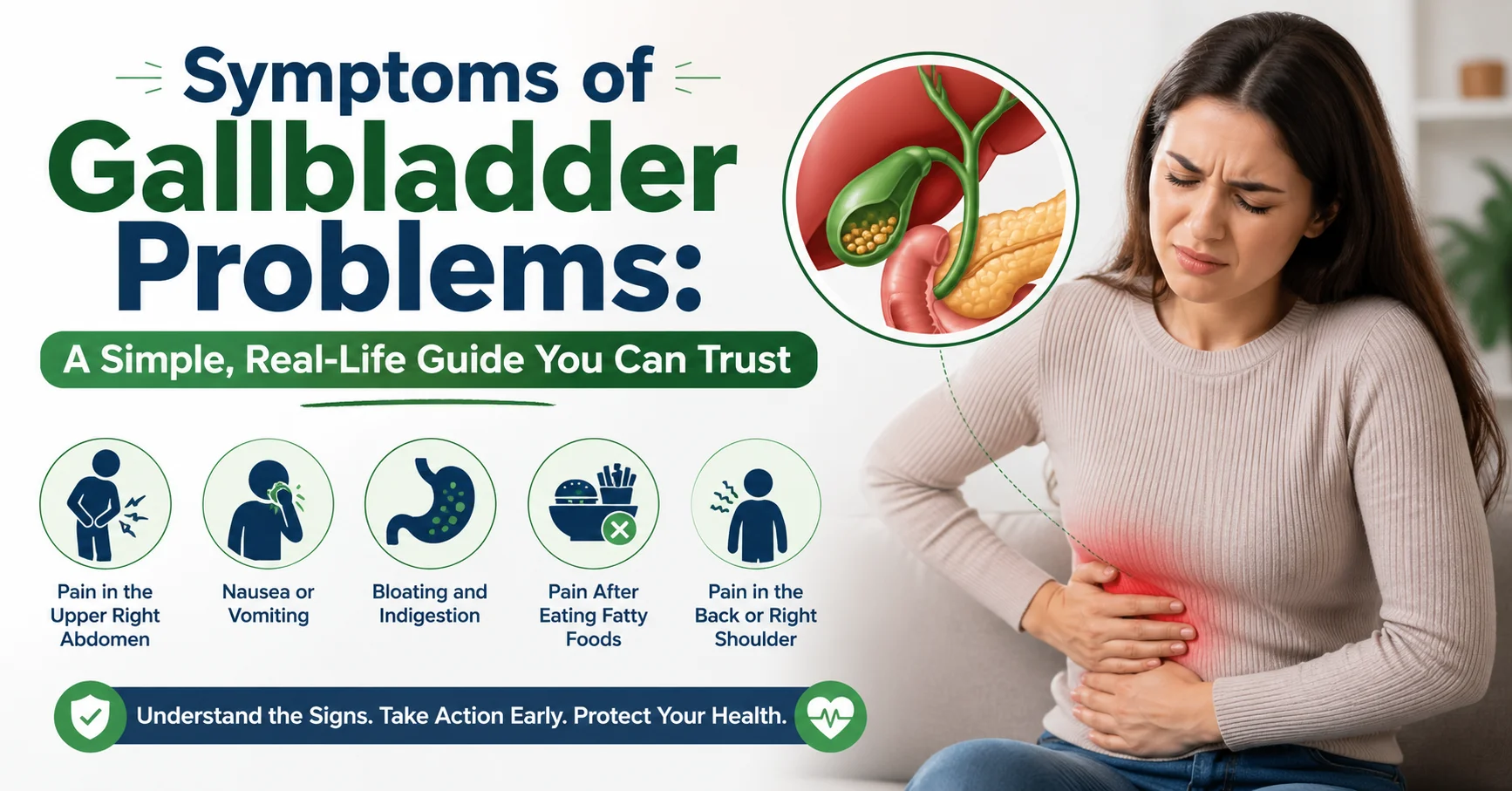
Your body often sends small signals before a bigger problem shows up. The gallbladder is no different. Many people ignore early warning signs, thinking it is just gas or stomach upset. But understanding the symptoms of gallbladder problems can help you act early and avoid serious pain later.
The gallbladder is a small organ under your liver. It stores bile, which helps digest fats. When something goes wrong, digestion gets disturbed. This can lead to pain, discomfort, and even infections. In this guide, you will learn everything in a simple and clear way. We will talk about signs, causes, risks, and when to see a doctor.
What Does the Gallbladder Do?
The gallbladder plays a simple but important role. It stores bile made by the liver. When you eat fatty food, it releases bile into your small intestine. This helps break down fat so your body can absorb it.
If the gallbladder stops working well, digestion becomes difficult. You may feel bloated, heavy, or uncomfortable after meals. Over time, this can lead to more serious issues like gallstones or inflammation.
Understanding how it works helps you notice the symptoms of problems with the gallbladder early. Many people only learn about it when pain starts, but the body gives clues long before that.
Early Symptoms of Gallbladder Problems
Early signs are often mild and easy to ignore. But they matter. These small signals are your body’s way of warning you.
Common early symptoms include:
- Mild pain in the upper right abdomen
- Feeling full quickly
- Nausea after eating fatty food
- Bloating or gas
These signs may come and go. That makes them easy to overlook. Many people think it is just indigestion. But if these symptoms repeat, it could be the start of a gallbladder issue.
Recognizing the early symptoms of gallbladder problems can prevent severe pain later. Acting early can save you from surgery or complications.
Common Signs and Symptoms of Gallbladder Problems
As the problem grows, symptoms become stronger. They are harder to ignore and often affect daily life.
Here are the most common signs:
| Symptom | What It Feels Like |
|---|---|
| Sharp abdominal pain | Sudden, intense pain on the right side |
| Nausea and vomiting | Feeling sick after meals |
| Fever | A sign of infection |
| Yellow skin (jaundice) | Indicates bile blockage |
| Dark urine | Shows bile flow issues |
These are clear what are signs and symptoms of gallbladder problems that need attention. If you feel these regularly, it is important to consult a doctor.
Pain: The Most Noticeable Symptom
Pain is often the strongest signal. It usually appears in the upper right side of your abdomen. Sometimes it spreads to your back or right shoulder.
This pain may:
- Start suddenly
- Last for minutes or hours
- Get worse after fatty meals
Some people describe it as a squeezing or stabbing feeling. It can be very intense and may stop you from doing normal activities.
Pain is one of the most serious symptoms of gallbladder problems. If it keeps coming back, do not ignore it.
Digestive Issues You Should Not Ignore
Your gallbladder helps digest fats. So when it fails, digestion suffers.
You may notice:
- Bloating after meals
- Excess gas
- Diarrhea
- Difficulty digesting fatty foods
These issues may seem small, but they are important clues. Many people live with these problems for years without knowing the cause.
If you often feel uncomfortable after eating, it could be one of the hidden what are the symptoms of gallbladder problems.
Gallstones: A Major Cause of Trouble
Gallstones are one of the main reasons behind gallbladder problems. They are small, hard deposits that form inside the gallbladder.
They can block bile flow and cause pain. Some people have gallstones without symptoms. But when they block a duct, symptoms appear suddenly.
Gallstones vs No Gallstones
| Condition | Symptoms |
|---|---|
| With gallstones | Severe pain, nausea, vomiting |
| Without gallstones | Mild discomfort, digestion issues |
Gallstones are a key reason behind many symptoms of problems with the gallbladder. Early detection can prevent complications.
Signs of a Gallbladder Infection
Sometimes, the gallbladder becomes inflamed or infected. This condition is serious and needs medical care.
Symptoms include:
- High fever
- Severe abdominal pain
- Chills
- Nausea and vomiting
This is not something to ignore. Infection can spread if untreated. These are advanced what are symptoms of gallbladder problems that require urgent attention.
Who Is at Risk?
Some people are more likely to develop gallbladder issues.
Risk Factors Table
| Risk Factor | Why It Matters |
|---|---|
| Obesity | Increases cholesterol in bile |
| Age (40+) | Risk grows with age |
| Female gender | Hormones affect bile |
| Pregnancy | Slows gallbladder movement |
| Poor diet | High fat intake increases risk |
Knowing your risk helps you stay alert to symptoms of gallbladder problems. Prevention becomes easier when you understand these factors.
Foods That Can Trigger Symptoms
Diet plays a big role in gallbladder health. Certain foods can make symptoms worse.
Avoid or limit:
- Fried foods
- Fast food
- Butter and cream
- Processed snacks
Instead, choose:
- Fresh fruits
- Vegetables
- Whole grains
- Lean proteins
Food choices directly affect the symptoms of gallbladder problems. A healthy diet can reduce pain and improve digestion.
When Should You See a Doctor?
Not every symptom needs urgent care, but some do.
Seek help if you have:
- Severe abdominal pain
- Fever with chills
- Yellow skin or eyes
- Persistent vomiting
These signs may indicate serious issues. Ignoring them can lead to complications.
Understanding what are signs and symptoms of gallbladder problems helps you act at the right time.
How Doctors Diagnose Gallbladder Problems
Doctors use simple tests to confirm the problem.
Common tests include:
- Ultrasound
- Blood tests
- CT scan
- MRI
These tests help find gallstones or inflammation. Diagnosis is usually quick and painless.
Getting checked early helps manage symptoms of gallbladder problems before they worsen.
Treatment Options Explained Simply
Treatment depends on the severity.
Treatment Comparison Table
| Treatment | When Used |
|---|---|
| Medication | Mild symptoms |
| Diet changes | Early stages |
| Surgery | Severe cases or gallstones |
Surgery to remove the gallbladder is common and safe. Many people live normal lives without it.
Choosing the right treatment depends on your symptoms of problems with the gallbladder.
Can You Prevent Gallbladder Problems?
Yes, many cases are preventable with simple steps.
Prevention Tips:
- Eat a balanced diet
- Maintain a healthy weight
- Exercise regularly
- Avoid crash diets
Small lifestyle changes can reduce the risk of symptoms of gallbladder problems.
Real-Life Example for Better Understanding
A friend once ignored mild stomach pain for months. He thought it was gas. One day, the pain became severe. He ended up in the hospital with gallstones.
This shows how small symptoms can grow into big problems. Listening to your body is important. Early care could have prevented his condition.
Stories like this remind us to take what are the symptoms of gallbladder problems seriously.
FAQs About Symptoms of Gallbladder Problems
1. What are the first symptoms of gallbladder problems?
Early symptoms include mild pain, bloating, and nausea after eating fatty food.
2. Where is gallbladder pain felt?
It is usually felt in the upper right abdomen and may spread to the back.
3. Can gallbladder problems go away on their own?
Mild symptoms may improve, but serious issues need medical treatment.
4. What foods should I avoid?
Avoid fried foods, fatty meals, and processed snacks.
5. Is gallbladder surgery safe?
Yes, it is a common and safe procedure with quick recovery.
6. How do I know if I have gallstones?
You need an ultrasound or medical test to confirm it.
Final Thoughts: Don’t Ignore the Signs
Your body always gives signals before something serious happens. The key is to listen. The symptoms of gallbladder problems may start small, but they can become severe if ignored.
If you notice repeated pain, digestive issues, or discomfort after meals, take it seriously. Simple lifestyle changes can help, but do not hesitate to seek medical advice when needed.
Taking action early can protect your health and prevent complications. Stay aware, stay informed, and take care of your body.
