

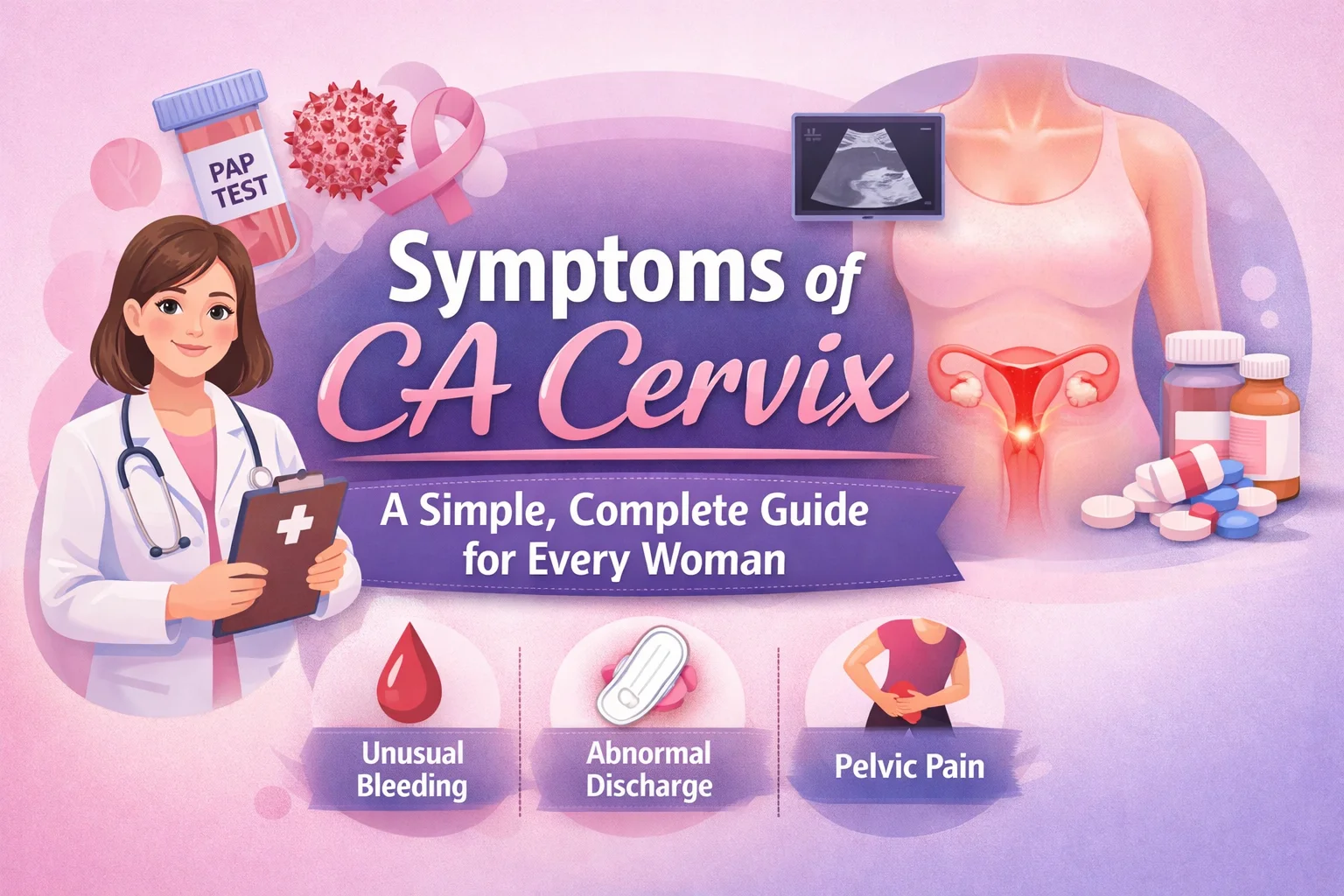
Understanding your body is one of the most powerful ways to protect your health. Many women ignore small changes, thinking they are normal. But sometimes, these changes can be early warning signs of a serious condition like cervical cancer. That is why learning the symptoms of CA cervix is so important.
Cervical cancer often grows slowly. In the early stages, it may not cause clear symptoms. This makes it easy to miss. However, as the condition progresses, the body begins to send signals. If you know what to look for, you can act early and get the right help.
In this guide, we will explain everything in a simple and friendly way. You will learn about early warning signs, advanced symptoms, risk factors, and when to see a doctor. This article is written to help you feel informed, not scared. With the right knowledge, you can take control of your health.
What Is CA Cervix?
CA cervix means cancer of the cervix. The cervix is the lower part of the uterus. It connects the uterus to the vagina. This area plays an important role in a woman’s reproductive system.
Cervical cancer usually develops slowly over many years. It often starts with abnormal cell changes. These changes are not cancer at first. But over time, they can turn into cancer if not treated.
One of the main causes is a virus called HPV (Human Papillomavirus). This virus spreads through skin contact, often during sexual activity. Most people with HPV do not get cancer. But in some cases, it leads to serious problems.
Knowing the symptoms of CA cervix can help you catch the disease early. Early detection can save lives and make treatment easier.
Why Knowing the Symptoms Matters
Many women feel fine even when cervical cancer begins. This is why regular check-ups are important. But symptoms can still appear as the disease grows.
Recognizing the early signs and symptoms of CA cervix helps you act quickly. Early treatment is usually more successful. It can prevent the cancer from spreading.
Late diagnosis can make treatment harder. It may also reduce survival chances. That is why awareness is key. Even small changes in your body should not be ignored.
Listening to your body is not overreacting. It is smart and necessary.
Early Signs and Symptoms of CA Cervix
In the early stages, symptoms can be mild or easy to ignore. Some women may not notice anything at all. Still, there are a few warning signs to watch for.
Common early symptoms of CA cervix include:
- Unusual vaginal bleeding
- Bleeding after intercourse
- Bleeding between periods
- Longer or heavier periods than usual
You may also notice watery or slightly bloody discharge. It may have a mild odor. This is not normal and should be checked.
These early signs are often painless. That is why many women ignore them. But early detection gives the best chance for recovery.
Advanced Symptoms of CA Cervix
As cervical cancer grows, symptoms become more serious. These signs should never be ignored.
Advanced signs and symptoms of CA cervix include:
- Pelvic pain
- Pain during intercourse
- Heavy vaginal bleeding
- Foul-smelling discharge
- Swelling in the legs
- Trouble urinating
Some women also feel tired all the time. Weight loss without trying is another warning sign.
These symptoms may mean the cancer has spread. Immediate medical attention is very important at this stage.
Common vs Serious Symptoms (Table)
| Symptom Type | Common Signs | Serious Signs |
|---|---|---|
| Bleeding | Light spotting | Heavy or constant bleeding |
| Pain | Mild discomfort | Severe pelvic pain |
| Discharge | Slight watery discharge | Foul-smelling discharge |
| Energy Levels | Normal | Extreme fatigue |
This table helps you understand the difference. Even mild symptoms should not be ignored.
Causes of CA Cervix
The main cause of cervical cancer is HPV infection. But not everyone with HPV gets cancer.
Other risk factors include:
- Early sexual activity
- Multiple partners
- Smoking
- Weak immune system
- Long-term use of birth control pills
Poor hygiene and lack of screening can also increase risk. Understanding these causes helps you reduce your chances.
Who Is at Higher Risk?
Some women have a higher risk of developing cervical cancer. Knowing your risk level is important.
You may be at higher risk if you:
- Are over 30 years old
- Have never had a Pap smear
- Smoke regularly
- Have a history of HPV infection
Women with weakened immunity are also more vulnerable. This includes those with certain illnesses.
Knowing your risk can help you stay alert to the symptoms of CA cervix.
When Should You See a Doctor?
You should see a doctor if you notice any unusual symptoms. Do not wait for them to get worse.
Visit a doctor if you have:
- Bleeding after menopause
- Bleeding after sex
- Persistent pelvic pain
- Unusual discharge
Even if the symptoms seem small, it is better to be safe. Early diagnosis can make a big difference.
Diagnosis of CA Cervix
Doctors use several tests to diagnose cervical cancer. These tests help confirm the condition.
Common Diagnostic Tests
| Test Name | Purpose |
|---|---|
| Pap Smear | Detects abnormal cells |
| HPV Test | Checks for HPV infection |
| Biopsy | Confirms cancer |
| Imaging Tests | Shows spread of cancer |
These tests are simple and often painless. Regular screening can detect problems early.
Treatment Options for CA Cervix
Treatment depends on the stage of cancer. Early stages are easier to treat.
Main Treatment Methods
| Treatment Type | Description |
|---|---|
| Surgery | Removes cancer tissue |
| Radiation | Uses high-energy rays |
| Chemotherapy | Uses drugs to kill cancer cells |
Some patients need a combination of treatments. Doctors decide based on each case.
Can CA Cervix Be Prevented?
Yes, cervical cancer can often be prevented. Prevention is better than treatment.
Simple steps include:
- Getting the HPV vaccine
- Regular Pap smears
- Safe sexual practices
- Avoiding smoking
These actions can greatly reduce your risk. Awareness is your best protection.
Lifestyle Tips for Better Cervical Health
Taking care of your body can lower your risk. Small habits make a big difference.
Healthy tips include:
- Eat fresh fruits and vegetables
- Stay physically active
- Maintain good hygiene
- Manage stress
A healthy lifestyle supports your immune system. This helps your body fight infections like HPV.
Emotional Impact and Support
Hearing about cancer can be scary. Many women feel anxious or overwhelmed. This is normal.
Talking to family and friends can help. Support groups are also useful. You are not alone in this journey.
Mental health is just as important as physical health. Stay positive and seek help when needed.
My Personal Insight
From experience, many women delay check-ups due to fear. Some feel shy or embarrassed. But ignoring symptoms only makes things worse.
I have seen cases where early detection saved lives. A simple test made a huge difference. That is why I always say—never ignore your body.
Even small changes matter. Trust your instincts and seek help early.
FAQs About Symptoms of CA Cervix
1. What are the early symptoms of CA cervix?
Early symptoms include unusual bleeding, discharge, and mild pelvic pain.
2. Can cervical cancer have no symptoms?
Yes, in early stages, there may be no symptoms at all.
3. Is pain a common symptom?
Pain usually appears in later stages of the disease.
4. How often should I get screened?
Most women should get a Pap smear every 3 years.
5. Can young women get cervical cancer?
Yes, but it is more common in women over 30.
6. Is cervical cancer treatable?
Yes, especially if detected early.
Final Thoughts
Understanding the symptoms of CA cervix can truly save lives. This condition often develops quietly, without clear signs at first. But your body always gives clues—you just need to pay attention.
Do not ignore unusual bleeding, discharge, or pain. These may seem small, but they matter. Early detection gives you the best chance for successful treatment.
Make regular check-ups a habit. Talk openly about your health. Encourage other women to stay informed too.
Your health is your responsibility—but you are not alone. Stay aware, stay strong, and take action when needed.
