

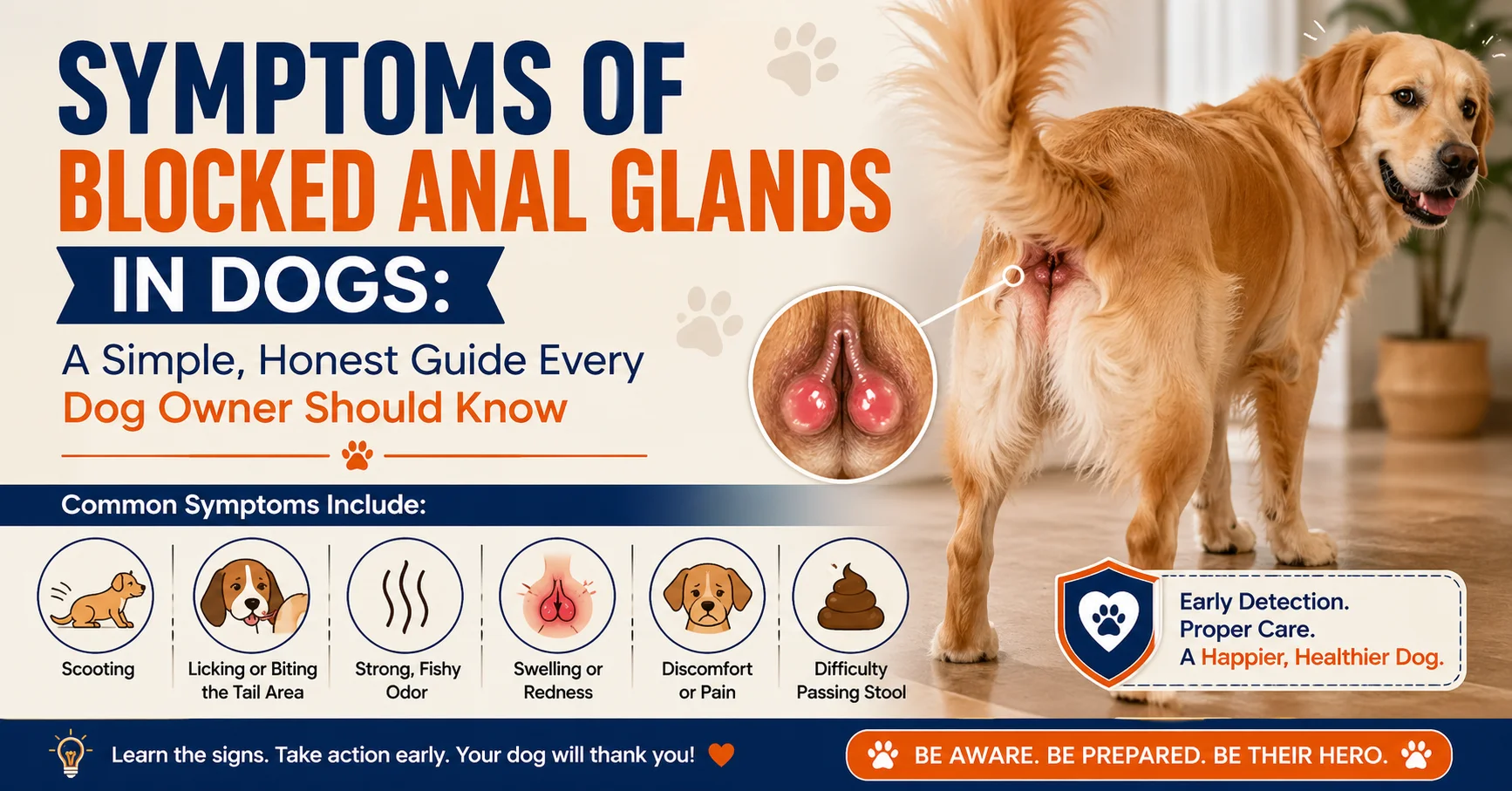
If you’ve ever seen your dog suddenly drag their bottom across the floor, you might have felt confused or even a little embarrassed. But this behavior can point to a real health issue. One common cause is blocked anal glands. Understanding the symptoms of blocked anal glands in dogs can help you act early and keep your pet comfortable.
Dogs cannot tell us when something feels wrong. They show it through behavior changes. When anal glands become blocked, the signs are often easy to miss at first. But if ignored, the problem can turn painful and serious.
In this guide, you’ll learn everything in simple words. We’ll cover signs, causes, treatment, and prevention. I’ll also share real-life insights from dog owners and vets. By the end, you’ll feel confident in spotting the symptoms of blocked anal glands in dogs and knowing what to do next.
What Are Anal Glands in Dogs?
Anal glands are small sacs located on each side of a dog’s anus. They produce a strong-smelling fluid. Dogs use this scent to mark their territory and communicate with other dogs.
Normally, these glands empty when your dog passes stool. The pressure from bowel movement pushes the fluid out naturally. In healthy dogs, this process happens without any trouble.
But sometimes, the glands don’t empty fully. The fluid becomes thick and builds up. This leads to blockage. When this happens, your dog may start showing symptoms of blocked anal glands in dogs.
Many pet owners don’t even know these glands exist until a problem appears. That’s why awareness is so important. Early knowledge helps prevent pain and costly treatments later.
Why Do Anal Glands Get Blocked?
Blocked anal glands can happen for several reasons. One of the most common causes is soft stool. If your dog’s poop is too soft, it won’t apply enough pressure to empty the glands.
Another reason is poor diet. Low fiber intake can lead to irregular bowel movements. This increases the risk of blockage. Some dogs also have naturally narrow gland openings, making them more prone to issues.
Obesity is another factor. Overweight dogs often have weaker muscle tone. This makes it harder for glands to empty properly. Allergies and skin problems can also cause inflammation, leading to blockage.
Here’s a quick breakdown:
| Cause | How It Affects Glands |
|---|---|
| Soft stool | No pressure to empty glands |
| Low fiber diet | Irregular bowel movements |
| Obesity | Weak muscle function |
| Allergies | Swelling and blockage |
Understanding these causes helps you prevent future problems and reduce the risk of symptoms of blocked anal glands in dogs.
Common Symptoms of Blocked Anal Glands in Dogs
Recognizing the early signs can save your dog from pain. The symptoms of blocked anal glands in dogs often start small but become worse over time.
The most common sign is scooting. This means your dog drags their bottom across the floor. It may look funny, but it’s a clear sign of discomfort.
Another sign is excessive licking or biting near the tail area. Dogs try to relieve the irritation themselves. You may also notice a strong, fishy smell. This odor comes from the gland fluid.
Other symptoms include:
- Swelling near the anus
- Pain when sitting
- Difficulty passing stool
- Sudden changes in behavior
If left untreated, the glands can become infected. This leads to abscesses, which are painful and may burst. That’s why it’s important to act quickly when you notice symptoms of blocked anal glands in dogs.
Early Warning Signs You Should Not Ignore
Early detection makes a big difference. Some signs may seem minor, but they can signal a bigger problem.
For example, your dog may sit awkwardly or avoid sitting altogether. This happens because of pressure in the gland area. You might also see your dog chasing their tail more often.
Another early sign is restlessness. Your dog may seem uneasy or unable to relax. Some dogs even lose interest in playing or eating.
These subtle changes are easy to overlook. But paying attention can help you catch symptoms of blocked anal glands in dogs before they become severe.
When Blocked Glands Become Serious
If blocked glands are ignored, they can lead to infection. The area becomes swollen, red, and very painful. Your dog may cry or whine when touched.
In severe cases, an abscess can form. This is a pocket of pus that may burst. When it bursts, you might see blood or discharge near the anus.
This stage requires immediate veterinary care. Delaying treatment can cause more pain and complications.
Here’s a comparison:
| Stage | Symptoms |
|---|---|
| Mild | Scooting, licking |
| Moderate | Swelling, odor |
| Severe | Abscess, bleeding |
Understanding these stages helps you take action at the right time and avoid worsening symptoms of blocked anal glands in dogs.
How Vets Diagnose the Problem
A veterinarian can quickly check if the glands are blocked. They do this by gently pressing the glands to see if fluid comes out.
They may also check for infection or swelling. In some cases, lab tests are needed to confirm bacteria or other issues.
The process is usually quick but may cause slight discomfort for your dog. However, it’s necessary to confirm the cause of the symptoms of blocked anal glands in dogs.
Treatment Options for Blocked Anal Glands
Treatment depends on the severity. In mild cases, manual expression is enough. This means the vet empties the glands by hand.
For infections, antibiotics may be prescribed. Pain relief medication may also be given to keep your dog comfortable.
In severe cases, surgery may be needed. This is rare but necessary for repeated problems.
Common treatments include:
| Treatment | Purpose |
|---|---|
| Manual expression | Removes buildup |
| Antibiotics | Treat infection |
| Surgery | Long-term solution |
Quick treatment helps reduce pain and prevents further complications from symptoms of blocked anal glands in dogs.
Can You Express Glands at Home?
Some dog owners learn to express glands at home. But it must be done carefully. Doing it wrong can cause injury or infection.
If you are unsure, it’s better to visit a vet or groomer. They have the right experience and tools.
Personally, many pet owners try it once and then prefer professional help. It’s safer and less stressful for both the dog and owner.
Best Diet to Prevent Anal Gland Issues
Diet plays a big role in preventing problems. High-fiber food helps create firm stool. This helps glands empty naturally.
Adding pumpkin or fiber supplements can improve digestion. Always consult your vet before making diet changes.
Healthy weight is also important. Regular exercise and balanced meals reduce the risk of blockage.
A good diet can greatly lower the chances of symptoms of blocked anal glands in dogs returning.
Home Care Tips for Dog Owners
Simple habits can keep your dog healthy. Regular grooming helps you notice early signs. Clean the area gently if needed.
Watch your dog’s behavior closely. Small changes often signal bigger issues. Keep track of eating and bathroom habits.
Also, schedule regular vet checkups. Prevention is always better than treatment.
Real-Life Example from a Dog Owner
A friend once noticed her dog scooting occasionally. She ignored it at first. But within days, the dog became restless and stopped eating.
When she visited the vet, the glands were badly infected. The dog needed antibiotics and pain relief. It took weeks to recover.
This experience shows how quickly symptoms of blocked anal glands in dogs can worsen. Early action could have prevented the pain.
FAQs About Symptoms of Blocked Anal Glands in Dogs
1. How often should anal glands be checked?
Most dogs don’t need regular checks unless they have a history of problems.
2. Are blocked glands dangerous?
Yes, if untreated, they can lead to infection and abscess.
3. Can diet alone fix the problem?
Diet helps a lot but may not solve severe cases.
4. Why does my dog smell bad suddenly?
A fishy smell is a key sign of gland issues.
5. Do all dogs get this problem?
No, but some breeds are more prone than others.
6. When should I visit a vet?
If symptoms last more than a few days or worsen quickly.
Final Thoughts: Protecting Your Dog’s Comfort and Health
Blocked anal glands may sound like a small issue, but they can cause serious discomfort. The good news is that early care makes a big difference.
By understanding the symptoms of blocked anal glands in dogs, you can act quickly and keep your pet happy. Watch for signs, maintain a healthy diet, and don’t ignore unusual behavior.
Your dog depends on you for care and comfort. A little attention today can prevent pain tomorrow. If you ever feel unsure, always consult a vet. It’s the best way to ensure your furry friend stays healthy and pain-free.
