

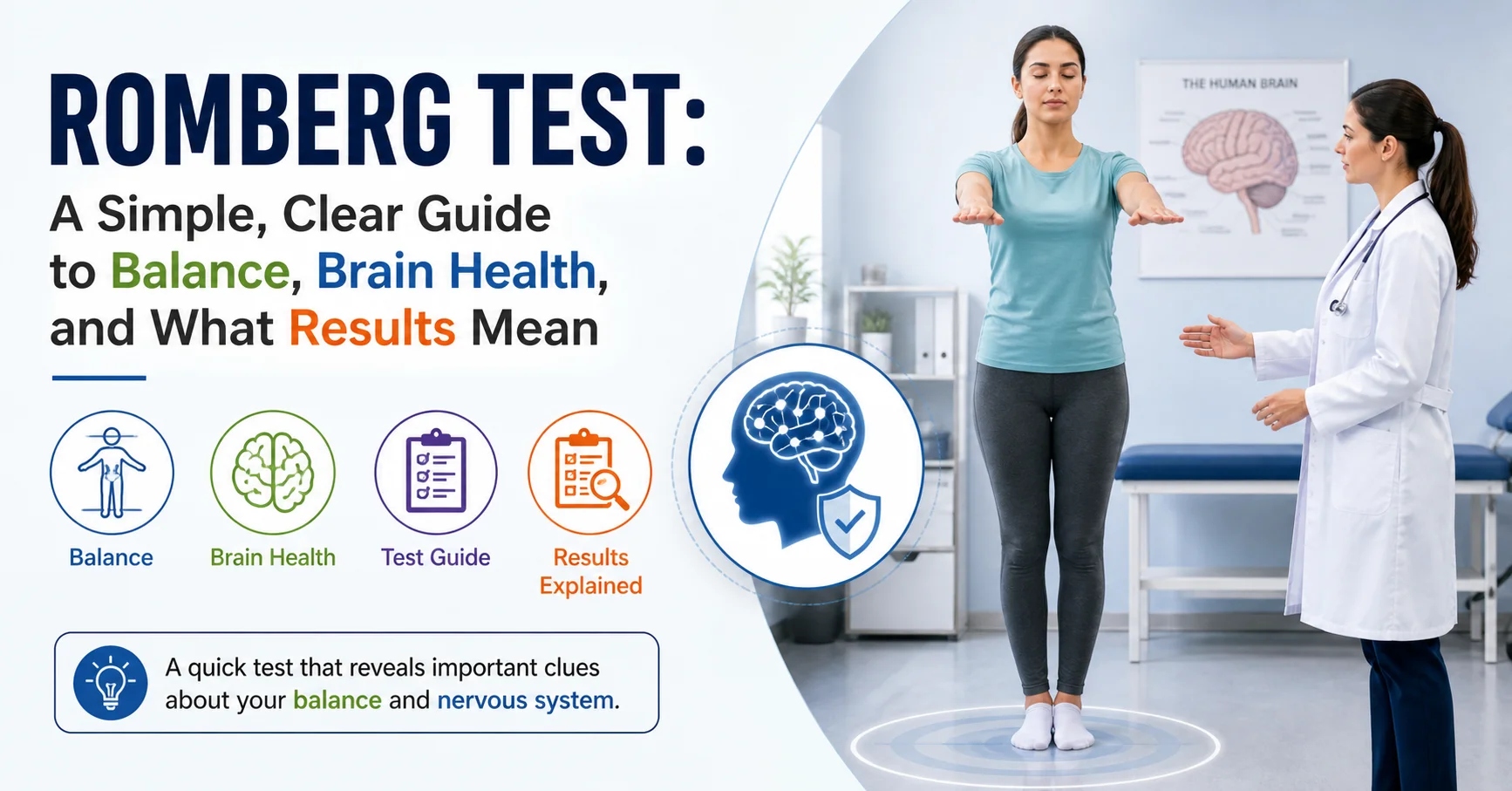
Balance is something most people take for granted—until it starts to feel off. If you’ve ever felt unsteady while standing still, especially with your eyes closed, a healthcare provider might suggest the romberg test. This quick and simple exam can reveal important clues about how your brain, nerves, and inner ear are working together.
In this guide, you’ll learn what is the romberg test, how it works, what a positive romberg test means, and why doctors use it. Everything is explained in easy, everyday language so anyone can understand.
What Is the Romberg Test?
The romberg test is a simple balance test. It checks how well your body can stay steady when standing still. Doctors use it to see if your brain and nervous system are working properly.
During the test, you stand upright with your feet together. First, you keep your eyes open. Then, you close your eyes. If your body starts to sway or you lose balance after closing your eyes, this may point to a problem.
Many people ask, what is a romberg test used for? The answer is simple: it helps find problems in the sensory system, especially those related to balance and coordination.
Why Doctors Use the Romberg Test
The romberg balance test is used to check three key systems in your body:
- Vision (what you see)
- Inner ear (balance control)
- Proprioception (body awareness)
When your eyes are open, your brain uses vision to help balance. When you close your eyes, your body must rely on other systems. If those systems are weak, balance becomes harder.
Doctors often use this test when someone reports:
- Dizziness
- Unsteady walking
- Frequent falls
- Numbness in the legs
How the Romberg Test Is Performed
The romberg test is quick and painless. It usually takes less than a minute.
Here’s how it works:
- You stand straight with your feet together
- Keep your arms by your sides
- First, keep your eyes open
- Then, close your eyes for about 20–30 seconds
The doctor watches closely to see if you sway or lose balance.
Important Tip:
For safety, a doctor always stands nearby to prevent falls.
What Is a Positive Romberg Test?
A positive romberg test happens when a person can stand steady with eyes open but begins to sway or fall when eyes are closed.
This result suggests a problem with the body’s ability to sense position. This is called proprioception.
Common causes of a romberg test positive result:
- Nerve damage (neuropathy)
- Vitamin B12 deficiency
- Spinal cord problems
- Certain infections
- Alcohol-related nerve damage
A romberg’s test positive result does not give a final diagnosis. It only points doctors in the right direction.
What Is a Negative Romberg Test?
A negative romberg test means the person can maintain balance even with eyes closed.
This usually suggests that the sensory system is working well.
However, if someone has trouble balancing even with eyes open, the issue may be related to the brain or cerebellum—not the sensory nerves.
Positive vs Negative Romberg Test
Here’s a simple comparison to make things clearer:
| Feature | Positive Romberg Test | Negative Romberg Test |
|---|---|---|
| Eyes Open | Stable | Stable |
| Eyes Closed | Loses balance | Remains stable |
| Possible Issue | Sensory problem | No sensory issue |
| Further Testing Needed | Yes | Sometimes not needed |
What Does the Romberg Test Diagnose?
The romberg test does not diagnose a disease on its own. Instead, it helps doctors narrow down possible causes.
It may point to:
- Peripheral neuropathy
- Multiple sclerosis
- Spinal cord disorders
- Inner ear issues
- Vitamin deficiencies
Doctors often combine this test with other exams for a full diagnosis.
Modified Romberg Test Explained
The modified romberg test is a slightly advanced version. It is often used in more detailed balance assessments.
In this version, the person may stand on a soft surface like foam. This removes reliable foot feedback and makes balance harder.
This test helps doctors better understand how the body uses sensory information.
Romberg Test and the Nervous System
The romberg test mainly checks the sensory pathways of the nervous system. These pathways help your brain know where your body is in space.
If these signals are weak or damaged, your brain struggles to keep you balanced—especially without visual input.
This is why closing the eyes is such an important part of the test.
Real-Life Example of the Romberg Test
Let’s imagine a patient named Ali. He feels dizzy while walking at night. During the romberg test, he stands fine with eyes open. But when he closes his eyes, he starts to sway.
This is a romberg test positive result. It suggests his body relies too much on vision. Further tests later show he has a vitamin B12 deficiency.
This simple test helped doctors find the root cause early.
Limitations of the Romberg Test
While helpful, the romberg test is not perfect. It has some limits:
- It cannot diagnose conditions alone
- Results may vary based on patient effort
- Not useful for all balance problems
- Requires follow-up testing
Doctors always use it as part of a bigger assessment.
When Should You Get a Romberg Test
You may need a romberg test if you experience:
- Frequent dizziness
- Trouble standing still
- Numbness in legs or feet
- Unexplained falls
- Weak coordination
Early testing can help catch serious conditions sooner.
Tips to Improve Balance Naturally
If balance is a concern, simple steps can help:
- Practice standing exercises
- Try yoga or tai chi
- Wear proper footwear
- Stay active daily
- Maintain a healthy diet
These habits support both nerve and muscle health.
Frequently Asked Questions (FAQs)
1. What is the romberg test used for?
It checks balance and helps find problems in the nervous system.
2. What does a positive romberg test mean?
It means you lose balance when your eyes are closed, suggesting sensory issues.
3. Is the romberg test painful?
No, it is completely painless and very quick.
4. Can the romberg test diagnose diseases?
No, it only helps guide further testing.
5. What is a negative romberg test?
It means you can stand steady even with your eyes closed.
6. What is the modified romberg test?
It is a more advanced version done on unstable surfaces for deeper analysis.
Final Thoughts: Why the Romberg Test Matters
The romberg test may look simple, but it plays a big role in medical care. It gives quick insight into how your body maintains balance and coordination.
Whether it shows a negative romberg test or a romberg test positive result, it helps doctors take the next step toward diagnosis and treatment.
If you ever feel unsteady or dizzy, don’t ignore it. A simple test like this could uncover important health clues.
Your balance is your body’s way of staying in control—make sure you listen to it.
