

Introduction
If you’ve ever had surgery or treated a deep wound, you may have heard of a penrose drain. It sounds complex, but it’s actually a simple tool that helps the body heal. Doctors use it to remove fluid, pus, or blood from a wound. This keeps the area clean and lowers the risk of infection.
In this guide, we will explain what a penrose drain is, how it works, when it’s used, and how to care for it. We will also cover penrose drain removal, use in pets like dogs, and helpful tips for recovery. Everything is written in a clear and friendly way so anyone can understand it—even if you have no medical background.
What Is a Penrose Drain?
A penrose drain is a soft, flexible rubber tube placed inside a wound during surgery. Its main job is to allow fluids to leave the body instead of building up under the skin.
Unlike closed drains, this type is open. That means fluid drains out onto a bandage rather than into a container. This simple design has been used for many years because it works well and is easy to use.
Doctors often choose a penrose surgical drain when they expect fluid buildup. It is commonly used in infections, abscesses, or after certain surgeries.
How Does a Penrose Drain Work?
You might wonder, how does a penrose drain work? The answer is simple.
The drain uses gravity and natural pressure. Fluid inside the wound moves along the tube and exits the body. No machine or suction is needed.
Because the tube is soft and flat, it stays comfortable inside the wound. It creates a path for fluid to escape, which helps reduce swelling and pressure.
Without a drain, fluid can collect and slow healing. In some cases, it can even lead to infection. That’s why doctors rely on penrose drains in many situations.
When Do Doctors Use a Penrose Drain?
Doctors use a penrose drain in several situations. These include:
- After surgery where fluid buildup is expected
- In infected wounds with pus
- After draining an abscess
- In trauma or deep cuts
This type of drain is often chosen because it is simple and effective. It does not require special equipment.
In many cases, a penrose surgical drain is placed for a short time—usually a few days. Once the fluid stops draining, it is removed.
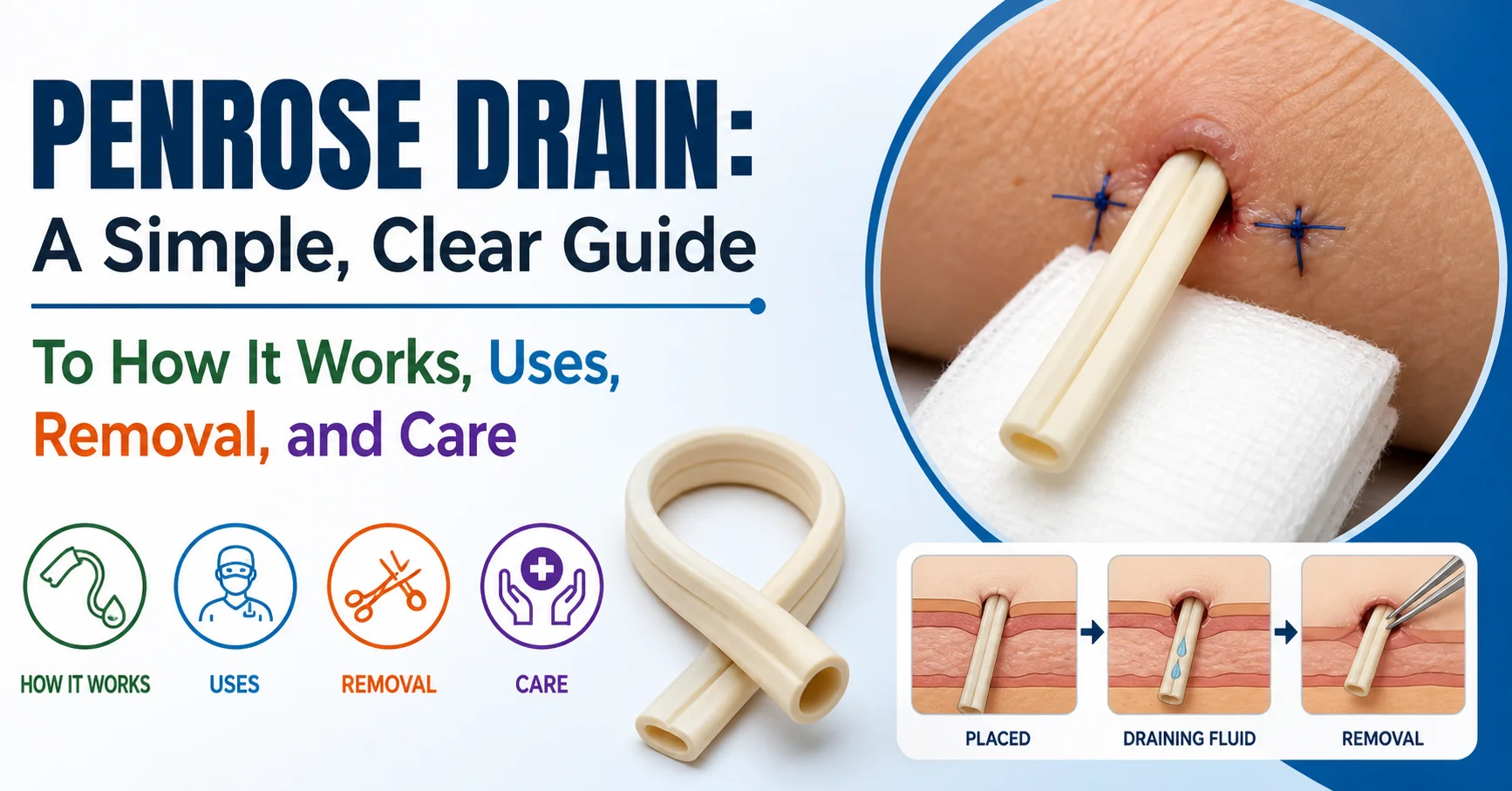
What Does a Penrose Drain Look Like?
Many people search for a penrose drain picture or penrose drain image to understand it better.
The drain looks like a thin, soft rubber strip or tube. It is usually flat and flexible. One end stays inside the wound, and the other hangs outside.
The outside part is covered with a bandage to absorb fluid. The drain may look simple, but it plays a big role in healing.
Benefits of Using a Penrose Drain
A penrose drain offers many benefits:
- Helps remove fluid and pus
- Reduces swelling and pressure
- Lowers infection risk
- Supports faster healing
- Simple and cost-effective
Doctors trust this method because it has been proven to work over time. Even with newer tools available, penrose drains are still widely used.
Risks and Possible Complications
While helpful, a penrose drain can have some risks. These are usually minor but important to know.
Possible issues include:
- Infection at the drain site
- Skin irritation
- Drain slipping out early
- Blockage of the tube
Proper care reduces these risks. Always follow your doctor’s instructions and keep the area clean.
Penrose Drain Care at Home
Taking care of a penrose drain is very important for healing.
Here are simple care tips:
- Keep the area clean and dry
- Change dressings as instructed
- Wash your hands before touching the drain
- Watch for signs of infection
- Avoid pulling or moving the tube
If you notice redness, swelling, or bad smell, contact your doctor right away.
Penrose Drain Removal: What to Expect
Many people worry about penrose drain removal, but it is usually quick and simple.
The doctor gently pulls the drain out. It may feel strange, but it is not very painful. Most patients feel only mild discomfort.
Removal usually happens when drainage stops or becomes very low. This means your body is healing well.
After removal, the wound may be covered with a bandage until it fully closes.
Penrose Drain in Dogs: What Pet Owners Should Know
A penrose drain dog situation is common in veterinary care. Vets use this drain to treat wounds, abscesses, or infections in pets.
If your dog has a penrose drain in dogs, you will need to:
- Keep the area clean
- Prevent your dog from licking it
- Use a protective collar if needed
- Follow the vet’s instructions carefully
Dogs usually recover well with proper care. The drain is removed once the infection clears and fluid stops.
Comparison: Penrose Drain vs Other Drains
Here is a simple table to understand how a penrose drain compares to other types:
| Feature | Penrose Drain | Closed Suction Drain |
|---|---|---|
| Design | Open system | Closed system |
| Fluid Collection | Onto dressing | Into container |
| Cost | Low | Higher |
| Complexity | Simple | More complex |
| Infection Risk | Slightly higher | Lower |
Both types have their uses. Doctors choose based on the situation.
Signs That Healing Is Going Well
After getting a penrose drain, you should see signs of healing.
Good signs include:
- Less fluid drainage
- Reduced swelling
- No strong odor
- Pain decreasing over time
These signs show your body is recovering. If anything feels wrong, always ask your doctor.
Common Mistakes to Avoid
Many people make small mistakes when caring for a penrose drain.
Avoid these:
- Ignoring hygiene
- Skipping dressing changes
- Pulling the drain
- Not watching for infection signs
Simple care can make a big difference in recovery.
Real-Life Example for Better Understanding
Let’s look at a simple example.
A patient had a deep skin infection. The doctor drained the pus and placed a penrose drain. Over the next few days, fluid slowly came out.
The patient kept the area clean and changed dressings daily. After five days, drainage stopped. The doctor performed penrose drain removal, and the wound healed fully.
This shows how effective this simple tool can be.
Table: Quick Care Checklist
| Task | Frequency |
|---|---|
| Wash hands | Before and after care |
| Change dressing | Daily or as advised |
| Check for infection | Twice daily |
| Keep area dry | Always |
| Follow doctor advice | Every step |
FAQs About Penrose Drain
1. What is a penrose drain used for?
A penrose drain is used to remove fluid, pus, or blood from a wound to help healing.
2. Is penrose drain removal painful?
No, penrose drain removal is usually quick and causes only mild discomfort.
3. How long does a penrose drain stay in?
It usually stays for a few days, depending on how much fluid is draining.
4. Can I shower with a penrose drain?
You should ask your doctor. In many cases, keeping it dry is recommended.
5. What if my penrose drain falls out?
Contact your doctor right away. Do not try to reinsert it yourself.
6. How do I care for a penrose drain in dogs?
Keep it clean, stop your dog from licking it, and follow your vet’s instructions.
Conclusion
A penrose drain may look simple, but it plays a powerful role in healing. It helps remove harmful fluid, reduces infection risk, and supports recovery after surgery or injury.
Understanding what a penrose drain is, how it works, and how to care for it can make the healing process smoother and less stressful. Whether for humans or pets, proper care is key.
If you or your pet has a penrose surgical drain, follow medical advice closely. Keep the area clean, watch for warning signs, and attend follow-up visits.
With the right care, healing becomes faster, safer, and more comfortable.
