

Introduction
Lupus can feel confusing, scary, and unpredictable. Many people hear the word but don’t fully understand what it means. If you are searching for clear answers about lupus symptoms, you are not alone. This guide is written to help you understand the signs in a simple and honest way.
Lupus is an autoimmune disease. This means the body’s immune system attacks healthy tissues by mistake. It can affect the skin, joints, blood, and even organs like the kidneys or heart. The tricky part is that symptoms of lupus can look different in each person. Some people feel mild effects, while others face more serious problems.
In this article, you will learn what to watch for, how symptoms may change over time, and when to seek help. Everything is explained in easy language so anyone can understand.
What Is Lupus in Simple Words?
Lupus is a long-term disease where the immune system becomes overactive. Instead of protecting the body, it attacks it. This can cause pain, swelling, and damage.
There are different types of lupus, but the most common is systemic lupus. It can affect many parts of the body at once. That’s why what are the symptoms of lupus is not always a simple question to answer.
Some people have flare-ups. This means symptoms get worse for a while, then improve. Others may feel symptoms all the time. The condition is more common in women, especially between ages 15 and 45.
Understanding lupus early can help you manage it better and avoid serious problems.
Early Lupus Symptoms You Should Not Ignore
Early signs are often mild and easy to miss. Many people think they are just tired or stressed.
Common early lupus symptoms include:
- Feeling very tired all the time
- Joint pain or stiffness
- Mild fever
- Skin rashes
- Hair thinning
These signs may come and go. That makes diagnosis harder. Many people live with these symptoms for months before they realize something is wrong.
If you notice these signs lasting for weeks, it’s important to talk to a doctor. Early detection can make a big difference.
Common Symptoms of Lupus Disease
As lupus develops, symptoms may become more noticeable. These can affect many parts of the body.
Here is a helpful table:
| Body Area | Common Symptoms |
|---|---|
| Joints | Pain, swelling, stiffness |
| Skin | Rashes, redness, sensitivity to sun |
| Blood | Anemia, low white cells |
| Kidneys | Swelling in legs, urine problems |
| Heart/Lungs | Chest pain, breathing issues |
These symptoms of lupus disease can appear suddenly or slowly over time. Not everyone will have all of them.
Lupus Symptoms in Women
Lupus affects women more than men. In fact, about 9 out of 10 people with lupus are women.
Lupus symptoms in women may include:
- Hormone-related flare-ups
- Severe fatigue during menstrual cycles
- Increased joint pain
- Skin rashes that worsen with sun exposure
Women may also face complications during pregnancy. That’s why early diagnosis is important.
Here is another table to show how symptoms may differ:
| Symptom Type | Women Experience More Often |
|---|---|
| Hormonal impact | Yes |
| Skin sensitivity | High |
| Fatigue | Severe |
| Autoimmune overlap | Common |
Understanding symptoms lupus in women helps in better care and management.
Lupus Symptoms on Skin (Skin Disease Signs)
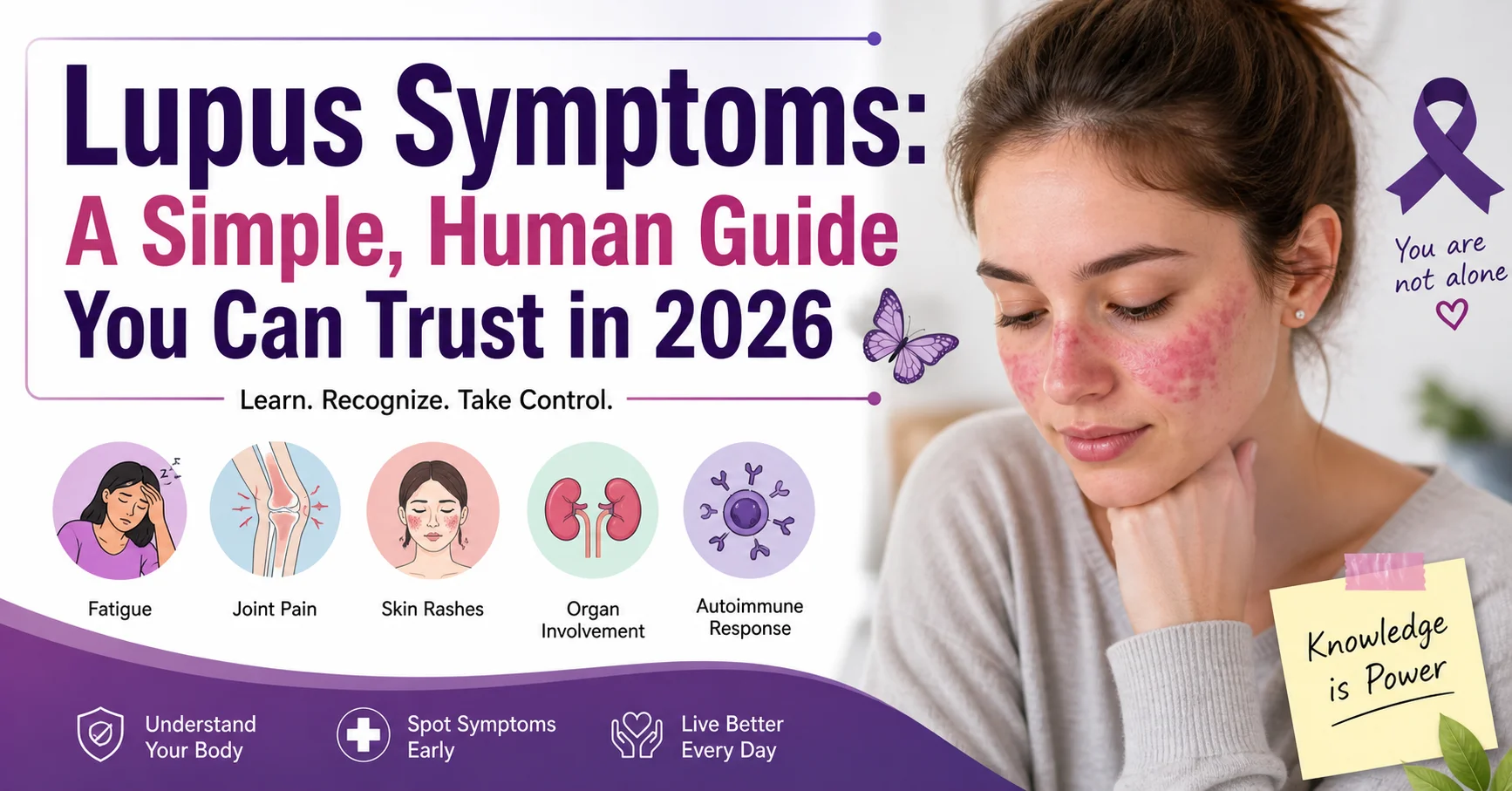
Skin problems are one of the most visible signs of lupus. Many people first notice changes on their face.
Common symptoms of lupus skin disease include:
- Butterfly-shaped rash across cheeks
- Red patches on skin
- Sensitivity to sunlight
- Sores in mouth or nose
These rashes may not itch but can worsen after sun exposure. Protecting your skin becomes very important.
Here is a simple breakdown:
| Skin Symptom | Description |
|---|---|
| Butterfly rash | Red rash across cheeks and nose |
| Discoid rash | Thick, scaly patches |
| Photosensitivity | Rash after sun exposure |
Skin symptoms can be a strong early clue of lupus.
Joint Pain and Muscle Problems
Joint pain is one of the most common lupus symptoms. It often affects hands, wrists, and knees.
The pain can feel like arthritis. Joints may swell and feel stiff, especially in the morning. Some people also feel muscle weakness.
Unlike other joint diseases, lupus usually does not cause permanent damage early on. However, the pain can still affect daily life.
Simple tasks like holding a cup or walking can become difficult during flare-ups. Rest and proper treatment can help manage this.
Fatigue: The Most Common Lupus Symptom
Fatigue is one of the most frustrating symptoms. It is not just normal tiredness.
People with lupus often feel:
- Exhausted even after rest
- Low energy all day
- Difficulty focusing
This fatigue can affect work, school, and relationships. It may come and go, just like other symptoms.
Many people say fatigue is the hardest part of living with lupus. Managing stress, sleep, and nutrition can help improve energy levels.
Childhood Lupus Symptoms and Signs
Lupus can also affect children, though it is less common. When it does, symptoms may be more severe.
Childhood lupus symptoms signs include:
- Fever and fatigue
- Joint pain
- Skin rashes
- Weight loss
Children may also face kidney or brain involvement earlier than adults.
Here’s a simple table:
| Symptom in Children | Frequency |
|---|---|
| Fever | Common |
| Joint pain | Common |
| Organ involvement | Higher |
| Skin rash | Common |
Early diagnosis in children is very important to prevent long-term damage.
How Lupus Symptoms Change Over Time
Lupus is not a steady disease. Symptoms can change often.
You may experience:
- Flare-ups (worsening symptoms)
- Remission (few or no symptoms)
Triggers for flare-ups include:
- Stress
- Sun exposure
- Infections
- Lack of sleep
Understanding your triggers can help you manage the condition better. Keeping a symptom diary can be very helpful.
When Should You See a Doctor?
If you notice multiple symptoms of lupus, don’t ignore them. It is better to check early.
See a doctor if you have:
- Ongoing fatigue
- Joint pain for weeks
- Unexplained rashes
- Frequent fevers
Doctors use blood tests and physical exams to diagnose lupus. Early treatment can reduce complications.
Living With Lupus: Real-Life Insight
Living with lupus is not easy, but many people manage it well. One common lesson patients share is learning to listen to their body.
For example, many people say they had to slow down and respect their limits. Ignoring fatigue often made symptoms worse.
Building a routine helps. This includes:
- Regular sleep
- Healthy eating
- Light exercise
Support from family and friends also makes a big difference. You are not alone in this journey.
Tips to Manage Lupus Symptoms Daily
Managing lupus symptoms requires small but consistent steps.
Helpful tips:
- Wear sunscreen daily
- Get enough sleep
- Avoid stress when possible
- Stay active with light exercise
- Follow your doctor’s advice
Here’s a quick guide:
| Habit | Benefit |
|---|---|
| Sleep | Reduces fatigue |
| Exercise | Improves joint movement |
| Healthy diet | Supports immune system |
| Sun protection | Prevents skin flare-ups |
These simple habits can improve quality of life.
FAQs About Lupus Symptoms
1. What are the first lupus symptoms?
Early signs include fatigue, joint pain, mild fever, and skin rashes. They often come and go.
2. Are lupus symptoms different in women?
Yes, lupus symptoms in women often include stronger fatigue and hormone-related flare-ups.
3. Can lupus affect the skin only?
Yes, some types mainly affect the skin. These are called cutaneous lupus.
4. Is lupus pain constant?
No, symptoms may flare up and then improve. It varies from person to person.
5. Can children get lupus?
Yes, but it is rare. Childhood lupus symptoms signs can be more severe.
6. Is lupus curable?
There is no cure yet, but treatment can control symptoms and improve life.
Conclusion
Understanding lupus symptoms is the first step toward better health. This condition can be complex, but knowledge makes it easier to manage.
From fatigue and joint pain to skin changes and organ issues, symptoms of lupus can vary widely. Women and children may experience different patterns, which makes awareness even more important.
If something feels wrong in your body, trust that feeling. Early action can prevent bigger problems later. With proper care, support, and lifestyle changes, many people live full and active lives with lupus.
If you found this guide helpful, consider sharing it with others. It might help someone recognize the signs early and take control of their health.
