

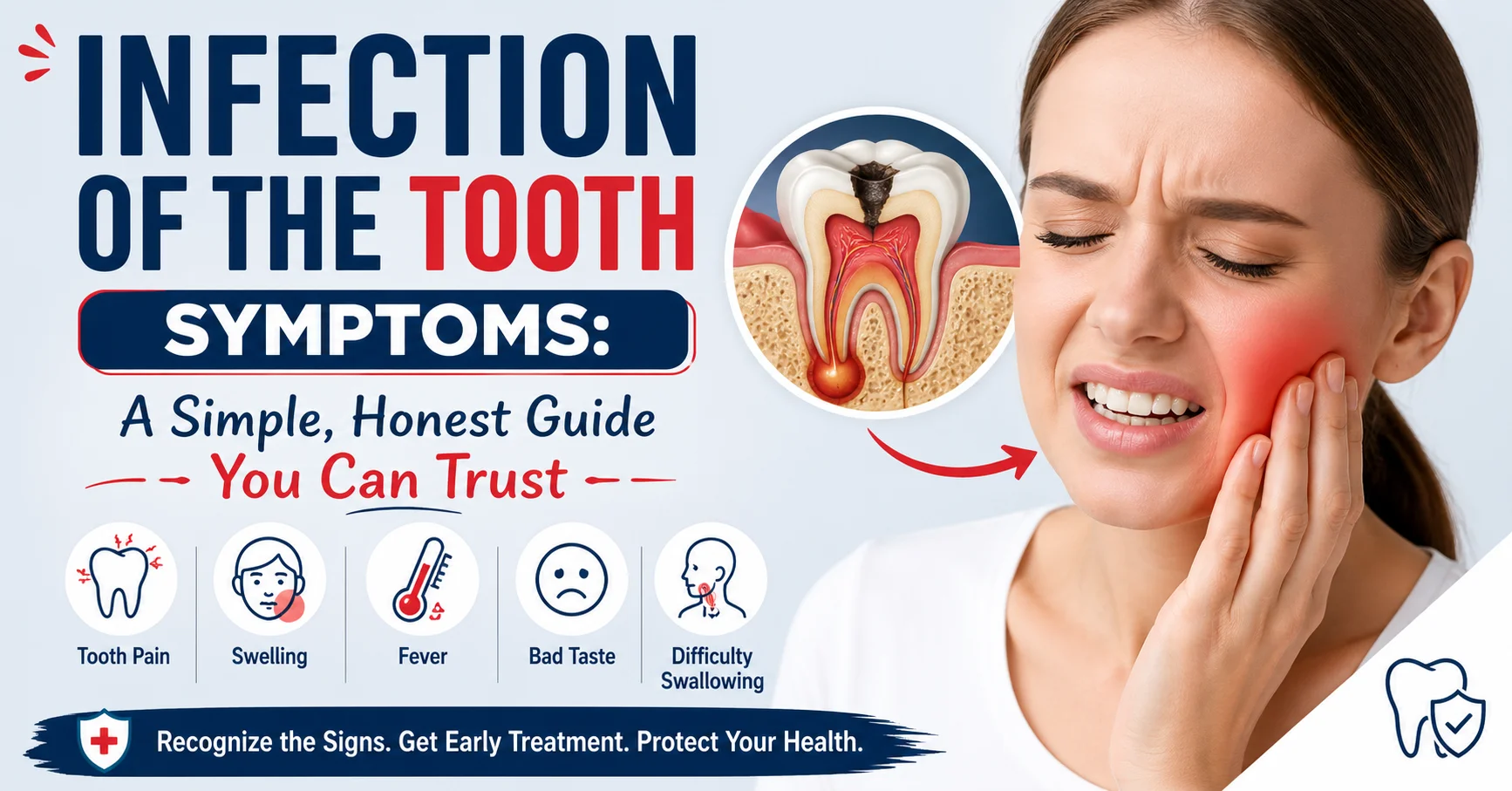
Tooth pain can feel small at first. But sometimes, it is more serious than it seems. Many people ignore early signs. This can lead to bigger problems later. Understanding infection of the tooth symptoms can help you act early and avoid pain, cost, and risk.
A tooth infection, also called a dental abscess, happens when bacteria enter the tooth. This can occur due to decay, injury, or gum disease. If not treated, the infection may spread to other parts of the body. That is why it is important to know the warning signs.
In this guide, you will learn what are the symptoms of a tooth infection, how it spreads, and when to seek help. The goal is simple: keep you informed, safe, and confident about your dental health.
What Is a Tooth Infection?
A tooth infection happens when bacteria get inside your tooth or gums. This often starts with a cavity or a cracked tooth. Once bacteria enter, they multiply and create pus. This leads to swelling and pain.
There are different types of infections. Some happen at the tip of the tooth root. Others affect the gums around the tooth. No matter the type, the body reacts with pain and inflammation.
Many people think tooth pain will go away on its own. But infection does not heal without treatment. It usually gets worse over time. Knowing infection of the tooth symptoms early can help prevent serious damage.
Common Infection of the Tooth Symptoms
The signs of a tooth infection can vary. Some are mild at first. Others are strong and hard to ignore.
Here are the most common symptoms:
| Symptom | What It Feels Like |
|---|---|
| Tooth pain | Sharp, throbbing, or constant |
| Sensitivity | Pain with hot or cold foods |
| Swelling | In gums, face, or jaw |
| Bad taste | Due to pus or infection |
| Fever | Body trying to fight infection |
These symptoms may come and go. But that does not mean the problem is gone. It often means the infection is growing deeper.
What Are the Symptoms of an Infected Tooth?
Many people ask, what are the symptoms of an infected tooth? The answer depends on how far the infection has progressed.
At first, you may feel slight discomfort. Later, the pain becomes intense. You may also notice redness in your gums. Some people see a small bump filled with pus.
As the infection grows, symptoms become more serious. You might have trouble chewing. Your face may swell. In some cases, breathing or swallowing becomes hard.
Understanding infection of the tooth symptoms at each stage can help you act quickly and avoid complications.
Early Warning Signs You Should Not Ignore
Early symptoms are often easy to miss. But they are your body’s way of asking for help.
Here are some early signs:
| Early Sign | Why It Matters |
|---|---|
| Mild toothache | First sign of decay or infection |
| Gum redness | Indicates irritation or bacteria |
| Sensitivity | Nerve irritation inside the tooth |
| Bad breath | Bacteria buildup |
These signs may seem small. But they can turn into bigger problems fast. Acting early can save your tooth and prevent pain.
What Are the Symptoms of a Tooth Infection Spreading?
When a tooth infection spreads, symptoms become more serious. Many people ask, what are the symptoms of a tooth infection spreading?
Here are key warning signs:
| Symptom | Meaning |
|---|---|
| Fever | Infection entering bloodstream |
| Swollen face | Infection spreading to tissues |
| Fatigue | Body fighting infection |
| Difficulty swallowing | Possible throat involvement |
| Swollen lymph nodes | Immune response |
These symptoms need urgent care. Do not wait or try home remedies alone. The infection may spread quickly.
Symptoms of a Tooth Infection Spread to the Brain
This is rare but very serious. Some people worry about symptoms of a tooth infection spread to the brain.
Signs may include:
- Severe headache
- Confusion or memory issues
- High fever
- Vision problems
- Neck stiffness
These symptoms are medical emergencies. Immediate treatment is required. This shows why early action is so important.
What Causes Tooth Infections?
Tooth infections do not happen without a reason. Understanding the cause can help prevent future problems.
Common causes include:
| Cause | Explanation |
|---|---|
| Tooth decay | Bacteria damage enamel |
| Gum disease | Infection spreads from gums |
| Cracked tooth | Allows bacteria inside |
| Poor hygiene | Plaque buildup leads to infection |
Simple habits like brushing and flossing can reduce risk. Regular dental visits also help catch problems early.
Risk Factors You Should Know
Some people are more likely to develop infections. Knowing your risk can help you stay careful.
Risk factors include:
- Poor oral hygiene
- High sugar diet
- Smoking
- Dry mouth
- Weak immune system
If you have these risks, take extra care. Watch for infection of the tooth symptoms and act quickly.
When Should You See a Dentist?
Do not wait for severe pain. Even mild symptoms need attention.
You should see a dentist if you have:
- Tooth pain lasting more than a day
- Swelling in your face or gums
- Fever with tooth pain
- Trouble eating or speaking
Early treatment can save your tooth. It also prevents the infection from spreading.
How Dentists Diagnose Tooth Infections
Dentists use simple tools to check your tooth. They may ask about your symptoms. Then, they examine your mouth.
In some cases, they take X-rays. This helps them see the infection inside the tooth. They check for pus, swelling, and damage.
Diagnosis is quick and painless. It helps create the right treatment plan.
Treatment Options for Tooth Infections
Treatment depends on how severe the infection is. The goal is to remove the infection and save the tooth.
Common treatments include:
| Treatment | Purpose |
|---|---|
| Antibiotics | Kill bacteria |
| Root canal | Remove infected pulp |
| Tooth extraction | Remove damaged tooth |
| Drainage | Remove pus |
Your dentist will choose the best option. Following their advice is important for healing.
Home Care Tips for Relief
Home care cannot cure infection. But it can help reduce pain until you see a dentist.
Try these tips:
- Rinse with warm salt water
- Avoid very hot or cold foods
- Use over-the-counter pain relief
- Keep the area clean
These steps can ease discomfort. But they do not replace professional care.
How to Prevent Tooth Infections
Prevention is always better than treatment. Simple habits can protect your teeth.
Here are easy steps:
- Brush twice daily
- Floss every day
- Limit sugary foods
- Visit your dentist regularly
These habits reduce bacteria and keep your mouth healthy.
Real-Life Insight: Why Early Action Matters
Many people ignore tooth pain. One common example is someone who waits weeks before seeing a dentist. At first, it feels like a small ache. Later, it becomes severe swelling and fever.
In such cases, treatment becomes more complex. Sometimes, the tooth cannot be saved. This shows why understanding infection of the tooth symptoms is so important.
Acting early can save time, money, and discomfort.
FAQs About Infection of the Tooth Symptoms
1. What are the symptoms of a tooth infection?
Common symptoms include pain, swelling, sensitivity, and bad taste. Fever may also occur.
2. Can a tooth infection go away on its own?
No, it usually gets worse without treatment. Professional care is needed.
3. What are the symptoms of a tooth infection spreading?
Fever, swelling, fatigue, and trouble swallowing are key signs.
4. Is a tooth infection dangerous?
Yes, if untreated, it can spread and become serious.
5. How fast can a tooth infection spread?
It varies, but it can spread within days or weeks.
6. When should I seek emergency care?
Seek help if you have severe pain, swelling, fever, or breathing issues.
Final Thoughts: Don’t Ignore the Signs
Tooth infections are more than just pain. They can affect your whole body if ignored. Learning infection of the tooth symptoms helps you stay safe and prepared.
The key is simple: act early. Do not wait for pain to become unbearable. A quick visit to the dentist can prevent serious problems.
Take care of your teeth every day. Listen to your body. And when in doubt, seek help. Your health is worth it.
