

Introduction
If you are searching for covid symptoms, you are not alone. Even in 2026, people still want clear answers. The virus has changed over time. New variants bring new patterns. This can feel confusing. But don’t worry. This guide will help you understand everything in simple words.
I’ve seen how people panic over small signs like a sore throat or cough. I’ve also seen cases where people ignored early symptoms and got worse. So, knowing the signs early really matters.
In this article, you will learn about current covid symptoms, how they feel, and how they may differ from older versions. We will also cover long covid symptoms, what to watch for in 2025–2026, and when to seek help.
Everything here is written in a simple, friendly way. You don’t need medical knowledge. Just read, understand, and stay safe.
What Are COVID Symptoms?
Covid symptoms are the signs your body shows when the virus enters your system. These symptoms happen because your immune system is fighting the infection.
In the early days, symptoms were very clear. People had fever, cough, and breathing issues. But now, things are different. Many new covid symptoms are milder and look like a cold or flu.
For example, some people feel tired, have a sore throat, or mild headache. Others may not even realize they are infected. This makes it easier for the virus to spread.
Symptoms can appear 2 to 14 days after exposure. Some people feel sick quickly. Others take longer. That’s why it’s important to stay alert.
Understanding covid 19 symptoms helps you act early. Early action can protect you and your family.
Common COVID Symptoms in 2026
In 2026, current covid symptoms are often milder than before. But they still vary from person to person.
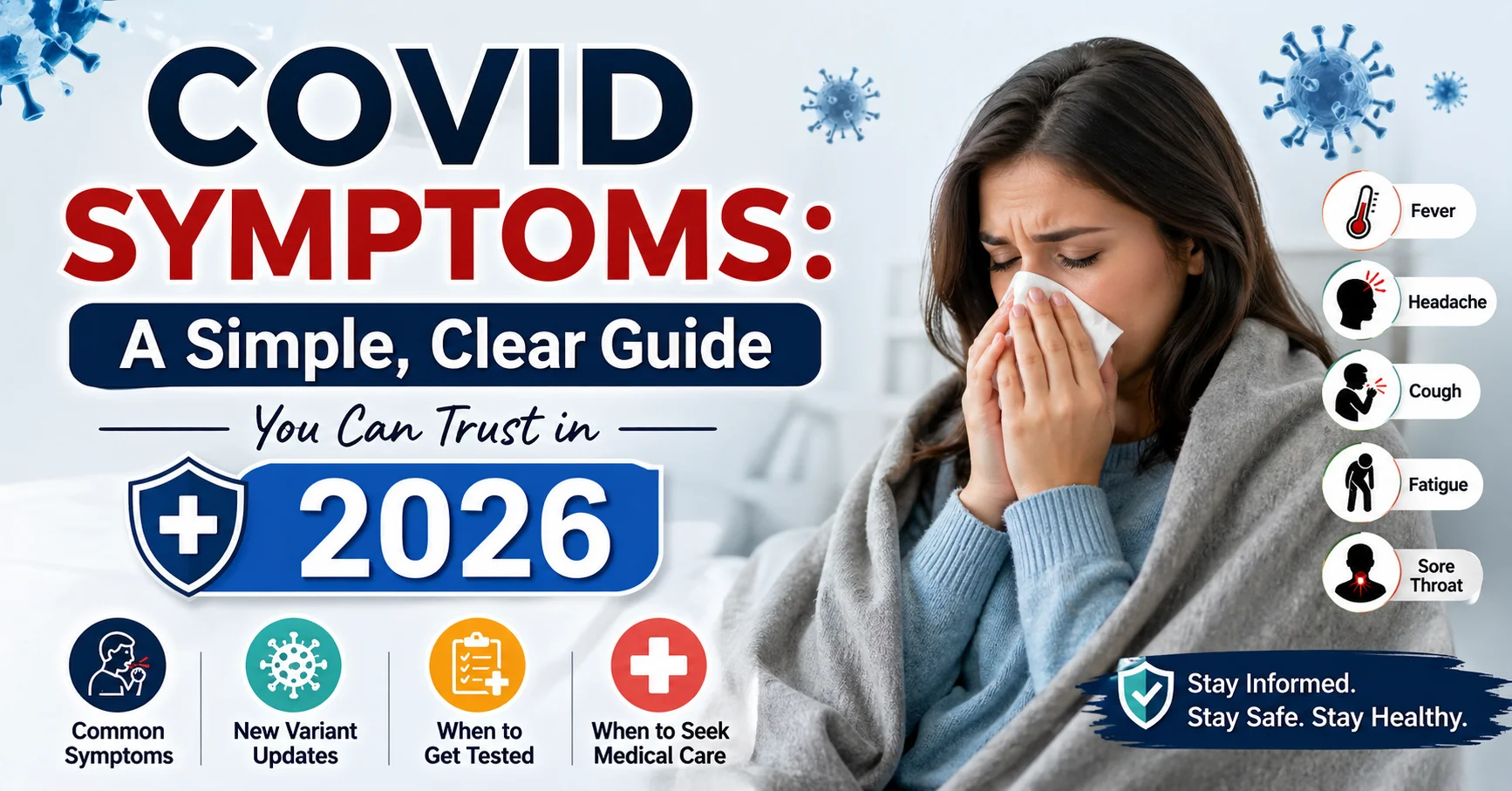
Here are the most common ones:
| Symptom | How It Feels |
|---|---|
| Fever | Mild to high temperature |
| Cough | Dry or with mucus |
| Fatigue | Feeling very tired |
| Sore throat | Pain or irritation in throat |
| Headache | Light to moderate pain |
| Runny nose | Like a common cold |
| Body aches | Muscle pain or weakness |
Many people say it feels like a strong cold. That’s why people confuse it with flu.
But even mild symptoms can spread the virus. So, don’t ignore them.
Early Symptoms of COVID
The symptoms of covid often start small. Many people miss them.
Early signs may include:
- Scratchy throat
- Mild headache
- Slight fatigue
- Sneezing or runny nose
At this stage, you may feel normal. You may go to work or school. But this is when the virus spreads most.
From my experience, people often say, “I thought it was just a cold.” A few days later, symptoms get worse.
That’s why noticing symptoms of covid early is very important.
If you feel “off,” take it seriously. Rest and test if needed.
New COVID Variant Symptoms
Viruses change over time. That’s why we now see new covid variant symptoms.
Recent variants often affect the upper respiratory system. This means:
- More throat pain
- Less lung damage
- More cold-like symptoms
People report:
- Hoarse voice
- Blocked nose
- Mild fever
- Short illness duration
This is different from earlier waves where breathing problems were more common.
Still, some people can get serious illness. Especially older adults or those with weak immunity.
So even if symptoms seem mild, stay careful.
Current COVID Symptoms vs Flu and Cold
It’s hard to tell the difference between covid symptoms, flu, and cold. They share many signs.
Here is a simple comparison:
| Feature | COVID-19 | Flu | Cold |
|---|---|---|---|
| Fever | Common | High | Rare |
| Cough | Common | Common | Mild |
| Fatigue | Strong | Strong | Mild |
| Loss of taste | Sometimes | Rare | Rare |
| Sneezing | Sometimes | Rare | Common |
The biggest difference is how quickly symptoms spread and how long they last.
If unsure, testing is the safest choice.
Long COVID Symptoms Explained
Some people don’t recover quickly. They develop long covid symptoms.
This means symptoms last for weeks or months after infection.
Common long covid signs include:
- Extreme tiredness
- Brain fog (trouble thinking)
- Shortness of breath
- Chest pain
- Sleep problems
I’ve seen cases where people felt fine after infection, but weeks later, they struggled with daily tasks.
This condition can affect anyone. Even those with mild illness.
So, recovery doesn’t always mean the end. Watch your health closely.
COVID Symptoms in Children
Children also get covid symptoms, but they are often mild.
Common signs in kids include:
- Low fever
- Runny nose
- Mild cough
- Tiredness
Some children may not show symptoms at all. But they can still spread the virus.
In rare cases, children may develop complications. These need medical attention.
Parents should stay alert. If a child seems unusually tired or sick, take action early.
COVID Symptoms in Vaccinated People
Vaccines have changed how covid symptoms appear.
Vaccinated people often have:
- Milder illness
- Shorter recovery time
- Less risk of severe disease
Instead of high fever and breathing issues, they may feel:
- Mild headache
- Slight cough
- Fatigue
This can be confusing. People may ignore symptoms because they seem small.
But even vaccinated individuals can spread the virus.
So, stay cautious and follow basic safety steps.
When Should You Get Tested?
Knowing when to test is very important.
You should test if you have:
- Any symptoms of covid
- Close contact with an infected person
- Sudden loss of smell or taste
- Fever with cough
Testing helps confirm infection. It also helps protect others.
Don’t wait for severe symptoms. Early testing is always better.
When to See a Doctor
Most covid symptoms are mild. But some need medical care.
Seek help if you notice:
- Trouble breathing
- Chest pain
- High fever for many days
- Confusion
- Blue lips or face
These are serious signs. Don’t ignore them.
Early treatment can save lives.
How Long Do COVID Symptoms Last?
The duration of covid symptoms varies.
- Mild cases: 5–7 days
- Moderate cases: 1–2 weeks
- Severe cases: longer recovery
Some people recover fast. Others take more time.
Fatigue may last longer even after recovery.
Listen to your body. Rest is key.
Tips to Manage COVID Symptoms at Home
If your symptoms are mild, you can recover at home.
Here are simple tips:
- Drink plenty of water
- Rest as much as possible
- Take fever medicine if needed
- Eat light, healthy food
- Isolate to protect others
From experience, hydration and rest make a big difference.
Avoid stress. Let your body heal.
How COVID Symptoms Have Changed Over Time
In 2020, covid symptoms were severe. Many people had breathing issues.
In 2025–2026, things are different.
Now we see:
- More mild cases
- More cold-like symptoms
- Faster recovery for many people
But the virus is still here. It still affects vulnerable groups.
So, don’t become careless.
FAQs About COVID Symptoms
1. What are the most common covid symptoms in 2026?
The most common covid symptoms 2026 include cough, fatigue, sore throat, and mild fever.
2. Are new covid symptoms different from old ones?
Yes, new covid symptoms are often milder and more like a cold.
3. Can I have covid without symptoms?
Yes, some people have no symptoms but can still spread the virus.
4. How long do covid symptoms last?
Most people recover in 5–10 days, but some may take longer.
5. What are long covid symptoms?
Long covid symptoms include fatigue, brain fog, and breathing issues lasting weeks or months.
6. Should I test if I have mild symptoms?
Yes, even mild symptoms of covid should be tested to prevent spreading.
Conclusion
Understanding covid symptoms is still very important in 2026. The virus may have changed, but it has not disappeared.
Today, symptoms are often mild. They can feel like a cold or flu. But they still matter. Ignoring them can put others at risk.
Stay aware of current covid symptoms. Watch for changes in your body. Take early action when needed.
From my experience, the best approach is simple: stay informed, stay calm, and stay careful.
If you found this guide helpful, share it with others. It could help someone stay safe.
