

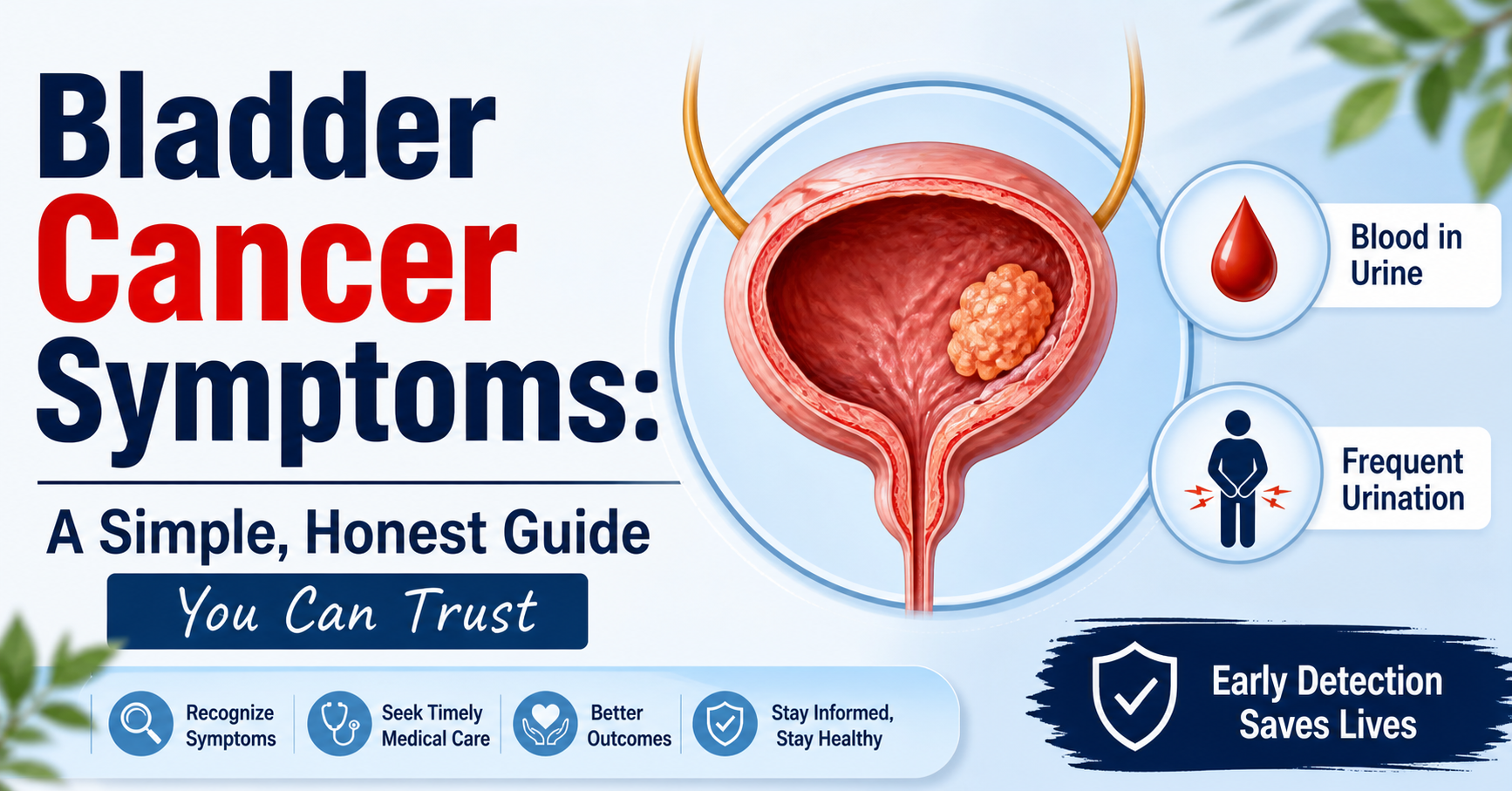
Understanding your body is powerful. Small changes can tell big stories. That’s why learning about bladder cancer symptoms matters. It can help you notice warning signs early and take action.
Many people ignore early symptoms. They may think it’s a simple infection or stress. I’ve seen this happen often. A friend once ignored blood in urine for weeks. He thought it was nothing serious. Later, he learned it needed medical attention.
This guide will walk you through everything in a clear and simple way. You’ll learn what to watch for, when to worry, and what steps to take. We will also cover symptoms of bladder cancer, especially in women, since signs can differ.
Let’s begin with the basics.
What Is Bladder Cancer?
Bladder cancer starts in the lining of the bladder. The bladder stores urine before it leaves your body. When cells grow out of control here, cancer can form.
Most cases begin in the inner lining. Over time, it may spread deeper. That’s why early detection is so important.
The tricky part is that early bladder cancer symptoms are often mild. Many people miss them. They may feel normal except for small changes in urination.
Knowing these early signs can make a big difference.
Why You Should Know the Symptoms Early
Early detection can save lives. When bladder cancer is found early, treatment is easier and more effective.
Many people confuse early cancer of the urinary bladder symptoms with common problems. These include urinary infections or kidney stones.
I’ve noticed that people often delay doctor visits. They wait for pain. But bladder cancer may not cause pain at first.
That’s why awareness matters more than fear. Knowing the signs gives you control. It helps you act quickly.
Most Common Bladder Cancer Symptoms
The most common sign is blood in the urine. This is called hematuria.
Sometimes, the urine looks pink, red, or brown. Other times, it looks normal, but blood is present.
Here are key symptoms of bladder cancer:
- Blood in urine
- Frequent urination
- Pain during urination
- Feeling the need to urinate often
- Trouble passing urine
These symptoms may come and go. That can make them easy to ignore.
Quick Symptom Overview
| Symptom | What It Feels Like | Should You Worry? |
|---|---|---|
| Blood in urine | Pink or red urine | Yes, always check |
| Frequent urination | Going often without reason | If persistent |
| Pain while urinating | Burning sensation | Needs attention |
| Urgency | Sudden strong urge | If unusual |
Early Signs You Should Never Ignore
Early bladder cancer symptoms are often silent or mild. But your body still gives clues.
One early sign is blood in urine without pain. This is very important. Many people expect pain, but it may not happen.
Another early warning is frequent urination without infection. If you feel the urge often but tests show no infection, take it seriously.
Also, watch for changes in urine color. Even slight changes matter.
Small signs can lead to early diagnosis. That’s a big advantage.
Advanced Symptoms of Bladder Cancer
As cancer grows, symptoms become stronger.
You may feel pain in the lower back. This pain is usually on one side. It may feel deep and constant.
Other advanced symptoms of bladder cancer include:
- Bone pain
- Weight loss
- Swelling in feet
- Feeling very tired
These signs mean the cancer may have spread. At this stage, treatment becomes more complex.
That’s why early action is always better.
Bladder Cancer Symptoms in Women
Women often face delays in diagnosis. Why? Because symptoms are mistaken for urinary infections.
Bladder cancer symptoms female may look like common UTIs. This includes burning, urgency, and frequent urination.
Doctors may treat these as infections first. If symptoms continue, further tests are needed.
Key Signs in Women
| Symptom | Common Confusion | What To Do |
|---|---|---|
| Burning urine | UTI | Test if it repeats |
| Frequent urination | Hormonal changes | Monitor duration |
| Blood in urine | Infection | Always investigate |
Women should be extra careful. If symptoms return after treatment, don’t ignore them.
Bladder Cancer Symptoms in Men vs Women
Both men and women share many symptoms. But differences exist.
Men are more likely to get bladder cancer. Women, however, often get diagnosed later.
Here’s a simple comparison:
| Feature | Men | Women |
|---|---|---|
| Risk level | Higher | Lower |
| Diagnosis time | Earlier | Often delayed |
| Symptom confusion | Less | More (UTIs) |
This delay in women can affect treatment outcomes. That’s why awareness is crucial.
Causes and Risk Factors
Bladder cancer doesn’t appear randomly. Certain factors increase risk.
The biggest risk is smoking. Harmful chemicals enter the bloodstream and reach the bladder.
Other risks include:
- Exposure to chemicals
- Long-term infections
- Family history
- Age (over 55)
I’ve seen many cases where lifestyle played a role. Reducing risks can help prevent disease.
When Should You See a Doctor?
You should never ignore blood in urine. Even if it happens once.
Also see a doctor if you have:
- Frequent urination for weeks
- Pain during urination
- Sudden urgency without reason
Don’t wait for symptoms to get worse. Early visits can save time and stress.
It’s always better to be safe.
How Doctors Diagnose Bladder Cancer
Doctors use several tests to confirm diagnosis.
These may include:
- Urine tests
- Imaging scans
- Cystoscopy (looking inside bladder)
- Biopsy
The process may sound scary, but it’s routine. Early testing leads to better outcomes.
Treatment Options and What to Expect
Treatment depends on the stage of cancer.
Common options include:
- Surgery
- Chemotherapy
- Radiation therapy
- Immunotherapy
Early-stage cancer may need simple treatment. Advanced stages require more care.
Doctors will guide you based on your condition.
Tips to Lower Your Risk
You can take steps to protect your health.
Simple habits can make a big difference:
- Quit smoking
- Drink plenty of water
- Avoid harmful chemicals
- Eat healthy foods
Prevention is always better than cure.
Living With Bladder Cancer
Life doesn’t stop after diagnosis. Many people live full lives with treatment.
Support from family helps a lot. So does staying informed.
I’ve seen people recover and thrive. Early detection and positive mindset matter.
Frequently Asked Questions (FAQs)
1. What is the first sign of bladder cancer?
The most common first sign is blood in urine. It may appear suddenly and without pain.
2. Are bladder cancer symptoms painful?
Not always. Early symptoms are often painless, which makes them easy to ignore.
3. Can women get bladder cancer?
Yes. While less common, bladder cancer symptoms in women are often misdiagnosed.
4. Is frequent urination a warning sign?
Yes, especially if it happens without infection or clear reason.
5. Can bladder cancer be cured?
Yes, especially if detected early. Treatment success is much higher in early stages.
6. When should I worry about urinary symptoms?
If symptoms last more than a few days or repeat often, consult a doctor.
Final Thoughts
Your body speaks to you. You just need to listen.
Bladder cancer symptoms may seem small at first. But they can signal something serious. Don’t ignore changes in urination or blood in urine.
Early action can save your life. Stay aware, stay informed, and don’t delay medical care.
If something feels wrong, trust your instincts and get checked. It’s always worth it.
