

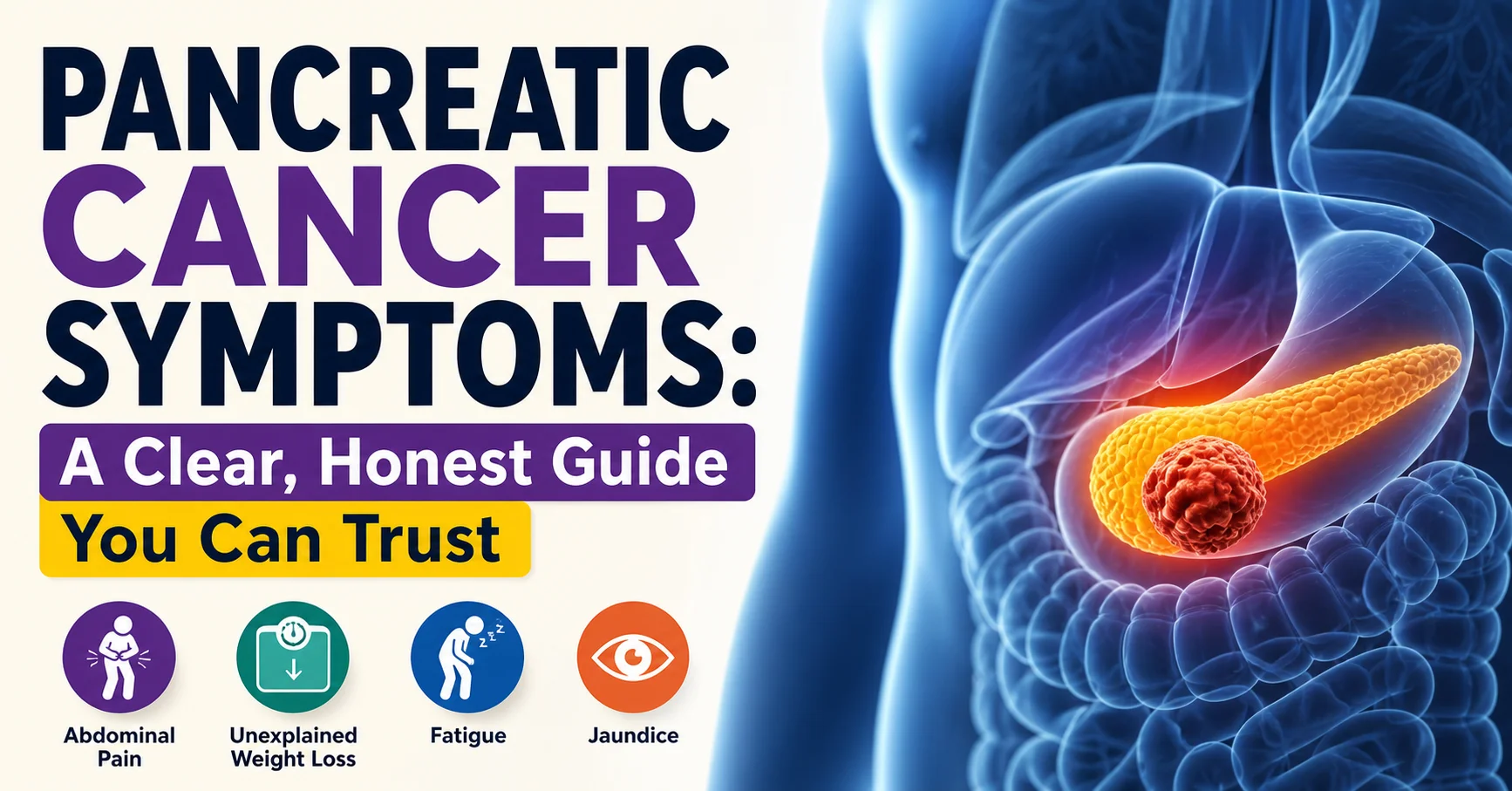
Understanding pancreatic cancer symptoms can feel confusing and even scary. Many people do not notice early signs, and that makes this disease harder to detect. But knowledge can help you stay aware and take action sooner. This guide breaks everything down in simple, easy words so anyone can understand it.
The Pancreatic cancer starts in the pancreas, a small organ behind your stomach. It helps with digestion and blood sugar control. When something goes wrong here, symptoms can be subtle at first. That’s why learning the early warning signs matters.
In this article, you’ll find clear explanations, real-life insights, and practical advice. You’ll also learn what symptoms to watch for, when to see a doctor, and how to stay proactive. Let’s walk through it together in a simple and honest way.
Why Pancreatic Cancer Symptoms Are Often Missed
Many people miss early pancreatic cancer symptoms because they feel normal. You may think it is just tiredness, stress, or a small stomach issue. This happens because the pancreas sits deep inside the body. It does not show obvious signs at first.
In my experience reading patient stories, many people say their first symptoms felt harmless. Some noticed mild pain or slight weight loss. Others thought they had digestion problems. These symptoms are easy to ignore.
Another reason is that symptoms develop slowly. They do not appear suddenly like a fever. Instead, they build over time. This slow change makes it harder to notice.
Doctors also say early-stage pancreatic cancer rarely causes strong signs. By the time symptoms become clear, the disease may already be advanced. That’s why awareness is key.
Early Pancreatic Cancer Symptoms You Should Know
Early symptoms of pancreatic cancer are often quiet. But they are not impossible to notice if you pay attention.
One of the first signs can be discomfort in the upper abdomen. This pain may spread to your back. It can feel dull and come and go. Some people ignore it because it is not severe.
Another early symptom is unexplained weight loss. If you are losing weight without trying, it could be a warning sign. Loss of appetite may also happen.
Fatigue is also common. You may feel tired even after rest. This is not normal tiredness. It feels deeper and lasts longer.
Some people also notice changes in digestion. You may feel bloated or full quickly. These signs may seem small, but together they matter.
My First Symptoms of Pancreatic Cancer: Real-Life Insight
When people talk about “my first symptoms of pancreatic cancer,” many stories sound similar. These real experiences can help others understand what to watch for.
One common story is about back pain. A person may think it is due to posture or work stress. But the pain does not go away. Over time, it gets worse.
Another person may notice sudden weight loss. Clothes start to feel loose. At first, it may seem like a good thing. But it happens without effort.
Some people mention feeling full after eating small meals. This can be frustrating and confusing. Others describe constant tiredness that affects daily life.
These stories show a pattern. The symptoms are mild but persistent. That’s the key difference. If something feels “off” for weeks, it is worth checking.
Common Pancreatic Cancer Signs and Symptoms
As the disease grows, pancreatic cancer signs and symptoms become more noticeable. These signs are easier to recognize.
Here is a simple table to help you understand:
| Symptom | What It Feels Like |
|---|---|
| Abdominal pain | Dull pain in upper stomach |
| Back pain | Pain that spreads from abdomen |
| Weight loss | Losing weight without trying |
| Loss of appetite | Not feeling hungry |
| Fatigue | Constant tiredness |
These symptoms may not always mean cancer. But if several appear together, it is important to see a doctor.
Jaundice: A Key Warning Sign
One of the most important pancreatic cancer symptoms is jaundice. This happens when your skin and eyes turn yellow.
Jaundice occurs when bile builds up in the body. The tumor can block the bile duct, causing this problem. It is often one of the first clear signs.
You may also notice dark urine and pale stools. These changes can happen at the same time. Some people feel itchy skin as well.
Jaundice is a strong signal that something is wrong. It should never be ignored. If you see yellowing of the skin or eyes, seek medical help right away.
Digestive Problems and Appetite Changes
Digestive issues are common pancreatic cancer symptoms of later stages. These problems can affect your daily life.
You may feel nauseous or experience vomiting. Food may not digest properly. This can lead to discomfort after meals.
Some people develop oily or greasy stools. This happens when the body cannot absorb fat properly. It is a sign the pancreas is not working well.
Loss of appetite is also common. You may not feel like eating at all. Over time, this leads to weight loss and weakness.
Here’s a quick overview:
| Digestive Issue | Explanation |
|---|---|
| Nausea | Feeling sick after eating |
| Oily stools | Poor fat digestion |
| Bloating | Feeling full quickly |
| Appetite loss | Reduced desire to eat |
Pain That Should Not Be Ignored
Pain is one of the most common symptoms of pancreatic cancer, but it is often misunderstood. It usually starts in the upper abdomen.
This pain may spread to your back. It can feel worse when lying down. Some people find relief by leaning forward.
The pain may not be sharp. Instead, it feels dull and constant. This makes it easy to ignore at first.
Over time, the pain becomes stronger. It may affect sleep and daily activities. If pain lasts for weeks, it is important to get checked.
Diabetes and Blood Sugar Changes
The pancreas plays a key role in controlling blood sugar. That’s why pancreatic cancer symptoms can include diabetes-related changes.
Some people develop diabetes suddenly without clear reason. Others notice their existing diabetes becomes harder to manage.
You may feel very thirsty or need to urinate often. These are signs of high blood sugar. Fatigue may also increase.
Doctors sometimes find pancreatic cancer while checking for new diabetes. This link is important and should not be ignored.
Risk Factors That Increase Your Chances
Knowing risk factors can help you understand your chances of developing pancreatic cancer symptoms.
Some common risk factors include:
| Risk Factor | Details |
|---|---|
| Smoking | Major cause of pancreatic cancer |
| Age | Risk increases after 60 |
| Family history | Genetics can play a role |
| Obesity | Linked to higher risk |
| Chronic pancreatitis | Long-term inflammation |
Having one risk factor does not mean you will get cancer. But multiple factors increase the risk.
When Should You See a Doctor?
You should not panic over every small symptom. But you also should not ignore ongoing changes.
If you notice pancreatic cancer signs and symptoms for more than two weeks, it is time to act. Persistent pain, weight loss, or jaundice should be checked.
Early diagnosis can improve outcomes. Doctors may use tests like scans or blood tests to find the cause.
Trust your body. If something feels unusual and does not go away, it is better to be safe.
How Doctors Diagnose Pancreatic Cancer
Diagnosing pancreatic cancer symptoms involves several steps. Doctors start by asking about your symptoms and medical history.
They may order imaging tests like CT scans or MRIs. These help them see the pancreas clearly. Blood tests may also be used.
In some cases, a biopsy is done. This means taking a small tissue sample. It helps confirm the diagnosis.
Diagnosis can take time, but it is important to be thorough. Early detection can make a big difference.
Can Pancreatic Cancer Symptoms Be Prevented?
You cannot fully prevent pancreatic cancer. But you can lower your risk by making healthy choices.
Avoid smoking and limit alcohol use. Maintain a healthy weight through diet and exercise. Eat more fruits and vegetables.
Regular check-ups can also help. If you have a family history, talk to your doctor about screening.
While prevention is not guaranteed, these steps can reduce your risk and improve overall health.
Living With Pancreatic Cancer: What to Expect
Living with pancreatic cancer symptoms can be challenging. But support and treatment can improve quality of life.
Treatment options may include surgery, chemotherapy, or radiation. The choice depends on the stage of cancer.
Many patients benefit from support groups and counseling. Emotional health is just as important as physical health.
Simple lifestyle changes can also help. Eating small meals and staying active can improve comfort.
Frequently Asked Questions (FAQs)
1. What are the first symptoms of pancreatic cancer?
Early symptoms include mild abdominal pain, weight loss, and fatigue. These signs are often subtle.
2. Is back pain a sign of pancreatic cancer?
Yes, back pain can be one of the symptoms of pancreatic cancer, especially when it spreads from the abdomen.
3. How fast do pancreatic cancer symptoms appear?
They usually develop slowly over time. This makes them harder to notice early.
4. Can pancreatic cancer be detected early?
It is difficult, but early detection is possible with awareness and regular check-ups.
5. What does pancreatic cancer pain feel like?
It is often dull, constant, and located in the upper abdomen or back.
6. Should I worry about sudden weight loss?
Yes, unexplained weight loss is one of the key pancreatic cancer signs and symptoms.
Final Thoughts: Listen to Your Body
Understanding pancreatic cancer symptoms can save lives. The signs may be small, but they matter. Paying attention to your body is the first step.
If something feels wrong, do not ignore it. Early action can make a big difference. Talk to a doctor and get checked.
This guide is here to help you stay informed and aware. Share it with others who may benefit. Awareness is powerful, and it can lead to early detection and better outcomes.
