
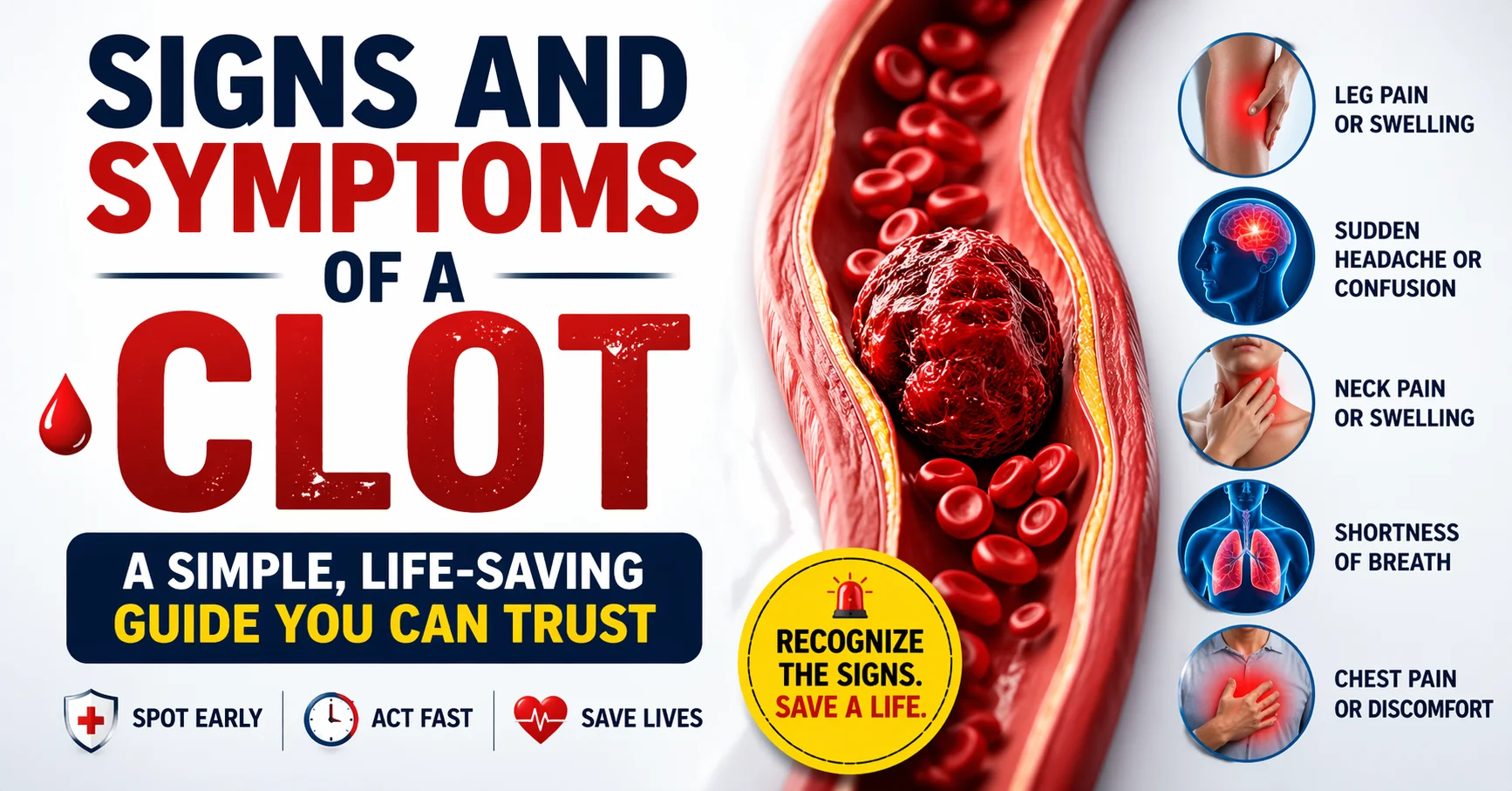
Blood clots can be helpful or dangerous. Your body forms clots to stop bleeding. That’s normal. But when a clot forms inside a blood vessel and blocks blood flow, it can be serious. Knowing the signs and symptoms of a clot can help you act fast and save a life—maybe even your own.
Many people miss early warning signs. Some symptoms feel mild at first. Others appear suddenly and feel scary. The truth is simple: the sooner you recognize a clot, the better your chances of recovery. In this guide, we’ll break everything down in plain language. No confusing medical words. Just clear, helpful advice you can trust.
What Is a Blood Clot?
A blood clot is a thick clump of blood. It forms when blood changes from liquid to gel. This usually happens to stop bleeding after an injury. But sometimes, clots form where they shouldn’t.
When this happens, the clot can block blood flow. This can damage organs like the brain, heart, or lungs. These dangerous clots can lead to conditions like Deep Vein Thrombosis or Pulmonary Embolism.
The tricky part is that not all clots feel the same. Some grow slowly. Others cause sudden symptoms. That’s why understanding the signs and symptoms of a clot is so important.
Why Blood Clots Are Dangerous
A clot can block oxygen-rich blood from reaching your body. This can cause pain, damage, or even death if not treated quickly.
For example, a clot in the brain can lead to a stroke. A clot in the lungs can stop breathing. A clot in the leg can travel and become life-threatening.
Many people think clots only affect older adults. That’s not true. Anyone can develop a clot, especially after long travel, surgery, or illness.
Recognizing the signs and symptoms of a clot early gives you a chance to get help before things get worse.
Common Signs and Symptoms of a Clot
Clots don’t always look the same. But there are some general warning signs you should never ignore.
Here are the most common ones:
| Symptom | What It Feels Like |
|---|---|
| Swelling | One area becomes larger than normal |
| Pain | Aching or cramping, often in one spot |
| Warm skin | The area feels warmer than usual |
| Redness | Skin may look red or discolored |
| Shortness of breath | Trouble breathing suddenly |
These signs may seem simple. But together, they can point to something serious. Always pay attention to changes in your body.
Signs and Symptoms of a Blood Clot in the Leg
A clot in the leg is one of the most common types. This is often called Deep Vein Thrombosis.
Here’s what you might notice:
- Swelling in one leg
- Pain or tenderness, often in the calf
- Warm skin
- Red or darkened skin
The pain may feel like a muscle cramp. But it doesn’t go away with rest. That’s a key warning sign.
| Symptom | Mild vs Severe |
|---|---|
| Pain | Starts dull, may get sharp |
| Swelling | Small at first, can increase |
| Skin color | Light red to deep purple |
These signs and symptoms of a clot in the leg should never be ignored. A clot can break loose and travel to your lungs.
Signs and Symptoms of a Blood Clot in the Brain
A clot in the brain can cause a stroke. This is a medical emergency. It can happen fast and without warning.
Watch for these symptoms:
- Sudden headache
- Trouble speaking
- Weakness on one side of the body
- Vision problems
- Confusion
These are key signs and symptoms of a blood clot in the brain. They often appear suddenly.
A simple way to remember is FAST:
| Letter | Meaning |
|---|---|
| F | Face drooping |
| A | Arm weakness |
| S | Speech trouble |
| T | Time to call help |
If you notice these signs, act quickly. Every minute matters.
Signs and Symptoms of a Blood Clot in the Neck
Clots in the neck are less common but still serious. They can affect blood flow to the brain.
Here are some warning signs:
- Neck pain or swelling
- Difficulty swallowing
- Headache
- Dizziness
- Vision changes
These signs and symptoms of a blood clot in the neck can feel mild at first. But they may get worse over time.
Because the neck connects to the brain, any blockage here can be dangerous. It’s best to seek medical help right away.
Signs and Symptoms of a Blood Clot in the Lungs
A clot in the lungs is called Pulmonary Embolism. This is life-threatening.
Symptoms include:
- Sudden shortness of breath
- Chest pain
- Fast heartbeat
- Coughing, sometimes with blood
These signs and symptoms of a clot need immediate attention. Don’t wait or ignore them.
Many people mistake these symptoms for anxiety. But a lung clot can quickly become fatal without treatment.
What Causes Blood Clots?
Clots can happen for many reasons. Some causes are common and easy to miss.
Here are a few:
- Sitting too long (like during travel)
- Surgery or injury
- Smoking
- Obesity
- Pregnancy
- Certain medications
| Risk Factor | Why It Matters |
|---|---|
| Long sitting | Slows blood flow |
| Smoking | Damages blood vessels |
| Surgery | Triggers clotting response |
Understanding these risks helps you prevent clots. It also helps you spot the signs and symptoms of a clot early.
Who Is at Higher Risk?
Some people have a higher chance of developing clots.
You may be at risk if you:
- Are over 40
- Have a family history of clots
- Are overweight
- Have heart disease
- Recently had surgery
Even young, healthy people can develop clots. That’s why awareness matters.
Knowing your risk can help you take action sooner.
When Should You See a Doctor?
You should never ignore possible clot symptoms. Even mild signs can become serious quickly.
Seek medical help if you notice:
- Sudden swelling or pain in one leg
- Trouble breathing
- Chest pain
- Sudden confusion or weakness
These are strong signs and symptoms of a clot that need urgent care.
If symptoms are severe, go to the emergency room. Don’t wait for them to pass.
How Blood Clots Are Diagnosed
Doctors use simple tests to find clots.
These may include:
- Ultrasound
- Blood tests
- CT scans
These tests help confirm if a clot is present. Early diagnosis can prevent complications.
The sooner a clot is found, the easier it is to treat.
Treatment Options for Blood Clots
Treatment depends on the type and location of the clot.
Common treatments include:
- Blood thinners
- Clot-dissolving drugs
- Compression stockings
| Treatment | Purpose |
|---|---|
| Blood thinners | Prevent clot growth |
| Clot busters | Break down clots |
| Compression wear | Improve blood flow |
Treatment can save your life. That’s why recognizing the signs and symptoms of a clot is so important.
Simple Ways to Prevent Blood Clots
Prevention is easier than treatment. Small changes can make a big difference.
Here’s what you can do:
- Stay active
- Drink enough water
- Avoid sitting too long
- Quit smoking
- Maintain a healthy weight
If you travel often, take breaks to move around. Even short walks help blood flow.
These habits lower your risk and keep your body healthy.
Real-Life Insight: Why Early Action Matters
A friend once ignored leg pain after a long flight. He thought it was just muscle soreness. Days later, he had trouble breathing. It turned out to be a lung clot.
He recovered—but only because he got help in time.
This shows how easy it is to miss the signs and symptoms of a clot. What feels small can become serious quickly.
FAQs About Signs and Symptoms of a Clot
1. What are the first signs of a blood clot?
The first signs often include swelling, pain, and warmth in one area. These may seem mild at first.
2. Can a blood clot go away on its own?
Some small clots may dissolve. But many need treatment. Never assume it will go away.
3. How fast can a blood clot become dangerous?
It can become serious within hours or days. That’s why quick action is important.
4. Are blood clots painful?
Yes, many clots cause pain. But not all do. Some are silent and still dangerous.
5. Can young people get blood clots?
Yes, especially with risk factors like long travel or smoking.
6. What should I do if I suspect a clot?
Seek medical help immediately. Don’t wait or try to treat it at home.
Final Thoughts: Listen to Your Body
Your body often gives warning signs. The key is to pay attention. The signs and symptoms of a clot may seem small, but they matter.
If something feels off, trust your instincts. It’s always better to check than to wait.
Stay active. Stay aware. And don’t ignore unusual symptoms.
If this guide helped you, consider sharing it. You could help someone recognize a clot before it’s too late.
