

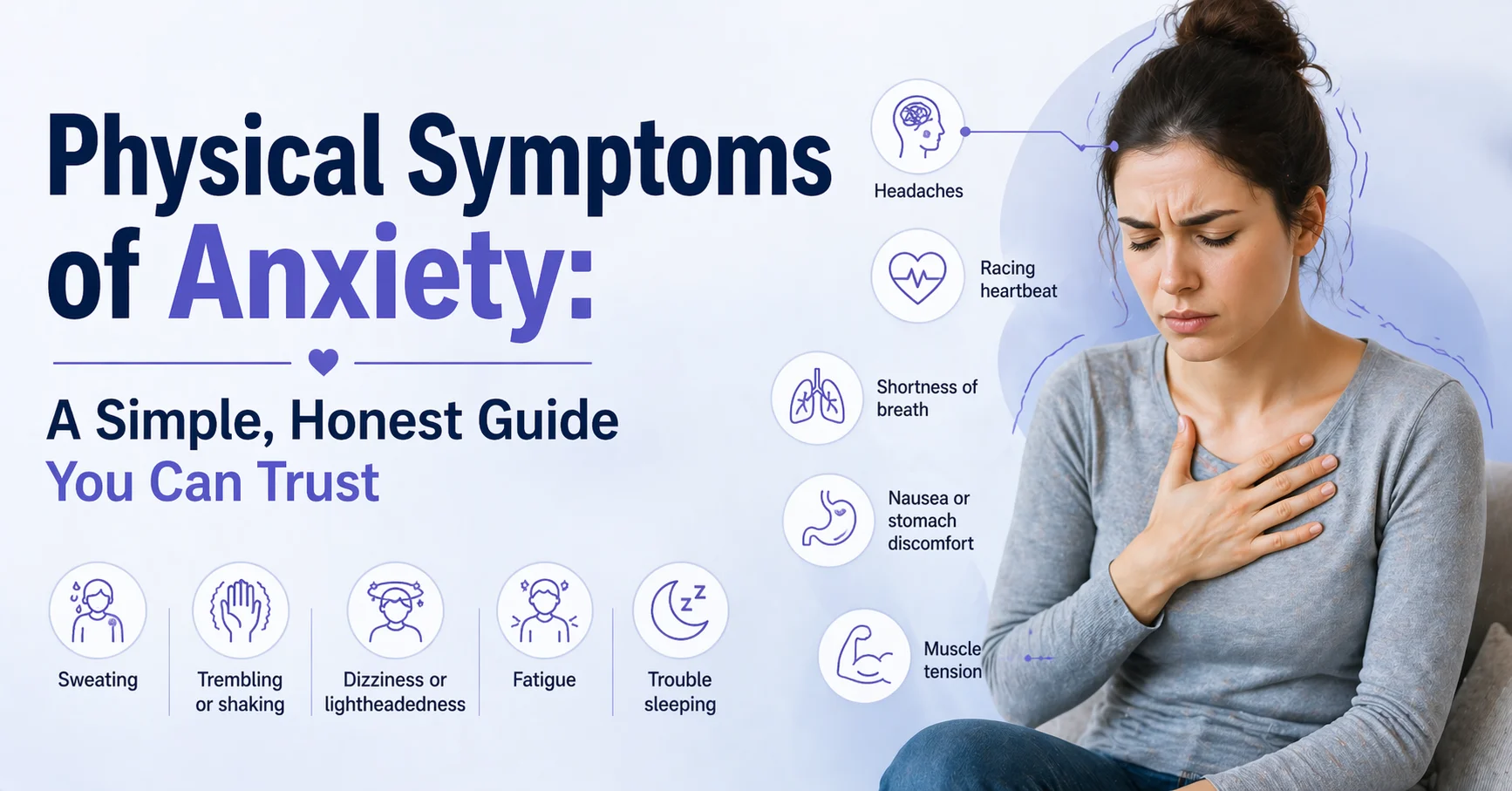
Anxiety is not just “in your head.” It can show up in your body in ways that feel very real—and sometimes scary. Many people search for answers when they feel strange sensations like a racing heart, dizziness, or tight chest. These are often physical symptoms of anxiety, and they can happen even when you don’t feel mentally worried.
In this guide, we’ll walk through everything you need to know. We’ll keep things simple, clear, and helpful. You’ll learn why these symptoms happen, what they feel like, and how to manage them. If you’ve ever thought, “Something feels wrong with my body,” this article is for you.
What Are Physical Symptoms of Anxiety?
Anxiety is your body’s natural response to stress or danger. It activates your “fight or flight” system. This system prepares you to face threats. But sometimes, it turns on when there is no real danger.
That’s when physical symptoms of anxiety begin. Your body reacts as if you are in danger, even if you are safe. This can lead to changes in your heart, breathing, muscles, and stomach.
These symptoms are not fake. They are real physical reactions caused by stress hormones like adrenaline. Many people mistake them for serious illness, which can make anxiety worse.
Why Anxiety Affects the Body So Strongly
Your brain and body are deeply connected. When your brain senses stress, it sends signals to your body instantly. This triggers a chain reaction.
Your heart beats faster. Your breathing becomes quick. Your muscles tighten. Your digestion slows down. All of this is meant to help you survive danger.
But when anxiety becomes constant, your body stays in this alert mode. This leads to ongoing physical symptoms of stress and anxiety that feel exhausting and confusing.
Common Physical Symptoms of Anxiety
Here are some of the most common signs people experience:
| Symptom | What It Feels Like |
|---|---|
| Fast heartbeat | Heart racing or pounding |
| Shortness of breath | Feeling like you can’t get enough air |
| Muscle tension | Tight shoulders, jaw, or neck |
| Sweating | Even without heat or exercise |
| Dizziness | Lightheaded or unsteady |
| Stomach issues | Nausea, cramps, or diarrhea |
These symptoms can come and go. Sometimes they last minutes. Other times, they linger for hours or days.
Weird Physical Symptoms of Anxiety You Might Not Expect
Anxiety doesn’t always look the same. Some people feel unusual or “weird” symptoms that seem unrelated to stress.
These weird physical symptoms of anxiety may include tingling hands, numbness, or a burning feeling in the skin. Some people feel like they are floating or not fully present.
Others report blurry vision, ringing in the ears, or sudden chills. These sensations can feel alarming. But they are often harmless and linked to anxiety.
Understanding these symptoms can reduce fear. When you know what’s happening, it feels less overwhelming.
Physical Symptoms of Anxiety Attack
An anxiety attack can come suddenly. It may feel intense and frightening. During an attack, your body goes into full alert mode.
Here’s what many people experience during physical symptoms of anxiety attack:
| Symptom | Description |
|---|---|
| Chest tightness | Pressure or pain in chest |
| Rapid breathing | Fast, shallow breaths |
| Sweating | Sudden and heavy |
| Trembling | Shaking hands or body |
| Nausea | Upset stomach |
| Fear of losing control | Feeling overwhelmed |
These symptoms can peak within minutes. Even though they feel dangerous, they are usually not harmful.
Physical Symptoms of Panic Attacks and Anxiety
Panic attacks are a stronger form of anxiety. They often come without warning. The body reacts quickly and intensely.
The physical symptoms of panic attacks and anxiety can include chest pain, choking sensations, or a feeling of doom. Many people think they are having a heart attack.
This fear can lead to repeated panic attacks. It becomes a cycle—fear of symptoms causes more anxiety, which causes more symptoms.
Breaking this cycle starts with understanding what’s happening in your body.
How Long Do Physical Symptoms Last?
The length of symptoms can vary. Some last only a few minutes. Others may stay for hours or even days.
It depends on how long your body stays in a stressed state. If your mind keeps focusing on the symptoms, they can last longer.
Here’s a simple breakdown:
| Duration | What It Means |
|---|---|
| Minutes | Likely an anxiety or panic attack |
| Hours | Ongoing stress or worry |
| Days | Chronic anxiety or tension |
Learning to calm your body can help shorten these symptoms.
When Anxiety Mimics Serious Illness
One of the hardest parts of anxiety is how real it feels. Chest pain can feel like a heart problem. Dizziness can feel like a brain issue.
This is why many people visit doctors often. They fear something serious is wrong.
While it’s important to check new symptoms, repeated normal tests often point to anxiety. Understanding this can bring relief.
Still, always seek medical help if symptoms are new, severe, or different from usual.
Triggers That Cause Physical Symptoms
Anxiety symptoms often have triggers. These triggers may be obvious or hidden.
Common triggers include:
| Trigger | Example |
|---|---|
| Stress | Work pressure or exams |
| Lack of sleep | Poor rest increases anxiety |
| Caffeine | Too much coffee or tea |
| Health worries | Fear of illness |
| Social situations | Fear of judgment |
Identifying your triggers can help you manage symptoms better.
How to Calm Physical Symptoms of Anxiety
You can learn to calm your body. It takes practice, but it works.
Start with slow breathing. Inhale through your nose. Exhale slowly through your mouth. This tells your body to relax.
Try grounding techniques. Focus on what you can see, hear, and touch. This brings your mind back to the present.
Gentle movement like walking or stretching also helps release tension.
Daily Habits That Reduce Anxiety Symptoms
Small habits can make a big difference over time. Your body responds well to routine and care.
Here are helpful habits:
| Habit | Benefit |
|---|---|
| Regular sleep | Keeps your body balanced |
| Healthy eating | Supports brain function |
| Exercise | Releases stress hormones |
| Limiting caffeine | Reduces jitteriness |
| Mindfulness | Calms your thoughts |
These habits reduce both mental and physical symptoms of anxiety.
Personal Insight: What Many People Don’t Realize
Many people don’t connect their body symptoms to anxiety at first. They think something is seriously wrong.
I’ve seen people worry for months about heart issues. After tests come back normal, they feel confused. But once they understand anxiety, things start to make sense.
The biggest shift happens when you stop fearing the symptoms. When fear decreases, symptoms often become less intense.
When to Seek Professional Help
If anxiety affects your daily life, it’s time to get help. You don’t have to manage this alone.
Signs you may need support:
- Symptoms happen often
- You avoid daily activities
- Panic attacks feel uncontrollable
- Sleep is affected
A doctor or therapist can guide you. Treatment may include therapy, lifestyle changes, or medication.
FAQs About Physical Symptoms of Anxiety
1. Can anxiety really cause physical pain?
Yes, anxiety can cause real pain. Muscle tension and stress hormones can lead to headaches, chest pain, and body aches.
2. Are physical symptoms of anxiety dangerous?
Most symptoms are not dangerous. They feel intense but are usually harmless. Always check new symptoms with a doctor.
3. Why do symptoms happen without stress?
Sometimes anxiety builds up in the body. Even if you feel calm, your body may still react.
4. Can anxiety cause stomach problems?
Yes, anxiety affects digestion. It can cause nausea, cramps, or diarrhea.
5. How do I know it’s anxiety and not illness?
If tests are normal and symptoms match anxiety patterns, it is likely anxiety. Still, consult a doctor for clarity.
6. Can physical symptoms go away completely?
Yes, with the right approach, symptoms can reduce or disappear over time.
Conclusion: You Are Not Alone—and You Can Feel Better
The physical symptoms of anxiety can feel confusing and overwhelming. They can make you question your health and create fear. But these symptoms are your body’s way of responding to stress—not a sign that something is seriously wrong.
Understanding your body is the first step toward healing. When you learn what triggers your symptoms and how to calm them, you gain control. Small daily habits, awareness, and support can make a huge difference.
If you’re struggling, don’t ignore it. Talk to someone. Seek help if needed. Anxiety is common—and it is treatable.
You deserve to feel calm, safe, and in control of your body again.
