

Introduction
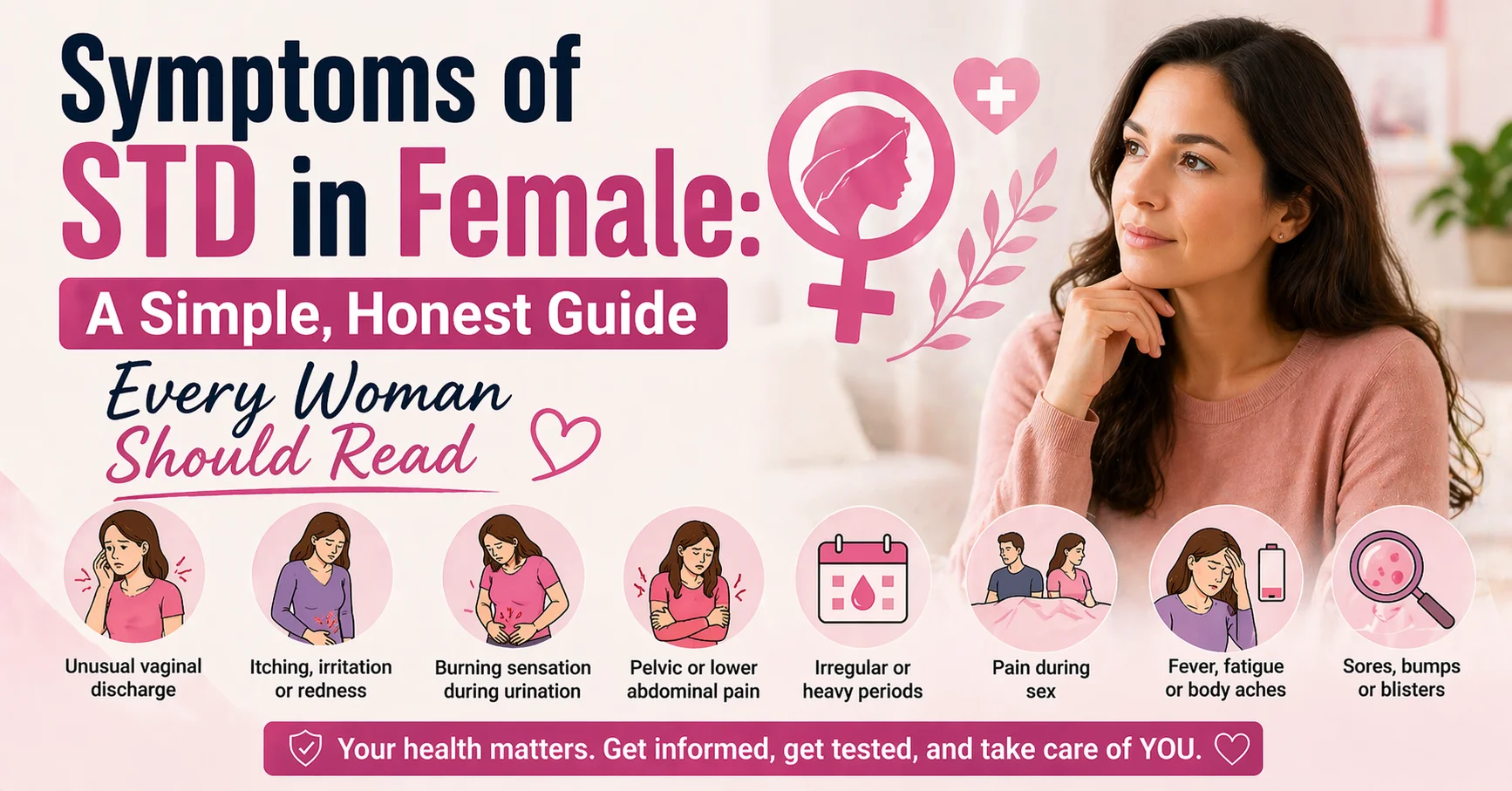
Talking about sexual health can feel uncomfortable, but it is one of the most important parts of overall well-being. Many women ignore early warning signs because they feel shy, confused, or unsure. That’s why understanding the symptoms of STD in female is so important. The earlier you notice changes in your body, the easier it is to treat and prevent serious problems.
Sexually transmitted diseases (STDs) are more common than many people think. Some infections show clear signs, while others stay silent for weeks or even months. This can make them harder to detect. I’ve seen many cases where women ignored mild discomfort, thinking it was nothing serious—only to later discover it needed medical care.
This guide will walk you through everything in a simple and friendly way. You’ll learn how to spot early signs, what symptoms look like, and when to seek help. The goal is to help you feel informed, confident, and in control of your health.
What Are STDs and Why They Matter
STDs are infections passed from one person to another during sexual contact. This includes vaginal, oral, and anal sex. These infections can be caused by bacteria, viruses, or parasites.
The symptoms of STD in female can vary widely depending on the type of infection. Some women feel strong symptoms, while others notice nothing at all. This makes regular testing very important.
If left untreated, STDs can lead to serious health issues. These include infertility, pelvic pain, and even pregnancy complications. That’s why awareness is key. Knowing your body and noticing small changes can make a big difference.
Early Symptoms of STD in Females
The early symptoms of STD in females are often mild and easy to miss. Many women confuse them with normal changes or minor infections.
Here are some common early signs:
| Symptom | What It May Feel Like |
|---|---|
| Unusual discharge | Change in color, smell, or thickness |
| Mild itching | Irritation around the vaginal area |
| Burning sensation | Pain during urination |
| Light spotting | Bleeding between periods |
These signs may come and go. That does not mean the infection is gone. It simply means your body is reacting differently.
I always suggest paying attention to anything that feels “off.” Even small discomfort can be your body’s way of warning you.
Common Signs and Symptoms of STDs in Females
The signs and symptoms of STDs in females can become more noticeable as the infection progresses. These symptoms should never be ignored.
Some common signs include:
- Strong vaginal odor
- Pain during sex
- Lower abdominal pain
- Sores or bumps in the genital area
- Fever or fatigue
| Symptom Type | Possible Meaning |
|---|---|
| Pain | Infection spreading |
| Sores | Viral infections like herpes |
| Fever | Body fighting infection |
These symptoms may feel scary, but they are your body’s way of asking for help. Early treatment can prevent complications.
Unusual Vaginal Discharge: What to Watch For
One of the most common symptoms of STD in female is unusual discharge. Every woman has natural discharge, but changes can signal a problem.
Look for:
- Yellow, green, or gray color
- Strong or fishy smell
- Thick or foamy texture
| Discharge Type | Possible Cause |
|---|---|
| Thick white | Yeast infection or STD |
| Green/yellow | Bacterial infection |
| Watery gray | Possible bacterial vaginosis or STD |
Changes in discharge are often the first visible sign. If something looks different than usual, it’s best to get it checked.
Pain or Burning During Urination
Pain while urinating is another early warning sign. Many women think it is just a urinary tract infection (UTI), but it can also be linked to STDs.
The feeling may include:
- Burning sensation
- Sharp pain
- Frequent urge to urinate
This symptom is commonly seen in infections like chlamydia or gonorrhea. If it lasts more than a day or two, do not ignore it.
Sores, Bumps, and Rashes
Visible changes on the skin can be alarming. These include sores, bumps, or rashes around the genital area.
The symptoms of STD in female pictures often show:
- Small blisters
- Painful ulcers
- Red patches
These symptoms are often linked to viral infections like herpes or HPV. They may appear suddenly and can be painful or itchy.
If you notice any unusual skin changes, it is important to seek medical advice quickly.
Pelvic Pain and Lower Abdominal Discomfort
Pelvic pain is a more serious symptom. It may indicate that the infection has spread.
Signs include:
- Constant dull pain
- Sharp cramps
- Pain during movement
This can lead to a condition called pelvic inflammatory disease (PID). If untreated, it can affect fertility.
Pain is never something to ignore. Even mild discomfort can be a sign of a deeper issue.
Early Symptoms of Oral STD in Females
Oral sex can also spread infections. The early symptoms of oral STD in females are often overlooked.
These include:
- Sore throat
- Mouth sores
- Difficulty swallowing
- Swollen glands
| Symptom | What It Could Mean |
|---|---|
| Sore throat | Possible throat infection |
| Mouth sores | Viral infection |
| Swelling | Immune response |
Many people think oral symptoms are just a cold or flu. But if they persist, testing is important.
When Symptoms Are Silent
Not all STDs show symptoms. In fact, many women have infections without knowing it.
This is why regular testing is essential. Even if you feel healthy, you could still have an infection.
Silent infections can still cause damage over time. This includes fertility problems and long-term pain.
Risk Factors You Should Know
Some factors increase the risk of getting an STD:
- Unprotected sex
- Multiple partners
- Lack of regular testing
- Weak immune system
Understanding these risks helps you make safer choices.
How STDs Are Diagnosed
Doctors use simple tests to diagnose STDs. These may include:
- Urine tests
- Blood tests
- Swab samples
Testing is quick, private, and often painless. Early diagnosis leads to better treatment.
Treatment Options and Recovery
Most STDs can be treated with medication. Bacterial infections are usually cured with antibiotics.
Viral infections may not be fully cured, but symptoms can be managed.
Treatment steps include:
- Taking prescribed medicine
- Avoiding sexual activity during treatment
- Informing your partner
Recovery is usually smooth if treated early.
How to Prevent STDs
Prevention is always better than treatment.
Simple steps include:
- Using protection
- Regular testing
- Open communication with partners
- Limiting number of partners
These habits can greatly reduce risk.
When to See a Doctor
You should see a doctor if you notice:
- Any unusual symptoms
- Pain or discomfort
- Changes in discharge
- Sores or bumps
Even if symptoms are mild, it is better to be safe.
FAQs
1. What are the first symptoms of STD in female?
Early signs include unusual discharge, itching, and mild pain during urination.
2. Can STDs go away on their own?
No, most STDs need treatment. Ignoring them can make things worse.
3. Are all STDs visible?
No, many infections have no visible symptoms.
4. Is testing painful?
Most tests are quick and cause little to no discomfort.
5. Can oral sex cause STDs?
Yes, infections can spread through oral contact.
6. How often should women get tested?
It depends on activity, but regular testing is strongly recommended.
Conclusion
Understanding the symptoms of STD in female is one of the best ways to protect your health. Your body often gives small signals before a problem becomes serious. Listening to those signals can save you from long-term complications.
There is nothing embarrassing about taking care of your health. In fact, it shows strength and awareness. If something feels wrong, trust your instincts and seek help.
Stay informed, stay safe, and never ignore your body’s voice.
