

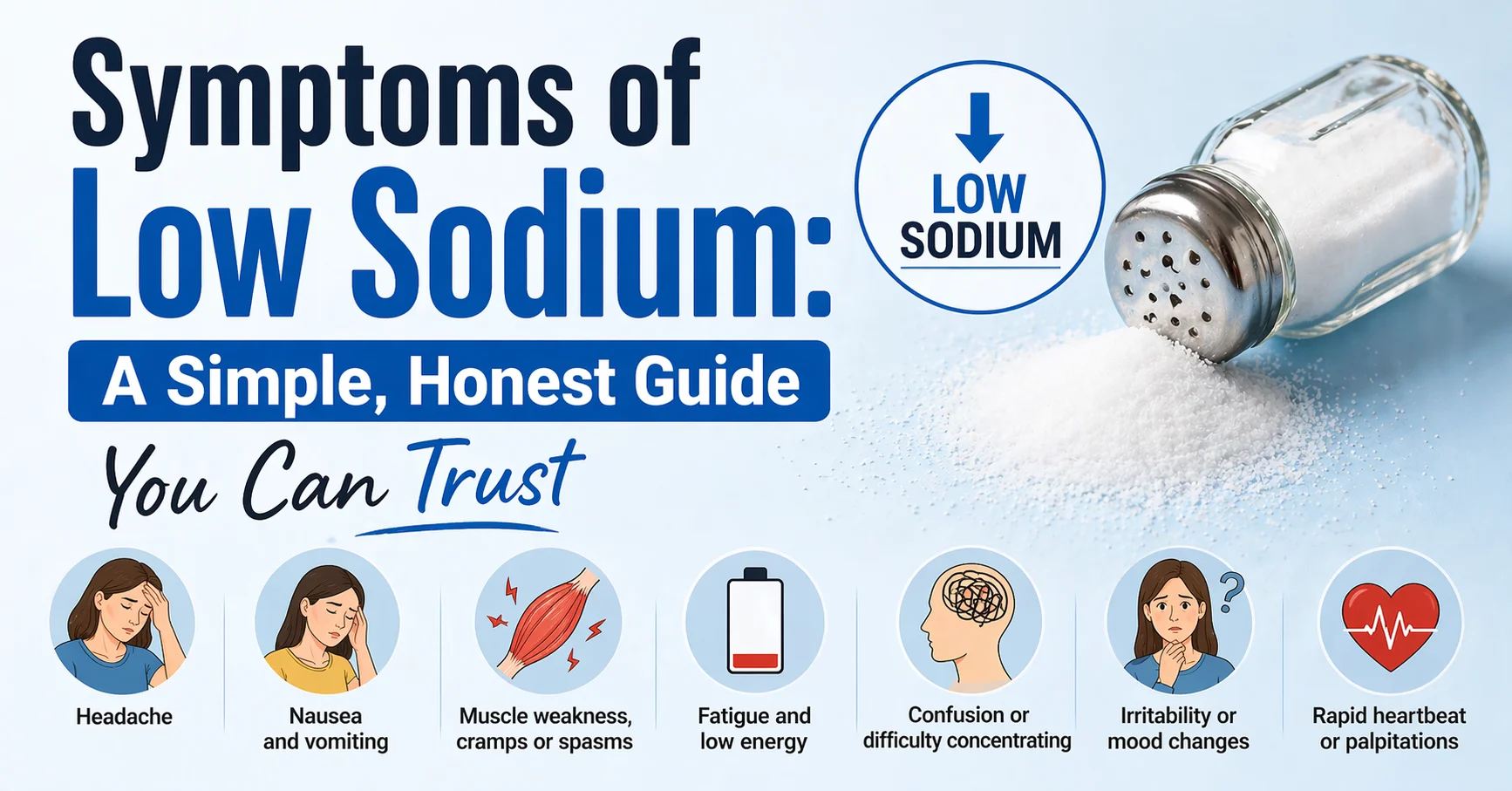
Low sodium in the body may sound minor, but it can quietly affect how your brain and muscles work. Many people ignore early signs until they feel really unwell. This guide will help you understand the symptoms of low sodium, what they feel like, and when to take action.
Doctors call low sodium Hyponatremia. It happens when sodium levels in your blood drop too low. Sodium helps balance fluids and keeps nerves working properly. When levels fall, your body sends warning signals—some mild, some serious.
In this article, we will walk through the symptoms of low sodium levels in blood, explain causes, and share simple ways to stay safe. You’ll also see real-life examples to make things clearer.
What Does Sodium Do in Your Body?
Sodium is not just about salt. It plays a key role in how your body functions every day. It helps control fluid balance, supports nerve signals, and keeps muscles working smoothly. Without enough sodium, cells cannot function the right way.
Think of sodium like a messenger. It carries signals between your brain and body. If levels drop, that communication gets disrupted. This is why the symptoms of low sodium levels often involve confusion, fatigue, and weakness.
For example, if someone drinks too much water without replacing electrolytes, sodium gets diluted. This can lead to headaches or dizziness. Many people mistake these early signs for stress or dehydration.
Understanding this basic role makes it easier to recognize what are the symptoms of low sodium before they become serious.
Early Symptoms of Low Sodium You Should Notice
The early symptoms of low sodium are often mild and easy to miss. Many people ignore them or blame something else like tiredness or poor sleep.
Common early signs include:
- Headache
- Nausea
- Mild confusion
- Low energy
- Muscle cramps
These symptoms happen because your brain starts to swell slightly due to fluid imbalance. It may not feel dangerous at first, but it is your body asking for help.
I once saw someone ignore constant fatigue for days. They thought it was just work stress. Later, it turned out their sodium was low due to excessive water intake.
Catching these early symptoms of low sodium levels in blood can prevent serious complications later.
Moderate Symptoms That Should Raise Concern
As sodium levels continue to drop, symptoms become more noticeable. At this stage, your body struggles to maintain balance.
Moderate symptoms include:
- Vomiting
- Confusion or disorientation
- Muscle weakness
- Trouble focusing
- Irritability
These signs often interfere with daily life. Someone may feel mentally “foggy” or struggle to complete simple tasks. This is when many people finally realize something is wrong.
These symptoms of low sodium levels should not be ignored. They indicate that your body is under stress and needs medical attention.
Severe Symptoms That Require Emergency Care
When sodium drops too low, it becomes life-threatening. Severe symptoms of low sodium can affect the brain rapidly.
These include:
- Seizures
- Loss of consciousness
- Severe confusion
- Coma
At this point, immediate medical care is critical. Brain swelling becomes dangerous and can lead to permanent damage.
If you ever see someone with these signs, do not wait. Seek emergency help right away. Severe symptoms of low sodium levels in blood are a medical emergency.
Table: Symptoms by Severity Level
| Severity Level | Symptoms |
|---|---|
| Mild | Headache, fatigue, nausea |
| Moderate | Confusion, weakness, vomiting |
| Severe | Seizures, coma, unconsciousness |
Common Causes of Low Sodium Levels
Understanding causes helps prevent the symptoms of low sodium from happening.
Some common causes include:
- Drinking excessive water
- Kidney problems
- Hormonal imbalances
- Certain medications (like diuretics)
- Chronic illnesses
For example, athletes sometimes overhydrate during intense exercise. This dilutes sodium in the blood. Similarly, older adults taking medications may develop low sodium without realizing it.
Knowing these causes helps you connect symptoms with possible triggers.
Symptoms of Low Sodium in Elderly People
The symptoms of low sodium in elderly individuals can be harder to detect. They may appear as general aging issues.
Common signs include:
- Increased confusion
- Frequent falls
- Memory problems
- Fatigue
Older adults are more sensitive to sodium changes. Even a small drop can cause noticeable symptoms.
I’ve seen cases where low sodium was mistaken for dementia. After treatment, the person improved significantly. This shows how important it is to check sodium levels in seniors.
Table: Symptoms in Different Age Groups
| Age Group | Common Symptoms |
|---|---|
| Children | Nausea, irritability |
| Adults | Headache, confusion |
| Elderly | Falls, memory issues |
How Doctors Diagnose Low Sodium
Doctors use simple tests to confirm low sodium. Blood tests measure sodium levels directly. Urine tests may also be used to find the cause.
If you show symptoms of low sodium levels, your doctor may ask about:
- Water intake
- Medications
- Medical history
Diagnosis is usually quick and painless. The challenge is recognizing symptoms early enough to get tested.
Treatment Options for Low Sodium
Treatment depends on the severity of symptoms.
Mild cases may only require:
- Reducing water intake
- Adjusting medications
- Adding electrolytes
Moderate to severe cases may need:
- IV fluids
- Hospital monitoring
- Treating underlying conditions
The key is not to self-treat aggressively. Drinking salt water without guidance can be dangerous. Always follow medical advice when dealing with symptoms of low sodium.
Table: Treatment Based on Severity
| Severity | Treatment |
|---|---|
| Mild | Diet and fluid changes |
| Moderate | Medication adjustment |
| Severe | Hospital care and IV fluids |
Foods That Help Maintain Healthy Sodium Levels
Food plays a big role in preventing symptoms of low sodium levels. Balanced intake is key.
Helpful foods include:
- Soups and broths
- Dairy products
- Salted nuts
- Whole grains
However, balance is important. Too much sodium can cause other health issues. Aim for moderation rather than extremes.
Can Drinking Too Much Water Cause Low Sodium?
Yes, it can. Overhydration dilutes sodium in the blood. This is a common but often overlooked cause.
People trying to “stay healthy” sometimes drink excessive water. While hydration is important, too much can lead to symptoms of low sodium.
A simple rule: drink when thirsty and avoid forcing large amounts of water.
When Should You See a Doctor?
You should seek medical help if you notice:
- Persistent confusion
- Severe fatigue
- Repeated vomiting
- Any neurological symptoms
Early evaluation can prevent serious complications. Never ignore worsening symptoms of low sodium levels in blood.
Prevention Tips for Everyday Life
Preventing low sodium is easier than treating it.
Simple tips:
- Drink water in moderation
- Eat balanced meals
- Monitor medications
- Be cautious during intense exercise
These small habits can help you avoid the symptoms of low sodium altogether.
FAQs About Symptoms of Low Sodium
1. What are the symptoms of low sodium?
Common symptoms include headache, nausea, confusion, and fatigue. Severe cases may cause seizures.
2. Can low sodium be life-threatening?
Yes, severe symptoms of low sodium levels can lead to coma or death if untreated.
3. Who is most at risk?
Elderly people, athletes, and those on certain medications are at higher risk.
4. How quickly do symptoms appear?
Symptoms can develop slowly or suddenly, depending on the cause.
5. Can diet fix low sodium?
Mild cases may improve with diet, but serious cases need medical care.
6. Is low sodium common?
Yes, especially in older adults and hospitalized patients.
Final Thoughts: Listen to Your Body
The symptoms of low sodium often start small but can become serious if ignored. Your body gives clear signals—fatigue, confusion, headaches. Paying attention to these signs can make a big difference.
From my experience, many people overlook these symptoms because they seem minor. But early action can prevent dangerous complications. Whether it’s adjusting your hydration or seeking medical advice, small steps matter.
If something feels off, trust your instincts. It’s always better to check than to wait. Your health deserves attention, and understanding these symptoms is the first step toward staying safe.
